—°F Boise, ID
◈ Cross-Vertical Intelligence · Treasure Valley · Boise Standard

Transportation Infrastructure ↔ relates to ↔ Coworking Commercial Space

26 Wikipedia bridge articles confirmed in both vertical ledgers. 253 deterministic cross-vertical edges. 6,477 external source links harvested. Every edge provenance-stamped. Every claim auditable.

26 QID Bridge Articles
253 Cross Edges
6,477 External Sources
288 Wikipedia Articles
29 🌲 Evergreen
176 🌿 Branch
HIGH SIGNAL · refinery-treasurevalley-v1.0.0
◈ Machine-Readable Schema
Deterministic Cross-Vertical Summary
PASS 2 · ZERO LLM
Entities Compared
Transportation Infrastructure
× Coworking Commercial Space
QID Bridge Articles
26
confirmed Wikipedia overlap
Total Cross Edges
253
External Sources Harvested
6,477
from Wikipedia external links
Geography
Treasure Valley, Ada County, Canyon County, Idaho, United States
Gate Tier
high
Haiku FAQ generated
Strongest Edge
Construction
score: 1.0000  ·  type: exact_title_cross  ·  21 shared tokens
QID Bridge Titles (20)
ConstructionZoningBroadbandLand-use planningApprenticeshipBoise State UniversityBoise AirportWarehouseCollege of Western IdahoTreasure ValleyUrban sprawlNampa, IdahoTransit-oriented developmentUnited States Environmental Protection AgencyAmericans with Disabilities Act of 1990Boise, IdahoUrban planningInterstate 84 in IdahoAda County, IdahoStar, Idaho
Shared Semantics (20 tokens)
boiseidahopopulationadametropolitandevelopmentplanninglandcitiespublicbuildingurbancanyonbuildingsindustrialgovernmentsgrowthlocaluseslevel
Pipeline
refinery-treasurevalley-v1.0.0
Generated
2026-07-17 23:39:42 UTC
Content Hash
c091fbb4aa8636c1
◈ Wikipedia Bridge Articles
QID Overlap — Confirmed in Both Vertical Ledgers
26 BRIDGES
Construction
Q3875186 EXACT TITLE 1.000
QID OVERLAP: Q3875186 in transportation_infrastructure (tier:evergreen) and coworking_commercial_space (tier:evergreen). | SHARED TOKENS (21): "associated", "building", "buildings", "built", "construction", "design", "development", "economic", "eventual", "extend", "facilities", "improve", "industrial", "industry", "infrastructure", "maintenance", "percent", "planning", "products", "until".... | EXACT TITLE in transportation_infrastructure: "Construction". | EXACT TITLE in coworking_commercial_space: "Construction".
associatedbuildingbuildingsbuiltconstructiondesigndevelopmenteconomiceventualextendfacilitiesimproveindustrialindustryinfrastructuremaintenancepercentplanningproductsuntilwork
Construction is the process involved in delivering buildings, infrastructure, industrial facilities, and associated activities through to the end of their life. It typically starts with planning, financing, and design that continues until the asset is built and ready for use. Construction also covers repairs and maintenance work, any work to expand, extend, and improve the asset, and its eventual demolition, dismantling, or decommissioning. The construction industry contributes significantly to many countries' gross domestic products (GDP). Global expenditure on construction activities was about $4 trillion in 2012. In 2022, expenditure on the construction industry exceeded $11 trillion a year, equivalent to about 13 percent of global GDP. This spending was forecasted to rise to around $14.8 trillion in 2030. The construction industry promotes economic development and brings many non-monetary benefits to many countries, but it is one of the most hazardous industries.
. Etymology "Construction" stems from the Latin word constructio (which comes from com- "together" and struere "to pile up") as well as Old French construction. "To construct" is a verb: the act of building. The noun is "construction": how something is built or the nature of its structure. History The first huts and shelters were constructed by hand or with simple tools. As cities grew during the Bronze Age, a class of professional craftsmen, like bricklayers and carpenters, appeared. Occasionally, slaves were used for construction work. In the Middle Ages, the artisan craftsmen were organized into craft guilds. In the 19th century, steam-powered machinery appeared, and later, diesel- and electric-powered vehicles such as cranes, excavators and bulldozers. Fast-track construction has been increasingly popular in the 21st century.
The first huts and shelters were constructed by hand or with simple tools. As cities grew during the Bronze Age, a class of professional craftsmen, like bricklayers and carpenters, appeared. Occasionally, slaves were used for construction work. In the Middle Ages, the artisan craftsmen were organized into craft guilds. In the 19th century, steam-powered machinery appeared, and later, diesel- and electric-powered vehicles such as cranes, excavators and bulldozers. Fast-track construction has been increasingly popular in the 21st century. Some estimates suggest that 40% of construction projects are now fast-track construction. Construction industry sectors Broadly, there are three sectors of construction: buildings, infrastructure and industrial: Building construction is usually further divided into residential and non-residential. Infrastructure, also called 'heavy civil' or 'heavy engineering', includes large public works, dams, bridges, highways, railways, water or wastewater and utility distribution. Industrial construction includes offshore construction (mainly of energy installations), mining and quarrying, refineries, chemical processing, mills and manufacturing plants. The industry can also be classified into sectors or markets. For example, Engineering News-Record (ENR), a US-based construction trade magazine, has compiled and reported data about the size of design and construction contractors. In 2014, it split the data into nine market segments: transportation, petroleum, buildings, power, industrial, water, manufacturing, sewage/waste, telecom, hazardous waste, and a tenth category for other projects. ENR used data on transportation, sewage, hazardous waste and water to rank firms as heavy contractors. The Standard Industrial Classification and the newer North American Industry Classification System classify companies that perform or engage in construction into three subsectors: building construction, heavy and civil engineering construction, and specialty trade contractors.
Zoning
Q702232 EXACT TITLE 1.000
QID OVERLAP: Q702232 in transportation_infrastructure (tier:evergreen) and coworking_commercial_space (tier:evergreen). | SHARED TOKENS (33): "allowing", "building", "buildings", "compatible", "density", "determine", "developed", "development", "different", "form", "govern", "government", "governments", "growth", "industrial", "land", "land-use", "local", "municipality", "places".... | EXACT TITLE in transportation_infrastructure: "Zoning". | EXACT TITLE in coworking_commercial_space: "Zoning".
allowingbuildingbuildingscompatibledensitydeterminedevelopeddevelopmentdifferentformgoverngovernmentgovernmentsgrowthindustriallandland-uselocalmunicipalityplacesplanningpolicypropertyregulatoryresidentialrulesscalesinglesizesystems+3
Mixed-use zoning combines residential, commercial, office, and public uses into a single space. Mixed-use zoning can be vertical, within a single building, or horizontal, involving multiple buildings. Planning and community activist Jane Jacobs wrote extensively on the connections between the separation of uses and the failure of urban renewal projects in New York City. She advocated dense mixed-use developments and walkable streets. In contrast to villages and towns, in which many residents know one another, and low-density outer suburbs that attract few visitors, cities and inner city areas have the problem of maintaining order between strangers. This order is maintained when, throughout the day and evening, there are sufficient people present with eyes on the street. This can be accomplished in successful urban districts that have a great diversity of uses, creating interest and attracting visitors. Jacobs' writings, along with increasing concerns about urban sprawl, are often credited with inspiring the New Urbanism movement. To accommodate the New Urbanist vision of walkable communities combining cafés, restaurants, offices and residential development in a single area, mixed-use zones have been created within some zoning systems. These still use the basic regulatory mechanisms of zoning, excluding incompatible uses such as heavy industry or sewage farms, while allowing compatible uses such as residential, commercial and retail activities so that people can live, work and socialise within a compact geographic area. The mixing of land uses is common throughout the world.
Inclusionary zoning refers to policies to increase the number of housing units within a development that are affordable to low and middle-income households. These policies can be mandatory as part of performance zoning or based on voluntary incentives, such as allowing greater density of development. Overlay zoning An overlay zone is a zoning district that overlaps one or more zoning districts to address a particular concern or feature of that area, such as wetlands, historic buildings or transit-oriented development. Overlay zoning has the advantage of providing targeted regulation to address a specific issue, such as a natural hazard, without having to significantly rewrite an existing zoning ordinance.
The United Kingdom does not use zoning as a technique for controlling land use. British land use control began its modern phase after the Town and Country Planning Act of 1947. Rather than dividing municipal maps into land use zones, English planning law places all development under the control of local and regional governments, effectively abolishing the ability to develop land by-right. However, existing development allows land use by-right as long as the use does not constitute a change in the type of land use. A property owner must apply to change land use type of any existing building, and such changes must be consistent with the local and regional land use plans. Development control or planning control is the element of the United Kingdom's system of town and country planning through which local government regulates land use and new building. There are 421 Local Planning Authorities (LPAs) in the United Kingdom. Generally they are the local borough or district council or a unitary authority. They each use a discretionary "plan-led system" whereby development plans are formed and the public consulted. Subsequent development requires planning permission, which will be granted or refused with reference to the development plan as a material consideration. The plan does not provide specific guidance on what type of buildings will be allowed in a given location, rather it provides general principles for development and goals for the management of urban change. Because planning committees (made up of directly elected local councillors) or in some cases planning officers themselves (via delegated decisions) have discretion on each application for development or change of use made, the system is considered a 'discretionary' one. Planning applications can differ greatly in scale, from airports and new towns to minor modifications to individual houses. In order to prevent local authorities from being overwhelmed by high volumes of small-scale applications from individual householders, a separate system of permitted development has been introduced. Permitted development rules are largely form-based, but in the absence of zoning, are applied at the national level. Examples include allowing a two-storey extension up to three metres at the rear of a property, extensions up to 50% of the original width at each side, and certain types of outbuildings in the garden, provided that no more than 50% of the land area is built over. These are appropriately sized for a typical three bedroom semi-detached property, but must be applied across a wide variety of housing types, from small terraces, to larger detached properties and manor houses. In August 2020, the UK Government published a consultation document called Planning for the Future. The proposals hinted at a move toward zoning in England, with areas given a Growth, Renewal or Protected designation, with the possibility of "sub-areas within each category", although the document did not elaborate on what the details of these might have been.
Broadband
Q194163 EXACT TITLE 1.000
QID OVERLAP: Q194163 in transportation_infrastructure (tier:evergreen) and coworking_commercial_space (tier:evergreen). | SHARED TOKENS (18): "access", "broadband", "context", "data", "different", "digital", "high", "implementation", "level", "network", "planned", "provide", "requirements", "speed", "technology", "telecommunications", "uses", "wireless". | EXACT TITLE in transportation_infrastructure: "Broadband". | EXACT TITLE in coworking_commercial_space: "Broadband".
accessbroadbandcontextdatadifferentdigitalhighimplementationlevelnetworkplannedproviderequirementsspeedtechnologytelecommunicationsuseswireless
nications, broadband or high speed is the wide-bandwidth data transmission that uses signals at a wide spread of frequencies or several different simultaneous frequencies. It is used in fast Internet access where the transmission medium can be coaxial cable, optical fiber, wireless Internet (radio), twisted pair cable, or satellite. Originally used to mean "using a wide-spread frequency" and for services that were analog at the lowest level, in the context of Internet access, "broadband" is now often used to mean any high-speed Internet access that is seemingly always "on" and is faster than dial-up access over traditional analog or ISDN PSTN services. The ideal telecommunication network has the following characteristics: broadband, multi-media, multi-point, multi-rate and economical implementation for a diversity of services (multi-services). The Broadband Integrated Services Digital Network (B-ISDN) was planned to provide these characteristics.
wireless Internet (radio), twisted pair cable, or satellite. Originally used to mean "using a wide-spread frequency" and for services that were analog at the lowest level, in the context of Internet access, "broadband" is now often used to mean any high-speed Internet access that is seemingly always "on" and is faster than dial-up access over traditional analog or ISDN PSTN services. The ideal telecommunication network has the following characteristics: broadband, multi-media, multi-point, multi-rate and economical implementation for a diversity of services (multi-services). The Broadband Integrated Services Digital Network (B-ISDN) was planned to provide these characteristics.
that were analog at the lowest level, in the context of Internet access, "broadband" is now often used to mean any high-speed Internet access that is seemingly always "on" and is faster than dial-up access over traditional analog or ISDN PSTN services. The ideal telecommunication network has the following characteristics: broadband, multi-media, multi-point, multi-rate and economical implementation for a diversity of services (multi-services). The Broadband Integrated Services Digital Network (B-ISDN) was planned to provide these characteristics.
Land-use planning
Q60738778 EXACT TITLE 1.000
QID OVERLAP: Q60738778 in transportation_infrastructure (tier:branch) and coworking_commercial_space (tier:evergreen). | SHARED TOKENS (52): "act", "applied", "association", "attractive", "authority", "behavior", "central", "changes", "cities", "communities", "community", "comprehensive", "conditions", "costs", "creating", "depend", "depends", "design", "development", "districts".... | EXACT TITLE in coworking_commercial_space: "Land-use planning".
actappliedassociationattractiveauthoritybehaviorcentralchangescitiescommunitiescommunitycomprehensiveconditionscostscreatingdependdependsdesigndevelopmentdistrictseconomicefficiencyenvironmentalexposurefacilitiesfoundedfunctionfuturegovernmentshealth+22
The American Planning Association states that the goal of land use planning is to further the welfare of people and their communities by creating convenient, equitable, healthful, efficient, and attractive environments for present and future generations.
able legislation applicable in Scotland and Northern Ireland. History Land use planning nearly always requires land use regulation, which typically encompasses zoning. Zoning regulates the types of activities that can be accommodated on a given piece of land, as well as the amount of space devoted to those activities, and the ways that buildings may be situated and shaped. The ambiguous nature of the term "planning", as it relates to land use, is historically tied to the practice of zoning. Zoning in the United States came about in the late 19th and early 20th centuries to protect the interests of property owners. The practice was found to be constitutionally sound by the Supreme Court decision of Village of Euclid v. Ambler Realty Co. in 1926. Soon after, the model law known as the Standard State Zoning Enabling Act was enacted by many state legislatures, which gave authority to the states and its subdivisions to regulate land use. Even so, the practice remains controversial today, particularly in its impact on economic and racial segregation, as some critics argue that zoning has often been used to exclude certain populations from particular neighborhoods. The "taking clause" of the Fifth Amendment to the United States Constitution prohibits the government from taking private property for public use without just compensation. The case of Dolan v. City of Tigard demonstrated the criteria that determine the threshold of what is considered taking. One interpretation of the taking clause is that any restriction on the development potential of land through zoning regulation is a "taking". A deep-rooted anti-zoning sentiment exists in America, that no one has the right to tell another what he can or cannot do with his land. Ironically, although people are often averse to being told how to develop their own land, they tend to expect the government to intervene when a proposed land use is undesirable. Conventional zoning has not typically regarded the manner in which buildings relate to one another or the public spaces around them, but rather has provided a pragmatic system for mapping jurisdictions according to permitted land use. This system, combined with the interstate highway system, widespread availability of mortgage loans, growth in the automobile industry, and the over-all post-World War II economic expansion, destroyed most of the character that gave distinctiveness to American cities. The urban sprawl that most US cities began to experience in the mid-twentieth century was, in part, created by a flat approach to land use regulations. Zoning without planning created unnecessarily exclusive zones. Thoughtless mapping of these zones over large areas was a big part of the recipe for suburban sprawl.
As America grew and urban sprawl was rampant, the much-loved America of the older towns, cities, or streetcar suburbs essentially became illegal through zoning. Unparalleled growth and unregulated development changed the look and feel of landscapes and communities. They strained commercial corridors and affected housing prices, causing citizens to fear a decline in the social, economic and environmental attributes that defined their quality of life. Zoning regulations became politically contentious as developers, legislators, and citizens struggled over altering zoning maps in a way that was acceptable to all parties. Land use planning practices evolved as an attempt to overcome these challenges.
Apprenticeship
Q20773771 EXACT TITLE 1.000
QID OVERLAP: Q20773771 in transportation_infrastructure (tier:evergreen) and coworking_commercial_space (tier:evergreen). | SHARED TOKENS (26): "apprenticeship", "apprenticeships", "boundaries", "certification", "competence", "complete", "continued", "employer", "extend", "formal", "labor", "level", "license", "people", "period", "permanent", "placement", "potential", "practitioners", "professional".... | EXACT TITLE in transportation_infrastructure: "Apprenticeship". | EXACT TITLE in coworking_commercial_space: "Apprenticeship".
apprenticeshipapprenticeshipsboundariescertificationcompetencecompletecontinuedemployerextendformallaborlevellicensepeopleperiodpermanentplacementpotentialpractitionersprofessionalreachregulatedsectorsstudysystemtraining
Apprenticeship is a system for training potential new practitioners of a trade or profession with on-the-job training and often some accompanying study. Apprenticeships may also enable practitioners to gain a license to practice in a regulated occupation. Most of their training is done while working for an experienced employer who helps the apprentices learn their trade or profession, in exchange for their continued labor for an agreed period after they have achieved measurable competencies. Apprenticeship lengths vary significantly across sectors, professions, roles and cultures. In some cases, people who successfully complete an apprenticeship can reach the "journeyman" or professional certification level of competence. In other cases, they can be offered a permanent job at the company that provided the placement.
ing for an experienced employer who helps the apprentices learn their trade or profession, in exchange for their continued labor for an agreed period after they have achieved measurable competencies. Apprenticeship lengths vary significantly across sectors, professions, roles and cultures. In some cases, people who successfully complete an apprenticeship can reach the "journeyman" or professional certification level of competence. In other cases, they can be offered a permanent job at the company that provided the placement.
period after they have achieved measurable competencies. Apprenticeship lengths vary significantly across sectors, professions, roles and cultures. In some cases, people who successfully complete an apprenticeship can reach the "journeyman" or professional certification level of competence. In other cases, they can be offered a permanent job at the company that provided the placement.
Boise State University
Q891082 EXACT TITLE 1.000
QID OVERLAP: Q891082 in transportation_infrastructure (tier:evergreen) and coworking_commercial_space (tier:evergreen). | SHARED TOKENS (23): "activity", "among", "boise", "business", "college", "compete", "division", "economics", "education", "engineering", "founded", "health", "high", "idaho", "independent", "million", "program", "programs", "public", "reported".... | EXACT TITLE in transportation_infrastructure: "Boise State University". | EXACT TITLE in coworking_commercial_space: "Boise State University".
activityamongboisebusinesscollegecompetedivisioneconomicseducationengineeringfoundedhealthhighidahoindependentmillionprogramprogramspublicreportedresearchuniversitywest
, Arts & Sciences, and Education; MPA program in the School of Public Service; and the MPH program in the College of Health Sciences. It is classified among "R2: Doctoral Universities – High research activity".
The university also has an honors college. Within the College of Arts and Sciences is the School of the Environment, approved by the Idaho State Board of Education in 2022 and established in 2023. Boise State's fall enrollment in 2016 was 23,886 students, and approximately 76 percent of these students were Idaho residents. More than 90 percent of Boise State's first-year students come directly from high school. In the 2015–16 school year, Boise State awarded diplomas to 3,916 distinct graduates, including 18 doctorates, 10 education specialists, 670 master's and 2,998 bachelor's degrees. The university is classified among "R2: Doctoral Universities – High research spending and doctorate production".
Boise State University (BSU) is a public research university in Boise, Idaho, United States. Founded in 1932 by the Episcopal Church, it became an independent junior college in 1934 and has been awarding baccalaureate and master's degrees since 1965. It became a public institution in 1969. Boise State offers more than 100 graduate programs, including a variety of MBA programs and the MAcc program in the College of Business and Economics; master's and PhD programs in the Colleges of Engineering, Arts & Sciences, and Education; MPA program in the School of Public Service; and the MPH program in the College of Health Sciences. It is classified among "R2: Doctoral Universities – High research activity".
Boise Airport
Q1430971 EXACT TITLE 1.000
QID OVERLAP: Q1430971 in transportation_infrastructure (tier:evergreen) and coworking_commercial_space (tier:branch). | SHARED TOKENS (28): "ada", "air", "base", "boise", "center", "combined", "commercial", "commission", "department", "downtown", "facility", "falls", "functions", "general", "idaho", "increase", "international", "million", "national", "operated".... | EXACT TITLE in transportation_infrastructure: "Boise Airport".
adaairbaseboisecentercombinedcommercialcommissiondepartmentdowntownfacilityfallsfunctionsgeneralidahoincreaseinternationalmillionnationaloperatedoperatesreceiverequiringrightssouthsupportuseswestern
irport (IATA: BOI, ICAO: KBOI, FAA LID: BOI) (Boise Air Terminal or Gowen Field) is a joint civil-military airport in the western United States in Idaho, three miles (5 km) south of downtown Boise in Ada County. The airport is operated by the city of Boise Department of Aviation, overseen by an airport commission. Boise Airport is the busiest airport in the state with more than 5.2 million passengers serviced in 2025. Boise Airport services roughly ten times as many passengers as the next busiest airport at Idaho Falls. In 2020 it serviced more passenger flights than all other Idaho airports combined. Boise is a landing rights airfield requiring international general aviation flights to receive permission from a Customs and Border Protection officer before landing. In addition to being a commercial and general aviation airport, Boise also functions concurrently as a USAF military facility as used by the 124th Fighter Wing (124 FW) of the Idaho Air National Guard on the Gowen Field Air National Guard Base portion of the airport. The 124 FW operates the A-10 Thunderbolt II aircraft. The National Interagency Fire Center is based in the city of Boise and the Boise Airport is used for logistical support. The United States Forest Service (USFS) also uses Boise Airport as a base for aerial firefighting air tankers during the wildfire season. Boise Airport enplaned 2,248,435 passengers in 2022, an increase of 24% vs.
The Boise Airport Passenger Terminal designed by CSHQA is a three-story, steel-framed 378,000-square-foot (35,100 m2) state-of-the-art aviation facility. Curvilinear, steel trusses create the undulating ceiling plane of the ticket lobby and define the signature profile of the building. The terminal has garnered national attention for the beauty of its design and is considered a prototypical post-9/11 facility. The Boise Airport was fourth in passenger satisfaction in the J.D. Power and Associates 2004 Global Airport Satisfaction Index Study. Power no longer publishes a global listing, and the airport was not listed in the 2017 North American ranking. The Boise Airport was a hub for Horizon Air from the late 1980s to the early 2000s. Horizon Air was acquired by the Alaska Air Group, the parent company of Alaska Airlines, in 1986 and began code sharing flights for Alaska Airlines at that time. During the summer of 1990, Horizon Air was operating up to 36 departures a day from the airport to destinations in Idaho, Oregon, and Washington, as well as direct one stop service to Salt Lake City. By 1999, Horizon Air was operating up to 22 departures a day from Boise with Fokker F28 Fellowship jets with additional flights being operated with de Havilland Canada DHC-8 Dash 8 turboprops. The regional airline also previously operated Dornier 328, Fairchild F-27, and Swearingen Metroliner propjets. Boise is currently a focus city for Alaska Airlines service operated by both Horizon Air and code sharing partner SkyWest Airlines. Boise was also one of the primary destinations served by Cascade Airways which competed with Horizon Air.
In 2008, city officials broke ground for Boise Air Terminal's new airport traffic control tower, the latest facilities improvement. The tower's height at 295 feet (90 m) made it the tallest building in the state of Idaho (surpassed in 2013 by the 323-foot (98 m) Zions Bank Idaho Headquarters Building in downtown Boise), and the Northwest's tallest control tower. It was relocated to the south side of the airport in order to control an existing 5,000-foot (1,525 m) Guard assault strip, runway 09/27, south of Gowen Road. The tower was planned and constructed when it was believed that the radar functions would be moved to Salt Lake City in Utah. After it was decided to leave the radar positions in Boise, the facility at the base of the tower was redesigned and partially remodeled to house the Terminal Radar Approach Control (TRACON). The tower and TRACON opened on September 16, 2013, with updated electronics and equipment, including the STARS radar system; improving services and safety for pilots and the flying public. With the expanded facilities and new equipment, the TRACON operates the approach control for Boise Airport, and also remotely operates the approach control for the Bozeman Airport in Montana. The TRACON was then renamed Big Sky Approach to reflect the broader geographical coverage. The consolidation of Boise and Bozeman approach control facilities into Big Sky Approach is part of the FAA's continuing plan to consolidate approach control services across the nation.
Warehouse
Q181623 EXACT TITLE 1.000
QID OVERLAP: Q181623 in transportation_infrastructure (tier:evergreen) and coworking_commercial_space (tier:evergreen). | SHARED TOKENS (17): "associated", "building", "buildings", "businesses", "cities", "components", "designed", "directly", "facility", "function", "industrial", "large", "load", "materials", "parks", "production", "warehouses". | EXACT TITLE in transportation_infrastructure: "Warehouse". | EXACT TITLE in coworking_commercial_space: "Warehouse".
associatedbuildingbuildingsbusinessescitiescomponentsdesigneddirectlyfacilityfunctionindustriallargeloadmaterialsparksproductionwarehouses
ng goods, which are usually placed on ISO standard pallets and then loaded into pallet racks. Stored goods can include any raw materials, packing materials, spare parts, components, or finished goods associated with agriculture, manufacturing, and production. In India and Hong Kong, a warehouse may be referred to as a godown. There are also godowns in the Shanghai Bund. Warehousing in the past Prehistory and ancient history A warehouse can be defined functionally as a building in which to store bulk produce or goods (wares) for commercial purposes.
A warehouse is a building for storing goods. Warehouses are used by manufacturers, importers, exporters, wholesalers, transport businesses, customs, etc. For a warehouse to function efficiently, the facility must be properly slotted. They are usually large plain buildings, often in industrial parks on the outskirts of cities, towns, or villages. Warehouses usually have loading docks to load and unload goods from trucks. Sometimes warehouses are designed for the loading and unloading of goods directly from railways, airports, or seaports. They often have cranes and forklifts for moving goods, which are usually placed on ISO standard pallets and then loaded into pallet racks. Stored goods can include any raw materials, packing materials, spare parts, components, or finished goods associated with agriculture, manufacturing, and production. In India and Hong Kong, a warehouse may be referred to as a godown.
Kong, a warehouse may be referred to as a godown. There are also godowns in the Shanghai Bund. Warehousing in the past Prehistory and ancient history A warehouse can be defined functionally as a building in which to store bulk produce or goods (wares) for commercial purposes.
College of Western Idaho
EXACT TITLE 1.000
QID OVERLAP: Q5146875 in transportation_infrastructure (tier:evergreen) and coworking_commercial_space (tier:evergreen). | SHARED TOKENS (29): "academic", "ada", "board", "boise", "canyon", "college", "community", "comprehensive", "counties", "cwi", "development", "eastern", "education", "idaho", "large", "nampa", "population", "primary", "programs", "public".... | EXACT TITLE in transportation_infrastructure: "College of Western Idaho". | EXACT TITLE in coworking_commercial_space: "College of Western Idaho".
academicadaboardboisecanyoncollegecommunitycomprehensivecountiescwidevelopmenteasterneducationidaholargenampapopulationprimaryprogramspublicreportedresidentsstudentstechnicalthroughouttreasurevalleywesternworkforce
Southern Idaho and North Idaho College, in Idaho and is governed by a five-member board of trustees elected at large by voters in Ada and Canyon counties. CWI offers over 120 programs in the areas of Academic Transfer, Dual Credit, Career and Technical Education, Workforce Development, and Adult Education. In fall of 2023, CWI served 21,359 credit students and 14,951 noncredit students. CWI reported the gender of their students to be 55% female and 45% male.
History Prior to the creation of CWI, Boise was one of the largest metropolitan statistical areas in the United States without a community college. CWI was created on May 22, 2007, when voters of Canyon and Ada counties passed a measure to allow the formation of the new community college district. In June 2007, the Albertson Foundation announced it was donating $10 million to help found the college. In July 2007, the Idaho State Board of Education selected an initial five-member board of trustees. The following month Boise State University faculty member Dennis Griffin was named to a two-year term as the college's first president and CWI began offering academic classes on January 20, 2009, with an enrollment of over 1,100 students. In the summer of 2009 the professional-technical programs from Boise State University's Selland College of Applied Technology transitioned to CWI. By the fall 2009 semester, CWI enrollment had expanded to over 3,600 students. In January 2010, CWI applied for accreditation from the Northwest Commission on Colleges and Universities (NWCCU). NWCCU granted candidacy status at the associate degree level in 2012 and initial accreditation in 2016. President Griffin retired in August 2009 and was succeeded by Bert Glandon. After serving as president for 12 years, Glandon retired from CWI on May 15, 2021. The college's board of trustees named Denise Aberle-Cannata the interim president. CWI Board of Trustees extended an offer to Gordon Jones on Dec. 9, 2021 to be the next president at College of Western Idaho. Gordon Jones accepted the position of President at CWI and began his tenure as the third president in CWI's history on Jan.
Catchment area The college's catchment area includes all of the following counties: Ada, Adams, Boise, Canyon, Gem, Payette, Valley, and Washington. It also includes portions of Elmore and Owyhee counties. Ada and Canyon counties are the taxation zone for the college. Student life CWI has over 30 student clubs and organizations. Student clubs have been created with academic focus as well as special interests. Student groups range from art to physics, horticulture, psychology, Glee, Birdies and Bogies, a Veterans Association, and more. The Associated Students of the College of Western Idaho (ASCWI) serve as the voice of the student body. ASCWI is governed by five officers and eight senators elected by the student body each spring. CWI students participate in competitive, skills-based organizations like Business Professionals of America, SkillsUSA, and Speech and Debate. CWI students have found success at state, regional, and national levels in all three organizations. CWI Speech and Debate captured seven Pi Kappa Delta Community College National Championships in 2011, 2012, 2013, 2015, 2016, 2017, and 2018. Students have earned individual medals at national skills competitions as well. Students have the opportunity to engage on campus through the CWI Presidential Ambassador Program, which promotes leadership and connects students to campus and community events.
Treasure Valley
Q7836726 EXACT TITLE 0.980
QID OVERLAP: Q7836726 in transportation_infrastructure (tier:evergreen) and coworking_commercial_space (tier:evergreen). | SHARED TOKENS (14): "agricultural", "association", "boise", "eastern", "idaho", "land", "local", "metropolitan", "opportunities", "region", "resources", "treasure", "valley", "western". | EXACT TITLE in transportation_infrastructure: "Treasure Valley". | EXACT TITLE in coworking_commercial_space: "Treasure Valley".
agriculturalassociationboiseeasternidaholandlocalmetropolitanopportunitiesregionresourcestreasurevalleywestern
, coined the name "Treasure Valley" in 1959 to reflect the treasure chest of resources and opportunities that the region offered. The valley has a very diverse terrain, from sage flatlands, to mesas, agricultural areas, and urbanized areas. As the Boise Metropolitan Area grows, more and more undeveloped and agricultural land is being urbanized. History Settling the region The tribes that roamed the area, specifically, were the Northern Paiute and Shoshone. In 1834, Thomas McKay built the original Fort Boise, in the area near present-day Parma, which was run for a time by Francois Payette. It later was moved because of flooding troubles and was abandoned in 1854. The Oregon Trail runs through the Treasure Valley. The valley was settled for the most part by ranchers and farmers, initially to supply the gold and silver mining communities in the higher elevations nearby: Idaho City in the Boise Basin and Silver City in the Owyhees. A new Fort Boise was constructed by the U.S. Army in 1863 in present-day Boise, from which the city grew.
ern Oregon to Boise, and is the most populated area in Idaho. Historically, the valley had been known as the Lower Snake River Valley or the Boise River Valley. Pete Olesen, president of the valley's association of local Chambers of Commerce, coined the name "Treasure Valley" in 1959 to reflect the treasure chest of resources and opportunities that the region offered. The valley has a very diverse terrain, from sage flatlands, to mesas, agricultural areas, and urbanized areas.
The Treasure Valley is a valley in the western United States, primarily in southwestern Idaho, where the Payette, Boise, Weiser, Malheur, and Owyhee rivers drain into the Snake River. It includes all the lowland areas from Vale in rural eastern Oregon to Boise, and is the most populated area in Idaho. Historically, the valley had been known as the Lower Snake River Valley or the Boise River Valley. Pete Olesen, president of the valley's association of local Chambers of Commerce, coined the name "Treasure Valley" in 1959 to reflect the treasure chest of resources and opportunities that the region offered. The valley has a very diverse terrain, from sage flatlands, to mesas, agricultural areas, and urbanized areas.
Urban sprawl
Q192042 QID OVERLAP 0.800
QID OVERLAP: Q192042 in transportation_infrastructure (tier:branch) and coworking_commercial_space (tier:branch). | SHARED TOKENS (40): "associated", "become", "building", "cities", "commercial", "costs", "dense", "density", "described", "development", "environment", "environmental", "existing", "expansion", "form", "generating", "growth", "housing", "industrial", "infrastructure"....
associatedbecomebuildingcitiescommercialcostsdensedensitydescribeddevelopmentenvironmentenvironmentalexistingexpansionformgeneratinggrowthhousingindustrialinfrastructurelandlargemeasurepeopleplanningpopulationprivatepropertyratesrequire+10
oads over large expanses of land, with little concern for very dense urban planning. Urban sprawl refers to a special form of urbanization, and it relates to the social and environmental consequences associated with such development. In modern times some suburban areas described as "sprawl" have less detached housing and higher density than the nearby core city. Medieval suburbs suffered from the loss of protection of city walls, before the advent of industrial warfare. Sometimes the urban areas described as the most "sprawling" are the most densely populated. The modern disadvantages and costs of urban sprawl include increased travel time, transport costs, pollution, and destruction of the countryside. The revenue for building and maintaining urban infrastructure in these areas are gained mostly through property and sales taxes. Most jobs in the US are now located in suburbs generating much of the revenue, although a lack of growth will require higher tax rates. In Europe, the term peri-urbanisation is often used to denote similar dynamics and phenomena, but the term urban sprawl is currently being used by the European Environment Agency. There is widespread disagreement about what constitutes sprawl and how to quantify it. For example, some commentators measure sprawl by residential density, using the average residential units per acre in a given area. Others associate it with decentralization (spread of population without a well-defined centre), discontinuity (leapfrogging development, as defined below), segregation of uses, and so forth. The term urban sprawl is highly politicized and almost always has negative connotations. It is criticized for causing environmental degradation, intensifying segregation, and undermining the vitality of existing urban areas, and is attacked on aesthetic grounds. Few people openly support urban sprawl as such, due to the pejorative connotations of the term.
Another prominent form of retail development in areas characterized by sprawl is the shopping mall. Unlike the strip mall, this is usually composed of a single building surrounded by a parking lot that contains multiple shops, usually "anchored" by one or more department stores. The function and size is also distinct from the strip mall. The focus is almost exclusively on recreational shopping rather than daily goods. Shopping malls also tend to serve a wider (regional) public and require higher-order infrastructure such as highway access and can have floorspaces in excess of 1 million sq ft (93,000 m2). Shopping malls are often detrimental to downtown shopping centres of nearby cities since the shopping malls act as a surrogate for the city centre. Some downtowns have responded to this challenge by building shopping centres of their own. Fast food chains are often built early in areas with low property values where the population is expected to boom and where large traffic is predicted, and set a precedent for future development. Eric Schlosser, in his book Fast Food Nation, argues that fast food chains accelerate suburban sprawl and help set its tone with their expansive parking lots, flashy signs, and plastic architecture (65). Duany Plater Zyberk & Company believe that this reinforces a destructive pattern of growth in an endless quest to move away from the sprawl that only results in creating more of it. Effects Environmental One of the major environmental problems associated with urban sprawl is land consumption, habitat loss, land pollution, subsequent reduction in biodiversity and destruction of local ecosystems. A review by Brian Czech and colleagues, finds that urbanization endangers more species and is more geographically ubiquitous in the mainland United States than any other human activity. Urban sprawl is disruptive to native flora & fauna and introduces invasive plants into their environments, which are considered to be harmful to local biomes. Although the effects can be mitigated through careful maintenance of native vegetation, the process of ecological succession and public education, sprawl represents one of the primary threats to biodiversity. Regions with high birth rates and immigration are therefore faced with environmental problems due to unplanned urban growth and emerging megacities such as Kolkata, Shenzen, and Chongqing. Unregulated urban sprawl in these areas contributes to severe pollution, resource depletion, and ecosystem degradation. For instance, Kolkata's expansion has led to extensive deforestation and wetland destruction, endangering biodiversity and increasing flood risks. Additionally, Chongqing, as one of China's fastest-growing urban centers. struggles with severe air pollution due to its reliance on coal-powered industries, with particulate matter (PM2.5) levels often exceeding World Health Organization safety limits. The rapid expansion of urban infrastructure in such megacities increases greenhouse gas emissions, with transportation and construction sectors contributing significantly to climate change.
Proposed alternatives Many critics concede that sprawl produces some negative externalities; however there is some dispute about the most effective way to reduce these negative effects. Gordon & Richardson for example argue that the costs of building new public transit is disproportionate to the actual environmental or economic benefits, that land use restrictions will increase the cost of housing and restrict economic opportunity, that infill possibilities are too limited to make a major difference to the structure of American cities, and that the government would need to coerce most people to live in a way that they do not want to in order to substantially change the impact of sprawl. They argue that the property market should be deregulated to allow different people to live as they wish, while providing a framework of market based fees (such as emission fees, congestion charging or road pricing) to mitigate many of the problems associated with sprawl such as congestion and increased pollution. Several cities have adopted strategies to curb urban sprawl effectively. Portland, Oregon, established an Urban Growth Boundary (UGB) to contain development within a designated area, promoting higher-density, walkable neighborhoods and preserving surrounding farmland. Singapore has pioneered Transit-Oriented Development (TOD), concentrating housing, employment, and services around an extensive mass transit system to minimize automobile dependency and urban expansion.
Nampa, Idaho
Q622633 QID OVERLAP 0.800
QID OVERLAP: Q622633 in transportation_infrastructure (tier:branch) and coworking_commercial_space (tier:branch). | SHARED TOKENS (15): "according", "boise", "canyon", "college", "idaho", "interstate", "meridian", "metropolitan", "nampa", "northwest", "population", "principal", "university", "west", "western".
accordingboisecanyoncollegeidahointerstatemeridianmetropolitannampanorthwestpopulationprincipaluniversitywestwestern
state 84, and 6 miles (9.7 km) west of Meridian. It is the second principal city of the Boise metropolitan area. The name "Nampa" may have come from a Shoshoni word meaning 'moccasin' or 'footprint'. According to toponymist William O. Bright, the name comes from the Shoshoni word /nampai/, meaning "foot".
W. J. McClelland, c.1901–1903 Frank H. Sutherland, c.1903–1904 H. A. Partridge, c.1904–1905, 1907–1908, 1913–1914 Rudolphus W. Purdum, c.1905–1906 E. H. Dewey, c.1909–1911 T. E. Munhall, c.1915–1917 Robert A. Davis, c.1917–1919 H. H. Keim, c.1919–1920 J. Fremont Bow, 1921–1923 Eugene Emerson, c.1923–1925 George Meffan, 1925–1929 Eustace Smallwood, c.1929–1930 E. W. Rising, c.1933–1935 George I. Van Name, 1935–1937 R. Lewis Ord, 1937–1939 Ben H. Waigand, 1939–1943 A. E. Lindsey, c.1943–1945 Sevren G. Honstead, 1945–1947 Peter Johnson, 1947–1951 Preston Capell, c.1951–1957 Thomas Leupp, 1957–1961 Ernest Starr, 1961–1981 Winston K.
pa ( ) is the most populous city in Canyon County, Idaho, United States. The population was 100,200 at the 2020 census. It is Idaho's third-most populous city. Nampa is about 20 miles (32 km) west of Boise along Interstate 84, and 6 miles (9.7 km) west of Meridian. It is the second principal city of the Boise metropolitan area. The name "Nampa" may have come from a Shoshoni word meaning 'moccasin' or 'footprint'. According to toponymist William O. Bright, the name comes from the Shoshoni word /nampai/, meaning "foot".
Transit-oriented development
Q374221 QID OVERLAP 0.800
QID OVERLAP: Q374221 in transportation_infrastructure (tier:branch) and coworking_commercial_space (tier:branch). | SHARED TOKENS (23): "building", "business", "center", "central", "dedicated", "dense", "designed", "development", "form", "growth", "increase", "land", "network", "planning", "private", "problem", "public", "relationship", "residential", "scale"....
buildingbusinesscentercentraldedicateddensedesigneddevelopmentformgrowthincreaselandnetworkplanningprivateproblempublicrelationshipresidentialscaleservingspaceurban
than other built-up areas, by using smaller block sizes and reducing the land area dedicated to automobiles. In some areas, it may include ferries.
Many of the new towns created after World War II in Japan, Sweden, and France have many of the characteristics of TOD communities. In a sense, nearly all communities built on reclaimed land in the Netherlands or as exurban developments in Denmark have had the local equivalent of TOD principles integrated in their planning, including the promotion of bicycles for local use. In the United States, a half-mile-radius circle has become the de facto standard for rail-transit catchment areas for TODs. A half mile (800 m) corresponds to the distance someone can walk in 10 minutes at 3 mph (4.8 km/h) and is a common estimate for the distance people will walk to get to a rail station. The half-mile ring is a little more than 500 acres (2.0 km2) in size. Transit-oriented development is sometimes distinguished by some planning officials from "transit-proximate development" because it contains specific features that are designed to encourage public transport use and differentiate the development from urban sprawl. A few examples of these features include mixed-use development that will use transit at all times of day, excellent pedestrian facilities such as high quality pedestrian crossings, narrow streets, and tapering of buildings as they become more distant from the public transport node.
Guatemala City, Guatemala In an attempt to control the rapid growth of Guatemala City, the long-time mayor, Álvaro Arzú, implemented a plan to control growth based on transects along important arterial roads and exhibiting transit-oriented development (TOD) characteristics. The plan adopted POT (Plan de Ordenamiento Territorial) aims to allow the construction of taller mixed-use building structures right by large arterial roads. The buildings would gradually decrease in height and density as distance would increase from arterial roads.
United States Environmental Protection Agency
Q460173 QID OVERLAP 0.800
QID OVERLAP: Q460173 in transportation_infrastructure (tier:evergreen) and coworking_commercial_space (tier:evergreen). | SHARED TOKENS (33): "approved", "began", "department", "education", "employee", "energy", "enforcement", "engineers", "environmental", "establishing", "executive", "federal", "government", "governments", "independent", "information", "january", "laws", "legal", "level"....
approvedbegandepartmenteducationemployeeenergyenforcementengineersenvironmentalestablishingexecutivefederalgovernmentgovernmentsindependentinformationjanuarylawslegallevellocalmattersnationaloperationpermittingprogramsproposedpublicregionalresearch+3
xon signed an executive order. The order establishing the EPA was ratified by committee hearings in the House and Senate. The agency is led by its administrator, who is appointed by the president and approved by the Senate. Since January 29, 2025, the administrator is Lee Zeldin. The EPA is not a Cabinet department, but the administrator is normally given cabinet rank. The EPA has its headquarters in Washington, D.C. There are regional offices for each of the agency's ten regions, as well as 27 laboratories around the country. The agency conducts environmental assessment, research, and education. It has the responsibility of maintaining and enforcing national standards under a variety of U.S. environmental laws, in consultation with state, tribal, and local governments. EPA enforcement powers include fines, sanctions, and other measures. It delegates some permitting, monitoring, and enforcement responsibility to U.S. states and the federally recognized tribes. The agency also works with industries and all levels of government in a wide variety of voluntary pollution prevention programs and energy conservation efforts. The agency's budgeted employee level in 2023 was 16,204.1 full-time equivalent (FTE).
On July 9, 1970, Nixon proposed an executive reorganization that consolidated many environmental responsibilities of the federal government under one agency, a new Environmental Protection Agency. This proposal included merging pollution control programs from a number of departments, such as the combination of pesticide programs from the United States Department of Agriculture and the United States Department of the Interior. After conducting hearings during that summer, the House and Senate approved the proposal. The EPA was created 90 days before it had to operate, and officially opened its doors on December 2, 1970. The agency's first administrator, William Ruckelshaus, took the oath of office on December 4, 1970. EPA's primary predecessor was the former Environmental Health Divisions of the U.S. Public Health Service (PHS), and its creation caused one of a series of reorganizations of PHS that occurred during 1966–1973. From PHS, EPA absorbed the entire National Air Pollution Control Administration, as well as the Environmental Control Administration's Bureau of Solid Waste Management, Bureau of Water Hygiene, and part of its Bureau of Radiological Health. It also absorbed the Federal Water Quality Administration, which had previously been transferred from PHS to the Department of the Interior in 1966. A few functions from other agencies were also incorporated into EPA: the formerly independent Federal Radiation Council was merged into it; pesticides programs were transferred from the Department of the Interior, Food and Drug Administration, and Agricultural Research Service; and some functions were transferred from the Council on Environmental Quality and Atomic Energy Commission. Upon its creation, EPA inherited 84 sites spread across 26 states, of which 42 sites were laboratories.
1970s In its first year, the EPA had a budget of $1.4 billion and 5,800 employees. At its start, the EPA was primarily a technical assistance agency that set goals and standards. Soon, new acts and amendments passed by Congress gave the agency its regulatory authority. A major expansion of the Clean Air Act was approved in December 1970. EPA staff recall that in the early days there was "an enormous sense of purpose and excitement" and the expectation that "there was this agency which was going to do something about a problem that clearly was on the minds of a lot of people in this country," leading to tens of thousands of resumes from those eager to participate in the mighty effort to clean up America's environment. When EPA first began operation, members of the private sector felt strongly that the environmental protection movement was a passing fad. Ruckelshaus stated that he felt pressure to show a public which was deeply skeptical about government's effectiveness, that EPA could respond effectively to widespread concerns about pollution. The burning Cuyahoga River in Cleveland, Ohio, in 1969 led to a national outcry and criminal charges against major steel companies. The US Justice Department in late 1970 began pollution control litigation in cooperation with the new EPA. Congress enacted the Federal Water Pollution Control Act Amendments of 1972, better known as the Clean Water Act (CWA). The CWA established a national framework for addressing water quality, including mandatory pollution control standards, to be implemented by the agency in partnership with the states. Congress amended the Federal Insecticide, Fungicide, and Rodenticide Act (FIFRA) in 1972, requiring EPA to measure every pesticide's risks against its potential benefits. In 1973 President Nixon appointed Russell E. Train to be the next EPA administrator. In 1974 Congress passed the Safe Drinking Water Act, requiring EPA to develop mandatory federal standards for all public water systems, which serve 90% of the US population. The law required EPA to enforce the standards with the cooperation of state agencies. In October 1976, Congress passed the Toxic Substances Control Act (TSCA) which, like FIFRA, related to the manufacture, labeling and usage of commercial products rather than pollution. This act gave the EPA the authority to gather information on chemicals and require producers to test them, gave it the ability to regulate chemical production and use (with specific mention of PCBs), and required the agency to create the National Inventory listing of chemicals. Congress also enacted the Resource Conservation and Recovery Act (RCRA) in 1976, significantly amending the Solid Waste Disposal Act of 1965. It tasked the EPA with setting national goals for waste disposal, conserving energy and natural resources, reducing waste, and ensuring environmentally sound management of waste. Accordingly, the agency developed regulations for solid and hazardous waste that were to be implemented in collaboration with states. President Jimmy Carter appointed Douglas M. Costle as EPA administrator in 1977.
Americans with Disabilities Act of 1990
Q1111004 QID OVERLAP 0.800
QID OVERLAP: Q1111004 in transportation_infrastructure (tier:evergreen) and coworking_commercial_space (tier:evergreen). | SHARED TOKENS (25): "accessibility", "act", "ada", "against", "americans", "broad", "business", "changes", "civil", "costs", "council", "covered", "disabilities", "employers", "final", "january", "law", "national", "provide", "public"....
accessibilityactadaagainstamericansbroadbusinesschangescivilcostscouncilcovereddisabilitiesemployersfinaljanuarylawnationalprovidepublicrecommendedrequirementsrequiresrightssupported
ual orientation and gender identity. In addition, unlike the Civil Rights Act, the ADA also requires covered employers to provide reasonable accommodations to employees with disabilities, and imposes accessibility requirements on public accommodations. In 1986, the National Council on Disability had recommended the enactment of an Americans with Disabilities Act and drafted the first version of the bill which was introduced in the House and Senate in 1988. A broad bipartisan coalition of legislators supported the ADA, while the bill was opposed by business interests (who argued the bill imposed costs on business) and conservative evangelicals (who opposed protection for individuals with HIV). The final version of the bill was signed into law on July 26, 1990, by President George H. W. Bush. It was later amended in 2008 and signed by President George W.
Under Title III, no individual may be discriminated against on the basis of disability with regards to the full and equal enjoyment of the goods, services, facilities, or accommodations of any place of public accommodation by any person who owns, leases, or operates a place of public accommodation. Public accommodations include most places of lodging (such as inns and hotels), recreation, transportation, education, and dining, along with stores, care providers, and places of public displays. Under Title III of the ADA, all new construction (construction, modification or alterations) after the effective date of the ADA (approximately July 1992) must be fully compliant with the Americans With Disabilities Act Accessibility Guidelines (ADAAG) found in the Code of Federal Regulations at 28 C.F.R., Part 36, Appendix A. Title III also has applications to existing facilities. One of the definitions of "discrimination" under Title III of the ADA is a "failure to remove" architectural barriers in existing facilities. See 42 U.S.C. § 12182(b)(2)(A)(iv). This means that even facilities that have not been modified or altered in any way after the ADA was passed still have obligations. The standard is whether "removing barriers" (typically defined as bringing a condition into compliance with the ADAAG) is "readily achievable", defined as "...easily accomplished without much difficulty or expense". The statutory definition of "readily achievable" calls for a balancing test between the cost of the proposed alteration and the wherewithal of the business and/or owners of the business. Thus, what might be "readily achievable" for a sophisticated and financially capable corporation might not be readily achievable for a small or local business. There are exceptions to this title; many private clubs and religious organizations may not be bound by Title III. With regard to historic properties (those properties that are listed or that are eligible for listing in the National Register of Historic Places, or properties designated as historic under state or local law), those facilities must still comply with the provisions of Title III of the ADA to the "maximum extent feasible" but if following the usual standards would "threaten to destroy the historic significance of a feature of the building" then alternative standards may be used. Under 2010 revisions of Department of Justice regulations, newly constructed or altered swimming pools, wading pools, and spas must have an accessible means of entrance and exit to pools for disabled people. However, the requirement is conditioned on whether providing access through a fixed lift is "readily achievable". Other requirements exist, based on pool size, include providing a certain number of accessible means of entry and exit, which are outlined in Section 242 of the standards. However, businesses are free to consider the differences in the application of the rules depending on whether the pool is new or altered, or whether the swimming pool was in existence before the effective date of the new rule.
ADA Amendments Act, 2008 The ADA defines a covered disability as a physical or mental impairment that substantially limits one or more major life activities, a history of having such an impairment, or being regarded as having such an impairment. The Equal Employment Opportunity Commission (EEOC) was charged with interpreting the 1990 law with regard to discrimination in employment. The EEOC developed regulations limiting an individual's impairment to one that "severely or significantly restricts" a major life activity. The ADAAA directed the EEOC to amend its regulations and replace "severely or significantly" with "substantially limits", a more lenient standard. On September 25, 2008, President George W. Bush signed the ADA Amendments Act of 2008 (ADAAA) into law. The amendment broadened the definition of "disability", thereby extending the ADA's protections to a greater number of people. The ADAAA also added to the ADA examples of "major life activities" including, but not limited to, "caring for oneself, performing manual tasks, seeing, hearing, eating, sleeping, walking, standing, lifting, bending, speaking, breathing, learning, reading, concentrating, thinking, communicating, and working" as well as the operation of several specified "major bodily functions". The act overturned a 1999 US Supreme Court case that held that an employee was not disabled if the impairment could be corrected by mitigating measures; it specifically provides that such impairment must be determined without considering such ameliorative measures. It also overturned the court's finding that an impairment that substantially limits one major life activity must also limit others to be considered a disability. In 2008, the United States House Committee on Education and Labor stated that the amendment "makes it absolutely clear that the ADA is intended to provide broad coverage to protect anyone who faces discrimination on the basis of disability." Thus the ADAAA led to broader coverage of impaired employees. Web Content Accessibility Guidelines, 2019 In October 2019, the Supreme Court declined to resolve a circuit split as to whether websites are covered by the ADA. The Court turned down an appeal from Domino's Pizza and let stand a U.S.
Boise, Idaho
Q35775 QID OVERLAP 0.800
QID OVERLAP: Q35775 in transportation_infrastructure (tier:branch) and coworking_commercial_space (tier:branch). | SHARED TOKENS (18): "ada", "annual", "boise", "capital", "counties", "downtown", "employers", "estimated", "idaho", "level", "locally", "major", "metropolitan", "population", "sectors", "technology", "treasure", "valley".
adaannualboisecapitalcountiesdowntownemployersestimatedidaholevellocallymajormetropolitanpopulationsectorstechnologytreasurevalley
Boise (locally also ) is the capital and most populous city in the U.S. state of Idaho. It is the county seat of Ada County. The population of the city was 235,685 at the 2020 census. The Boise metropolitan area, located in the Treasure Valley, includes five counties of Idaho with an estimated population of 846,000, the most populous metropolitan area in Idaho and 95th-most populous in the United States. Located on the Boise River in southwestern Idaho, it is 41 miles (66 km) east of the Oregon border and 110 miles (177 km) north of the Nevada border. Downtown Boise's elevation is 2,704 feet (824 m) above sea level. Boise is home to major employers in the technology, manufacturing, and service sectors, including companies such as Micron Technology and Hewlett-Packard.
an area in Idaho and 95th-most populous in the United States. Located on the Boise River in southwestern Idaho, it is 41 miles (66 km) east of the Oregon border and 110 miles (177 km) north of the Nevada border. Downtown Boise's elevation is 2,704 feet (824 m) above sea level. Boise is home to major employers in the technology, manufacturing, and service sectors, including companies such as Micron Technology and Hewlett-Packard.
...that the military should continue killing Indians 'until the last Indian in the Territories was either on his reservation or enriched the sagebrush with his decaying carcass.' ...if the Indians refused to move there, 'they will be killed or put on the reservation by force, and certainly shot if they don't stay there.' Furthermore, the editor continues, 'The idea that the Indians have any right to the soil is ridiculous. ...They have no more rights to the soil of the Territories of the United States than wolves or coyotes...' This would be our plan of establishing friendship upon an eternal basis with our Indians: Let all the hostile bands of Idaho Territory be called in (they will not be caught in any other manner) to attend a grand treaty; plenty of blankets and nice little trinkets distributed among them; plenty of grub on hand; have a real jolly time with them; then just before the big feast put strychnine in their meat and poison to death the last mother's son of them. At the same time, native warriors around the valley, under the leadership of Howluck also known as "Bigfoot" among white settlers, among others, waged an escalating and intensified guerrilla campaign of harassment of passerby caravans along the Oregon Trail. The United States Army also escalated and intensified "punitive expeditions" against formations of warriors and against civilian communities as well. This marked the start of the "unofficial" Snake War in 1866. This war lasted until 1868, and is statistically the deadliest of the Indian Wars in the West in terms of casualties. In the end, 1,762 men were counted as the casualties of this war from both sides. In 1868, Fort Hall Indian Reservation was established in Southeastern Idaho, about 220 miles upstream, according to the terms of Fort Bridger Treaty. The Boise Valley Shoshone and Bannock Tribes were not party to this treaty. Nevertheless, in April 1869, the United States Military embarked on a campaign of "Removal, rounding up of natives in the region including in and around Boise, and expelling them with cavalry escort to Fort Hall Indian Reservation. This period is known among the Shoshone and Bannock people as Idaho's Trail of Tears. Some of the natives managed to escape, and they ran to either Duck Valley or Fort McDermitt in Nevada. Incorporation and growth Boise's early growth was significantly driven by its role in supplying the nearby gold towns that sprung up in the 1860s northeast and then southwest of the town. Miners sometimes wintered in Boise and a number of early prominent businessmen were miners who settled in town in the years after the gold rush waned. By 1864 substantial agricultural production was underway on easily irrigated lands near the river and three canal companies had been incorporated. Early transportation improvements were largely a result of toll road franchises awarded by the territorial legislature starting in the 1860s. These first ran from Fort Boise to the mining centers in the Boise Basin and east to Rocky Bar and to Rattlesnake Station where they connected to the Oregon Trail. Territorial census records from a special 1864 enumeration list the population of Boise as 1,658, and an act of December 12, 1864, was the first attempt by the Idaho Territorial Legislature to incorporate the city. This was rejected by voters the following March. Two more unsuccessful attempts were made to organize a city administration by election before the 1866 version of the city charter was approved by voters on January 6, 1868. The growing number of homes and businesses, for which owners wanted proper legal title, may have contributed to the eventual success of incorporation. All of these rejected efforts to incorporate the city came after Boise had been controversially made the state capital in 1864 over strong opposition from northern Idaho interests. This decision reflected the rapid shift of population growth from north to south after the discovery of gold in southern Idaho. By 1868 Boise had over 400 permanent buildings with a wide range of commercial services. 1868 also marked the formal beginning of a long advocacy for railroad connections to other Idaho communities and, just as importantly, to other growing cities in the west such as Portland, Oregon. Competing railroad and western state government interests frustrated these efforts for many years. Designed by Alfred B. Mullett, the U.S. Assay Office at 210 Main Street was built in 1871 and today is a National Historic Landmark. It first began accepting gold and silver for purchase on March 2, 1872, largely eliminating the need to transport ore to the mint in San Francisco. A territorial penitentiary, now known as the Old Idaho State Penitentiary, opened the same month several miles east of town. Mining continued to be important to Boise's economic growth and periodic booms contributed to population growth as well, though production of gold and silver probably peaked in the 1860s. 1882's gold and silver production of $3,500,000 declined to $1,488,315 (including lead) by 1899. Boise began to earn its City of Trees nickname in this period with a popular focus on a range of tree planting projects. Thomas J. Davis planted several thousand fruit trees in 1864 and several other early businessmen either founded nurseries or orchards of their own. In the 1870s tree planting began in earnest in downtown Boise led by prominent hotels as well as businessmen and residents. In 1907 Davis donated 43 acres of his orchard property to the city for use as a park in the name of his wife Julia. Commercial agriculture continued to expand, but was slowed by the lack of reliable rail links to regional and national markets and by a lack of large scale irrigation projects, which themselves were often tied to hoped-for railroad projects for financing. A.D. Foote, a successful mining engineer, drew up plans to irrigate up to 500,000 acres immediately south of Boise in 1882, but progress was halting and smaller farms were the norm until after the turn of the century with most located near to the river bottom where soil was productive and irrigation more easily achieved. Fruit orchards proliferated and sugar beets, still an important agricultural industry in Idaho, began to be widely cultivated in the 1890s. Cattle and sheep farming became increasingly important as the century closed. With the exception of dairy, most livestock products were exported from Idaho, unlike other agricultural products which were still largely scaled to support local markets. The timber industry also increasingly thrived in the Boise market in the 1880s and 1890s. Large quantities of timber were exported from elsewhere in Idaho, but a growing Boise supported the expansion of Alexander Rossi's sawmill, first established in 1865. Prominent early Boisean William Ridenbaugh had inherited control of the canal now bearing his name from his uncle William Morris in 1878 and later partnered with Rossi to expand the sawmill capacity under the name Rossi and Ridenbaugh Lumber Company. Their materials supported bridge building and the rapid expansion of Boise in the 1890s. As with many early infrastructure ventures, electrification succeeded only after at least one false start. July 4, 1887, marked the start of electrical transmission from a plant located on the Bench. William Ridenbaugh provided expertise and manpower for the water supply and several months were spent rigging poles and lines from the Bench to the service area across the river. Additional electrical supplies allowed the building of an electric streetcar line in 1891. This ran without interruption until buses replaced the lines in 1927, tracking—and sometimes driving—the development of Boise and nearby communities. This system expanded over several decades, reaching into the North End, South Boise and across the river on Front St. A loop line, completed in 1912, ran as far as Caldwell and Nampa, providing transport throughout the valley. Three early trolley companies merged in 1912 to form the Idaho Traction Company with a depot at 7th and Bannock Streets downtown. Additional services and urban amenities arrived in the 1890s as Boise grew. Exploratory drilling for hot water was successful in 1890 and by the end of the decade many homes along Warm Springs avenue were being heated by this source. A natatorium was built in 1892 close to the source of the hot water near the Idaho State Penitentiary. Churches serving several denominations, a Jewish synagogue, a major hardware store and department store, a Masonic hall, the Columbia Theater, Saint Alphonsus' Hospital, a number of parochial and secular schools, a City Hall and a new Union Pacific passenger station, constructed when service was finally extended to downtown, were all built during the 1890s. Falk's Department Store sponsored a semi-professional baseball team representing Boise from at least 1892 and the city supported other organized sports as they became popular.
Urban planning
Q69883 QID OVERLAP 0.800
QID OVERLAP: Q69883 in transportation_infrastructure (tier:branch) and coworking_commercial_space (tier:branch). | SHARED TOKENS (74): "accessibility", "administration", "adopted", "air", "analysis", "another", "architecture", "broader", "buildings", "built", "business", "capital", "category", "cities", "civil", "codes", "communications", "communities", "community", "creating"....
accessibilityadministrationadoptedairanalysisanotherarchitecturebroaderbuildingsbuiltbusinesscapitalcategorycitiescivilcodescommunicationscommunitiescommunitycreatingdesigndevelopmentdifferenteconomicefficiencyengineeringenvironmentenvironmentalexistinggeography+44
for land use and the built environment, including air, water, and the infrastructure passing into and out of urban areas, such as transportation, communications, and distribution networks, and their accessibility. Traditionally, urban planning followed a top-down approach in master planning the physical layout of human settlements. The primary concern was the public welfare, which included considerations of efficiency, sanitation, protection and use of the environment, as well as taking account of effects of the master plans on the social and economic activities. Over time, urban planning has adopted a focus on the social and environmental "bottom lines" that focuses on using planning as a tool to improve the health and well-being of people and maintain sustainability standards. In the mid-20th century, urban planning experts such as Jane Jacobs called on urban planners to take resident experiences and needs more into consideration. Urban planning answers questions about how people will live, work, and play in a given area and thus, guides orderly development in urban, suburban and rural areas. Although predominantly concerned with the planning of settlements and communities, urban planners are also responsible for planning the efficient transportation of goods, resources, people, and waste. The distribution of basic necessities such as water and electricity; a sense of inclusion and opportunity for people of all kinds, culture and needs; economic growth or business development; improving health and conserving areas of natural environmental significance that actively contribute to reduction in CO2 emissions as well as protecting heritage structures and built environments. Since most urban planning teams consist of highly educated individuals that work for city governments, recent debates focus on how to involve more community members in city planning processes. Urban planning is an interdisciplinary field that includes civil engineering, architecture, human geography, social science and design sciences. Practitioners of urban planning use research and analysis, strategic thinking, engineering architecture, urban design, public consultation, policy recommendations, implementation and management. It is closely related to the field of urban design and some urban planners provide designs for streets, parks, buildings and other urban areas. Urban planners work with the cognate fields of civil engineering, landscape architecture, architecture, and public administration to achieve strategic, policy and sustainability goals. Early urban planners were often members of these cognate fields though in the 21st century, urban planning is a separate, independent professional discipline. The discipline of urban planning is the broader category that includes different sub-fields such as land-use planning, zoning, economic development, environmental planning, and transportation planning. Creating the plans requires a thorough understanding of penal codes and zonal codes of planning. Another important aspect of urban planning is that projects range from the large-scale planning of new towns and Greenfield projects to the transformation and renewal of existing cities, neighborhoods, and public spaces. Pierre Charles L'Enfant and Lúcio Costa are known for planning new capital cities, while Daniel Burnham's Plan of Chicago, Georges-Eugene Haussmann's renovation of Paris, and the urban renewal projects of Robert Moses exemplify the large-scale reshaping of existing urban environments.
urban planners provide designs for streets, parks, buildings and other urban areas. Urban planners work with the cognate fields of civil engineering, landscape architecture, architecture, and public administration to achieve strategic, policy and sustainability goals. Early urban planners were often members of these cognate fields though in the 21st century, urban planning is a separate, independent professional discipline. The discipline of urban planning is the broader category that includes different sub-fields such as land-use planning, zoning, economic development, environmental planning, and transportation planning. Creating the plans requires a thorough understanding of penal codes and zonal codes of planning. Another important aspect of urban planning is that projects range from the large-scale planning of new towns and Greenfield projects to the transformation and renewal of existing cities, neighborhoods, and public spaces. Pierre Charles L'Enfant and Lúcio Costa are known for planning new capital cities, while Daniel Burnham's Plan of Chicago, Georges-Eugene Haussmann's renovation of Paris, and the urban renewal projects of Robert Moses exemplify the large-scale reshaping of existing urban environments.
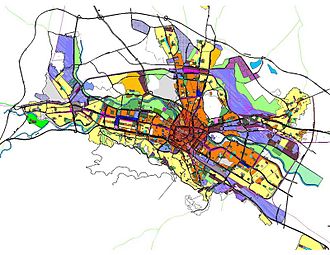
rations of efficiency, sanitation, protection and use of the environment, as well as taking account of effects of the master plans on the social and economic activities. Over time, urban planning has adopted a focus on the social and environmental "bottom lines" that focuses on using planning as a tool to improve the health and well-being of people and maintain sustainability standards. In the mid-20th century, urban planning experts such as Jane Jacobs called on urban planners to take resident experiences and needs more into consideration. Urban planning answers questions about how people will live, work, and play in a given area and thus, guides orderly development in urban, suburban and rural areas. Although predominantly concerned with the planning of settlements and communities, urban planners are also responsible for planning the efficient transportation of goods, resources, people, and waste. The distribution of basic necessities such as water and electricity; a sense of inclusion and opportunity for people of all kinds, culture and needs; economic growth or business development; improving health and conserving areas of natural environmental significance that actively contribute to reduction in CO2 emissions as well as protecting heritage structures and built environments. Since most urban planning teams consist of highly educated individuals that work for city governments, recent debates focus on how to involve more community members in city planning processes. Urban planning is an interdisciplinary field that includes civil engineering, architecture, human geography, social science and design sciences. Practitioners of urban planning use research and analysis, strategic thinking, engineering architecture, urban design, public consultation, policy recommendations, implementation and management. It is closely related to the field of urban design and some urban planners provide designs for streets, parks, buildings and other urban areas. Urban planners work with the cognate fields of civil engineering, landscape architecture, architecture, and public administration to achieve strategic, policy and sustainability goals. Early urban planners were often members of these cognate fields though in the 21st century, urban planning is a separate, independent professional discipline. The discipline of urban planning is the broader category that includes different sub-fields such as land-use planning, zoning, economic development, environmental planning, and transportation planning. Creating the plans requires a thorough understanding of penal codes and zonal codes of planning. Another important aspect of urban planning is that projects range from the large-scale planning of new towns and Greenfield projects to the transformation and renewal of existing cities, neighborhoods, and public spaces. Pierre Charles L'Enfant and Lúcio Costa are known for planning new capital cities, while Daniel Burnham's Plan of Chicago, Georges-Eugene Haussmann's renovation of Paris, and the urban renewal projects of Robert Moses exemplify the large-scale reshaping of existing urban environments.
Interstate 84 in Idaho
Q843258 QID OVERLAP 0.800
QID OVERLAP: Q843258 in transportation_infrastructure (tier:evergreen) and coworking_commercial_space (tier:evergreen). | SHARED TOKENS (15): "away", "boise", "cities", "designated", "downtown", "falls", "highway", "idaho", "interstate", "major", "metropolitan", "near", "northwest", "routes", "twin".
awayboisecitiesdesignateddowntownfallshighwayidahointerstatemajormetropolitannearnorthwestroutestwin
76 miles (444 km) within Idaho, beginning near Ontario, Oregon, and traveling concurrent with several U.S. routes through the Boise metropolitan area and Mountain Home towards Twin Falls. I-84 splits away from US 30 and the Snake River at a junction with I-86 near Declo, where it turns southeast to cross the Sublett Range into northern Utah.
state Highway that traverses the state from the Oregon state line in the northwest to Utah state line in the southeast. It primarily follows the Snake River across a plain that includes the cities of Boise, Mountain Home, and Twin Falls. The highway is one of the busiest in Idaho and is designated as the Vietnam Veterans Memorial Highway. I-84 runs for 276 miles (444 km) within Idaho, beginning near Ontario, Oregon, and traveling concurrent with several U.S. routes through the Boise metropolitan area and Mountain Home towards Twin Falls. I-84 splits away from US 30 and the Snake River at a junction with I-86 near Declo, where it turns southeast to cross the Sublett Range into northern Utah.
nd is designated as the Vietnam Veterans Memorial Highway. I-84 runs for 276 miles (444 km) within Idaho, beginning near Ontario, Oregon, and traveling concurrent with several U.S. routes through the Boise metropolitan area and Mountain Home towards Twin Falls. I-84 splits away from US 30 and the Snake River at a junction with I-86 near Declo, where it turns southeast to cross the Sublett Range into northern Utah.
Ada County, Idaho
Q109820 QID OVERLAP 0.780
QID OVERLAP: Q109820 in transportation_infrastructure (tier:evergreen) and coworking_commercial_space (tier:evergreen). | SHARED TOKENS (14): "ada", "boise", "capital", "district", "estimated", "highway", "idaho", "jurisdiction", "local", "metropolitan", "northwest", "population", "private", "streets".
adaboisecapitaldistrictestimatedhighwayidahojurisdictionlocalmetropolitannorthwestpopulationprivatestreets
Ada County is located in the southwestern part of Idaho, United States. As of the 2020 census, the county had a population of 494,967, which by 2025 was estimated to have risen to 546,141. Ada County is by far the state's most populous county; it is home to 26.8% of the state's population. The county seat and largest city is Boise, which is also the state capital. Ada County is included in the Boise metropolitan area. The Ada County Highway District has jurisdiction over all the local county and city streets, except for private roads and state roads.
populous county; it is home to 26.8% of the state's population. The county seat and largest city is Boise, which is also the state capital. Ada County is included in the Boise metropolitan area. The Ada County Highway District has jurisdiction over all the local county and city streets, except for private roads and state roads.
ea. The Ada County Highway District has jurisdiction over all the local county and city streets, except for private roads and state roads. In the interior Pacific Northwest east of the Cascade Range, Ada County ranks second in population, behind Spokane County, Washington. History Ada County was created by the Idaho Territory legislature on December 22, 1864, partitioned from Boise County. It is named for Ada Riggs, the daughter of H. C. Riggs, a member of the legislature; he established the county and was a co-founder of Boise.
Star, Idaho
Q1516815 QID OVERLAP 0.760
QID OVERLAP: Q1516815 in transportation_infrastructure (tier:branch) and coworking_commercial_space (tier:branch). | SHARED TOKENS (13): "ada", "boise", "canyon", "district", "growing", "idaho", "metropolitan", "population", "rapidly", "schools", "shared", "star", "west".
adaboisecanyondistrictgrowingidahometropolitanpopulationrapidlyschoolssharedstarwest
Star is a city in northwestern Ada County, Idaho, with parts stretching into neighboring Canyon County. The population was 11,117 at the 2020 census, up from 5,793 in 2010. It was named in the 19th century by travelers on their way to Middleton and Boise who used the star on the school house to find east and west. The name stuck and it became Star, Idaho.
on the school house to find east and west. The name stuck and it became Star, Idaho. Today, it is a rapidly growing suburb of Boise and its schools are shared with Middleton School District and West Ada School District. Star is part of the Boise metropolitan area. Geography Star is located at 43°41′39″N 116°29′25″W (43.694084, -116.490225), at an elevation of 2,470 feet (753 m) above sea level.
2000 census As of the census of 2000, there were 1,795 people in 631 households, including 485 families, in the city. The population density was 2,092.5 inhabitants per square mile (807.9/km2). There were 681 housing units at an average density of 793.9 per square mile (306.5/km2). The racial makeup of the city was 92.87% White, 0.28% African American, 0.95% Native American, 0.22% Asian, 0.06% Pacific Islander, 0.89% from other races, and 4.74% from two or more races. Hispanic or Latino of any race were 4.29%. Of the 631 households 48.0% had children under the age of 18 living with them, 60.2% were married couples living together, 11.7% had a female householder with no husband present, and 23.1% were non-families. 16.8% of households were one person and 4.1% were one person aged 65 or older. The average household size was 2.82 and the average family size was 3.19. The age distribution was 33.2% under the age of 18, 9.9% from 18 to 24, 36.4% from 25 to 44, 14.8% from 45 to 64, and 5.7% 65 or older. The median age was 28 years. For every 100 females, there were 97.0 males. For every 100 females age 18 and over, there were 92.8 males. The median household income was $42,337 and the median family income was $46,458. Males had a median income of $31,028 versus $22,625 for females. The per capita income for the city was $15,864. About 5.4% of families and 8.5% of the population were below the poverty line, including 10.7% of those under age 18 and 13.6% of those age 65 or over. Education All of Star in Ada County is in the West Ada School District (Meridian Joint School District 2).
Garden City, Idaho
QID OVERLAP 0.720
QID OVERLAP: Q1516892 in transportation_infrastructure (tier:evergreen) and coworking_commercial_space (tier:evergreen). | SHARED TOKENS (11): "ada", "boise", "garden", "government", "idaho", "metropolitan", "municipal", "nearly", "population", "separate", "street".
adaboisegardengovernmentidahometropolitanmunicipalnearlypopulationseparatestreet
Garden City is a city in Ada County, Idaho. The population was 12,316 at the time of the 2020 census. Garden City is nearly surrounded by Boise but retains a separate municipal government. Garden City was named for gardens raised by Chinese immigrants who lived in the area.
Geography According to the United States Census Bureau, the city has a total area of 4.17 square miles (10.80 km2), of which 4.04 square miles (10.46 km2) is land and 0.13 square miles (0.34 km2) is water. Expo Idaho, which hosts the Western Idaho Fair, is part of unincorporated Ada County but the city limits completely surround the complex. In 2017, Mayor John Evans proposed that Garden City annex the enclave in order to develop a downtown area. Demographics 2020 census As of the 2020 census, Garden City had a population of 12,316. The median age was 47.0 years. 16.9% of residents were under the age of 18 and 26.4% of residents were 65 years of age or older. For every 100 females there were 92.1 males, and for every 100 females age 18 and over there were 90.5 males age 18 and over. 100.0% of residents lived in urban areas, while 0.0% lived in rural areas. There were 5,585 households in Garden City, of which 21.4% had children under the age of 18 living in them. Of all households, 40.2% were married-couple households, 21.5% were households with a male householder and no spouse or partner present, and 30.1% were households with a female householder and no spouse or partner present. About 33.1% of all households were made up of individuals and 16.8% had someone living alone who was 65 years of age or older. There were 5,927 housing units, of which 5.8% were vacant.
2000 census At the 2000 census there were 10,624 people, 4,331 households, and 2,784 families living in the city. The population density was 2,559.9 per square mile. There were 4,590 housing units at an average density of 1,106.0 per square mile. The racial makeup of the city was 89.3% White, 0.5% African American, 0.9% Native American, 1.4% Asian, 0.1% Pacific Islander, 4.9% from other races, and 2.9% from two or more races. Hispanic or Latino of any race were 9.6%. Of the 4,331 households 29.8% had children under the age of 18 living with them, 47.7% were married couples living together, 10.9% had a female householder with no husband present, and 35.7% were non-families. 27% of households were one person and 8.3% were one person aged 65 or older. The average household size was 2.43 and the average family size was 2.91. The age distribution was 24.3% under the age of 18, 10.8% from 18 to 24, 29.9% from 25 to 44, 22.6% from 45 to 64, and 12.5% 65 or older. The median age was 35 years. For every 100 females, there were 103.1 males. For every 100 females age 18 and over, there were 101.3 males. The median household income was $38,520 and the median family income was $46,463. Males had a median income of $30,499 versus $28,315 for females. The per capita income for the city was $24,242. About 9.8% of families and 12.7% of the population were below the poverty line, including 16.6% of those under age 18 and 4.0% of those age 65 or over. Education Most of Garden City is in Boise School District.
Caldwell, Idaho
Q849592 QID OVERLAP 0.700
QID OVERLAP: Q849592 in transportation_infrastructure (tier:branch) and coworking_commercial_space (tier:branch). | SHARED TOKENS (10): "approximately", "boise", "caldwell", "canyon", "college", "idaho", "locally", "metropolitan", "population", "west".
approximatelyboisecaldwellcanyoncollegeidaholocallymetropolitanpopulationwest
city in Idaho. As of the 2020 census, Caldwell had a population of 59,996. Caldwell is considered part of the Boise metropolitan area, and is the location of the College of Idaho. The city is located approximately 24 miles (39 km) west of Boise, and approximately 17 miles (27 km) east of the Oregon border. History The present-day location of Caldwell is along a natural passageway to the Inland and Pacific Northwest. Native American tribes from the west coast, north Idaho and as far away as Colorado came to the banks of the Boise River for annual trading fairs, or rendezvous. European and some Hawaiian explorers and traders soon followed the paths left by Native Americans and hopeful emigrants later forged the Oregon Trail and followed those paths to seek a better life in the Oregon Territory. Pioneers of the Trail traveled along the Boise River to Canyon Hill and forded the river close to the Silver Bridge on Plymouth Street. During the Civil War, the discovery of gold in Idaho's mountains brought a variety of new settlers into the area. Many never made it to the mines but settled along the Boise River and run ferries, stage stations, and freighting businesses. These early entrepreneurs created small ranches and farms in the river valleys. Caldwell's inception occurred largely as a result of the construction of the Oregon Short Line Railroad, which connected Wyoming to Oregon through Idaho. Robert E. Strahorn came to the Boise River Valley in 1883 to select a route for the railroad. He rejected the grade into Boise City as too steep and chose a site 30 miles to the west. He drove a stake into an alkali flat of sagebrush and greasewood and the City of Caldwell was platted. Caldwell was named after one of Strahorn's business partners, Alexander Caldwell, a former senator from Kansas. When Caldwell was platted in August 1883, its founder, the Idaho and Oregon Land Improvement Company, started persuading settlers and businessmen to move to the area. Within four months, Caldwell had 600 residents living in 150 dwellings, 40 businesses, a school, a telephone exchange, and two newspapers. On January 15, 1890, the Board of Commissioners of Ada County issued a handwritten order incorporating the City of Caldwell. The College of Idaho was founded in Caldwell in 1891. In 1892, Canyon County was established from a portion of Ada County, and Caldwell was named the county seat. Irrigation canals and waterways were constructed throughout Canyon County, providing the foundation for an agricultural economy. The Oregon Short Line Railroad became part of the larger Union Pacific Railroad network and in 1906 the Caldwell freight and passenger depot was constructed. Caldwell experienced moderate growth as an agricultural processing, commercial retail and educational center during the 20th century. In 2009, the City of Caldwell completed a revitalization project to restore Indian Creek, which runs through downtown Caldwell, but had been used for sewage disposal by local industries and been covered over.
History The present-day location of Caldwell is along a natural passageway to the Inland and Pacific Northwest. Native American tribes from the west coast, north Idaho and as far away as Colorado came to the banks of the Boise River for annual trading fairs, or rendezvous. European and some Hawaiian explorers and traders soon followed the paths left by Native Americans and hopeful emigrants later forged the Oregon Trail and followed those paths to seek a better life in the Oregon Territory. Pioneers of the Trail traveled along the Boise River to Canyon Hill and forded the river close to the Silver Bridge on Plymouth Street. During the Civil War, the discovery of gold in Idaho's mountains brought a variety of new settlers into the area. Many never made it to the mines but settled along the Boise River and run ferries, stage stations, and freighting businesses. These early entrepreneurs created small ranches and farms in the river valleys. Caldwell's inception occurred largely as a result of the construction of the Oregon Short Line Railroad, which connected Wyoming to Oregon through Idaho. Robert E. Strahorn came to the Boise River Valley in 1883 to select a route for the railroad. He rejected the grade into Boise City as too steep and chose a site 30 miles to the west. He drove a stake into an alkali flat of sagebrush and greasewood and the City of Caldwell was platted. Caldwell was named after one of Strahorn's business partners, Alexander Caldwell, a former senator from Kansas. When Caldwell was platted in August 1883, its founder, the Idaho and Oregon Land Improvement Company, started persuading settlers and businessmen to move to the area. Within four months, Caldwell had 600 residents living in 150 dwellings, 40 businesses, a school, a telephone exchange, and two newspapers. On January 15, 1890, the Board of Commissioners of Ada County issued a handwritten order incorporating the City of Caldwell. The College of Idaho was founded in Caldwell in 1891. In 1892, Canyon County was established from a portion of Ada County, and Caldwell was named the county seat. Irrigation canals and waterways were constructed throughout Canyon County, providing the foundation for an agricultural economy. The Oregon Short Line Railroad became part of the larger Union Pacific Railroad network and in 1906 the Caldwell freight and passenger depot was constructed. Caldwell experienced moderate growth as an agricultural processing, commercial retail and educational center during the 20th century. In 2009, the City of Caldwell completed a revitalization project to restore Indian Creek, which runs through downtown Caldwell, but had been used for sewage disposal by local industries and been covered over.
location of the College of Idaho. The city is located approximately 24 miles (39 km) west of Boise, and approximately 17 miles (27 km) east of the Oregon border. History The present-day location of Caldwell is along a natural passageway to the Inland and Pacific Northwest. Native American tribes from the west coast, north Idaho and as far away as Colorado came to the banks of the Boise River for annual trading fairs, or rendezvous. European and some Hawaiian explorers and traders soon followed the paths left by Native Americans and hopeful emigrants later forged the Oregon Trail and followed those paths to seek a better life in the Oregon Territory. Pioneers of the Trail traveled along the Boise River to Canyon Hill and forded the river close to the Silver Bridge on Plymouth Street. During the Civil War, the discovery of gold in Idaho's mountains brought a variety of new settlers into the area. Many never made it to the mines but settled along the Boise River and run ferries, stage stations, and freighting businesses. These early entrepreneurs created small ranches and farms in the river valleys. Caldwell's inception occurred largely as a result of the construction of the Oregon Short Line Railroad, which connected Wyoming to Oregon through Idaho. Robert E. Strahorn came to the Boise River Valley in 1883 to select a route for the railroad. He rejected the grade into Boise City as too steep and chose a site 30 miles to the west. He drove a stake into an alkali flat of sagebrush and greasewood and the City of Caldwell was platted. Caldwell was named after one of Strahorn's business partners, Alexander Caldwell, a former senator from Kansas. When Caldwell was platted in August 1883, its founder, the Idaho and Oregon Land Improvement Company, started persuading settlers and businessmen to move to the area. Within four months, Caldwell had 600 residents living in 150 dwellings, 40 businesses, a school, a telephone exchange, and two newspapers. On January 15, 1890, the Board of Commissioners of Ada County issued a handwritten order incorporating the City of Caldwell. The College of Idaho was founded in Caldwell in 1891. In 1892, Canyon County was established from a portion of Ada County, and Caldwell was named the county seat. Irrigation canals and waterways were constructed throughout Canyon County, providing the foundation for an agricultural economy. The Oregon Short Line Railroad became part of the larger Union Pacific Railroad network and in 1906 the Caldwell freight and passenger depot was constructed. Caldwell experienced moderate growth as an agricultural processing, commercial retail and educational center during the 20th century. In 2009, the City of Caldwell completed a revitalization project to restore Indian Creek, which runs through downtown Caldwell, but had been used for sewage disposal by local industries and been covered over.
Kuna, Idaho
Q1515177 QID OVERLAP 0.680
QID OVERLAP: Q1515177 in transportation_infrastructure (tier:branch) and coworking_commercial_space (tier:branch). | SHARED TOKENS (9): "ada", "additional", "boise", "idaho", "kuna", "metropolitan", "nearly", "percent", "population".
adaadditionalboiseidahokunametropolitannearlypercentpopulation
Kuna ( KYOO-nə) is a city in Ada County, Idaho. It is part of the Boise metropolitan area. The population was 24,011 at the time of the 2020 census. Kuna is one of the fastest-growing areas in Idaho, having nearly tripled in population between 2000 and 2010 and a nearly additional 60 percent gain between 2010 and 2020.
History Kuna originated as a railroad stop with coach transport to Boise. It is popularly believed, as cited by the Kuna Chamber of Commerce, that the translation of the name "Kuna" means "the end of the trail", but Charles S. Walgamott cites the origin of the name as a Shoshone Indian word meaning "green leaf, good to smoke." The Western Heritage Historic Byway, designated as a national as well as a state scenic byway, travels around a number of historic sites in the area. Geography Kuna's business center is approximately 18 miles (29 km) southwest of downtown Boise, the state capital. According to the United States Census Bureau, the city has a total area of 18.18 square miles (47.09 km2), of which 18.08 square miles (46.83 km2) is land and 0.10 square miles (0.26 km2) is water. South of Kuna is the Kuna Caves, a lava tube. A small seasonal creek, Indian Creek, runs through the city. It is now used as an irrigation canal, filled by the New York Canal from the Boise River Diversion Dam.
Geography Kuna's business center is approximately 18 miles (29 km) southwest of downtown Boise, the state capital. According to the United States Census Bureau, the city has a total area of 18.18 square miles (47.09 km2), of which 18.08 square miles (46.83 km2) is land and 0.10 square miles (0.26 km2) is water. South of Kuna is the Kuna Caves, a lava tube. A small seasonal creek, Indian Creek, runs through the city. It is now used as an irrigation canal, filled by the New York Canal from the Boise River Diversion Dam. One of the few small floatable waterways in the region, Indian Creek is a favorite swimming spot for local residents. Demographics 2020 census As of the 2020 census, Kuna had a population of 24,011. The median age was 30.9 years. 31.8% of residents were under the age of 18 and 8.1% of residents were 65 years of age or older. For every 100 females there were 97.8 males, and for every 100 females age 18 and over there were 96.2 males age 18 and over. 97.1% of residents lived in urban areas, while 2.9% lived in rural areas. There were 7,736 households in Kuna, of which 48.2% had children under the age of 18 living in them. Of all households, 62.3% were married-couple households, 11.6% were households with a male householder and no spouse or partner present, and 17.4% were households with a female householder and no spouse or partner present. About 13.9% of all households were made up of individuals and 4.6% had someone living alone who was 65 years of age or older. There were 7,948 housing units, of which 2.7% were vacant. The homeowner vacancy rate was 0.8% and the rental vacancy rate was 5.9%. As of the 2020 census, the median income for a household in the city was $68,017. Families had a median income of $75,296 versus $91,364 for married-couple families and $33,512 for nonfamily households.
Canyon County, Idaho
Q486078 QID OVERLAP 0.680
QID OVERLAP: Q486078 in transportation_infrastructure (tier:branch) and coworking_commercial_space (tier:branch). | SHARED TOKENS (9): "boise", "caldwell", "canyon", "estimated", "idaho", "making", "metropolitan", "nampa", "population".
boisecaldwellcanyonestimatedidahomakingmetropolitannampapopulation
105, which by 2025 was estimated to have risen to 275,123, making it the second-most populous county in Idaho. The county seat is Caldwell, and its largest city is Nampa. Canyon County is part of the Boise metropolitan area. History Hudson's Bay Company established Fort Boise in 1834 near what is now Parma, but abandoned it in 1855. Emigrants traveled through Canyon County on the Oregon Trail. Discovery of gold in the Boise Basin in 1862 brought settlement to the region again. The lower Boise River was fully contained within Boise County from 1863 until the formation of Ada County in 1864. Settlement of the lower Boise River west of Boise City was limited prior to the completion of the Oregon Short Line Railroad. Middleton was the first European settlement of Canyon County, starting in 1863. The 1870 Census for Ada County listed 76 residents of the Boise Valley, excluding Boise City and the 1880 Census listed 44 residents at Middleton. The arrival of the railroad at Caldwell led to the establishment of a town there as of August 1883. Businessmen James A. McGee and Alexander Duffes filed the plat for nearby Nampa in 1886. Parma was settled around the same time, with the Old Fort Boise post office being moved to the town's location; it was incorporated in 1904. Ada County established precincts for each of the settlements with a combined 1890 Census population of 2,311. Significant settlement of Greenleaf and Notus started around 1904 with the two settlements listed as precincts at the 1910 census. Notus was incorporated in 1921 while Greenleaf was incorporated prior to 1980. Melba was incorporated in 1912 while Wilder was incorporated in 1919. The City of Star annexed a portion of territory in northeast Canyon County prior to 2007, becoming the county's ninth incorporated city. The majority of Star is located within Ada County. The Idaho Legislature created Canyon County from Ada County in an act approved March 7, 1891, effective at the November 26, 1892, election. Caldwell was established as the county seat. The county originally contained all of Canyon and Payette counties and part of Gem; Gem County formed in 1915 and Payette County in 1917.
History Hudson's Bay Company established Fort Boise in 1834 near what is now Parma, but abandoned it in 1855. Emigrants traveled through Canyon County on the Oregon Trail. Discovery of gold in the Boise Basin in 1862 brought settlement to the region again. The lower Boise River was fully contained within Boise County from 1863 until the formation of Ada County in 1864. Settlement of the lower Boise River west of Boise City was limited prior to the completion of the Oregon Short Line Railroad. Middleton was the first European settlement of Canyon County, starting in 1863. The 1870 Census for Ada County listed 76 residents of the Boise Valley, excluding Boise City and the 1880 Census listed 44 residents at Middleton. The arrival of the railroad at Caldwell led to the establishment of a town there as of August 1883. Businessmen James A. McGee and Alexander Duffes filed the plat for nearby Nampa in 1886. Parma was settled around the same time, with the Old Fort Boise post office being moved to the town's location; it was incorporated in 1904. Ada County established precincts for each of the settlements with a combined 1890 Census population of 2,311. Significant settlement of Greenleaf and Notus started around 1904 with the two settlements listed as precincts at the 1910 census. Notus was incorporated in 1921 while Greenleaf was incorporated prior to 1980. Melba was incorporated in 1912 while Wilder was incorporated in 1919. The City of Star annexed a portion of territory in northeast Canyon County prior to 2007, becoming the county's ninth incorporated city. The majority of Star is located within Ada County. The Idaho Legislature created Canyon County from Ada County in an act approved March 7, 1891, effective at the November 26, 1892, election. Caldwell was established as the county seat. The county originally contained all of Canyon and Payette counties and part of Gem; Gem County formed in 1915 and Payette County in 1917.
2000 census As of the 2000 census, there were 131,441 people, 45,018 households and 33,943 families living in the county. The population density was 223 people per square mile (86 people/km2). There were 47,965 housing units at an average density of 81 units per square mile (31 units/km2). The racial makeup of the county was 83.10% White, 0.32% Black or African American, 0.85% Native American, 0.80% Asian, 0.13% Pacific Islander, 12.17% from other races, and 2.62% from two or more races. Hispanic or Latino of any race were 18.61% of the population. 15.9% were of German, 12.7% English, 10.3% American and 7.6% Irish ancestry. There were 45,018 households, of which 39.80% had children under the age of 18 living with them, 60.70% were married couples living together, 10.10% had a female householder with no husband present, and 24.60% were non-families. 19.80% of all households were made up of individuals, and 8.40% had someone living alone who was 65 years of age or older. The average household size was 2.85 and the average family size was 3.28. 30.90% of the population were under the age of 18, 10.70% from 18 to 24, 28.30% from 25 to 44, 19.10% from 45 to 64, and 11.00% who were 65 years of age or older. The median age was 30 years. For every 100 females, there were 98.70 males. For every 100 females age 18 and over, there were 96.30 males. The median household income was $35,884 and the median family income was $40,377. Males had a median income of $29,418 compared with $22,044 for females. The per capita income for the county was $15,155. About 8.70% of families and 12.00% of the population were below the poverty line, including 14.50% of those under age 18 and 10.70% of those age 65 or over. Communities Cities Unincorporated communities Bowmont Huston Roswell Sunnyslope Walters Ferry, Idaho Politics Like the majority of Idaho, Canyon County is reliably Republican by comfortable margins. The last time a Democratic candidate carried the county was in 1936 by Franklin D. Roosevelt.
Meridian, Idaho
Q1085274 QID OVERLAP 0.680
QID OVERLAP: Q1085274 in transportation_infrastructure (tier:branch) and coworking_commercial_space (tier:branch). | SHARED TOKENS (9): "ada", "among", "boise", "capital", "cities", "idaho", "making", "meridian", "population".
adaamongboisecapitalcitiesidahomakingmeridianpopulation
Meridian is a city located in Ada County, Idaho, United States. The population was 117,635 at the 2020 census, making it the second most populous city in the county and Idaho, after Boise, the state capital.
Rail transportation (1908–28) Following the raising of $4,000 to lay the Interurban rail line from Onweiler (Meridian and Ustick Roads), the tracks were completed into the village center. Turning east on Broadway and ending at East Second, the last car would spend the night in Meridian before returning to Boise early the next morning with passengers and freight. The interurban Station and Generator building (west one-third of the old library at Meridian and Idaho Streets) was built in 1912, and the line continued on to Nampa via Meridian. The tracks down Broadway were not used after 1912. The Interurban Company entered into receivership and closed in 1928 after 20 years of providing continuous transportation to neighboring towns. It was Meridian's main connection to the area outside the local community. The Union Pacific Railroad spur opened in 1900 and is currently operated by the Boise Valley Railroad. Many industrial customers continue to ship forest, agricultural, and chemical products along this corridor. Creamery (1929–70) The city's official website describes the history of the Ada County Dairymen's cooperative creamery as follows:The lowest days of the Great Depression brightened for area dairymen when the Ada County Dairymen's cooperative creamery began operation in 1929. It provided milk checks to those who were members of the cooperative, enabling them to pay their taxes and provide food for their families. Other community members hauled milk to the creamery and were employed by the creamery, whose product was Challenge Butter. The creamery ran seven days a week for 40 years. Additions and improvements were made while the plant was in full operation. Later years saw the Wyeth Laboratories affiliate with the creamery to manufacture SMA baby formula.
Creamery (1929–70) The city's official website describes the history of the Ada County Dairymen's cooperative creamery as follows:The lowest days of the Great Depression brightened for area dairymen when the Ada County Dairymen's cooperative creamery began operation in 1929. It provided milk checks to those who were members of the cooperative, enabling them to pay their taxes and provide food for their families. Other community members hauled milk to the creamery and were employed by the creamery, whose product was Challenge Butter. The creamery ran seven days a week for 40 years. Additions and improvements were made while the plant was in full operation. Later years saw the Wyeth Laboratories affiliate with the creamery to manufacture SMA baby formula.
Eagle, Idaho
Q1516870 QID OVERLAP 0.640
QID OVERLAP: Q1516870 in transportation_infrastructure (tier:branch) and coworking_commercial_space (tier:branch). | SHARED TOKENS (7): "ada", "boise", "downtown", "eagle", "idaho", "northwest", "population".
adaboisedowntowneagleidahonorthwestpopulation
Eagle is a city in Ada County, Idaho, ten miles (16 km) northwest of downtown Boise. The population was 30,346 at the 2020 census. History 19th century Eagle Island in Idaho was settled in 1863 by Truman Coe Catlin, who later shifted from crop farming to dairy farming, starting the island's dairy tradition. He also pioneered irrigation in the area by constructing a wide irrigation ditch. The most notable early community developer was Thomas Hugh Aiken, a Canadian surveyor, who helped establish the Eagle community in the 1870s.
Parks and recreation The city features numerous parks, including Arboretum Park, Friendship Park, Heritage Park, Orval Krasen Park, Reid W. Merrill Sr. Community Park, and Stephen C. Guerber Park, among others. The Parks and Recreation department offers youth sports leagues, camps, special events (such as Eagle Fun Days), and maintains extensive trails. Nearby Eagle Island State Park provides a swimming beach, trails, disc golf, and winter sports. Education Most of Eagle is in the West Ada School District, with a small portion in the Boise School District.
20th century The Eagle Fish Hatchery, established in the late 1940s in Idaho, was originally part of a trout program until the 1980s. In 1991, it was restructured to support the conservation of Snake River sockeye salmon, an endangered species listed that year. The hatchery's mission shifted to preserving the species and its genetic diversity through the development of eight broodstocks derived from smolts, anadromous adults, and residual populations.
◈ Cross-Vertical Edge Ledger
All Additional Edges — Deterministic Matching
227 EDGES
◈ ADDITIONAL CROSS EDGES · NON-OVERLAP227 edges
🌲 EVERGREEN3 edges
0.650
acquisitionboardbroadcommissionconstructioneconomicfederalgovernmentindependentindustryinterstatejurisdictionmatterspipelinespreviouslyrailroadrateregulationregulatoryrelevant
SHARED TOKENS (23): "acquisition", "board", "broad", "commission", "construction", "economic", "federal", "government", "independent", "industry", "interstate", "jurisdiction", "matters", "pipelines", "previously", "railroad", "rate", "regulation", "regulatory", "relevant".... | URL->A (1): http://www.stb.gov/. | EXACT TITLE in transportation_infrastructure: "Surface Transportation Board".
0.650
acquisitionadministrationcommercialcostsefficiencyfederalgeneralimproveimprovementlandlightingpercentplanningprogramprojectspublicrevenuesafetysignagesize
SHARED TOKENS (21): "acquisition", "administration", "commercial", "costs", "efficiency", "federal", "general", "improve", "improvement", "land", "lighting", "percent", "planning", "program", "projects", "public", "revenue", "safety", "signage", "size".... | URL->A (1): https://www.faa.gov/airports/aip/. | EXACT TITLE in transportation_infrastructure: "Airport Improvement Program".
0.650
Vanpool ↗ Q17088425 EXACT TITLE
achdadaadditionalagenciesairamonganotherauthoritiesauthoritybaseboisecanyoncapacitycapitalcentercitiescommutingconventionalcostcosts
SHARED TOKENS (87): "achd", "ada", "additional", "agencies", "air", "among", "another", "authorities", "authority", "base", "boise", "canyon", "capacity", "capital", "center", "cities", "commuting", "conventional", "cost", "costs".... | URL->A (1): http://www.commuteride.com/. | EXACT TITLE in transportation_infrastructure: "Vanpool".
🌿 BRANCH176 edges
0.570
begancreatingdepartmentenforcementidaholawlegislaturemunicipalorganizationpublicstatewide
SHARED TOKENS (11): "began", "creating", "department", "enforcement", "idaho", "law", "legislature", "municipal", "organization", "public", "statewide". | URL->A (1): http://www.isp.idaho.gov/. | EXACT TITLE in transportation_infrastructure: "Idaho State Police".
0.500
commercialestatefeeindividualindustriallabormanagersoccupationalofficeoperatingownedpropertyrealregisteredreportedresidentialretailtitle
SHARED TOKENS (18): "commercial", "estate", "fee", "individual", "industrial", "labor", "managers", "occupational", "office", "operating", "owned", "property", "real", "registered", "reported", "residential", "retail", "title". | EXACT TITLE in coworking_commercial_space: "Property manager".
0.500
accessactappliedbehaviorcomcompletecreatedifferententitiesformgroupincreaselabormethodsorganizationspeoplephysicalrelationshipresourcesshared
SHARED TOKENS (26): "access", "act", "applied", "behavior", "com", "complete", "create", "different", "entities", "form", "group", "increase", "labor", "methods", "organizations", "people", "physical", "relationship", "resources", "shared".... | EXACT TITLE in coworking_commercial_space: "Collaboration".
0.500
Road ↗ Q34442 EXACT TITLE
accessanotherdesigndistinctionfeatureslandlaneslocalplaceprimaryprivatepublicroadsidewalksstreetstreetstrafficurbanwhose
SHARED TOKENS (19): "access", "another", "design", "distinction", "features", "land", "lanes", "local", "place", "primary", "private", "public", "road", "sidewalks", "street", "streets", "traffic", "urban", "whose". | EXACT TITLE in transportation_infrastructure: "Road". | EXACT TITLE in coworking_commercial_space: "Road".
0.500
buildingconstructiondesigndesignersdevelopmentenvironmentfundamentalmanagementmanagespeopleplanningplansprojectprojectsresearchsitespacespaces
SHARED TOKENS (18): "building", "construction", "design", "designers", "development", "environment", "fundamental", "management", "manages", "people", "planning", "plans", "project", "projects", "research", "site", "space", "spaces". | EXACT TITLE in coworking_commercial_space: "Interior design".
0.500
academicadministrationbegancaldwellcollegeeducationenrollmentfoundedidahomajormedicalpreviouslyprivateprofessionalprogramsstudents
SHARED TOKENS (16): "academic", "administration", "began", "caldwell", "college", "education", "enrollment", "founded", "idaho", "major", "medical", "previously", "private", "professional", "programs", "students". | EXACT TITLE in coworking_commercial_space: "College of Idaho".
0.500
Culvert ↗ Q4168092 EXACT TITLE
allowingdesignedembeddedhighwayitselfmaterialnaturalneednoiseplacingrequirementsroadroadwayselectionstructuretrafficvehicle
SHARED TOKENS (17): "allowing", "designed", "embedded", "highway", "itself", "material", "natural", "need", "noise", "placing", "requirements", "road", "roadway", "selection", "structure", "traffic", "vehicle". | EXACT TITLE in transportation_infrastructure: "Culvert".
0.500
Idaho ↗ Q1221 EXACT TITLE
agriculturalapproximatelyassociatedboisecapitalcontainsdistinctdividedeasterneconomyidahoincorporateslandmethodsmillionnationalnorthwestofficialpeoplepopulation
SHARED TOKENS (35): "agricultural", "approximately", "associated", "boise", "capital", "contains", "distinct", "divided", "eastern", "economy", "idaho", "incorporates", "land", "methods", "million", "national", "northwest", "official", "people", "population".... | EXACT TITLE in transportation_infrastructure: "Idaho". | EXACT TITLE in coworking_commercial_space: "Idaho".
0.500
accessactapplicationsconsumerscontrolcontrolsdesigndigitalgeneralinformationmodelneedorganizationorganizationsphysicalplaceplatformspoliciespolicyrequire
SHARED TOKENS (26): "access", "act", "applications", "consumers", "control", "controls", "design", "digital", "general", "information", "model", "need", "organization", "organizations", "physical", "place", "platforms", "policies", "policy", "require".... | EXACT TITLE in coworking_commercial_space: "Access control".
0.500
Lease ↗ Q716894 EXACT TITLE
agreementarrangementassetsbuildingsbusinessconditionconditionsdifferentequipmentindustriallandleaseleasinglegalletlicenseprogrampropertyproviderprovisions
SHARED TOKENS (22): "agreement", "arrangement", "assets", "buildings", "business", "condition", "conditions", "different", "equipment", "industrial", "land", "lease", "leasing", "legal", "let", "license", "program", "property", "provider", "provisions".... | EXACT TITLE in transportation_infrastructure: "Lease". | EXACT TITLE in coworking_commercial_space: "Lease".
0.500
associationcorridorsenvironmentalespeciallyindustriallandlanesmultipleparkparkspeoplerightsurbanusersutility
SHARED TOKENS (15): "association", "corridors", "environmental", "especially", "industrial", "land", "lanes", "multiple", "park", "parks", "people", "rights", "urban", "users", "utility". | EXACT TITLE in transportation_infrastructure: "Greenway (landscape)".
0.500
aircanyoncivilconstructionemergencygeneralidahoindustrialmunicipalnampanationalplanprivatepublicsystemstraining
SHARED TOKENS (16): "air", "canyon", "civil", "construction", "emergency", "general", "idaho", "industrial", "municipal", "nampa", "national", "plan", "private", "public", "systems", "training". | EXACT TITLE in transportation_infrastructure: "Nampa Municipal Airport".
0.500
bodybrandbuildingbusinesscorporatedesigndevelopmentdifferentemergencyenvironmenteventeventsformalidentifyingindustryknowledgemanagementmarketmarketingorganizations
SHARED TOKENS (38): "body", "brand", "building", "business", "corporate", "design", "development", "different", "emergency", "environment", "event", "events", "formal", "identifying", "industry", "knowledge", "management", "market", "marketing", "organizations".... | EXACT TITLE in transportation_infrastructure: "Event management".
0.500
Workplace ↗ Q628858 EXACT TITLE
buildingcentralcustomersdevelopmentemployeremploymententitieslargeofficeorganizationphysicalplacespacesworkworkplace
SHARED TOKENS (15): "building", "central", "customers", "development", "employer", "employment", "entities", "large", "office", "organization", "physical", "place", "spaces", "work", "workplace". | EXACT TITLE in transportation_infrastructure: "Workplace". | EXACT TITLE in coworking_commercial_space: "Workplace".
0.500
alongsideanalysisappliesbuildingbusinesscapitalcommercialcompletionconstraintsconstructioncontrolcoordinatecostdesignestatefirmsinfrastructureknowledgemanagementmanagers
SHARED TOKENS (29): "alongside", "analysis", "applies", "building", "business", "capital", "commercial", "completion", "constraints", "construction", "control", "coordinate", "cost", "design", "estate", "firms", "infrastructure", "knowledge", "management", "managers".... | EXACT TITLE in coworking_commercial_space: "Construction management".
0.500
airbuildingcentercenterscommercialconsumerscoordinatededicateddemanddirectlyequipmentfacilityfirmsfunctionhandlinginventorylaborlargemarketneeded
SHARED TOKENS (37): "air", "building", "center", "centers", "commercial", "consumers", "coordinate", "dedicated", "demand", "directly", "equipment", "facility", "firms", "function", "handling", "inventory", "labor", "large", "market", "needed".... | EXACT TITLE in transportation_infrastructure: "Distribution center".
0.500
adaboisecanyoncitiescombinedcountiesdesignatedidaholargermeridianmetropolitannampanearlynorthwestpercentpopulationsectionthirdtreasurevalley
SHARED TOKENS (20): "ada", "boise", "canyon", "cities", "combined", "counties", "designated", "idaho", "larger", "meridian", "metropolitan", "nampa", "nearly", "northwest", "percent", "population", "section", "third", "treasure", "valley". | EXACT TITLE in coworking_commercial_space: "Boise metropolitan area".
0.500
Podcast ↗ Q20899 EXACT TITLE
additionaladvertisingassociatedbusinesscommercialcommunityconcernsconsumercostcurrentdedicateddigitaleventfeaturesfilesfreeitselflinksmaintenancemedia
SHARED TOKENS (40): "additional", "advertising", "associated", "business", "commercial", "community", "concerns", "consumer", "cost", "current", "dedicated", "digital", "event", "features", "files", "free", "itself", "links", "maintenance", "media".... | EXACT TITLE in coworking_commercial_space: "Podcast".
0.500
LinkedIn ↗ Q213660 EXACT TITLE
accessacquisitionamongapproximatelybecomebeyondbusinesscapitalconnectionscreatedesigndevelopmentemployerseventsfirmshandlinginformationletlistmillion
SHARED TOKENS (35): "access", "acquisition", "among", "approximately", "become", "beyond", "business", "capital", "connections", "create", "design", "development", "employers", "events", "firms", "handling", "information", "let", "list", "million".... | EXACT TITLE in coworking_commercial_space: "LinkedIn".
0.500
accessactauthoritiescomprehensivecontinuingexistingfederalformationfuturegovernmenthighwaylawlocalmetropolitanorganizationparticipationplanningplanspopulationprograms
SHARED TOKENS (25): "access", "act", "authorities", "comprehensive", "continuing", "existing", "federal", "formation", "future", "government", "highway", "law", "local", "metropolitan", "organization", "participation", "planning", "plans", "population", "programs".... | EXACT TITLE in transportation_infrastructure: "Metropolitan planning organization".
0.500
Landlord ↗ Q618532 EXACT TITLE
appliesbuildingbuildingsbusinesseconomyestateformincomeindividuallandlicensednaturalownerspositionpropertyrealresourcesterms
SHARED TOKENS (18): "applies", "building", "buildings", "business", "economy", "estate", "form", "income", "individual", "land", "licensed", "natural", "owners", "position", "property", "real", "resources", "terms". | EXACT TITLE in coworking_commercial_space: "Landlord".
0.500
broadercitiescomprehensivecoveringdevelopmenteconomicenvironmentalgrowthindividualindustrialinfrastructurelandland-uselargerlawslevelmanagementnationalnetworkplacement
SHARED TOKENS (37): "broader", "cities", "comprehensive", "covering", "development", "economic", "environmental", "growth", "individual", "industrial", "infrastructure", "land", "land-use", "larger", "laws", "level", "management", "national", "network", "placement".... | EXACT TITLE in transportation_infrastructure: "Regional planning".
0.500
accessagenciesbroadbandcommunitycomponentsconditionsdevelopmentdifferentdistincteconomiceconomyelectricalemergencyenforcementenvironmentenvironmentalespeciallyfacilitiesfirmsfunction
SHARED TOKENS (47): "access", "agencies", "broadband", "community", "components", "conditions", "development", "different", "distinct", "economic", "economy", "electrical", "emergency", "enforcement", "environment", "environmental", "especially", "facilities", "firms", "function".... | EXACT TITLE in transportation_infrastructure: "Infrastructure". | EXACT TITLE in coworking_commercial_space: "Infrastructure".
0.500
accessibleawaybuildingbuildingsbusinesscentercentralcitiescommercialcontainsdescribeddevelopmentdistinctdistinctiondistrictdowntownespeciallygeographicallyhistoryincreasing
SHARED TOKENS (34): "accessible", "away", "building", "buildings", "business", "center", "central", "cities", "commercial", "contains", "described", "development", "distinct", "distinction", "district", "downtown", "especially", "geographically", "history", "increasing".... | EXACT TITLE in coworking_commercial_space: "Central business district".
0.500
agriculturalalongsideconcentratedconcernsconsumptiondemographicdevelopeddevelopmentdirectenvironmentenvironmentalfreegroupgrowinggrowthhighimpactimproveincreaseindividual
SHARED TOKENS (37): "agricultural", "alongside", "concentrated", "concerns", "consumption", "demographic", "developed", "development", "direct", "environment", "environmental", "free", "group", "growing", "growth", "high", "impact", "improve", "increase", "individual".... | EXACT TITLE in transportation_infrastructure: "Population growth". | EXACT TITLE in coworking_commercial_space: "Population growth".
0.500
Innovation ↗ Q174165 EXACT TITLE
businessdefinesdefinitionsdevelopmentdifferentengineeringentitygovernmentsimpactimplementationimprovementimprovementsitselfmarketmarketsmodelsplaceproblemproductsrequire
SHARED TOKENS (22): "business", "defines", "definitions", "development", "different", "engineering", "entity", "governments", "impact", "implementation", "improvement", "improvements", "itself", "market", "markets", "models", "place", "problem", "products", "require".... | EXACT TITLE in coworking_commercial_space: "Innovation".
0.500
Entrepreneurship ↗ EXACT TITLE
businessbusinessescapacitycentralcreatecreatesdefinitionseconomiceconomicsentityestablishestablishedfirmsformalidentificationindividualoperatingopportunitiesproceduresproducts
SHARED TOKENS (25): "business", "businesses", "capacity", "central", "create", "creates", "definitions", "economic", "economics", "entity", "establish", "established", "firms", "formal", "identification", "individual", "operating", "opportunities", "procedures", "products".... | EXACT TITLE in coworking_commercial_space: "Entrepreneurship".
0.500
Architecture ↗ Q12271 EXACT TITLE
accordingarchitecturebeganbuildingbuildingsciviccivilconstructiondesigndevelopedeconomicengineeringengineersespeciallyformfunctionhistoricalidentifieditselflocal
SHARED TOKENS (31): "according", "architecture", "began", "building", "buildings", "civic", "civil", "construction", "design", "developed", "economic", "engineering", "engineers", "especially", "form", "function", "historical", "identified", "itself", "local".... | EXACT TITLE in transportation_infrastructure: "Architecture". | EXACT TITLE in coworking_commercial_space: "Architecture".
0.500
accordingcommunitydescribesdevelopmenteconomiceconomicsespeciallygrowthimproveincreasesindividualinfrastructurelocalmarketpeoplepoliciespolicyqualityregionterms
SHARED TOKENS (21): "according", "community", "describes", "development", "economic", "economics", "especially", "growth", "improve", "increases", "individual", "infrastructure", "local", "market", "people", "policies", "policy", "quality", "region", "terms".... | EXACT TITLE in transportation_infrastructure: "Economic development". | EXACT TITLE in coworking_commercial_space: "Economic development".
0.500
actadministrationchaptercodeconditionsemployersenvironmentexposurefederalfreegoverninggovernmenthazardshealthlaborlawnationalnoiseoccupationalprivate
SHARED TOKENS (24): "act", "administration", "chapter", "code", "conditions", "employers", "environment", "exposure", "federal", "free", "governing", "government", "hazards", "health", "labor", "law", "national", "noise", "occupational", "private".... | EXACT TITLE in coworking_commercial_space: "Occupational Safety and Health Act (United States)".
0.500
chainchainscomplexconsumerconsumersconvertcreatingcustomersdirectdirectlyefficiencyfacilitiesindependentmanagementmaterialsnetworkproductproductsstructuresystem
SHARED TOKENS (23): "chain", "chains", "complex", "consumer", "consumers", "convert", "creating", "customers", "direct", "directly", "efficiency", "facilities", "independent", "management", "materials", "network", "product", "products", "structure", "system".... | EXACT TITLE in transportation_infrastructure: "Supply chain".
0.500
administrationairassetsauthoritycertificationcivilcommercialcontroldepartmentfederalgovernmentinternationalorganizationpersonnelregulatesspacestandardstraffictransportation
SHARED TOKENS (19): "administration", "air", "assets", "authority", "certification", "civil", "commercial", "control", "department", "federal", "government", "international", "organization", "personnel", "regulates", "space", "standards", "traffic", "transportation". | EXACT TITLE in transportation_infrastructure: "Federal Aviation Administration".
0.500
accessactadministrationannouncedapproximatelybanksbusinessbusinessescapitalcenterscommunitiesconnectcontractsdevelopmentdirectoryeconomiceconomyfederalfranchisegovernment
SHARED TOKENS (37): "access", "act", "administration", "announced", "approximately", "banks", "business", "businesses", "capital", "centers", "communities", "connect", "contracts", "development", "directory", "economic", "economy", "federal", "franchise", "government".... | EXACT TITLE in coworking_commercial_space: "Small Business Administration".
0.500
acquiredadditionalairbrandformformationhistoryindependentinternationalmajornetworkoperatesoperatingprincipalregionalstarthroughout
SHARED TOKENS (17): "acquired", "additional", "air", "brand", "form", "formation", "history", "independent", "international", "major", "network", "operates", "operating", "principal", "regional", "star", "throughout". | EXACT TITLE in transportation_infrastructure: "United Airlines".
0.500
Coworking ↗ Q869457 EXACT TITLE
arrangementattractiveavoidcontractorscostdifferentdigitalequipmentimpactindependentmajormembershipofficeparcelpeopleprovidesharingspacespacestravel
SHARED TOKENS (22): "arrangement", "attractive", "avoid", "contractors", "cost", "different", "digital", "equipment", "impact", "independent", "major", "membership", "office", "parcel", "people", "provide", "sharing", "space", "spaces", "travel".... | EXACT TITLE in coworking_commercial_space: "Coworking".
0.500
administrationairapproximatelyauthoritycombinedconnectingdatadepartmentenforcementfacilitiesfederalgovernmentidentificationimprovelawlocaloperatedpartnerspersonnelpipelines
SHARED TOKENS (36): "administration", "air", "approximately", "authority", "combined", "connecting", "data", "department", "enforcement", "facilities", "federal", "government", "identification", "improve", "law", "local", "operated", "partners", "personnel", "pipelines".... | EXACT TITLE in transportation_infrastructure: "Transportation Security Administration".
0.500
Logistics ↗ Q177777 EXACT TITLE
accordinganotherchaincivilconsumptioncostscustomersdedicatedequipmentfacilityfoodinformationmanagementmaterialmaterialsmodeloperationalphysicalplanningproduction
SHARED TOKENS (29): "according", "another", "chain", "civil", "consumption", "costs", "customers", "dedicated", "equipment", "facility", "food", "information", "management", "material", "materials", "model", "operational", "physical", "planning", "production".... | EXACT TITLE in transportation_infrastructure: "Logistics".
0.500
administrationagenciesassistancedepartmentdistrictexistingfederalfunctionsgovernmentimprovelocalofficeoperateoperatorspeopleprogramsprovidersprovidingpublicregional
SHARED TOKENS (28): "administration", "agencies", "assistance", "department", "district", "existing", "federal", "functions", "government", "improve", "local", "office", "operate", "operators", "people", "programs", "providers", "providing", "public", "regional".... | EXACT TITLE in transportation_infrastructure: "Federal Transit Administration".
0.500
assetsbodybroadbroaderbuildingscapitalcategorycommunityconstructiondirectlyeconomicelectricalemploymentenvironmentalfacilitiesgovernmenthealthinfrastructurelong-termmunicipal
SHARED TOKENS (33): "assets", "body", "broad", "broader", "buildings", "capital", "category", "community", "construction", "directly", "economic", "electrical", "employment", "environmental", "facilities", "government", "health", "infrastructure", "long-term", "municipal".... | EXACT TITLE in transportation_infrastructure: "Public works". | EXACT TITLE in coworking_commercial_space: "Public works".
0.500
assetsbusinesscapitaldevelopmenteconomiceconomyfoundedgeneratinggrowthinformationknowledgenaturalorganizationsphysicalprimaryproductionpropertyresourcesrolesystem
SHARED TOKENS (22): "assets", "business", "capital", "development", "economic", "economy", "founded", "generating", "growth", "information", "knowledge", "natural", "organizations", "physical", "primary", "production", "property", "resources", "role", "system".... | EXACT TITLE in coworking_commercial_space: "Knowledge economy".
0.500
Real estate ↗ Q684740 EXACT TITLE
acquisitionbuildingsbusinesscommercialdifferententityestategeneralgovernmentgrowinghousingintendedlandlawlegalmeansnaturalownedownershipprivate
SHARED TOKENS (26): "acquisition", "buildings", "business", "commercial", "different", "entity", "estate", "general", "government", "growing", "housing", "intended", "land", "law", "legal", "means", "natural", "owned", "ownership", "private".... | EXACT TITLE in transportation_infrastructure: "Real estate". | EXACT TITLE in coworking_commercial_space: "Real estate".
0.500
businessbusinessesdevelopmenteducationengineerslicensesmanagementoccupationspractitionerprofessionalprovidingpublicrequirerequiringsectorsectorsskillsspecificsupportsupporting
SHARED TOKENS (22): "business", "businesses", "development", "education", "engineers", "licenses", "management", "occupations", "practitioner", "professional", "providing", "public", "require", "requiring", "sector", "sectors", "skills", "specific", "support", "supporting".... | EXACT TITLE in transportation_infrastructure: "Professional services".
0.500
authoritiesauthoritybuildingbuildingsbusinesscapitalcenterscommercialcontainingestatefunctionsgeneratehousingincomeintendedinvestmentlandlocalmedicalmultiple
SHARED TOKENS (32): "authorities", "authority", "building", "buildings", "business", "capital", "centers", "commercial", "containing", "estate", "functions", "generate", "housing", "income", "intended", "investment", "land", "local", "medical", "multiple".... | EXACT TITLE in coworking_commercial_space: "Commercial property".
0.500
accessanotherassociatedbegancommutingcontrolscostsdevelopeddistributeddowntownemployersenvironmentalevengeographicallyinteractionlargenetworkofficeratherscale
SHARED TOKENS (29): "access", "another", "associated", "began", "commuting", "controls", "costs", "developed", "distributed", "downtown", "employers", "environmental", "even", "geographically", "interaction", "large", "network", "office", "rather", "scale".... | EXACT TITLE in coworking_commercial_space: "Remote work".
0.500
accessairallowingarrangementsassociationauthoritiescompetitivecorridorscostsdesignateddevelopmenteconomicefficiencyestatefixedgeneralgovernmenthistoricalindustryinfrastructure
SHARED TOKENS (53): "access", "air", "allowing", "arrangements", "association", "authorities", "competitive", "corridors", "costs", "designated", "development", "economic", "efficiency", "estate", "fixed", "general", "government", "historical", "industry", "infrastructure".... | EXACT TITLE in transportation_infrastructure: "Public transport".
0.500
appliedconstructioncontextcontroldescribeddesignedequipmentfunctionsindustrialinformationinvolvinglaborlargeoperationspeoplepowerprimarystructuresystemsuses
SHARED TOKENS (20): "applied", "construction", "context", "control", "described", "designed", "equipment", "functions", "industrial", "information", "involving", "labor", "large", "operations", "people", "power", "primary", "structure", "systems", "uses". | EXACT TITLE in transportation_infrastructure: "Heavy equipment".
0.500
Pedestrian ↗ Q221488 EXACT TITLE
associatedcitiescreatingcrossingdesignatednetworkpeopleprofessionalrecordsafetyshortsidewalksspeedstreetstrafficurban
SHARED TOKENS (16): "associated", "cities", "creating", "crossing", "designated", "network", "people", "professional", "record", "safety", "short", "sidewalks", "speed", "streets", "traffic", "urban". | EXACT TITLE in transportation_infrastructure: "Pedestrian".
0.500
approveddepartmentefficiencyfacilitiesfederalhighwayidentifiedindividualinterstatelocalmajormetropolitannationalnetworkorganizationspipelineplanningsafetyservingstrategic
SHARED TOKENS (22): "approved", "department", "efficiency", "facilities", "federal", "highway", "identified", "individual", "interstate", "local", "major", "metropolitan", "national", "network", "organizations", "pipeline", "planning", "safety", "serving", "strategic".... | EXACT TITLE in transportation_infrastructure: "National Highway System (United States)".
0.500
appliedbuildingclassificationcommercialcompletedconnectionsconstructiondesigndevelopmentexistingfunctionsinstitutionalmultipleneighborhoodplanningpolicyprivateprojectsresidentialsingle
SHARED TOKENS (27): "applied", "building", "classification", "commercial", "completed", "connections", "construction", "design", "development", "existing", "functions", "institutional", "multiple", "neighborhood", "planning", "policy", "private", "projects", "residential", "single".... | EXACT TITLE in coworking_commercial_space: "Mixed-use development".
0.500
accordingauthoritybeganboundariescitiescivilconcentratedcountiesdifferentdistrictdistrictsdividedentitiesexistingformformergovernmentgovernmentsindependentlaw
SHARED TOKENS (36): "according", "authority", "began", "boundaries", "cities", "civil", "concentrated", "counties", "different", "district", "districts", "divided", "entities", "existing", "form", "former", "government", "governments", "independent", "law".... | EXACT TITLE in transportation_infrastructure: "County (United States)". | EXACT TITLE in coworking_commercial_space: "County (United States)".
0.500
Surveying ↗ Q816425 EXACT TITLE
analysisboundariescivilcommunicationscomponentsconstructiondesignateddevelopmentdigitalengineeringenvironmentequipmentestablishfeaturesgeometrygovernmenthistorylandlawlegal
SHARED TOKENS (32): "analysis", "boundaries", "civil", "communications", "components", "construction", "designated", "development", "digital", "engineering", "environment", "equipment", "establish", "features", "geometry", "government", "history", "land", "law", "legal".... | EXACT TITLE in transportation_infrastructure: "Surveying".
0.500
Retail ↗ Q126793 EXACT TITLE
accessalongsideanalysisbroaderbusinesscenterchainconsumerscostscustomercustomersdecisionsdescribeddesigndigitaldirectlyeconomicallyenvironmentalevidencefinal
SHARED TOKENS (61): "access", "alongside", "analysis", "broader", "business", "center", "chain", "consumers", "costs", "customer", "customers", "decisions", "described", "design", "digital", "directly", "economically", "environmental", "evidence", "final".... | EXACT TITLE in transportation_infrastructure: "Retail". | EXACT TITLE in coworking_commercial_space: "Retail".
0.500
additionalbecomebuildingcivilconstructionelectricalengineeringengineersenvironmentenvironmentalestablishedexistingfacilitieshealthindependentinfrastructurelandlimitedmaintenanceoperating
SHARED TOKENS (28): "additional", "become", "building", "civil", "construction", "electrical", "engineering", "engineers", "environment", "environmental", "established", "existing", "facilities", "health", "independent", "infrastructure", "land", "limited", "maintenance", "operating".... | EXACT TITLE in transportation_infrastructure: "Civil engineer". | EXACT TITLE in coworking_commercial_space: "Civil engineer".
0.500
actadministeradministrationagenciesassistancecivilcorridordepartmentdevelopmentfederalgovernmentmanagementnationaloperatespolicyprogramsprovidepublicrailroadresearch
SHARED TOKENS (24): "act", "administer", "administration", "agencies", "assistance", "civil", "corridor", "department", "development", "federal", "government", "management", "national", "operates", "policy", "programs", "provide", "public", "railroad", "research".... | EXACT TITLE in transportation_infrastructure: "Federal Railroad Administration".
0.500
actaddressingadministeredassistancechangescontroldirectlyengineersenvironmentalfederalformgoverninggovernmentsimprovementinvolvinglawlawsmajorownedphysical
SHARED TOKENS (28): "act", "addressing", "administered", "assistance", "changes", "control", "directly", "engineers", "environmental", "federal", "form", "governing", "governments", "improvement", "involving", "law", "laws", "major", "owned", "physical".... | EXACT TITLE in transportation_infrastructure: "Clean Water Act".
0.500
Bridge ↗ Q12280 EXACT TITLE
allowingbuiltcommunitycomplexconnectingconstructioncontributionscreatedesigndesignedengineeringengineersenvironmentimpactsindustrialintendedlimitlocalmajormeet
SHARED TOKENS (38): "allowing", "built", "community", "complex", "connecting", "construction", "contributions", "create", "design", "designed", "engineering", "engineers", "environment", "impacts", "industrial", "intended", "limit", "local", "major", "meet".... | EXACT TITLE in transportation_infrastructure: "Bridge".
0.500
activityaffectamongapplicationscapacitycommunitiescompetitivecreatingdigitalindividualinformationknowledgemajormanagementmediaorganizationorganizationalorganizationspeoplereach
SHARED TOKENS (23): "activity", "affect", "among", "applications", "capacity", "communities", "competitive", "creating", "digital", "individual", "information", "knowledge", "major", "management", "media", "organization", "organizational", "organizations", "people", "reach".... | EXACT TITLE in coworking_commercial_space: "Knowledge sharing".
0.500
Irrigation ↗ Q11453 EXACT TITLE
agriculturalappliescentralchangesconditionsconsolidationcontributioncontroldevelopeddirectlydistributedenvironmentalformfullgrowthhighimprovementslandmanagementmethods
SHARED TOKENS (34): "agricultural", "applies", "central", "changes", "conditions", "consolidation", "contribution", "control", "developed", "directly", "distributed", "environmental", "form", "full", "growth", "high", "improvements", "land", "management", "methods".... | EXACT TITLE in transportation_infrastructure: "Irrigation".
0.500
accordingactadministrationannualassetsauthoritiesbusinessbusinessescertificationgovernmentindustryinspectionlargelicensemedicalmethodsoperateoperationsorganizationspartnerships
SHARED TOKENS (36): "according", "act", "administration", "annual", "assets", "authorities", "business", "businesses", "certification", "government", "industry", "inspection", "large", "license", "medical", "methods", "operate", "operations", "organizations", "partnerships".... | EXACT TITLE in coworking_commercial_space: "Small business".
0.500
Shared space ↗ EXACT TITLE
appliescreatingdesigndifferentespeciallyfeatureslevelmakingnearlypeopleratesreduceresidentialroadsafetyseparatesharedsignsspacespaces
SHARED TOKENS (28): "applies", "creating", "design", "different", "especially", "features", "level", "making", "nearly", "people", "rates", "reduce", "residential", "road", "safety", "separate", "shared", "signs", "space", "spaces".... | EXACT TITLE in coworking_commercial_space: "Shared space".
0.500
accessallowingbegancommunicationsdatadevelopersdevelopmentdigitaldividedelectricalformindependentindividualinformationmeansmediaphysicalpowersingletechnology
SHARED TOKENS (23): "access", "allowing", "began", "communications", "data", "developers", "development", "digital", "divided", "electrical", "form", "independent", "individual", "information", "means", "media", "physical", "power", "single", "technology".... | EXACT TITLE in transportation_infrastructure: "Telecommunications". | EXACT TITLE in coworking_commercial_space: "Telecommunications".
0.500
acquiredacquisitionadministrationagreementassetsbuildingbusinesscapitalcommercialconditioncontrolcoordinateequipmentestateincomeindustrialinformationinspectionlandlease
SHARED TOKENS (38): "acquired", "acquisition", "administration", "agreement", "assets", "building", "business", "capital", "commercial", "condition", "control", "coordinate", "equipment", "estate", "income", "industrial", "information", "inspection", "land", "lease".... | EXACT TITLE in coworking_commercial_space: "Property management".
0.500
Franchising ↗ Q171947 EXACT TITLE
agreementanotherarrangementbrandbrandedbusinesscapitalchaincompeteconditionscorporatedirecteconomicentityespeciallyexpansionfeesfranchisegrowthindividual
SHARED TOKENS (47): "agreement", "another", "arrangement", "brand", "branded", "business", "capital", "chain", "compete", "conditions", "corporate", "direct", "economic", "entity", "especially", "expansion", "fees", "franchise", "growth", "individual".... | EXACT TITLE in coworking_commercial_space: "Franchising".
0.500
activebusinesscapitalcategorychangescontroldescribeddevelopmentexpansionfinancefirmsgeneralinvestmentlimitedlong-termmanagementoperationalownershippartnershipsprivate
SHARED TOKENS (31): "active", "business", "capital", "category", "changes", "control", "described", "development", "expansion", "finance", "firms", "general", "investment", "limited", "long-term", "management", "operational", "ownership", "partnerships", "private".... | EXACT TITLE in transportation_infrastructure: "Private equity".
0.500
agenciesbuildingsbuiltcivilcomponentsconstructiondepartmentsdesigndistinguishengineeringenvironmentfirmsgovernmentinfrastructurelocallymaintenancemunicipalnationalphysicalpipelines
SHARED TOKENS (27): "agencies", "buildings", "built", "civil", "components", "construction", "departments", "design", "distinguish", "engineering", "environment", "firms", "government", "infrastructure", "locally", "maintenance", "municipal", "national", "physical", "pipelines".... | EXACT TITLE in transportation_infrastructure: "Civil engineering".
0.500
Amtrak ↗ Q23239 EXACT TITLE
additionalapproximatelyboardbusinesscorridordailydirectlyexecutivefederalfoundedlimitedmetropolitanmillionnationalnearlynetworkoperateoperatesoperatororganization
SHARED TOKENS (32): "additional", "approximately", "board", "business", "corridor", "daily", "directly", "executive", "federal", "founded", "limited", "metropolitan", "million", "national", "nearly", "network", "operate", "operates", "operator", "organization".... | EXACT TITLE in transportation_infrastructure: "Amtrak".
0.500
agenciesbusinessescomprehensivedesignfacilitiesfuturegovernmentimpactsincorporatesinfluencelanesmovepeopleplanningpoliciesprepareprivatepublicstreetssystem
SHARED TOKENS (21): "agencies", "businesses", "comprehensive", "design", "facilities", "future", "government", "impacts", "incorporates", "influence", "lanes", "move", "people", "planning", "policies", "prepare", "private", "public", "streets", "system".... | EXACT TITLE in transportation_infrastructure: "Transportation planning". | EXACT TITLE in coworking_commercial_space: "Transportation planning".
0.500
broadcommunitycomprehensivecurrentdeterminesdevelopmentdocumentestablishinggeneralgrowthhousingindividuallandlargelong-termneighborhoodparcelperiodplanplanning
SHARED TOKENS (35): "broad", "community", "comprehensive", "current", "determines", "development", "document", "establishing", "general", "growth", "housing", "individual", "land", "large", "long-term", "neighborhood", "parcel", "period", "plan", "planning".... | EXACT TITLE in transportation_infrastructure: "Comprehensive planning".
0.500
accessagenciesbeyondcitiescommunitycustomersdailydesigneddevelopeddisabilitieseconomicfixedformformalgovernmentincomelocalmetropolitanon-demandoperate
SHARED TOKENS (39): "access", "agencies", "beyond", "cities", "community", "customers", "daily", "designed", "developed", "disabilities", "economic", "fixed", "form", "formal", "government", "income", "local", "metropolitan", "on-demand", "operate".... | EXACT TITLE in transportation_infrastructure: "Paratransit".
0.500
LoopNet ↗ Q6675775 EXACT TITLE
acquiredallowingapproximatelybrokersbusinesscentralizedcommercialcomprehensivedevelopmentdigitaldirectlyeconomicestatefoundedgroupindustryinformationmarketingmillionmultiple
SHARED TOKENS (33): "acquired", "allowing", "approximately", "brokers", "business", "centralized", "commercial", "comprehensive", "development", "digital", "directly", "economic", "estate", "founded", "group", "industry", "information", "marketing", "million", "multiple".... | EXACT TITLE in coworking_commercial_space: "LoopNet".
0.480
administrationdepartmentdivisionfederalhighwaymajorofficepreviouslyprogramprogramspublicroadroletransportation
SHARED TOKENS (14): "administration", "department", "division", "federal", "highway", "major", "office", "previously", "program", "programs", "public", "road", "role", "transportation". | EXACT TITLE in transportation_infrastructure: "Federal Highway Administration".
0.460
Downtown ↗ Q1050303 EXACT TITLE
businesscentercentralcommercialconcentrateddistrictdowntownemploymenthistoricalofficepopulationpublicsmall
SHARED TOKENS (13): "business", "center", "central", "commercial", "concentrated", "district", "downtown", "employment", "historical", "office", "population", "public", "small". | EXACT TITLE in transportation_infrastructure: "Downtown". | EXACT TITLE in coworking_commercial_space: "Downtown".
0.460
annualcostscurrentdependdifferentestateincomemarketmeasurepotentialraterealvalue
SHARED TOKENS (13): "annual", "costs", "current", "depend", "different", "estate", "income", "market", "measure", "potential", "rate", "real", "value". | EXACT TITLE in coworking_commercial_space: "Capitalization rate".
0.460
Floodplain ↗ Q193110 EXACT TITLE
adjacentagriculturalbanksbasebodycontroldevelopedhighincreasinglandnearurbanvalley
SHARED TOKENS (13): "adjacent", "agricultural", "banks", "base", "body", "control", "developed", "high", "increasing", "land", "near", "urban", "valley". | EXACT TITLE in transportation_infrastructure: "Floodplain".
0.460
acquisitionbusinessconsolidationcontextentitiesentityexistinggrouplargerlawstaxtaxationtreatment
SHARED TOKENS (13): "acquisition", "business", "consolidation", "context", "entities", "entity", "existing", "group", "larger", "laws", "tax", "taxation", "treatment". | EXACT TITLE in transportation_infrastructure: "Consolidation (business)". | EXACT TITLE in coworking_commercial_space: "Consolidation (business)".
0.460
academiccompatibledesignengineeringfacilitiesmanagementoccupationaloperationpeopleplanningprovidetechnologytransportation
SHARED TOKENS (13): "academic", "compatible", "design", "engineering", "facilities", "management", "occupational", "operation", "people", "planning", "provide", "technology", "transportation". | EXACT TITLE in coworking_commercial_space: "Transportation engineering".
0.460
Sidewalk ↗ Q177749 EXACT TITLE
adjacentbuildingscurbdesignedlandlanesprivateroadroadwaysidewalkssouthstreetvehicle
SHARED TOKENS (13): "adjacent", "buildings", "curb", "designed", "land", "lanes", "private", "road", "roadway", "sidewalks", "south", "street", "vehicle". | EXACT TITLE in transportation_infrastructure: "Sidewalk". | EXACT TITLE in coworking_commercial_space: "Sidewalk".
0.440
crossingfreewayhighwayintersectionpermitroadroutesstreetssystemthoughtrafficuses
SHARED TOKENS (12): "crossing", "freeway", "highway", "intersection", "permit", "road", "routes", "streets", "system", "though", "traffic", "uses". | EXACT TITLE in transportation_infrastructure: "Interchange (road)".
0.440
controlsdesigndifferentintersectionjurisdictionslanemajormeetroadseparatetrafficuses
SHARED TOKENS (12): "controls", "design", "different", "intersection", "jurisdictions", "lane", "major", "meet", "road", "separate", "traffic", "uses". | EXACT TITLE in transportation_infrastructure: "Intersection (road)". | EXACT TITLE in coworking_commercial_space: "Intersection (road)".
0.420
Utility ↗ Q466707 EXACT TITLE
amongbehaviorcontextdevelopeddistincteconomicsfunctionfunctionsmeasurerelationshiputility
SHARED TOKENS (11): "among", "behavior", "context", "developed", "distinct", "economics", "function", "functions", "measure", "relationship", "utility". | EXACT TITLE in transportation_infrastructure: "Utility". | EXACT TITLE in coworking_commercial_space: "Utility".
0.400
Electrician ↗ Q165029 EXACT TITLE
buildingscomponentsdataelectricalelectriciansequipmentexistinginfrastructuremaintenanceplatforms
SHARED TOKENS (10): "buildings", "components", "data", "electrical", "electricians", "equipment", "existing", "infrastructure", "maintenance", "platforms". | EXACT TITLE in transportation_infrastructure: "Electrician". | EXACT TITLE in coworking_commercial_space: "Electrician".
0.400
Snowplow ↗ Q14976 EXACT TITLE
especiallyintendedlargeoutdoorreceiveservingspecificstreetstransportationvehicle
SHARED TOKENS (10): "especially", "intended", "large", "outdoor", "receive", "serving", "specific", "streets", "transportation", "vehicle". | EXACT TITLE in transportation_infrastructure: "Snowplow".
0.380
associatedbusinessbusinessescompeteincreaseinstitutionsmanagementstrategicurban
SHARED TOKENS (9): "associated", "business", "businesses", "compete", "increase", "institutions", "management", "strategic", "urban". | EXACT TITLE in coworking_commercial_space: "Business cluster".
0.380
businessdevelopmentestateindustrialindustryofficeparkplannedrather
SHARED TOKENS (9): "business", "development", "estate", "industrial", "industry", "office", "park", "planned", "rather". | EXACT TITLE in transportation_infrastructure: "Industrial park".
0.360
boiseeasternexpansionformeridahooperatingpioneerthough
SHARED TOKENS (8): "boise", "eastern", "expansion", "former", "idaho", "operating", "pioneer", "though". | EXACT TITLE in transportation_infrastructure: "Pioneer (train)". | EXACT TITLE in coworking_commercial_space: "Pioneer (train)".
0.340
civilengineeringinvolvingnetworktelecommunicationstraffictransportation
SHARED TOKENS (7): "civil", "engineering", "involving", "network", "telecommunications", "traffic", "transportation". | EXACT TITLE in transportation_infrastructure: "Traffic engineering".
0.320
Boise River ↗ Q891080 EXACT TITLE
agriculturalapproximatelyboiseidahourbanwestern
SHARED TOKENS (6): "agricultural", "approximately", "boise", "idaho", "urban", "western". | EXACT TITLE in transportation_infrastructure: "Boise River".
0.320
groupindexinternationalofficeregisteredworkplace
SHARED TOKENS (6): "group", "index", "international", "office", "registered", "workplace". | EXACT TITLE in coworking_commercial_space: "International Workplace Group".
0.300
accessibilityaccessibleaddressesassociatedbuildingscreatecreatingcurbdesigndifferentknowledgemeasureparticipationpeopleproductsrelevantstrategythem
SHARED TOKENS (18): "accessibility", "accessible", "addresses", "associated", "buildings", "create", "creating", "curb", "design", "different", "knowledge", "measure", "participation", "people", "products", "relevant", "strategy", "them".
0.300
actassetsbuildingbuildingscapitalcentersclassclassificationcommercialdevelopmentdistinctestatefinancegoverninghousingincreasingindustryinstitutionalinvestmentlaws
SHARED TOKENS (35): "act", "assets", "building", "buildings", "capital", "centers", "class", "classification", "commercial", "development", "distinct", "estate", "finance", "governing", "housing", "increasing", "industry", "institutional", "investment", "laws"....
0.300
accesschaincostsdirecteconomicsespeciallygeneralgrouphighwayintendedinternationalitselfmaterialoperatingregionspecializedtrainstransportationunion
SHARED TOKENS (19): "access", "chain", "costs", "direct", "economics", "especially", "general", "group", "highway", "intended", "international", "itself", "material", "operating", "region", "specialized", "trains", "transportation", "union".
0.300
Shopping center ↗ Q11315 KW CROSS HIGH
adjacentairbeganbuiltcentercenterscommercialcomplexcovereddepartmentdifferentdistinctiondowntowneasternespeciallyevenfeaturesgrouphighlarge
SHARED TOKENS (37): "adjacent", "air", "began", "built", "center", "centers", "commercial", "complex", "covered", "department", "different", "distinction", "downtown", "eastern", "especially", "even", "features", "group", "high", "large"....
0.300
accordingbroadbuildingbuildingscodescommercialconstructioncostdesigndesigneddirectlydocumentationelectricalengineeringengineersequipmentfacilitieshotimpactsinfluence
SHARED TOKENS (35): "according", "broad", "building", "buildings", "codes", "commercial", "construction", "cost", "design", "designed", "directly", "documentation", "electrical", "engineering", "engineers", "equipment", "facilities", "hot", "impacts", "influence"....
0.300
accessaccordingadditionalaffectapplicationsattractivebusinessbusinessescannotcapitalcostcreatecustomersdigitalemployeeemployersenvironmentestablishevenfee
SHARED TOKENS (54): "access", "according", "additional", "affect", "applications", "attractive", "business", "businesses", "cannot", "capital", "cost", "create", "customers", "digital", "employee", "employers", "environment", "establish", "even", "fee"....
0.300
buildingbuildingsdefineselectricalfacilitiesfacilityinternationalmaintenancemanagementneededoperationsorganizationplanningrequirementssectorsecuritysitesspacestandardssupport
SHARED TOKENS (24): "building", "buildings", "defines", "electrical", "facilities", "facility", "international", "maintenance", "management", "needed", "operations", "organization", "planning", "requirements", "sector", "security", "sites", "space", "standards", "support"....
0.300
approximatelybanksbuildingcentercommercialcomplexindustrialinsurancejunemeetofficepropertyratereportsreviewschedulesubjecttermsthird-party
SHARED TOKENS (19): "approximately", "banks", "building", "center", "commercial", "complex", "industrial", "insurance", "june", "meet", "office", "property", "rate", "reports", "review", "schedule", "subject", "terms", "third-party".
0.300
Auto mechanic ↗ Q706835 KW CROSS HIGH
approvalapprovedbrandconditionscustomersdeterminedigitalfundamentalindependentinspectionmaintenanceproblemproposedroleshowingsignsspecificvehiclework
SHARED TOKENS (19): "approval", "approved", "brand", "conditions", "customers", "determine", "digital", "fundamental", "independent", "inspection", "maintenance", "problem", "proposed", "role", "showing", "signs", "specific", "vehicle", "work".
0.300
Roundabout ↗ Q1525 KW CROSS HIGH
associatedbecomecentraldesignengineersenvironmentfullimprovementincreaseintersectionneednoisepermittedreducerequireresearchroadrulessafetysignificant
SHARED TOKENS (26): "associated", "become", "central", "design", "engineers", "environment", "full", "improvement", "increase", "intersection", "need", "noise", "permitted", "reduce", "require", "research", "road", "rules", "safety", "significant"....
0.300
accordingcreatingdemandfixedformfunctionsmedicalnetworkolderon-demandpeopleprivateprogramsprovidepublicratherrelevantroutessharedtechnology
SHARED TOKENS (21): "according", "creating", "demand", "fixed", "form", "functions", "medical", "network", "older", "on-demand", "people", "private", "programs", "provide", "public", "rather", "relevant", "routes", "shared", "technology"....
0.300
analysisassetsavoidbuildingcapitalconditionsdebtdecisionsdependsdeterminedeterminesdevelopmentdifferentestatefixedfundamentalgenerateidentifyingimproveincome
SHARED TOKENS (39): "analysis", "assets", "avoid", "building", "capital", "conditions", "debt", "decisions", "depends", "determine", "determines", "development", "different", "estate", "fixed", "fundamental", "generate", "identifying", "improve", "income"....
0.300
awaybuiltbusinessescenterscentralchangescitiesdemographicdevelopmenteconomicenvironmentalexpansionformationgrowinggrowthmodelpatternsplannedpopulationpopulations
SHARED TOKENS (24): "away", "built", "businesses", "centers", "central", "changes", "cities", "demographic", "development", "economic", "environmental", "expansion", "formation", "growing", "growth", "model", "patterns", "planned", "population", "populations"....
0.300
Carpentry ↗ Q203605 KW CROSS HIGH
apprenticeshipbuildingbuildingscompetenceconstructiondesignformalmaterialsmillionnaturalplacesprimaryprogramsouthstructuralstructuretesttraininguntilwork
SHARED TOKENS (20): "apprenticeship", "building", "buildings", "competence", "construction", "design", "formal", "materials", "million", "natural", "places", "primary", "program", "south", "structural", "structure", "test", "training", "until", "work".
0.300
approvalbuildingcannotcodecodescompletioncomplianceconstructiondevelopmenteconomyemploymentexpansiongovernmentgovernmentsjurisdictionslawlocalmeetnationalneeded
SHARED TOKENS (29): "approval", "building", "cannot", "code", "codes", "completion", "compliance", "construction", "development", "economy", "employment", "expansion", "government", "governments", "jurisdictions", "law", "local", "meet", "national", "needed"....
0.300
Commuter rail ↗ Q1412403 KW CROSS HIGH
businesscentralcitiescommunitiesconnectingdifferentdistrictsfeatureshourinsidemetropolitanmultipleoperateoperatespricingregionalsystemstrainsurban
SHARED TOKENS (19): "business", "central", "cities", "communities", "connecting", "different", "districts", "features", "hour", "inside", "metropolitan", "multiple", "operate", "operates", "pricing", "regional", "systems", "trains", "urban".
0.300
Road safety ↗ Q1147899 KW CROSS HIGH
appliedbehaviorclassificationscontrolenforcementeventhealthidentifiedimpactimprovelevelmethodsoccupationalprovidingpublicrapidlyremainrequiringroadsafety
SHARED TOKENS (30): "applied", "behavior", "classifications", "control", "enforcement", "event", "health", "identified", "impact", "improve", "level", "methods", "occupational", "providing", "public", "rapidly", "remain", "requiring", "road", "safety"....
0.300
NNN lease ↗ Q6954788 KW CROSS HIGH
arrangementarrangementsbasecommercialestateinsurancelawleasemaintenanceownershippropertyratherrealreal-estateresponsiblesingle
SHARED TOKENS (16): "arrangement", "arrangements", "base", "commercial", "estate", "insurance", "law", "lease", "maintenance", "ownership", "property", "rather", "real", "real-estate", "responsible", "single".
0.300
architecturebuildingbuildingsconstructiondesignenvironmentindustrialindustrylaborproductionresourcessafetysectorstructuresuseswork
SHARED TOKENS (16): "architecture", "building", "buildings", "construction", "design", "environment", "industrial", "industry", "labor", "production", "resources", "safety", "sector", "structures", "uses", "work".
0.300
annualanotherattractivebecomebusinesscapitalcompleteconsequentlycontroldebtdecisionsdevelopmententityeventeventualfinancefirmsformgeneratinggrowth
SHARED TOKENS (53): "annual", "another", "attractive", "become", "business", "capital", "complete", "consequently", "control", "debt", "decisions", "development", "entity", "event", "eventual", "finance", "firms", "form", "generating", "growth"....
0.300
Network effect ↗ Q649124 KW CROSS HIGH
additionaladoptionbecomecompatibleconsumerconsumerscostcostscustomerdemanddependsdifferentdirecteconomicseconomyevenexistingfunctiongroupgrowth
SHARED TOKENS (46): "additional", "adoption", "become", "compatible", "consumer", "consumers", "cost", "costs", "customer", "demand", "depends", "different", "direct", "economics", "economy", "even", "existing", "function", "group", "growth"....
0.300
becomechangesdesigndesignersengineeringengineersespeciallygrowingimprovephysicalresponsibleroadrulesafetysignsspeedtrafficurbanuses
SHARED TOKENS (19): "become", "changes", "design", "designers", "engineering", "engineers", "especially", "growing", "improve", "physical", "responsible", "road", "rule", "safety", "signs", "speed", "traffic", "urban", "uses".
0.300
accessibleadministrationairanotherawaybuildingcenterscommercialconstructiondepartmentdivisioneconomyeducationenvironmentalfederalgoverninggovernshandlinghealthhighway
SHARED TOKENS (47): "accessible", "administration", "air", "another", "away", "building", "centers", "commercial", "construction", "department", "division", "economy", "education", "environmental", "federal", "governing", "governs", "handling", "health", "highway"....
0.300
Health care ↗ Q31207 KW CROSS HIGH
accessaccordingadditionalaffectbasecommunitiesconditionscostsdecisionsdevelopmenteconomiceconomyestablishedfacilitiesgeneralhealthhealthcarehistoryimprovementincome
SHARED TOKENS (51): "access", "according", "additional", "affect", "base", "communities", "conditions", "costs", "decisions", "development", "economic", "economy", "established", "facilities", "general", "health", "healthcare", "history", "improvement", "income"....
0.300
collegecommunitydesignedeconomiceducationformalgeneralindividualknowledgelevelmethodsoccupationsplaceprepareprovideschoolssectorsskillsspecializedspecific
SHARED TOKENS (23): "college", "community", "designed", "economic", "education", "formal", "general", "individual", "knowledge", "level", "methods", "occupations", "place", "prepare", "provide", "schools", "sectors", "skills", "specialized", "specific"....
0.300
Right of way ↗ Q17128254 KW CROSS HIGH
authoritybicyclecapabledifferentestatefacilityfullgovernmenthighwaylandlegallocaloperateownershippeoplephysicalprivaterealrestrictedrights
SHARED TOKENS (30): "authority", "bicycle", "capable", "different", "estate", "facility", "full", "government", "highway", "land", "legal", "local", "operate", "ownership", "people", "physical", "private", "real", "restricted", "rights"....
0.300
apprenticeshipapproximatelyassociationconstructioncontractorscostdataelectricalelectriciansgovernmentindustryinsideinternationaljurisdictionslabornationalprogramspublictelecommunicationstrained
SHARED TOKENS (25): "apprenticeship", "approximately", "association", "construction", "contractors", "cost", "data", "electrical", "electricians", "government", "industry", "inside", "international", "jurisdictions", "labor", "national", "programs", "public", "telecommunications", "trained"....
0.300
Urbanization ↗ Q161078 KW CROSS HIGH
approximatelyarchitecturebecomecitiescommunitiescompetitiveconditioncreatecreatescurrentdescribesdevelopeddevelopmenteconomiceconomicseducationenvironmentalgenerategeographygrowth
SHARED TOKENS (59): "approximately", "architecture", "become", "cities", "communities", "competitive", "condition", "create", "creates", "current", "describes", "developed", "development", "economic", "economics", "education", "environmental", "generate", "geography", "growth"....
0.300
addinganotherbecomecapacityconditiondemanddensitydepartmentsfixedhighincreasinginteractionlanemodeledplanningpublicroadspeedtraffictransportation
SHARED TOKENS (21): "adding", "another", "become", "capacity", "condition", "demand", "density", "departments", "fixed", "high", "increasing", "interaction", "lane", "modeled", "planning", "public", "road", "speed", "traffic", "transportation"....
0.300
appliedbuildingbuildingsbuiltcivilcomplexconstructioncontractorscreatedesigndesignersdifferentengineeringengineersequipmentformknowledgelawsmakingmaterials
SHARED TOKENS (31): "applied", "building", "buildings", "built", "civil", "complex", "construction", "contractors", "create", "design", "designers", "different", "engineering", "engineers", "equipment", "form", "knowledge", "laws", "making", "materials"....
0.300
Hot desking ↗ Q3472398 KW CROSS HIGH
citiescostdifferentespeciallyestatehighhotmultipleofficeorganizationprimaryratherrealsharedsharingshiftsspacespecificsystemwork
SHARED TOKENS (21): "cities", "cost", "different", "especially", "estate", "high", "hot", "multiple", "office", "organization", "primary", "rather", "real", "shared", "sharing", "shifts", "space", "specific", "system", "work"....
0.300
alongsidecapacitycapitalcitiesconnectingconventionalcorridorscostdailydedicateddesigndesignedfeatureslanesmillionnetworkpublicqualityreducereliability
SHARED TOKENS (26): "alongside", "capacity", "capital", "cities", "connecting", "conventional", "corridors", "cost", "daily", "dedicated", "design", "designed", "features", "lanes", "million", "network", "public", "quality", "reduce", "reliability"....
0.300
buildingcentralcombineddesigneddirectemergencyentryfreemeansopenoperationspathwaypeoplepowerprovidesignagesignsstructure
SHARED TOKENS (18): "building", "central", "combined", "designed", "direct", "emergency", "entry", "free", "means", "open", "operations", "pathway", "people", "power", "provide", "signage", "signs", "structure".
0.300
activeagainstanalysisapplicationsbehaviorbuildingbuildingscentercontroldesigndeveloperseconomicemergencyengineeringengineersenvironmenteventsfacilitiesformalidentify
SHARED TOKENS (38): "active", "against", "analysis", "applications", "behavior", "building", "buildings", "center", "control", "design", "developers", "economic", "emergency", "engineering", "engineers", "environment", "events", "facilities", "formal", "identify"....
0.300
adoptedappliedcapacitychangesconditionsdifferentefficiencyemergencyimproveincreaseinformationinfrastructurelawslimitmanagementprovidereduceroadsafetysigns
SHARED TOKENS (28): "adopted", "applied", "capacity", "changes", "conditions", "different", "efficiency", "emergency", "improve", "increase", "information", "infrastructure", "laws", "limit", "management", "provide", "reduce", "road", "safety", "signs"....
0.300
Net lease ↗ Q6998482 KW CROSS HIGH
agreementamongarrangementcentercommercialcontrolespeciallyestatefeesfitinsuranceleasemaintenanceoperationspropertyrealrequiresshortsizeutilities
SHARED TOKENS (20): "agreement", "among", "arrangement", "center", "commercial", "control", "especially", "estate", "fees", "fit", "insurance", "lease", "maintenance", "operations", "property", "real", "requires", "short", "size", "utilities".
0.300
accessadditionalallowingbrokeragebuildingbusinessbusinessescentercenterscentralcitiesconventionalcostsdistrictsequipmentexecutivefacilityindividualindustrylarge
SHARED TOKENS (37): "access", "additional", "allowing", "brokerage", "building", "business", "businesses", "center", "centers", "central", "cities", "conventional", "costs", "districts", "equipment", "executive", "facility", "individual", "industry", "large"....
0.300
accommodateanticipatedcreatingdepartmentdesignateddesigneddifferentdividedevenlanespathwaypermitprimaryprovidesharedsidewalkstravelurbanuserusers
SHARED TOKENS (20): "accommodate", "anticipated", "creating", "department", "designated", "designed", "different", "divided", "even", "lanes", "pathway", "permit", "primary", "provide", "shared", "sidewalks", "travel", "urban", "user", "users".
0.300
assistanceawaycombinedcrossingdesignatedespeciallyevenfacilitiesfeaturesgovernintersectionjurisdictionslargelawsplaceroadrulessafelysafetyseparate
SHARED TOKENS (27): "assistance", "away", "combined", "crossing", "designated", "especially", "even", "facilities", "features", "govern", "intersection", "jurisdictions", "large", "laws", "place", "road", "rules", "safely", "safety", "separate"....
0.300
broaderbusinesscompetitivecontextcorporatedecisionsdistinctemployeemanagementmanagersnationalorganizationorganizationalorganizationspeoplesharedstrategicworkforce
SHARED TOKENS (18): "broader", "business", "competitive", "context", "corporate", "decisions", "distinct", "employee", "management", "managers", "national", "organization", "organizational", "organizations", "people", "shared", "strategic", "workforce".
0.300
academicassistanceassociationbusinessbusinessescapitalcorporatedefinesdevelopmenteconomicfirmsgovernmentindividualinstitutionsmanagementnationalofficeorganizationparksprogram
SHARED TOKENS (31): "academic", "assistance", "association", "business", "businesses", "capital", "corporate", "defines", "development", "economic", "firms", "government", "individual", "institutions", "management", "national", "office", "organization", "parks", "program"....
0.300
academicbeganbroadercompletedesigneddirectlyeducationhighneededoccupationsprepareprofessionalprovideprovidingratherschoolsshiftskillsspecificstudents
SHARED TOKENS (24): "academic", "began", "broader", "complete", "designed", "directly", "education", "high", "needed", "occupations", "prepare", "professional", "provide", "providing", "rather", "schools", "shift", "skills", "specific", "students"....
0.300
additionalavoidbusinesscapacitycapitalcontrolcostcostsdesigndivisioneconomicenergyengineeringequipmentevenfacilitiesincreaseincreasesindustrialindustry
SHARED TOKENS (46): "additional", "avoid", "business", "capacity", "capital", "control", "cost", "costs", "design", "division", "economic", "energy", "engineering", "equipment", "even", "facilities", "increase", "increases", "industrial", "industry"....
0.300
businessexecutivegeneralmanagersspecific
SHARED TOKENS (5): "business", "executive", "general", "managers", "specific". | EXACT TITLE in coworking_commercial_space: "Executive suite".
0.300
appliedappliesapprovalassociationcontextdecisionsdefinesdevelopmentdocumentationenvironmentalidentifyingimpactimpactsinternationalmajormakingmanagementmoveparticipationplan
SHARED TOKENS (36): "applied", "applies", "approval", "association", "context", "decisions", "defines", "development", "documentation", "environmental", "identifying", "impact", "impacts", "international", "major", "making", "management", "move", "participation", "plan"....
0.300
acquisitionactactivityanotherassetsbusinesscapitalcentralcombinedcommissioncompetitiveconsolidationcontrolcorporatecreatedepartmentdescribeddirecteconomicallyentities
SHARED TOKENS (48): "acquisition", "act", "activity", "another", "assets", "business", "capital", "central", "combined", "commission", "competitive", "consolidation", "control", "corporate", "create", "department", "described", "direct", "economically", "entities"....
0.300
accessbuiltcapacitycentralchangescitiesclasscompletedconnectconnectedconnectingcontainingdesignedegressentrancesevenfreefreewayhighwayincreasing
SHARED TOKENS (43): "access", "built", "capacity", "central", "changes", "cities", "class", "completed", "connect", "connected", "connecting", "containing", "designed", "egress", "entrances", "even", "free", "freeway", "highway", "increasing"....
0.300
U.S. Route 20 ↗ Q407881 KW CROSS HIGH
caldwelleasternextendedgeneralhighwayidahointersectioninterstatemajornationalnearnorthwestofficialparkplannedpositioningroadrulesthroughoutwest
SHARED TOKENS (21): "caldwell", "eastern", "extended", "general", "highway", "idaho", "intersection", "interstate", "major", "national", "near", "northwest", "official", "park", "planned", "positioning", "road", "rules", "throughout", "west"....
0.300
Wireless LAN ↗ Q212607 KW CROSS HIGH
accessbuildingconnectedconsumersformlimitedlinkslocalmovenetworkofficeprovideremainsmallstandardsthemuserswireless
SHARED TOKENS (18): "access", "building", "connected", "consumers", "form", "limited", "links", "local", "move", "network", "office", "provide", "remain", "small", "standards", "them", "users", "wireless".
0.300
conditionenvironmentestablishestateformlandmarketpropertyrealreportreportsrolesizetaxationvalue
SHARED TOKENS (15): "condition", "environment", "establish", "estate", "form", "land", "market", "property", "real", "report", "reports", "role", "size", "taxation", "value".
0.300
advertisingarchitecturebecomedefinitionsdependdesigndevelopmentdifferenteconomiceconomyeducationespeciallyindustryinformationknowledgeprivatepublicresourcesectorsectors
SHARED TOKENS (21): "advertising", "architecture", "become", "definitions", "depend", "design", "development", "different", "economic", "economy", "education", "especially", "industry", "information", "knowledge", "private", "public", "resource", "sector", "sectors"....
0.300
agreementbuildingestatefeefixedformlandlawleaselegalletmarketoccupyopenownershipperiodpropertyrealremainresidential
SHARED TOKENS (23): "agreement", "building", "estate", "fee", "fixed", "form", "land", "law", "lease", "legal", "let", "market", "occupy", "open", "ownership", "period", "property", "real", "remain", "residential"....
0.300
Snake River ↗ Q272074 KW CROSS HIGH
agenciesamericanscanyoncentralcommercialconstructioncontrolcovereddevelopedeasterneventualfallsfeaturesgovernmentshighhistoryidahoinlandlargelimited
SHARED TOKENS (45): "agencies", "americans", "canyon", "central", "commercial", "construction", "control", "covered", "developed", "eastern", "eventual", "falls", "features", "governments", "high", "history", "idaho", "inland", "large", "limited"....
0.300
announcedannualapproximatelycommercialconsultingcorporatedevelopersestateexecutivefacilitiesgroupindustrialinternationalinvestmentjunemanagementofficeorganizationownersplanning
SHARED TOKENS (30): "announced", "annual", "approximately", "commercial", "consulting", "corporate", "developers", "estate", "executive", "facilities", "group", "industrial", "international", "investment", "june", "management", "office", "organization", "owners", "planning"....
0.300
analysiscommercialcostcostsdefinitionsdependsdevelopeddevelopersdevelopmentdifferentincreaseindustriallandpolicypreviouslyrequirerequiressitesitesspecialized
SHARED TOKENS (21): "analysis", "commercial", "cost", "costs", "definitions", "depends", "developed", "developers", "development", "different", "increase", "industrial", "land", "policy", "previously", "require", "requires", "site", "sites", "specialized"....
0.300
administersdepartmentdepartmentsdevelopmentdirectlyexecutivefederalfoundedgovernmenthousinglawspoliciesprogramreportsurban
SHARED TOKENS (15): "administers", "department", "departments", "development", "directly", "executive", "federal", "founded", "government", "housing", "laws", "policies", "program", "reports", "urban".
0.300
combinedconnectsconsumerscurrentcustomersdirectdirectlydistincteasternefficiencyelectricalenergyevenformgeneratinghandlingincreaseindustrylevellocal
SHARED TOKENS (30): "combined", "connects", "consumers", "current", "customers", "direct", "directly", "distinct", "eastern", "efficiency", "electrical", "energy", "even", "form", "generating", "handling", "increase", "industry", "level", "local"....
0.300
Traffic light ↗ Q8004 KW CROSS HIGH
bicyclecapacitycontrolinformationintersectionlanelawslevellocalnationalneedpositionedreduceroadsouthsystemsystemstechnologytrafficusers
SHARED TOKENS (20): "bicycle", "capacity", "control", "information", "intersection", "lane", "laws", "level", "local", "national", "need", "positioned", "reduce", "road", "south", "system", "systems", "technology", "traffic", "users".
0.300
airbuildingconditionscontainingcreatesenvironmentevenhealthhotidentificationmaterialsoriginatedpeoplepersonnelphysicalpropertypublicriskssafetysignage
SHARED TOKENS (26): "air", "building", "conditions", "containing", "creates", "environment", "even", "health", "hot", "identification", "materials", "originated", "people", "personnel", "physical", "property", "public", "risks", "safety", "signage"....
0.300
announcedapprovedcenterclasscreatefoundeditselfnetworkoperatesoperatingplansprincipalprojectrailroadreachreportingroadroutessystemtransportation
SHARED TOKENS (23): "announced", "approved", "center", "class", "create", "founded", "itself", "network", "operates", "operating", "plans", "principal", "project", "railroad", "reach", "reporting", "road", "routes", "system", "transportation"....
0.300
accessactadditionaladministrationadoptedapproximatelyavoidbeganbuiltcompleteconstructioncontinuedcostcreatingdensedesigndesigneddevelopedestablishedfederal
SHARED TOKENS (57): "access", "act", "additional", "administration", "adopted", "approximately", "avoid", "began", "built", "complete", "construction", "continued", "cost", "creating", "dense", "design", "designed", "developed", "established", "federal"....
0.300
beyondbusinessbusinessesgrowinggrowthhighinfluencelargemodelpotentialprivateprojectpublicratessignificant
SHARED TOKENS (15): "beyond", "business", "businesses", "growing", "growth", "high", "influence", "large", "model", "potential", "private", "project", "public", "rates", "significant".
0.300
accordingactivityanalysisbecomesboundariesdesigndocumentationengineeringengineersenvironmentestablishedgeneralgovernmentjurisdictionslegallicenselicensedlicensurelocalmaintenance
SHARED TOKENS (42): "according", "activity", "analysis", "becomes", "boundaries", "design", "documentation", "engineering", "engineers", "environment", "established", "general", "government", "jurisdictions", "legal", "license", "licensed", "licensure", "local", "maintenance"....
0.300
academiccollegecommunitydifferenteducationenrollmentformhighinstitutionsopenpolicyprogramsseniorstudentsuniversityworkforce
SHARED TOKENS (16): "academic", "college", "community", "different", "education", "enrollment", "form", "high", "institutions", "open", "policy", "programs", "senior", "students", "university", "workforce".
0.300
Building code ↗ Q2333573 KW CROSS HIGH
adoptedappliedapprovedauthoritybecomesbeganbuildingbuildingscodecodescomplianceconstructioncontrolcouncildepartmentsdesigndesignersdevelopersdistrictelectrical
SHARED TOKENS (52): "adopted", "applied", "approved", "authority", "becomes", "began", "building", "buildings", "code", "codes", "compliance", "construction", "control", "council", "departments", "design", "designers", "developers", "district", "electrical"....
0.300
airbuildingbuildingscontrolcostsdesigndesignedefficiencyelectricalenergyengineersenvironmentalevaluateimpactmaintenanceoperatingprojectsprovidequalitysystems
SHARED TOKENS (21): "air", "building", "buildings", "control", "costs", "design", "designed", "efficiency", "electrical", "energy", "engineers", "environmental", "evaluate", "impact", "maintenance", "operating", "projects", "provide", "quality", "systems"....
0.300
activitybeyondbusinessconnectcostcreatedesigneddigitalformalframeworkfullimpactsincreasinginteractionslevelneedofficeopportunitiesorganizationorganizational
SHARED TOKENS (36): "activity", "beyond", "business", "connect", "cost", "create", "designed", "digital", "formal", "framework", "full", "impacts", "increasing", "interactions", "level", "need", "office", "opportunities", "organization", "organizational"....
0.300
actactiveadministeredagenciesairapproximatelyauthoritybuildingbusinesscapacitycivilcombinedcomponentsconstructioncontroldepartmentdesigndirectdirectlyeconomy
SHARED TOKENS (66): "act", "active", "administered", "agencies", "air", "approximately", "authority", "building", "business", "capacity", "civil", "combined", "components", "construction", "control", "department", "design", "direct", "directly", "economy"....
0.300
actadministrationassistanceconditionscostsdepartmenteducationemploymentestablishedfederalhealthlaborlawoccupationalprovidingratesratingsreduceregulatorysafety
SHARED TOKENS (25): "act", "administration", "assistance", "conditions", "costs", "department", "education", "employment", "established", "federal", "health", "labor", "law", "occupational", "providing", "rates", "ratings", "reduce", "regulatory", "safety"....
0.300
adaboisecentercentralconnectedcontainseasterngardenidahoitselfmetropolitannationalpopulationrecreationsectionstarvalleywestern
SHARED TOKENS (18): "ada", "boise", "center", "central", "connected", "contains", "eastern", "garden", "idaho", "itself", "metropolitan", "national", "population", "recreation", "section", "star", "valley", "western".
0.300
Eminent domain ↗ Q166332 KW CROSS HIGH
acquisitionanotherbuildingsconnectdevelopmenteasementsevenfeefinalfullfunctionsgovernmentimpactjurisdictionslandlegalonceownersownershippower
SHARED TOKENS (31): "acquisition", "another", "buildings", "connect", "development", "easements", "even", "fee", "final", "full", "functions", "government", "impact", "jurisdictions", "land", "legal", "once", "owners", "ownership", "power"....
0.300
Edge city ↗ Q1266029 KW CROSS HIGH
activitybecomebusinesscenterscentralcurrentdevelopeddistrictdistrictsdowntownedgeestablishedformgrowthmajornearpreviouslyresidentialtermsurban
SHARED TOKENS (20): "activity", "become", "business", "centers", "central", "current", "developed", "district", "districts", "downtown", "edge", "established", "form", "growth", "major", "near", "previously", "residential", "terms", "urban".
0.300
Medicine ↗ Q11190 KW CROSS HIGH
accordingappliedappliesbecomeconcernsconnectionshealthknowledgelevellocalmedicalremainresearchsafetytechnologytreatment
SHARED TOKENS (16): "according", "applied", "applies", "become", "concerns", "connections", "health", "knowledge", "level", "local", "medical", "remain", "research", "safety", "technology", "treatment".
0.300
civilconstructiondesignengineeringengineersfuturehighwaymaintenancematerialsoperationplanningprofessionalstandardsstreetsstructuraltraffictransportation
SHARED TOKENS (17): "civil", "construction", "design", "engineering", "engineers", "future", "highway", "maintenance", "materials", "operation", "planning", "professional", "standards", "streets", "structural", "traffic", "transportation".
0.300
Spot zoning ↗ Q3494193 KW CROSS HIGH
actaddingadjacentallowinganotherauthoritybodyboundariesbuildingclasscommercialcommissioncommunitycompatiblecontrolcouncilcreatingcurrentdistrictdistricts
SHARED TOKENS (52): "act", "adding", "adjacent", "allowing", "another", "authority", "body", "boundaries", "building", "class", "commercial", "commission", "community", "compatible", "control", "council", "creating", "current", "district", "districts"....
0.300
additionalagenciesauthoritiesbeganbusinessescontactdepartmentdispatchemergencyfacilitiesmedicalmodeloperatepatientpersonnelplacesprimaryprovideprovidingpublic
SHARED TOKENS (35): "additional", "agencies", "authorities", "began", "businesses", "contact", "department", "dispatch", "emergency", "facilities", "medical", "model", "operate", "patient", "personnel", "places", "primary", "provide", "providing", "public"....
0.300
idahonampanorthwestprivateuniversity
SHARED TOKENS (5): "idaho", "nampa", "northwest", "private", "university". | EXACT TITLE in coworking_commercial_space: "Northwest Nazarene University".
0.300
administrationagenciesamongchangescommunitiescompliancecontrolcurrentdefinesdepartmentdesigndesigneddevelopeddocumentfederalhighwaylawlocalnationalopen
SHARED TOKENS (33): "administration", "agencies", "among", "changes", "communities", "compliance", "control", "current", "defines", "department", "design", "designed", "developed", "document", "federal", "highway", "law", "local", "national", "open"....
0.300
Storm drain ↗ Q1139766 KW CROSS HIGH
buildingscannotcombinedconnectdesigndesignedevenfallshighwayinfrastructureinsidelargemunicipalparkingparkspropertypublicreceiverequireresidential
SHARED TOKENS (25): "buildings", "cannot", "combined", "connect", "design", "designed", "even", "falls", "highway", "infrastructure", "inside", "large", "municipal", "parking", "parks", "property", "public", "receive", "require", "residential"....
0.300
Light rail ↗ Q1268865 KW CROSS HIGH
broadercapacityconditionsdefinitionsdifferentformindividualmultipleoperateoperatesoperatingoperationsrailroadsectionspeedstreetssystemsystemstechnologytraffic
SHARED TOKENS (22): "broader", "capacity", "conditions", "definitions", "different", "form", "individual", "multiple", "operate", "operates", "operating", "operations", "railroad", "section", "speed", "streets", "system", "systems", "technology", "traffic"....
0.300
administersadministrationbuildingconditionsdepartmentdepartmentsdirectlydoleconomicemployersemploymentexecutivefederalgoverninggovernmenthealthhistoryhourimprovelabor
SHARED TOKENS (33): "administers", "administration", "building", "conditions", "department", "departments", "directly", "dol", "economic", "employers", "employment", "executive", "federal", "governing", "government", "health", "history", "hour", "improve", "labor"....
0.300
administrationagenciesbuildingcivilcontainsdatedepartmentdirectlydistrictsenforcementenvironmentexecutivefederalfunctionsgeneralgovernmentlawlawsmanagementnational
SHARED TOKENS (27): "administration", "agencies", "building", "civil", "contains", "date", "department", "directly", "districts", "enforcement", "environment", "executive", "federal", "functions", "general", "government", "law", "laws", "management", "national"....
0.300
New Urbanism ↗ Q735901 KW CROSS HIGH
architectureassociatedbuildingcommunitycontainingcreatingdesigndevelopmentestatefacilitieshousingincreaseinfrastructurelandland-usemunicipalneighborhoodopenplanningpopulation
SHARED TOKENS (29): "architecture", "associated", "building", "community", "containing", "creating", "design", "development", "estate", "facilities", "housing", "increase", "infrastructure", "land", "land-use", "municipal", "neighborhood", "open", "planning", "population"....
0.300
accordinganotherapprovedauthoritybuildingbuiltchangescodescommercialcomplianceconditionconstructiondepartmentdocumentevidencegovernmentindustrialjurisdictionlawlaws
SHARED TOKENS (33): "according", "another", "approved", "authority", "building", "built", "changes", "codes", "commercial", "compliance", "condition", "construction", "department", "document", "evidence", "government", "industrial", "jurisdiction", "law", "laws"....
0.300
accesscommunitycompletedesigndesignedeconomicengineersenvironmentalhealthhighwayoperatedplannedpolicypractitionerspublicrequiressafetystreetstraffictransportation
SHARED TOKENS (23): "access", "community", "complete", "design", "designed", "economic", "engineers", "environmental", "health", "highway", "operated", "planned", "policy", "practitioners", "public", "requires", "safety", "streets", "traffic", "transportation"....
0.300
buildingsbusinesscentersdatadesignedelectricalemergencyenergyequipmentlargeloadpowerprovideshortsinglesizesystemuses
SHARED TOKENS (18): "buildings", "business", "centers", "data", "designed", "electrical", "emergency", "energy", "equipment", "large", "load", "power", "provide", "short", "single", "size", "system", "uses".
0.300
actapprovalapprovalsapprovedbuildingcommercialconstructioncontextcontractorscostscreatesdesigndeterminedevelopersdevelopmentdifferenteconomicengineersenvironmentalestate
SHARED TOKENS (49): "act", "approval", "approvals", "approved", "building", "commercial", "construction", "context", "contractors", "costs", "creates", "design", "determine", "developers", "development", "different", "economic", "engineers", "environmental", "estate"....
0.300
Idaho State Capitol ↗ KW CROSS HIGH
adaarchitecturebeganboisebuildingcapitalcompletedconstructioncontinuedcostdepartmentdesigndistrictfederalfinalformationgovernmentidaholegislaturelisting
SHARED TOKENS (31): "ada", "architecture", "began", "boise", "building", "capital", "completed", "construction", "continued", "cost", "department", "design", "district", "federal", "final", "formation", "government", "idaho", "legislature", "listing"....
🫐 BERRY48 edges
0.280
aircreatenaturaluses
SHARED TOKENS (4): "air", "create", "natural", "uses". | EXACT TITLE in transportation_infrastructure: "Diesel engine".
0.280
awaybusinessdefinesdefinitionsenvironmentgovernmentlimitedorganizationorganizationspeopleplacesprimarytravelworkplace
SHARED TOKENS (14): "away", "business", "defines", "definitions", "environment", "government", "limited", "organization", "organizations", "people", "places", "primary", "travel", "workplace".
0.280
departmentdepartmentsdirectlyeconomyexecutivefederalgovernmentpeopleplanreportsservingstrategicsystemtransportation
SHARED TOKENS (14): "department", "departments", "directly", "economy", "executive", "federal", "government", "people", "plan", "reports", "serving", "strategic", "system", "transportation".
0.280
accessarterialconnectingdesignedformerjurisdictionslocalmajormoveprovideresidentialroadstreetstraffic
SHARED TOKENS (14): "access", "arterial", "connecting", "designed", "former", "jurisdictions", "local", "major", "move", "provide", "residential", "road", "streets", "traffic".
0.280
additionalanotherauthoritiesclasscustomersinternationalmanagementofficeperiodprivateprovidersstandardizedthirdunion
SHARED TOKENS (14): "additional", "another", "authorities", "class", "customers", "international", "management", "office", "period", "private", "providers", "standardized", "third", "union".
0.280
comprehensivecontinuingfacilitieshealthhealthcareidahonetworkoperatesoperatingpeopleseniorsouthsupportsystem
SHARED TOKENS (14): "comprehensive", "continuing", "facilities", "health", "healthcare", "idaho", "network", "operates", "operating", "people", "senior", "south", "support", "system".
0.280
Oversize load ↗ Q680421 KW CROSS HIGH
airconstructionequipmenthighwayindustrialinfrastructurelargelegallimitsloadordinaryroadsizetransportation
SHARED TOKENS (14): "air", "construction", "equipment", "highway", "industrial", "infrastructure", "large", "legal", "limits", "load", "ordinary", "road", "size", "transportation".
0.260
activealonebuildingbuildingscommercialconnecteddesignedlargemillionprovidingsmallsystemsystems
SHARED TOKENS (13): "active", "alone", "building", "buildings", "commercial", "connected", "designed", "large", "million", "providing", "small", "system", "systems".
0.260
officeplanningspace
SHARED TOKENS (3): "office", "planning", "space". | EXACT TITLE in coworking_commercial_space: "Office space".
0.260
Park and ride ↗ Q738031 KW CROSS HIGH
citiesconnectionslargemarketingmetropolitanparkparkingpeoplepublicroadsignssystemvehicle
SHARED TOKENS (13): "cities", "connections", "large", "marketing", "metropolitan", "park", "parking", "people", "public", "road", "signs", "system", "vehicle".
0.260
Studio ↗ Q746628 EXACT TITLE
spacestudywork
SHARED TOKENS (3): "space", "study", "work". | EXACT TITLE in coworking_commercial_space: "Studio".
0.260
actbusinesscompetitivecomponentscorporateeventlargeropenorganizationprogramsprovidepublicspecific
SHARED TOKENS (13): "act", "business", "competitive", "components", "corporate", "event", "larger", "open", "organization", "programs", "provide", "public", "specific".
0.260
actappliescreatesemployeremploymentinterstatelaborlawpeopleproductionstandardswagework
SHARED TOKENS (13): "act", "applies", "creates", "employer", "employment", "interstate", "labor", "law", "people", "production", "standards", "wage", "work".
0.260
Bike lane ↗ Q1378400 KW CROSS HIGH
businesseseconomicentryimprovelanelanespermittedresearchrestrictedroadroadwaysafetytraffic
SHARED TOKENS (13): "businesses", "economic", "entry", "improve", "lane", "lanes", "permitted", "research", "restricted", "road", "roadway", "safety", "traffic".
0.240
Boise Centre ↗ Q4938442 KW CROSS HIGH
accommodateboisecentercompleteddistrictdowntownentityeventexpansionidahooperatingspace
SHARED TOKENS (12): "accommodate", "boise", "center", "completed", "district", "downtown", "entity", "event", "expansion", "idaho", "operating", "space".
0.220
U.S. Route 26 ↗ Q408902 KW CROSS HIGH
continuedeasternhighwayidahointersectioninterstatelimitedsouthsystemwestwestern
SHARED TOKENS (11): "continued", "eastern", "highway", "idaho", "intersection", "interstate", "limited", "south", "system", "west", "western".
0.220
anotherelectricalformhighinformationlocalplaceproductreachedrecordtelecommunications
SHARED TOKENS (11): "another", "electrical", "form", "high", "information", "local", "place", "product", "reached", "record", "telecommunications".
0.220
Business park ↗ Q338313 KW CROSS HIGH
accessbuildingbuildingsbusinesscostsdesignatedlandmajornearofficepark
SHARED TOKENS (11): "access", "building", "buildings", "business", "costs", "designated", "land", "major", "near", "office", "park".
0.220
Plumber ↗ Q252924 EXACT TITLE
productionsystems
SHARED TOKENS (2): "production", "systems". | EXACT TITLE in coworking_commercial_space: "Plumber".
0.220
businessesconsumerdevelopmentdigitalenergyproductsresearchsupporttechnologythemvalley
SHARED TOKENS (11): "businesses", "consumer", "development", "digital", "energy", "products", "research", "support", "technology", "them", "valley".
0.200
accessadministrationdemandforminternationalnetworkorganizationphysicalresourcesshared
SHARED TOKENS (10): "access", "administration", "demand", "form", "international", "network", "organization", "physical", "resources", "shared".
0.200
Third place ↗ Q3540209 KW CROSS HIGH
civicparksplaceplacespublicseparatespacespacesthirdworkplace
SHARED TOKENS (10): "civic", "parks", "place", "places", "public", "separate", "space", "spaces", "third", "workplace".
0.200
agreementsbrokersdocumentationestatelicensedpeoplepropertyrealsaleswork
SHARED TOKENS (10): "agreements", "brokers", "documentation", "estate", "licensed", "people", "property", "real", "sales", "work".
0.200
Tenant ↗ Q528278 EXACT TITLE
EXACT TITLE in coworking_commercial_space: "Tenant".
0.180
builtconstructionenvironmentindustryinfrastructurelaborphysicalprojectthough
SHARED TOKENS (9): "built", "construction", "environment", "industry", "infrastructure", "labor", "physical", "project", "though".
0.180
becomeespeciallyhealthinterfaceintersectionprivateresearchworkworkers
SHARED TOKENS (9): "become", "especially", "health", "interface", "intersection", "private", "research", "work", "workers".
0.180
bodycitiescountiesgoverninglegallimitedlocalmunicipalowned
SHARED TOKENS (9): "body", "cities", "counties", "governing", "legal", "limited", "local", "municipal", "owned".
0.180
Parma, Idaho ↗ Q1522393 KW CROSS HIGH
boisecaldwellcanyoneasternidahometropolitannampapopulationwestern
SHARED TOKENS (9): "boise", "caldwell", "canyon", "eastern", "idaho", "metropolitan", "nampa", "population", "western".
0.180
amongbuildingbuildingsbuiltconstructioncostsdesignedexistingterms
SHARED TOKENS (9): "among", "building", "buildings", "built", "construction", "costs", "designed", "existing", "terms".
0.180
bankscanyonconnectingeaglehighwayidahomeridiannampavalley
SHARED TOKENS (9): "banks", "canyon", "connecting", "eagle", "highway", "idaho", "meridian", "nampa", "valley".
0.160
aircommercialenvironmentextendedinternationallandphysicalproducts
SHARED TOKENS (8): "air", "commercial", "environment", "extended", "international", "land", "physical", "products".
0.160
associatedboisecentercontainsidahometropolitanpopulationvalley
SHARED TOKENS (8): "associated", "boise", "center", "contains", "idaho", "metropolitan", "population", "valley".
0.160
costshandlingitselfmultipleroadsecuritytransportationvehicle
SHARED TOKENS (8): "costs", "handling", "itself", "multiple", "road", "security", "transportation", "vehicle".
0.140
accommodatebuildingcentercentersdesignedlargemajor
SHARED TOKENS (7): "accommodate", "building", "center", "centers", "designed", "large", "major".
0.140
authorizesdistrictlandordinancepermituseszoning
SHARED TOKENS (7): "authorizes", "district", "land", "ordinance", "permit", "uses", "zoning".
0.140
commerciallargelicensematerialsoperatesizevehicle
SHARED TOKENS (7): "commercial", "large", "license", "materials", "operate", "size", "vehicle".
0.140
Axle load ↗ Q340755 KW CROSS HIGH
connecteddesigndesignedengineeringloadroadwayvehicle
SHARED TOKENS (7): "connected", "design", "designed", "engineering", "load", "roadway", "vehicle".
0.120
associatedassociationconstructioncontractorsgeneralindustry
SHARED TOKENS (6): "associated", "association", "construction", "contractors", "general", "industry".
0.120
gardenhighwayidahointerstatetreasurevalley
SHARED TOKENS (6): "garden", "highway", "idaho", "interstate", "treasure", "valley".
0.120
boisecanyonidahometropolitannampapopulation
SHARED TOKENS (6): "boise", "canyon", "idaho", "metropolitan", "nampa", "population".
0.120
adaconnectingcountieshighwayidahostar
SHARED TOKENS (6): "ada", "connecting", "counties", "highway", "idaho", "star".
0.120
Notus, Idaho ↗ Q990903 KW CROSS HIGH
boisecanyonidahometropolitanpopulationsmall
SHARED TOKENS (6): "boise", "canyon", "idaho", "metropolitan", "population", "small".
0.120
agriculturalcitiesidaholandmajornorthwest
SHARED TOKENS (6): "agricultural", "cities", "idaho", "land", "major", "northwest".
0.120
Gross lease ↗ Q5610497 KW CROSS HIGH
commercialleaseoperatingownershippropertyutilities
SHARED TOKENS (6): "commercial", "lease", "operating", "ownership", "property", "utilities".
0.120
Wilder, Idaho ↗ Q1515350 KW CROSS HIGH
boisecanyonidahometropolitannampapopulation
SHARED TOKENS (6): "boise", "canyon", "idaho", "metropolitan", "nampa", "population".
0.100
financeincomemeasureoperatingtax
SHARED TOKENS (5): "finance", "income", "measure", "operating", "tax".
0.100
Melba, Idaho ↗ Q522047 KW CROSS HIGH
boisecanyonidahometropolitanpopulation
SHARED TOKENS (5): "boise", "canyon", "idaho", "metropolitan", "population".
0.100
canyonestablishedidahometropolitanpopulation
SHARED TOKENS (5): "canyon", "established", "idaho", "metropolitan", "population".
◈ Frequently Asked Questions
Transportation Infrastructure × Coworking Commercial Space — Treasure Valley
HAIKU · HIGH GATE
How does Boise Airport's location affect coworking space demand in the Treasure Valley?
Boise Airport's proximity to downtown Boise and expanding metropolitan area directly influences where coworking operators site facilities to serve traveling professionals and visiting teams. Transit-oriented development patterns around the airport corridor have increased land values and zoning changes that shape coworking commercial leasing decisions in surrounding neighborhoods.
What role does transit-oriented development play in coworking space placement across Nampa and Boise?
Transit-oriented development zoning in Nampa, Idaho and Boise prioritizes mixed-use buildings near public transportation routes, creating opportunities for coworking operators to locate along these corridors. Land-use planning policies in both cities actively encourage commercial development near transit nodes, reducing parking requirements and lowering operating costs for coworking tenants.
How do broadband infrastructure investments affect coworking competitiveness in the Treasure Valley?
Broadband deployment across the Treasure Valley metropolitan area determines whether coworking spaces can offer reliable connectivity required by remote workers and distributed teams. Cities including Boise and Nampa that prioritize broadband construction in commercial districts gain competitive advantage in attracting coworking operators and their client companies.
Why do land-use planning decisions in the Treasure Valley influence where coworking buildings can develop?
Zoning regulations and land-use planning policies adopted by Treasure Valley cities determine which parcels can accommodate commercial coworking development versus industrial or residential uses. Construction standards tied to Americans with Disabilities Act of 1990 compliance and local building codes further shape where developers can feasibly build new coworking facilities.
◈ Provenance Chain · refinery-treasurevalley-v1.0.0
Transportation Infrastructure × Coworking Commercial Space 26 QID bridges 253 edges 6,477 ext links 2026-07-17 23:39:42 UTC 7ee2a6fd26ec5da5
Transportation Infrastructure corridor ↗ Coworking Commercial Space corridor ↗ Coworking Commercial Space × Transportation Infrastructure ↗ boisestandard.org/standard ↗
Parent Corridors
Transportation Infrastructure × All Other Verticals