Wikipedia source excerpts
ider sense includes extraction of any non-renewable resource such as petroleum, natural gas, or even water.
Mining is also associated with a range of environmental, health, and social impacts. Mining activities contribute to land degradation, water contamination, and habitat loss. In addition to environmental impacts, mining has been linked to occupational health risks and community displacement, and has affected low-income and marginalized populations.
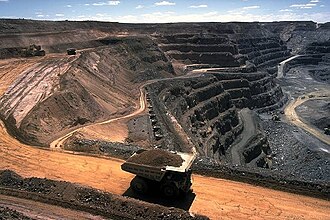
Modern mining processes involve prospecting for ore bodies, analysis of the profit potential of a proposed mine, extraction of the desired materials, and final reclamation or restoration of the land after the mine is closed. Mining materials are often obtained from ore bodies, lodes, veins, seams, reefs, or placer deposits. The exploitation of these deposits for raw materials is dependent on investment, labor, energy, refining, and transportation costs.
Mining operations can have negative environmental impacts, both during mining and after the mine closes. Hence, most of the world's nations have enacted regulations to reduce the impact; however, the outsized role of mining in generating business for often rural, remote, or economically depressed communities means that governments frequently fail to enforce them fully.
Work safety has long been a concern as well, and where enforced, modern practices have significantly improved safety in mines. Unregulated, poorly regulated or illegal mining, especially in developing economies, frequently contributes to local human rights violations and environmental conflicts.
While individual entrepreneurs or small businesses can conduct exploration and mining, most modern-day mines are large enterprises that require substantial capital to establish. Consequently, the mining sector of the industry is dominated by large, often multinational companies, most of which are publicly listed. It can be argued that what is referred to as the 'mining industry' comprises two sectors: one specializing in the exploration of new resources and the other in mining those resources. The exploration sector is typically made up of individuals and small mineral resource companies, called "juniors", that depend on venture capital. The mining sector comprises large multinational companies that are sustained by production from their operations. Various other industries, such as equipment manufacturing, environmental testing, and metallurgical analysis, rely on and support the mining industry worldwide. Canadian stock exchanges have a particular focus on mining companies, particularly junior exploration companies, through Toronto's TSX Venture Exchange; Canadian companies raise capital on these exchanges and then invest the money in exploration globally. Some have argued that below juniors, there exists a substantial sector of illegitimate companies primarily focused on manipulating stock prices.
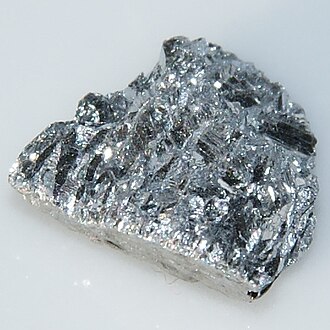
Mining operations can be grouped into five major categories based on the resources they exploit. These are oil and gas extraction, coal mining, metal ore mining, nonmetallic mineral mining and quarrying, and mining support activities. Of all of these categories, oil and gas extraction remains one of the largest in terms of its global economic importance. Prospecting potential mining sites, a vital area of concern for the mining industry, is now done using sophisticated new technologies such as seismic prospecting and remote-sensing satellites. Mining is heavily affected by the prices of the commodity minerals, which are often volatile. The 2000s commodities boom ("commodities supercycle") increased commodity prices, driving aggressive mining.
Safety has long been a concern in the mining business, especially in sub-surface mining. The Courrières mine disaster, Europe's worst mining accident, involved the death of 1,099 miners in Northern France on March 10, 1906. This disaster was surpassed only by the Benxihu Colliery accident in China on April 26, 1942, which killed 1,549 miners. Although mining has become substantially safer than it was in previous decades, mining accidents still occur.
Government figures indicate that around 5,000 Chinese miners die in accidents each year, while other reports have suggested a figure as high as 20,000.
Between 1870 and 1920 in Queensland, Australia, an increase in mining accidents led to more safety measures regarding the use of explosives in mining.
In the Democratic Republic of the Congo (DRC), safety concerns have been raised for both those who work in the mines and those who live in the surrounding areas. Workers are usually seen with a mustard-colored powder that turned out to be "...dried sulfuric acid, [which] they use in the mine to process the [mineral] ores. Surrounding the mine, there is a "small stream of foul, sludgy water that passes beneath a bridge next to the fence." Around the mine, biomonitoring studies of metal exposure show that "The levels found in Kinshasa remain above the CDC reference value (>5 μg/dL) and constitute a public health concern," and that subjects living close (< 3 km) to mines or metal-processing industries have higher urinary concentrations of various metals (p < 0.01) than those living further away (3–10 km)," revealing an "... absence of a national policy to control and prevent exposure to harmful chemicals." In the mines, specifically at the Tenke Fungurume mine, there were hundreds of thousands of people [who] engaged in the feverish excavation of cobalt in medieval conditions." These workers were locals who worked for "two dollars (roughly one day's income)." In addition, the rates of schistosomiasis, a mining related disease endemic to DRC, were found to be "higher among mining workers (27%) than in the total population (<13 %)," indicating harmful long-term impacts for the workers.
In South Africa, issues are similar to those in the DRC. Miners are exposed to silica dust, which "increases the risk of pulmonary tuberculosis," with a tuberculosis rate of "over 1,000 per 100,000." "Mine shafts themselves are crowded and poorly-ventilated, but so are hostels where over a dozen men can share a small room. These conditions are highly conducive to infection; the rate of recurrent tuberculosis in a recent South African prospective cohort of 600 miners was about 8 per 100 person-years," which increases the risk of tuberculosis spreading in both mining and living locations. Past the mines, the "extraction of minerals often leads to the disruption of ecosystems, polluting water sources, and degrading habitats including cultural heritage critical for the livelihoods of people."
Mining accidents continue worldwide, including incidents that have caused dozens of fatalities at a time, such as the 2007 Ulyanovskaya Mine disaster in Russia, the 2009 Heilongjiang mine explosion in China, and the 2010 Upper Big Branch Mine disaster in the United States. Mining has been identified by the National Institute for Occupational Safety and Health (NIOSH) as a priority industry sector in the National Occupational Research Agenda (NORA) to identify and provide intervention strategies regarding occupational health and safety issues. The Mining Safety and Health Administration (MSHA) was established in 1978 to "work to prevent death, illness, and injury from mining and promote safe and healthful workplaces for US miners." Since its implementation in 1978, the number of miner fatalities has decreased from 242 miners in 1978 to 24 miners in 2019.
There are numerous occupational hazards associated with mining, including exposure to rockdust, which can lead to diseases such as silicosis, asbestosis, and pneumoconiosis. Gases in the mine can lead to asphyxiation and have a risk of ignition. Mining equipment can generate considerable noise, putting workers at risk for hearing loss. Cave-ins, rock falls, and exposure to excess heat are also known hazards. The NIOSH Recommended Exposure Limit (REL) of noise is 85 dBA with a 3 dBA exchange rate, and the MSHA Permissible Exposure Limit (PEL) is 90 dBA with a 5 dBA exchange rate as an 8-hour time-weighted average. NIOSH has found that 25% of noise-exposed workers in Mining, Quarrying, and Oil and Gas Extraction have hearing impairment. The prevalence of hearing loss increased by 1% from 1991 to 2001 within these workers.
Noise studies have been conducted in several mining environments. Stageloaders (84-102 dBA), shearers (85-99 dBA), auxiliary fans (84–120 dBA), continuous mining machines (78–109 dBA), and roof bolters (92–103 dBA) represent some of the noisiest equipment in underground coal mines. Dragline oilers, dozer operators, and welders using air arcing were occupations with the highest noise exposures among surface coal miners. Coal mines had the highest hearing loss injury likelihood.
Environmental effects
Mining activities can significantly contribute to water pollution through the release of heavy metals and toxic substances into surrounding waterways. Processes such as acid mine drainage occur when sulfide minerals are exposed to air and water, producing acidic runoff that carry contaminants such as arsenic, lead, and mercury into rivers and groundwater. This pollution can harm aquatic ecosystems, reduce water quality, and pose risks to human health, particularly in communities that rely on local water sources for drinking and agriculture. In some cases, contamination persists long after mining operations have stopped, making remediation difficult and costly.
Water pollution from mining can also result from the storage and disposal of mine waste, including tailings and waste rock, which may contain hazardous chemicals and heavy metals. Failures or leaks in tailings storage facilities have released large volumes of contaminated materials into rivers and surrounding ecosystems, causing widespread environmental damage. Even without major failures, runoff from mining sites can transport pollutants into nearby waterways during rainfall events, further degrading water quality. Abandoned mine sites are a particularly significant source of ongoing contamination, as untreated drainage can continue to release acidic and metal laden water into the environment for decades after closure.
This is important because water is vital for many communities' survival. Fresh rivers are a source of fish and fresh water. However, the water isn't fresh anymore, it is heavily polluted by toxic runoff from nearby mines. Researcher Siddharth Kara explains that in the context of cobalt mining in the Democratic Republic of Congo, "water is heavily polluted, a condition that local residents attribute to toxic runoff from nearby mines. The environmental researcher at the University of Lubumbashi whom I met after my visit to Kipushi, Germain, took samples from the river water near Mupanja and found particularly high levels of lead, chromium, cobalt, and industrial acids.