—°F Boise, ID
◈ Cross-Vertical Intelligence · Treasure Valley · Boise Standard

Interior Design Architecture ↔ relates to ↔ Beauty Salon

30 Wikipedia bridge articles confirmed in both vertical ledgers. 246 deterministic cross-vertical edges. 6,734 external source links harvested. Every edge provenance-stamped. Every claim auditable.

30 QID Bridge Articles
246 Cross Edges
6,734 External Sources
307 Wikipedia Articles
31 🌲 Evergreen
165 🌿 Branch
HIGH SIGNAL · refinery-treasurevalley-v1.0.0
◈ Machine-Readable Schema
Deterministic Cross-Vertical Summary
PASS 2 · ZERO LLM
Entities Compared
Interior Design Architecture
× Beauty Salon
QID Bridge Articles
30
confirmed Wikipedia overlap
Total Cross Edges
246
External Sources Harvested
6,734
from Wikipedia external links
Geography
Treasure Valley, Ada County, Canyon County, Idaho, United States
Gate Tier
high
Haiku FAQ generated
Strongest Edge
Idaho
score: 1.0000  ·  type: exact_title_cross  ·  27 shared tokens
QID Bridge Titles (20)
IdahoZoningVocational educationApprenticeshipBureau of Labor StatisticsBoise, IdahoOccupational licensingFranchisingPlumbingCommercial propertyTreasure ValleyPlanning permissionOnline marketplaceVocational schoolMixed-use developmentAmericans with Disabilities Act of 1990Indoor air qualityBuilding codeHeating, ventilation, and air conditioningPrivate equity
Shared Semantics (20 tokens)
boiseidahopopulationmetropolitancapitalbuildinglocalproductsprovidepublicurbangeneralbusinessnationaltechnologyuseswesterndevelopmentformplanning
Pipeline
refinery-treasurevalley-v1.0.0
Generated
2026-07-17 21:33:12 UTC
Content Hash
6be73bbb1b142b27
◈ Wikipedia Bridge Articles
QID Overlap — Confirmed in Both Vertical Ledgers
30 BRIDGES
Idaho
Q1221 EXACT TITLE 1.000
QID OVERLAP: Q1221 in interior_design_architecture (tier:evergreen) and beauty_salon (tier:evergreen). | SHARED TOKENS (27): "approximately", "associated", "boise", "capital", "century", "distinct", "economy", "geographic", "idaho", "july", "linked", "national", "north", "official", "population", "portion", "prior", "products", "sector", "separate".... | EXACT TITLE in interior_design_architecture: "Idaho". | EXACT TITLE in beauty_salon: "Idaho".
approximatelyassociatedboisecapitalcenturydistincteconomygeographicidahojulylinkednationalnorthofficialpopulationportionpriorproductssectorseparatesignificantsmallsuppliestechnologytourismuseswestern
ce of British Columbia. Idaho's state capital and largest city is Boise. With an area of 83,569 square miles (216,440 km2), Idaho is the 14th-largest state by land area. The state has a population of approximately two million people; it ranks as the 13th-least populous and the seventh-least densely populated of the 50 U.S. states. For thousands of years, and prior to European colonization, Idaho had been inhabited by natives. In the early 19th century, Idaho was considered part of the Oregon Country, an area which was disputed between the U.S. and the British Empire. Idaho officially became a U.S. territory with the signing of the Oregon Treaty of 1846, but a separate Idaho Territory was not organized until 1863, instead being included for periods in Oregon Territory and Washington Territory. The state was eventually admitted to the Union on July 3, 1890, becoming the 43rd state. Forming part of the Pacific Northwest (and the associated Cascadia bioregion), Idaho is divided into several distinct geographic and climatic regions. The state's north, the relatively isolated Idaho Panhandle, is closely linked with Eastern Washington, with which it shares the Pacific Time Zone—the rest of the state uses the Mountain Time Zone. The state's south includes the Snake River Plain (which has most of the population and agricultural land), and the southeast incorporates part of the Great Basin. Idaho is quite mountainous and contains several stretches of the Rocky Mountains. The United States Forest Service holds about 38% of Idaho's land, the highest proportion of any state. Industries significant for the state economy include manufacturing, agriculture, mining, forestry, science and technology, and tourism. Idaho has been a predominantly Republican state since statehood, with the Republican Party dominating in both state and national elections; abortion is severely restricted and the state retains the death penalty, including methods like the firing squad. The state contains the Idaho National Laboratory. Idaho's agricultural sector supplies many products, but the state is best known for its potato crop, which comprises around one-third of the nationwide yield.
Idaho's highest point is Borah Peak, 12,662 ft (3,859 m), in the Lost River Range north of Mackay. Idaho's lowest point, 710 ft (216 m), is in Lewiston, where the Clearwater River joins the Snake River and continues into Washington. The Sawtooth Range is often considered Idaho's most famous mountain range. Other mountain ranges in Idaho include the Bitterroot Range, the White Cloud Mountains, the Lost River Range, the Clearwater Mountains, and the Salmon River Mountains. Salmon-Challis National Forest is located in the east central sections of the state, with Salmon National Forest to the north and Challis National Forest to the south. The forest is in an area known as the Idaho Cobalt Belt, which consists of a 34 miles (55 km) long geological formation of sedimentary rock that contains some of the largest cobalt deposits in the U.S. Idaho has two time zones, with the dividing line approximately midway between Canada and Nevada. Southern Idaho, including the Boise metropolitan area, Idaho Falls, Pocatello, and Twin Falls, are in the Mountain Time Zone. A legislative error (15 U.S.C. ch. 6 §264) theoretically placed this region in the Central Time Zone, but this was corrected with a 2007 amendment.
luded for periods in Oregon Territory and Washington Territory. The state was eventually admitted to the Union on July 3, 1890, becoming the 43rd state. Forming part of the Pacific Northwest (and the associated Cascadia bioregion), Idaho is divided into several distinct geographic and climatic regions. The state's north, the relatively isolated Idaho Panhandle, is closely linked with Eastern Washington, with which it shares the Pacific Time Zone—the rest of the state uses the Mountain Time Zone. The state's south includes the Snake River Plain (which has most of the population and agricultural land), and the southeast incorporates part of the Great Basin. Idaho is quite mountainous and contains several stretches of the Rocky Mountains. The United States Forest Service holds about 38% of Idaho's land, the highest proportion of any state. Industries significant for the state economy include manufacturing, agriculture, mining, forestry, science and technology, and tourism. Idaho has been a predominantly Republican state since statehood, with the Republican Party dominating in both state and national elections; abortion is severely restricted and the state retains the death penalty, including methods like the firing squad. The state contains the Idaho National Laboratory. Idaho's agricultural sector supplies many products, but the state is best known for its potato crop, which comprises around one-third of the nationwide yield.
Zoning
Q702232 EXACT TITLE 1.000
QID OVERLAP: Q702232 in interior_design_architecture (tier:evergreen) and beauty_salon (tier:evergreen). | SHARED TOKENS (28): "allowing", "building", "defined", "developed", "development", "different", "form", "growth", "guide", "land-use", "local", "places", "planning", "policy", "procedure", "property", "regulations", "regulatory", "residential", "rules".... | EXACT TITLE in interior_design_architecture: "Zoning". | EXACT TITLE in beauty_salon: "Zoning".
allowingbuildingdefineddevelopeddevelopmentdifferentformgrowthguideland-uselocalplacesplanningpolicyprocedurepropertyregulationsregulatoryresidentialrulesscalesetshapesinglesystemsurbanuseszoning
Mixed-use zoning combines residential, commercial, office, and public uses into a single space. Mixed-use zoning can be vertical, within a single building, or horizontal, involving multiple buildings. Planning and community activist Jane Jacobs wrote extensively on the connections between the separation of uses and the failure of urban renewal projects in New York City. She advocated dense mixed-use developments and walkable streets. In contrast to villages and towns, in which many residents know one another, and low-density outer suburbs that attract few visitors, cities and inner city areas have the problem of maintaining order between strangers. This order is maintained when, throughout the day and evening, there are sufficient people present with eyes on the street. This can be accomplished in successful urban districts that have a great diversity of uses, creating interest and attracting visitors. Jacobs' writings, along with increasing concerns about urban sprawl, are often credited with inspiring the New Urbanism movement. To accommodate the New Urbanist vision of walkable communities combining cafés, restaurants, offices and residential development in a single area, mixed-use zones have been created within some zoning systems. These still use the basic regulatory mechanisms of zoning, excluding incompatible uses such as heavy industry or sewage farms, while allowing compatible uses such as residential, commercial and retail activities so that people can live, work and socialise within a compact geographic area. The mixing of land uses is common throughout the world.
Inclusionary zoning refers to policies to increase the number of housing units within a development that are affordable to low and middle-income households. These policies can be mandatory as part of performance zoning or based on voluntary incentives, such as allowing greater density of development. Overlay zoning An overlay zone is a zoning district that overlaps one or more zoning districts to address a particular concern or feature of that area, such as wetlands, historic buildings or transit-oriented development. Overlay zoning has the advantage of providing targeted regulation to address a specific issue, such as a natural hazard, without having to significantly rewrite an existing zoning ordinance.
The United Kingdom does not use zoning as a technique for controlling land use. British land use control began its modern phase after the Town and Country Planning Act of 1947. Rather than dividing municipal maps into land use zones, English planning law places all development under the control of local and regional governments, effectively abolishing the ability to develop land by-right. However, existing development allows land use by-right as long as the use does not constitute a change in the type of land use. A property owner must apply to change land use type of any existing building, and such changes must be consistent with the local and regional land use plans. Development control or planning control is the element of the United Kingdom's system of town and country planning through which local government regulates land use and new building. There are 421 Local Planning Authorities (LPAs) in the United Kingdom. Generally they are the local borough or district council or a unitary authority. They each use a discretionary "plan-led system" whereby development plans are formed and the public consulted. Subsequent development requires planning permission, which will be granted or refused with reference to the development plan as a material consideration. The plan does not provide specific guidance on what type of buildings will be allowed in a given location, rather it provides general principles for development and goals for the management of urban change. Because planning committees (made up of directly elected local councillors) or in some cases planning officers themselves (via delegated decisions) have discretion on each application for development or change of use made, the system is considered a 'discretionary' one. Planning applications can differ greatly in scale, from airports and new towns to minor modifications to individual houses. In order to prevent local authorities from being overwhelmed by high volumes of small-scale applications from individual householders, a separate system of permitted development has been introduced. Permitted development rules are largely form-based, but in the absence of zoning, are applied at the national level. Examples include allowing a two-storey extension up to three metres at the rear of a property, extensions up to 50% of the original width at each side, and certain types of outbuildings in the garden, provided that no more than 50% of the land area is built over. These are appropriately sized for a typical three bedroom semi-detached property, but must be applied across a wide variety of housing types, from small terraces, to larger detached properties and manor houses. In August 2020, the UK Government published a consultation document called Planning for the Future. The proposals hinted at a move toward zoning in England, with areas given a Growth, Renewal or Protected designation, with the possibility of "sub-areas within each category", although the document did not elaborate on what the details of these might have been.
Vocational education
Q6869278 EXACT TITLE 1.000
QID OVERLAP: Q6869278 in interior_design_architecture (tier:branch) and beauty_salon (tier:evergreen). | SHARED TOKENS (23): "career", "college", "community", "defined", "economic", "education", "educational", "formal", "forms", "general", "individual", "knowledge", "provide", "related", "school", "schools", "sectors", "specialized", "specifically", "technical".... | EXACT TITLE in beauty_salon: "Vocational education".
careercollegecommunitydefinedeconomiceducationeducationalformalformsgeneralindividualknowledgeproviderelatedschoolschoolssectorsspecializedspecificallytechnicaltechnologytradetraining
cupation. Vocational education can also be defined as the type of education given to an individual. Vocational education is known by a variety of names, depending on the country concerned, including career and technical education, or acronyms such as TVET (technical and vocational education and training; used by UNESCO) and TAFE (technical and further education). TVE refers to all forms and levels of education which provide knowledge and skills related to occupations in various sectors of economic and social life through formal, non-formal and informal learning methods in both school-based and work-based learning contexts. To achieve its aims and purposes, TVE focuses on the learning and mastery of specialized techniques and the scientific principles underlying those techniques, as well as general knowledge, skills and values. A vocational school is a type of educational institution specifically designed to provide vocational education, as is a technical college. Vocational education can take place at the post-secondary, further education, and higher education levels.
Purpose TVET serves multiple purposes. One purpose is to prepare the youth for work. This is done through the learning and development of work related skills and the mastery of underlying knowledge and scientific principles. Work is broadly defined and therefore refers to both formal employment and self-employment. To support self-employment, TVET curricula often include entrepreneurship training. Related to this is the social reproduction and transformation of occupational and vocational practices. A related role is continuing professional development. The rapid technological changes demand that workers continuously update their knowledge and skills. Unlike the past where a job could be held for life, it is common place to change vocations several times. TVET enables that flexibility in two ways. One is providing broad based technical knowledge and transversal skills on which different occupations can be based on. The second is providing continuing vocational training to workers. In contrast with the industrial paradigm of the old economy, today's global economy lays the onus on the worker to continually reinvent himself or herself. In the past, workers were assured of a job for life, with full-time employment, clear occupational roles and well established career paths. This is no longer the case. The knowledge dependent global economy is characterized by rapid changes in technology and related modes of work. Often, workers find themselves declared redundant and out of work. TVET today has the responsibility of re-skilling such workers to enable them find and get back to work Apart from providing work related education, TVET is also a site for personal development and emancipation. These concerns the development of those personal capacities that relate to realizing one's full potential with regard to paid or self employment, occupational interests, and life goals outside of work. At the same time TVET seeks to enable individual overcome disadvantages due to circumstances of birth or prior educational experiences. From a development point of view, TVET facilitates provide economic growth by increasing the productivity of workers. The returns from increased output far exceed the costs of training, direct and indirect, leading to economic growth. TVET like any other form of education also facilitates socio-economic development by enhancing the capacity of individuals to adopt practices that are socially worthwhile. As a form of education similar to all others, TVET aims to developing the broad range of personal capabilities that characterize an educated person. Thus, the provision of broad based knowledge seeks to ensure critic-creative thinking.
Labour market demands and trends After the 2008 financial crisis, labour markets across the world experienced structural changes that influenced the demand for skills and TVET. Unemployment worsened and the quality of jobs decreased, especially for youth. Gender differentials in labour force participation placed men ahead of women, and skill mismatches deepened. The crisis impacted labour markets adversely and led to deepening uncertainty, vulnerability of employment, and inequality. Furthermore, measures to improve efficiency and profitability in the economic recovery have often led to jobless growth, as happened in Algeria, India and post-apartheid South Africa. In seeking to address the level of vulnerable employment, TVET systems have focused on increasing the employability of graduates and enhancing their capacity to function effectively within existing vulnerable labour markets and to adjust to other labour market constraints. This has meant enhanced coordination among government departments responsible for TVET and employment policies. It has also created the need for TVET systems to develop mechanisms that identify skills needs early on and make better use of labour market information for matching skills demands and supply. TVET systems have focused more on developing immediate job skills and wider competencies. This has been accomplished by adopting competency-based approaches to instruction and workplace learning that enable learners to handle vulnerable employment, adjust to changing jobs and career contexts, and build their capacity to learn and agility to adapt. Migration flows Increasing migration are significant challenges to the national character of TVET systems and qualifications. TVET qualifications are progressively expected not only to serve as proxies for an individual's competencies but to also act as a form of a currency that signals national and international value. TVET systems have been developing mechanisms to enable credible and fair cross-border recognition of skills. In 2007, the ILO identified three types of recognition that TVET system may use: unilateral (independent assessment by the receiving country), mutual (agreements between sending and receiving countries), and multilateral (mostly between a regional grouping of countries). The most prevalent of these is unilateral recognition, which is mostly under the control of national credential evaluation agencies. Countries have been slow to move from input-based skill evaluations to outcome-based methodologies that focus on competencies attained. TVET systems are responding to migration by providing qualifications that can stand the rigour of these recognition systems and by creating frameworks for mutual recognition of qualifications. Regional Qualifications Frameworks such as those in Southern Africa, Europe, Asia and the Caribbean aim to significantly support the recognition of qualifications across borders.
Apprenticeship
Q20773771 EXACT TITLE 1.000
QID OVERLAP: Q20773771 in interior_design_architecture (tier:evergreen) and beauty_salon (tier:evergreen). | SHARED TOKENS (18): "apprenticeship", "boundaries", "certification", "formal", "labor", "license", "measurable", "potential", "practice", "practitioners", "professional", "regulated", "sectors", "study", "system", "terminology", "trade", "training". | EXACT TITLE in interior_design_architecture: "Apprenticeship". | EXACT TITLE in beauty_salon: "Apprenticeship".
apprenticeshipboundariescertificationformallaborlicensemeasurablepotentialpracticepractitionersprofessionalregulatedsectorsstudysystemterminologytradetraining
Apprenticeship is a system for training potential new practitioners of a trade or profession with on-the-job training and often some accompanying study. Apprenticeships may also enable practitioners to gain a license to practice in a regulated occupation. Most of their training is done while working for an experienced employer who helps the apprentices learn their trade or profession, in exchange for their continued labor for an agreed period after they have achieved measurable competencies. Apprenticeship lengths vary significantly across sectors, professions, roles and cultures. In some cases, people who successfully complete an apprenticeship can reach the "journeyman" or professional certification level of competence. In other cases, they can be offered a permanent job at the company that provided the placement.
ing for an experienced employer who helps the apprentices learn their trade or profession, in exchange for their continued labor for an agreed period after they have achieved measurable competencies. Apprenticeship lengths vary significantly across sectors, professions, roles and cultures. In some cases, people who successfully complete an apprenticeship can reach the "journeyman" or professional certification level of competence. In other cases, they can be offered a permanent job at the company that provided the placement.
period after they have achieved measurable competencies. Apprenticeship lengths vary significantly across sectors, professions, roles and cultures. In some cases, people who successfully complete an apprenticeship can reach the "journeyman" or professional certification level of competence. In other cases, they can be offered a permanent job at the company that provided the placement.
Bureau of Labor Statistics
Q2928428 EXACT TITLE 1.000
QID OVERLAP: Q2928428 in interior_design_architecture (tier:evergreen) and beauty_salon (tier:evergreen). | SHARED TOKENS (25): "accessibility", "agency", "appearance", "bls", "bureau", "conditions", "criteria", "current", "data", "department", "economic", "economics", "federal", "labor", "local", "major", "management", "processes", "public", "quality".... | EXACT TITLE in interior_design_architecture: "Bureau of Labor Statistics". | EXACT TITLE in beauty_salon: "Bureau of Labor Statistics".
accessibilityagencyappearanceblsbureauconditionscriteriacurrentdatadepartmenteconomiceconomicsfederallaborlocalmajormanagementprocessespublicqualityresearchresourcestatisticssubjectsystem
d economic issues, timeliness in reflecting today's rapidly changing economic conditions, accuracy and consistently high statistical quality, impartiality in both subject matter and presentation, and accessibility to all. To avoid the appearance of partiality, the dates of major data releases are scheduled more than a year in advance, in coordination with the Office of Management and Budget. History The Bureau of Labor was established within the Department of the Interior on June 27, 1884, to collect information about employment and labor. Its creation under the Bureau of Labor Act (23 Stat. 60) stemmed from the findings of U.S. Senator Henry W. Blair's "Labor and Capital Hearings", which examined labor issues and working conditions in the U.S. Statistician Carroll D. Wright became the first U.S. Commissioner of Labor in 1885, a position he held until 1905. The Bureau's placement within the federal government structure changed three times in the first 29 years following its formation. It was made an independent (sub-Cabinet) department by the Department of Labor Act (25 Stat. 182) on June 13, 1888. The Bureau was then incorporated into the Department of Commerce and Labor by the Department of Commerce Act (32 Stat. 827) on February 14, 1903. Finally, it was transferred under the Department of Labor in 1913, where it resides today. Starting in 1992, BLS was headquartered in the Postal Square Building near Washington Union Station. During 2024, BLS headquarters were moved to the Suitland Federal Center in Suitland, Maryland, into the same facility that houses the Bureau of the Census headquarters. Since 1915, the BLS has published the Monthly Labor Review, a journal focused on the data and methodologies of labor statistics. The BLS is headed by a commissioner who serves a four-year term of office. Erica Groshen was confirmed by the U.S. Senate on January 2, 2013, and sworn in as the 14th commissioner of labor statistics on January 29, 2013, for a term that ended on January 27, 2017. William Wiatrowski, Deputy Commissioner of the BLS, served as Acting Commissioner until the next commissioner, William Beach was sworn in. Beach served until January 2024, at which time he was succeeded by Erika McEntarfer.
The Bureau of Labor Statistics (BLS) is a unit of the United States Department of Labor. It is the principal fact-finding agency for the U.S. government in the broad field of labor economics and statistics and serves as a principal agency of the U.S. federal statistical system. The BLS collects, processes, analyzes, and disseminates essential statistical data to the American public, the U.S. Congress, other Federal agencies, state and local governments, businesses, and labor representatives. The BLS also serves as a statistical resource to the United States Department of Labor, and conducts research measuring the income levels families need to maintain a satisfactory quality of life. BLS data must satisfy a number of criteria, including relevance to current social and economic issues, timeliness in reflecting today's rapidly changing economic conditions, accuracy and consistently high statistical quality, impartiality in both subject matter and presentation, and accessibility to all.
flecting today's rapidly changing economic conditions, accuracy and consistently high statistical quality, impartiality in both subject matter and presentation, and accessibility to all. To avoid the appearance of partiality, the dates of major data releases are scheduled more than a year in advance, in coordination with the Office of Management and Budget. History The Bureau of Labor was established within the Department of the Interior on June 27, 1884, to collect information about employment and labor. Its creation under the Bureau of Labor Act (23 Stat. 60) stemmed from the findings of U.S. Senator Henry W. Blair's "Labor and Capital Hearings", which examined labor issues and working conditions in the U.S. Statistician Carroll D. Wright became the first U.S. Commissioner of Labor in 1885, a position he held until 1905. The Bureau's placement within the federal government structure changed three times in the first 29 years following its formation. It was made an independent (sub-Cabinet) department by the Department of Labor Act (25 Stat. 182) on June 13, 1888. The Bureau was then incorporated into the Department of Commerce and Labor by the Department of Commerce Act (32 Stat. 827) on February 14, 1903. Finally, it was transferred under the Department of Labor in 1913, where it resides today. Starting in 1992, BLS was headquartered in the Postal Square Building near Washington Union Station. During 2024, BLS headquarters were moved to the Suitland Federal Center in Suitland, Maryland, into the same facility that houses the Bureau of the Census headquarters. Since 1915, the BLS has published the Monthly Labor Review, a journal focused on the data and methodologies of labor statistics. The BLS is headed by a commissioner who serves a four-year term of office. Erica Groshen was confirmed by the U.S. Senate on January 2, 2013, and sworn in as the 14th commissioner of labor statistics on January 29, 2013, for a term that ended on January 27, 2017. William Wiatrowski, Deputy Commissioner of the BLS, served as Acting Commissioner until the next commissioner, William Beach was sworn in. Beach served until January 2024, at which time he was succeeded by Erika McEntarfer.
Boise, Idaho
Q35775 EXACT TITLE 1.000
QID OVERLAP: Q35775 in interior_design_architecture (tier:branch) and beauty_salon (tier:evergreen). | SHARED TOKENS (15): "annual", "boise", "capital", "downtown", "home", "idaho", "locally", "major", "metropolitan", "north", "population", "sectors", "technology", "treasure", "valley". | EXACT TITLE in beauty_salon: "Boise, Idaho".
annualboisecapitaldowntownhomeidaholocallymajormetropolitannorthpopulationsectorstechnologytreasurevalley
employers in the technology, manufacturing, and service sectors, including companies such as Micron Technology and Hewlett-Packard. The city is home to the Boise Art Museum, Idaho State Capitol, the annual Treefort Music Fest, and the Basque Block. History Etymology The origin of the name is uncertain. One account credits Capt. B. L. E. Bonneville of the U.S. Army as its source. After trekking for weeks through dry and rough terrain, his exploration party reached an overlook with a view of the Boise River Valley. The place where they stood is called Bonneville Point, located on the Oregon Trail east of the city. According to the story, a French-speaking guide, overwhelmed by the sight of the verdant river, yelled "Les bois! Les bois!" ("The woods! The woods!")—and the name stuck. The name may also derive from earlier mountain men who named the river that flows through the city. In the 1820s, French Canadian fur trappers associated with the British-owned Hudson's Bay Company set trap lines in the vicinity. Set in a high-desert area, the tree-lined valley of the Boise River became a distinct landmark, an oasis dominated by cottonwood trees.
Tribes and First Contact The area of Boise valley was inhabited by Boise Valley Shoshone and Bannock tribes, a part of the "Snake Country". According to the City of Boise's "History of Boise" report, "they gathered annually in the valley to participate in trading rendezvous with other tribes and catch salmon in the Boise River runs to help sustain them year-round. They spent winters in the valley where the climate was milder and visited the hot springs for bathing and healing. Castle Rock, called Eagle Rock by the tribes, was and remains a sacred site." Boise Valley Bannock tribes belonged to the "tuuˀagaidɨkaˀa" (black trout eaters). Boise Valley Shoshone belonged to the "Yahandeka" (groundhog eaters) grouping. They were among the early mounted Shoshone bands. They traveled over a considerable range by the beginning of the nineteenth century, with their main hunting lands along the lower Boise River and Payette River. When Donald MacKenzie developed the Snake country fur trade after 1818, the most prominent of the Boise Shoshone, Peiem (a Shoshoni rendition of "Big Jim", their leader's English name), became the most influential leader of the large composite Shoshoni band that white trappers regularly encountered in the Snake Country. In 1811, Wilson Hunt, employed as an agent in the fur trade under John Jacob Astor, organized and led the greater part of a group of about 60 men on an overland expedition to establish a fur trading outpost at the mouth of the Columbia River. This expedition passed through the Boise valley, and was the first ever time a white American has entered the region. Because of the War of 1812 and the lack of U.S. fur trading posts in the Pacific Northwest, most of the route was not used in the following two decades, and thus Snake Country remained free of settler incursions. After the conclusion of the war of 1812, until the 1840s, Oregon, while officially "jointly administered", was solely dominated by the British Hudson's Bay Company (HBC), which had a land connection to the inland of the Canadian Prairies via York Factory Express. Snake Country, including Boise Valley remained independent and relatively free of settler passage and incursion. There were two main reasons for this. Firstly, the general region east of the Cascades and west of the Rockies was described at the time in the media and literature of the eastern US as the "Great American Desert", an arid unproductive region, unsuitable for habitation. This discouraged settlers from traveling to the region of Boise; however, Oregon Country, on the other side of the Cascades, was a desirable destination for them. Nevertheless, the British had an official policy of discouraging American settlers, and settler incursions into Boise Valley along the Oregon Trail remained low until the early 1840s. The HBC established a fort in the region, the Old Fort Boise, 40 miles (64 km) west, near Parma, down the Boise River near its confluence with the Snake River at the Oregon border.
The North End, generally defined as the part of Boise north of State Street, contains many of the city's older homes. It is known for its tree-lined drives such as Harrison Boulevard, and for its quiet neighborhoods near the downtown area. Downtown Boise is visible from Camel's Back Park. On 13th Street, Hyde Park is home to restaurants and other businesses. The North End also hosts events such as the annual Hyde Park Street Fair. In 2008, the American Planning Association designated Boise's North End one of 10 Great Neighborhoods. Boise Highlands The Boise Highlands is just north of the North End; its location is generally defined as north of Hill Road and east of Bogus Basin Road.
O
Q7075804 EXACT TITLE 1.000
QID OVERLAP: Q7075804 in interior_design_architecture (tier:evergreen) and beauty_salon (tier:evergreen). | SHARED TOKENS (39): "boards", "business", "certification", "consumer", "consumers", "creates", "customer", "economic", "form", "general", "growth", "health", "individual", "inspections", "law", "license", "licensed", "licensing", "licensure", "market".... | EXACT TITLE in interior_design_architecture: "Occupational licensing". | EXACT TITLE in beauty_salon: "Occupational licensing".
boardsbusinesscertificationconsumerconsumerscreatescustomereconomicformgeneralgrowthhealthindividualinspectionslawlicenselicensedlicensinglicensuremarketoccupationalpermittingpracticespractitionersprofessionalprotectionprovidepublicqualityregulated+9
he public. However, there is little evidence that it affects the overall quality of services provided to customers by members of the regulated occupation. Scholars have raised concerns that licensing boards frequently enact arbitrary standards that hinder competition while also turning a blind eye towards unethical behavior by incumbent practitioners. It can also harm consumers by raising prices and reducing innovation by new market entrants, and may slow overall economic growth. Some occupational licensing can violate competition law due to anti-competitive practices. Alternatives to individual licensing include only requiring that at least one person on a premises be licensed to oversee unlicensed practitioners, permitting of the business overall, random health and safety inspections, general consumer protection laws, and deregulation in favor of voluntary professional certification schemes or free market mechanisms such as customer review sites.
ue to anti-competitive practices. Alternatives to individual licensing include only requiring that at least one person on a premises be licensed to oversee unlicensed practitioners, permitting of the business overall, random health and safety inspections, general consumer protection laws, and deregulation in favor of voluntary professional certification schemes or free market mechanisms such as customer review sites.
History Traditionally, occupations in the crafts professions and in the liberal professions organize their respective industries in guilds and chambers in European countries like Germany and Austria. One of the most important changes in licensing has been the 2004 reform in Germany, where workers in 53 of 94 crafts professions were not required to be licensed anymore in order to start a business. In 2020, 12 of these deregulated professions reinstated the licensing requirement. Types In the United States and Canada, licensing (the term registration is sometimes used) is usually required by law to work in a particular profession or to obtain a privilege such as to drive a car or truck. Many other privileges and professions require a license, generally from the state or provincial government, in order to ensure that the public will not be harmed by the incompetence of the practitioners, and to limit supply to incumbent practitioners and thus increase wages. Examples of professions that require licensure in some jurisdictions include: actuary, architect, certified public accountant, electrician, engineering, general contractors, financial analyst, geologists, hedge fund manager, insurance agent, interior design, investment banker, licensed professional counselor, nurse, occupational therapist, physical therapist, plumber, private investigator, psychologist, landscape architect, lawyer, nutritionist, physician, real estate broker, speech-language pathologist, school counselor, social worker, stockbroker, surveyor, and teacher. Licensure is similar to professional certification, and sometimes synonymous (such as in the case with teacher licensure/certification); however, certification is an employment qualification and not a legal requirement for practicing a profession. In many cases, an individual must complete certain steps, such as training, acquiring an academic degree in a particular area of study, and/or passing an exam, before becoming eligible to receive their license. There are various resources available to assist professionals with the completion of these steps. Professional associations are often a tremendous resource to individuals looking to obtain a special level of certification or licensure.
Franchising
Q171947 EXACT TITLE 1.000
QID OVERLAP: Q171947 in interior_design_architecture (tier:branch) and beauty_salon (tier:evergreen). | SHARED TOKENS (37): "another", "arrangement", "brand", "business", "capital", "chain", "conditions", "controlling", "corporate", "direct", "economic", "entity", "especially", "expansion", "explicitly", "fees", "growth", "individual", "investment", "large".... | EXACT TITLE in beauty_salon: "Franchising".
anotherarrangementbrandbusinesscapitalchainconditionscontrollingcorporatedirecteconomicentityespeciallyexpansionexplicitlyfeesgrowthindividualinvestmentlargelegallicenseslicensingmajoritymarketmeansmodelpracticeproceduresproducts+7
Franchising is a business practice where a company licenses its business model to another company. It can involve the franchisor licensing some or part of its knowhow, procedures, intellectual property and other rights to sell its branded products and services to a franchisee. In return, the franchisee pays certain fees and agrees to comply with certain obligations, typically set out in a franchise agreement. For the franchisor, use of a franchise system is an alternative business growth strategy, compared to expansion through corporate owned outlets or "chain stores". Adopting a franchise system is a business growth strategy that minimizes the franchisor's capital investment and liability risk. Franchising is rarely an equal partnership, especially in the typical arrangement where the franchisee is an individual, unincorporated partnership or small privately-held corporation, as this ensures the franchisor has substantial legal and/or economic advantages over the franchisee. The usual exception to this rule is when the prospective franchisee is also a powerful corporate entity controlling a highly lucrative location, and/or captive market. For example, a large sports stadium for which prospective franchisors must compete to exclude one another.
e is also a powerful corporate entity controlling a highly lucrative location, and/or captive market. For example, a large sports stadium for which prospective franchisors must compete to exclude one another.
History The boom in franchising did not take place until after World War II. Nevertheless, the rudiments of modern franchising date back to the Middle Ages when landowners made franchise-like agreements with tax collectors, who retained a percentage of the money they collected and turned the rest over. The practice ended around 1562, but spread into other endeavors. For example, in 17th-century England, franchisees were granted the right to sponsor markets and fairs or operate ferries. There was little growth in franchising, though, until the mid-19th century, when it appeared in the United States for the first time. One of the first successful American franchising operations was started by an enterprising druggist named John S. Pemberton. In 1886, he concocted a beverage comprising sugar, molasses, spices, and cocaine. Pemberton licensed selected people to bottle and sell the drink, which was an early version of what is now known as Coca-Cola. His was one of the earliest and most successful franchising operations in the United States. The Singer Company implemented a franchising plan in the 1850s to distribute its sewing machines. The operation failed, though, because the company did not earn much money even though the machines sold well. The dealers, who had exclusive rights to their territories, absorbed most of the profits because of deep discounts. Some failed to push Singer products, so competitors were able to outsell the company. Under the existing contract, Singer could neither withdraw rights granted to franchisees nor send in its own salaried representatives. So, the company started repurchasing the rights it had sold. The experiment proved to be a failure. That may have been one of the first times a franchisor failed, but it was by no means the last. Colonel Harland Sanders did not initially succeed in his early efforts at franchising KFC. Still, the Singer venture did not put an end to franchising. Other companies attempted franchising in one form or another after the Singer experience. For example, several decades later, General Motors established a somewhat successful franchising operation in order to raise capital. Perhaps the father of modern franchising, though, is Louis K. Liggett. In 1902, Liggett invited a group of druggists to join a "drug cooperative". As he explained to them, they could increase profits by paying less for their purchases, especially if they set up their own manufacturing company. His idea was to market private-label products. About 40 druggists pooled $4,000 of their own money and adopted the name Rexall. Sales soared, and Rexall became a franchisor. The chain's success set a pattern for other franchisors to follow. Although many business owners did affiliate with cooperative ventures of one type or another, there was little growth in franchising until the early 20th century, and in whatever form franchising existed, it looked nothing like what it is today. As the United States shifted from an agricultural to an industrial economy, manufacturers licensed individuals to sell automobiles, trucks, gasoline, beverages, and a variety of other products. The franchisees did little more than selling the products, though. The sharing of responsibility associated with contemporary franchising arrangement did not exist to a great extent. Consequently, franchising was not a growth industry in the United States. It was not until the 1960s and 1970s that people began to take a close look at the attractiveness of franchising. The concept intrigued people with entrepreneurial spirit.
Plumbing
Q3241671 EXACT TITLE 1.000
QID OVERLAP: Q3241671 in interior_design_architecture (tier:evergreen) and beauty_salon (tier:evergreen). | SHARED TOKENS (17): "among", "applications", "delivery", "developed", "fixtures", "health", "hvac", "infrastructure", "lead", "limited", "plumbing", "public", "system", "systems", "trade", "uses", "work". | EXACT TITLE in interior_design_architecture: "Plumbing". | EXACT TITLE in beauty_salon: "Plumbing".
amongapplicationsdeliverydevelopedfixtureshealthhvacinfrastructureleadlimitedplumbingpublicsystemsystemstradeuseswork
a wide range of applications. Plumbing uses pipes, valves, plumbing fixtures, tanks, and other apparatuses to convey fluids. Heating and cooling (HVAC), waste removal, and potable water delivery are among the most common uses for plumbing, but it is not limited to these applications.
Lead was the favoured material for water pipes for many centuries because its malleability made it practical to work into the desired shape. Such use was so common that the word "plumbing" derives from plumbum, the Latin word for lead. This was a source of lead-related health problems in the years before the health hazards of ingesting lead were fully understood; among these were stillbirths and high rates of infant mortality. Lead water pipes were still widely used in the early 20th century and remain in many households. Lead-tin alloy solder was commonly used to join copper pipes, but modern practice uses tin-antimony alloy solder instead in order to eliminate lead hazards. Despite the Romans' common use of lead pipes, their aqueducts rarely poisoned people. Unlike other parts of the world where lead pipes cause poisoning, the Roman water had so much calcium in it that a layer of plaque prevented the water contacting the lead itself. What often causes confusion is the large amount of evidence of widespread lead poisoning, particularly amongst those who would have had easy access to piped water, an unfortunate result of lead being used in cookware and as an additive to processed food and drink (for example as a preservative in wine). Roman lead pipe inscriptions provided information on the owner to prevent water theft. Wooden pipes were used in London and elsewhere during the 16th and 17th centuries. The pipes were hollowed-out logs which were tapered at the end with a small hole in which the water would pass through. The multiple pipes were then sealed together with hot animal fat. Wooden pipes were used in Philadelphia, Boston, and Montreal in the 1800s. Built-up wooden tubes were widely used in the US during the 20th century. These pipes (used in place of corrugated iron or reinforced concrete pipes) were made of sections cut from short lengths of wood. Locking of adjacent rings with hardwood dowel pins produced a flexible structure.
Galvanized steel potable water supply and distribution pipes are commonly found with nominal pipe sizes from 3⁄8 inch (9.5 mm) to 2 inches (51 mm). It is rarely used today for new construction residential plumbing. Steel pipe has National Pipe Thread (NPT) standard tapered male threads, which connect with female tapered threads on elbows, tees, couplers, valves, and other fittings. Galvanized steel (often known simply as "galv" or "iron" in the plumbing trade) is relatively expensive, and difficult to work with due to weight and requirement of a pipe threader. It remains in common use for repair of existing "galv" systems and to satisfy building code non-combustibility requirements typically found in hotels, apartment buildings and other commercial applications. It is also extremely durable and resistant to mechanical abuse. Black lacquered steel pipe is the most widely used pipe material for fire sprinklers and natural gas. Most typical single family home systems will not require supply piping larger than 3⁄4 inch (19 mm) due to expense as well as steel piping's tendency to become obstructed from internal rusting and mineral deposits forming on the inside of the pipe over time once the internal galvanizing zinc coating has degraded.
Commercial property
Q1520439 EXACT TITLE 1.000
QID OVERLAP: Q1520439 in interior_design_architecture (tier:branch) and beauty_salon (tier:evergreen). | SHARED TOKENS (22): "authority", "building", "business", "capital", "commercial", "containing", "estate", "functions", "investment", "local", "medical", "multiple", "offices", "property", "real", "regulations", "residential", "retail", "significant", "space".... | EXACT TITLE in beauty_salon: "Commercial property".
authoritybuildingbusinesscapitalcommercialcontainingestatefunctionsinvestmentlocalmedicalmultipleofficespropertyrealregulationsresidentialretailsignificantspaceurbanzoning
floor 1. When space allocated to multiple functions is significant, these buildings can be called multi-use.
Commercial property, also called commercial real estate, investment property or income property, is real estate (buildings or land) intended to generate a profit, either from capital gains or rental income. Commercial property includes office buildings, medical centers, hotels, malls, retail stores, multifamily housing buildings, farm land, warehouses, and garages. In many U.S. states, residential property containing more than a certain number of units qualifies as commercial property for borrowing and tax purposes. Commercial buildings are buildings that are used for commercial purposes, and include office buildings, warehouses, and retail buildings (e.g. convenience stores, 'big box' stores, and shopping malls). In urban locations, a commercial building may combine functions, such as offices on levels 2–10, with retail on floor 1. When space allocated to multiple functions is significant, these buildings can be called multi-use.
arm land, warehouses, and garages. In many U.S. states, residential property containing more than a certain number of units qualifies as commercial property for borrowing and tax purposes. Commercial buildings are buildings that are used for commercial purposes, and include office buildings, warehouses, and retail buildings (e.g. convenience stores, 'big box' stores, and shopping malls). In urban locations, a commercial building may combine functions, such as offices on levels 2–10, with retail on floor 1. When space allocated to multiple functions is significant, these buildings can be called multi-use.
Treasure Valley
Q7836726 EXACT TITLE 0.920
QID OVERLAP: Q7836726 in interior_design_architecture (tier:evergreen) and beauty_salon (tier:evergreen). | SHARED TOKENS (11): "association", "boise", "historically", "idaho", "local", "metropolitan", "region", "resources", "treasure", "valley", "western". | EXACT TITLE in interior_design_architecture: "Treasure Valley". | EXACT TITLE in beauty_salon: "Treasure Valley".
associationboisehistoricallyidaholocalmetropolitanregionresourcestreasurevalleywestern
ern Oregon to Boise, and is the most populated area in Idaho. Historically, the valley had been known as the Lower Snake River Valley or the Boise River Valley. Pete Olesen, president of the valley's association of local Chambers of Commerce, coined the name "Treasure Valley" in 1959 to reflect the treasure chest of resources and opportunities that the region offered. The valley has a very diverse terrain, from sage flatlands, to mesas, agricultural areas, and urbanized areas.
The Treasure Valley is a valley in the western United States, primarily in southwestern Idaho, where the Payette, Boise, Weiser, Malheur, and Owyhee rivers drain into the Snake River. It includes all the lowland areas from Vale in rural eastern Oregon to Boise, and is the most populated area in Idaho. Historically, the valley had been known as the Lower Snake River Valley or the Boise River Valley. Pete Olesen, president of the valley's association of local Chambers of Commerce, coined the name "Treasure Valley" in 1959 to reflect the treasure chest of resources and opportunities that the region offered. The valley has a very diverse terrain, from sage flatlands, to mesas, agricultural areas, and urbanized areas.
eflect the treasure chest of resources and opportunities that the region offered. The valley has a very diverse terrain, from sage flatlands, to mesas, agricultural areas, and urbanized areas. As the Boise Metropolitan Area grows, more and more undeveloped and agricultural land is being urbanized. History Settling the region The tribes that roamed the area, specifically, were the Northern Paiute and Shoshone. In 1834, Thomas McKay built the original Fort Boise, in the area near present-day Parma, which was run for a time by Francois Payette. It later was moved because of flooding troubles and was abandoned in 1854. The Oregon Trail runs through the Treasure Valley. The valley was settled for the most part by ranchers and farmers, initially to supply the gold and silver mining communities in the higher elevations nearby: Idaho City in the Boise Basin and Silver City in the Owyhees. A new Fort Boise was constructed by the U.S. Army in 1863 in present-day Boise, from which the city grew.
Planning permission
Q7571373 QID OVERLAP 0.800
QID OVERLAP: Q7571373 in interior_design_architecture (tier:branch) and beauty_salon (tier:branch). | SHARED TOKENS (28): "approval", "building", "cannot", "code", "codes", "compliance", "construction", "criteria", "development", "economy", "employment", "expansion", "law", "local", "national", "obtain", "permit", "permits", "plan", "planners"....
approvalbuildingcannotcodecodescomplianceconstructioncriteriadevelopmenteconomyemploymentexpansionlawlocalnationalobtainpermitpermitsplanplannersplanningplansprocessesregionalrequiredsignificantsubjecturban
Planning permission or building permit refers to the approval needed for construction or expansion (including significant renovation), and sometimes for demolition, in some jurisdictions. House building permits, for example, are subject to building codes. There is also a "plan check" (PLCK) to check compliance with plans for the area, if any. For example, one cannot obtain permission to build a nightclub in an area where it is inappropriate such as a high-density suburb. The criteria for planning permission are a part of urban planning and construction law, and are usually managed by town planners employed by local governments. Failure to obtain a permit can result in fines, penalties, and demolition of unauthorized construction if it cannot be made to meet code. Generally, the new construction must be inspected during construction and after completion to ensure compliance with national, regional, and local building codes. Since building permits usually precede outlays for construction, employment, financing and furnishings, they are often used as a leading indicator for development in other areas of the economy. The number of building permits issued per year varies by country.
oyment, financing and furnishings, they are often used as a leading indicator for development in other areas of the economy. The number of building permits issued per year varies by country. By-right approval processes can be faster than discretionary approval processes. In specific industries Broadcasting As part of broadcast law, the term is also used in broadcasting, where individual radio and television stations typically must apply for and receive permission to construct radio towers and radio antennas. This type of permit is issued by a national broadcasting authority, but does not imply zoning any other permission that must be given by local government. The permit itself also does not necessarily imply permission to operate the station once constructed. In the U.S., a construction permit is valid for three years. Afterwards, the station must receive a full license to operate, which is good for seven years. This is provided by a separate broadcast license, also called a "license to cover" by the Federal Communications Commission (FCC) in the United States. Further permission or registration for towers may be needed from aviation authorities. In the U.S., construction permits for new commercial stations are now assigned by auction, rather than the former process of determining who would serve the community of license best.
ized construction if it cannot be made to meet code. Generally, the new construction must be inspected during construction and after completion to ensure compliance with national, regional, and local building codes. Since building permits usually precede outlays for construction, employment, financing and furnishings, they are often used as a leading indicator for development in other areas of the economy. The number of building permits issued per year varies by country.
O
Q3390477 QID OVERLAP 0.800
QID OVERLAP: Q3390477 in interior_design_architecture (tier:branch) and beauty_salon (tier:branch). | SHARED TOKENS (17): "availability", "consumer", "consumers", "general", "information", "multiple", "online", "operator", "primary", "process", "product", "products", "providers", "retail", "single", "site", "users".
availabilityconsumerconsumersgeneralinformationmultipleonlineoperatorprimaryprocessproductproductsprovidersretailsinglesiteusers
s of websites allow users to register and sell single items to many items for a "post-selling" fee. Because marketplaces aggregate products from a wide array of providers, the selection is wider, and availability is higher than in vendor-specific online retail stores.
information is provided by multiple third parties. Online marketplaces are the primary type of multichannel ecommerce and can be a way to streamline the production process. In an online marketplace, consumer transactions are processed by the marketplace operator and then delivered and fulfilled by the participating retailers or wholesalers. These types of websites allow users to register and sell single items to many items for a "post-selling" fee. Because marketplaces aggregate products from a wide array of providers, the selection is wider, and availability is higher than in vendor-specific online retail stores.
is wider, and availability is higher than in vendor-specific online retail stores. Some online marketplaces have a wide variety of general interest products that cater to almost all the needs of the consumers, others are consumer specific and cater to a particular segment. B2B online marketplaces Business-to-business (B2B) online marketplaces are platforms that allow companies to buy and sell products or services to other businesses. These marketplaces typically focus on a specific product or service category and are used by businesses to find suppliers, negotiate prices, and manage logistics. Some examples of B2B online marketplaces include VerticalNet, Commerce One, and Covisint, which were some of the earliest B2B marketplaces to emerge in the early days of e-commerce.
Vocational school
Q322563 QID OVERLAP 0.800
QID OVERLAP: Q322563 in interior_design_architecture (tier:branch) and beauty_salon (tier:branch). | SHARED TOKENS (21): "academic", "broader", "directly", "discipline", "education", "educational", "enter", "preparation", "professional", "provide", "providing", "rather", "required", "school", "schools", "students", "technical", "toward", "trade", "training"....
academicbroaderdirectlydisciplineeducationeducationalenterpreparationprofessionalprovideprovidingratherrequiredschoolschoolsstudentstechnicaltowardtradetrainingworkforce
y education designed to provide vocational education or technical skills required to complete the tasks of a particular and specific job. In the case of secondary education, these schools differ from academic high schools which usually prepare students who aim to pursue tertiary education, rather than enter directly into the workforce. With regard to post-secondary education, vocational schools are traditionally distinguished from four-year colleges by their focus on job-specific training to students who are typically bound for one of the skilled trades, rather than providing academic training for students pursuing careers in a professional discipline.
tional schools are traditionally distinguished from four-year colleges by their focus on job-specific training to students who are typically bound for one of the skilled trades, rather than providing academic training for students pursuing careers in a professional discipline.
discipline. While many schools have largely adhered to this convention, the purely vocational focus of other trade schools began to shift in the 1990s "toward a broader preparation that develops the academic" as well as the technical skills of their students. Terminology This type of institution may also be called a trade school, career center, career college, or vocational college. By region Oceania
Mixed-use development
Q4298922 QID OVERLAP 0.800
QID OVERLAP: Q4298922 in interior_design_architecture (tier:branch) and beauty_salon (tier:branch). | SHARED TOKENS (25): "administrative", "agency", "building", "combination", "commercial", "construction", "design", "development", "functions", "governmental", "institutional", "integrated", "mixed-use", "multiple", "neighborhood", "planning", "policy", "private", "residential", "single"....
administrativeagencybuildingcombinationcommercialconstructiondesigndevelopmentfunctionsgovernmentalinstitutionalintegratedmixed-usemultipleneighborhoodplanningpolicyprivateresidentialsinglesitespaceurbanuseszoning
nctionally integrated, and that provides pedestrian connections. Mixed-use development may be applied to a single building, a block or neighborhood, or in zoning policy across an entire city or other administrative unit. These projects may be completed by a private developer, (quasi-) governmental agency, or a combination thereof.
Canada One of the first cities to adopt a policy on mixed-use development is Toronto. The local government first played a role in 1986 with a zoning bylaw that allowed for commercial and residential units to be mixed. At the time, Toronto was in the beginning stages of planning a focus on developing mixed-use development due to the growing popularity of more social housing. The law has since been updated as recently as 2013, shifting much of its focus outside the downtown area which has been a part of the main city since 1998. With the regulations in place, the city has overseen the development of high-rise condominiums throughout the city with amenities and transit stops nearby. Toronto's policies of mixed-use development have inspired other North American cities in Canada and the United States to bring about similar changes. One example of a Toronto mixed-use development is Mirvish Village by architect Gregory Henriquez. Located at Bloor and Bathurst Street, a significant intersection in Toronto, portions of the Mirvish Village project site are zoned as "commercial residential" and others as "mixed commercial residential". Within the City of Toronto's zoning by-laws, commercial residential includes "a range of commercial, residential and institutional uses, as well as parks." Mirvish Village's programmatic uses include rental apartments, a public market, and small-unit retail, while also preserving 23 of 27 heritage houses on site. The project is notable for its public consultation process, which was lauded by Toronto city officials. Architect Henriquez and the developer had previously collaborated on mixed-use projects in Vancouver, British Columbia, including the successful Woodward's Redevelopment. United States In the United States, the Environmental Protection Agency (EPA) collaborates with local governments by providing researchers developing new data that estimates how a city can be impacted by mixed-use development. With the EPA putting models in the spreadsheet, it makes it much easier for municipalities, and developers to estimate the traffic, with Mixed-use spaces. The linking models also used as a resource tool measures the geography, demographics, and land use characteristics in a city. The Environmental Protection Agency has conducted an analysis on six major metropolitan areas using land usage, household surveys, and GIS databases. States such as California, Washington, New Mexico, and Virginia have adopted this standard as statewide policy when assessing how urban developments can impact traffic. Preconditions for the success of mixed-use developments are employment, population, and consumer spending. The three preconditions ensure that a development can attract quality tenants and financial success.
In the United States, the Environmental Protection Agency (EPA) collaborates with local governments by providing researchers developing new data that estimates how a city can be impacted by mixed-use development. With the EPA putting models in the spreadsheet, it makes it much easier for municipalities, and developers to estimate the traffic, with Mixed-use spaces. The linking models also used as a resource tool measures the geography, demographics, and land use characteristics in a city. The Environmental Protection Agency has conducted an analysis on six major metropolitan areas using land usage, household surveys, and GIS databases. States such as California, Washington, New Mexico, and Virginia have adopted this standard as statewide policy when assessing how urban developments can impact traffic. Preconditions for the success of mixed-use developments are employment, population, and consumer spending. The three preconditions ensure that a development can attract quality tenants and financial success.
Americans with Disabilities Act of 1990
Q1111004 QID OVERLAP 0.800
QID OVERLAP: Q1111004 in interior_design_architecture (tier:branch) and beauty_salon (tier:branch). | SHARED TOKENS (17): "accessibility", "act", "against", "business", "changes", "costs", "council", "identity", "july", "later", "law", "national", "protection", "provide", "public", "requirements", "requires".
accessibilityactagainstbusinesschangescostscouncilidentityjulylaterlawnationalprotectionprovidepublicrequirementsrequires
ual orientation and gender identity. In addition, unlike the Civil Rights Act, the ADA also requires covered employers to provide reasonable accommodations to employees with disabilities, and imposes accessibility requirements on public accommodations. In 1986, the National Council on Disability had recommended the enactment of an Americans with Disabilities Act and drafted the first version of the bill which was introduced in the House and Senate in 1988. A broad bipartisan coalition of legislators supported the ADA, while the bill was opposed by business interests (who argued the bill imposed costs on business) and conservative evangelicals (who opposed protection for individuals with HIV). The final version of the bill was signed into law on July 26, 1990, by President George H. W. Bush. It was later amended in 2008 and signed by President George W.
Under Title III, no individual may be discriminated against on the basis of disability with regards to the full and equal enjoyment of the goods, services, facilities, or accommodations of any place of public accommodation by any person who owns, leases, or operates a place of public accommodation. Public accommodations include most places of lodging (such as inns and hotels), recreation, transportation, education, and dining, along with stores, care providers, and places of public displays. Under Title III of the ADA, all new construction (construction, modification or alterations) after the effective date of the ADA (approximately July 1992) must be fully compliant with the Americans With Disabilities Act Accessibility Guidelines (ADAAG) found in the Code of Federal Regulations at 28 C.F.R., Part 36, Appendix A. Title III also has applications to existing facilities. One of the definitions of "discrimination" under Title III of the ADA is a "failure to remove" architectural barriers in existing facilities. See 42 U.S.C. § 12182(b)(2)(A)(iv). This means that even facilities that have not been modified or altered in any way after the ADA was passed still have obligations. The standard is whether "removing barriers" (typically defined as bringing a condition into compliance with the ADAAG) is "readily achievable", defined as "...easily accomplished without much difficulty or expense". The statutory definition of "readily achievable" calls for a balancing test between the cost of the proposed alteration and the wherewithal of the business and/or owners of the business. Thus, what might be "readily achievable" for a sophisticated and financially capable corporation might not be readily achievable for a small or local business. There are exceptions to this title; many private clubs and religious organizations may not be bound by Title III. With regard to historic properties (those properties that are listed or that are eligible for listing in the National Register of Historic Places, or properties designated as historic under state or local law), those facilities must still comply with the provisions of Title III of the ADA to the "maximum extent feasible" but if following the usual standards would "threaten to destroy the historic significance of a feature of the building" then alternative standards may be used. Under 2010 revisions of Department of Justice regulations, newly constructed or altered swimming pools, wading pools, and spas must have an accessible means of entrance and exit to pools for disabled people. However, the requirement is conditioned on whether providing access through a fixed lift is "readily achievable". Other requirements exist, based on pool size, include providing a certain number of accessible means of entry and exit, which are outlined in Section 242 of the standards. However, businesses are free to consider the differences in the application of the rules depending on whether the pool is new or altered, or whether the swimming pool was in existence before the effective date of the new rule.
ADA Amendments Act, 2008 The ADA defines a covered disability as a physical or mental impairment that substantially limits one or more major life activities, a history of having such an impairment, or being regarded as having such an impairment. The Equal Employment Opportunity Commission (EEOC) was charged with interpreting the 1990 law with regard to discrimination in employment. The EEOC developed regulations limiting an individual's impairment to one that "severely or significantly restricts" a major life activity. The ADAAA directed the EEOC to amend its regulations and replace "severely or significantly" with "substantially limits", a more lenient standard. On September 25, 2008, President George W. Bush signed the ADA Amendments Act of 2008 (ADAAA) into law. The amendment broadened the definition of "disability", thereby extending the ADA's protections to a greater number of people. The ADAAA also added to the ADA examples of "major life activities" including, but not limited to, "caring for oneself, performing manual tasks, seeing, hearing, eating, sleeping, walking, standing, lifting, bending, speaking, breathing, learning, reading, concentrating, thinking, communicating, and working" as well as the operation of several specified "major bodily functions". The act overturned a 1999 US Supreme Court case that held that an employee was not disabled if the impairment could be corrected by mitigating measures; it specifically provides that such impairment must be determined without considering such ameliorative measures. It also overturned the court's finding that an impairment that substantially limits one major life activity must also limit others to be considered a disability. In 2008, the United States House Committee on Education and Labor stated that the amendment "makes it absolutely clear that the ADA is intended to provide broad coverage to protect anyone who faces discrimination on the basis of disability." Thus the ADAAA led to broader coverage of impaired employees. Web Content Accessibility Guidelines, 2019 In October 2019, the Supreme Court declined to resolve a circuit split as to whether websites are covered by the ADA. The Court turned down an appeal from Domino's Pizza and let stand a U.S.
Indoor air quality
Q905504 QID OVERLAP 0.800
QID OVERLAP: Q905504 in interior_design_architecture (tier:branch) and beauty_salon (tier:branch). | SHARED TOKENS (21): "alone", "analysis", "annual", "building", "control", "form", "health", "influence", "inside", "linked", "maintaining", "major", "physical", "primary", "problem", "quality", "schools", "source", "structures", "study"....
aloneanalysisannualbuildingcontrolformhealthinfluenceinsidelinkedmaintainingmajorphysicalprimaryproblemqualityschoolssourcestructuresstudytreatment
ation to dilute contaminants are the primary methods for improving indoor air quality. Although ventilation is an integral component of maintaining good indoor air quality, it may not be satisfactory alone. In scenarios where outdoor pollution would deteriorate indoor air quality, other treatment devices such as filtration may also be necessary. IAQ is evaluated through collection of air samples, monitoring human exposure to pollutants, analysis of building surfaces, and computer modeling of air flow inside buildings. IAQ is part of indoor environmental quality (IEQ), along with other factors that exert an influence on physical and psychological aspects of life indoors (e.g., lighting, visual quality, acoustics, and thermal comfort). Indoor air pollution is a major health hazard in developing countries and is commonly referred to as "household air pollution" in that context. It is mostly relating to cooking and heating methods by burning biomass fuel, in the form of wood, charcoal, dung, and crop residue, in indoor environments that lack proper ventilation. Millions of people, primarily women and children, face serious health risks. In total, about three billion people in developing countries are affected by this problem. The World Health Organization (WHO) estimates that cooking-related indoor air pollution causes 3.8 million annual deaths.
on would deteriorate indoor air quality, other treatment devices such as filtration may also be necessary. IAQ is evaluated through collection of air samples, monitoring human exposure to pollutants, analysis of building surfaces, and computer modeling of air flow inside buildings. IAQ is part of indoor environmental quality (IEQ), along with other factors that exert an influence on physical and psychological aspects of life indoors (e.g., lighting, visual quality, acoustics, and thermal comfort). Indoor air pollution is a major health hazard in developing countries and is commonly referred to as "household air pollution" in that context. It is mostly relating to cooking and heating methods by burning biomass fuel, in the form of wood, charcoal, dung, and crop residue, in indoor environments that lack proper ventilation. Millions of people, primarily women and children, face serious health risks. In total, about three billion people in developing countries are affected by this problem. The World Health Organization (WHO) estimates that cooking-related indoor air pollution causes 3.8 million annual deaths.
Other bacteria There are many bacteria of health significance found in indoor air and on indoor surfaces. The role of microbes in the indoor environment is increasingly studied using modern gene-based analysis of environmental samples. Currently, efforts are under way to link microbial ecologists and indoor air scientists to forge new methods for analysis and to better interpret the results. A large fraction of the bacteria found in indoor air and dust are shed from humans.
Building code
Q2333573 QID OVERLAP 0.800
QID OVERLAP: Q2333573 in interior_design_architecture (tier:branch) and beauty_salon (tier:branch). | SHARED TOKENS (48): "approved", "architects", "authority", "becomes", "bodies", "building", "code", "codes", "compliance", "construction", "control", "council", "design", "district", "electrical", "estate", "facility", "general", "governmental", "health"....
approvedarchitectsauthoritybecomesbodiesbuildingcodecodescomplianceconstructioncontrolcouncildesigndistrictelectricalestatefacilitygeneralgovernmentalhealthinspectorsinsurancejurisdictionlawlocalmaterialsmodelnationalobtainoccupancy+18
. In Canada, national model codes are published by the National Research Council of Canada. In the United Kingdom, compliance with Building Regulations is monitored by building control bodies, either Approved Inspectors or Local Authority Building Control departments.
uildings. The building code becomes law of a particular jurisdiction when formally enacted by the appropriate governmental or private authority. Building codes are generally intended to be applied by architects, engineers, interior designers, constructors and regulators but are also used for various purposes by safety inspectors, environmental scientists, real estate developers, subcontractors, manufacturers of building products and materials, insurance companies, facility managers, tenants, and others. Codes regulate the design and construction of structures where adopted into law. Examples of building codes began in ancient times. In the USA the main codes are the International Building Code or International Residential Code [IBC/IRC], electrical codes and plumbing, mechanical codes. Fifty states and the District of Columbia have adopted the I-Codes at the state or jurisdictional level. In Canada, national model codes are published by the National Research Council of Canada. In the United Kingdom, compliance with Building Regulations is monitored by building control bodies, either Approved Inspectors or Local Authority Building Control departments.
Types The practice of developing, approving, and enforcing building codes varies considerably among nations. In some countries building codes are developed by the government agencies or quasi-governmental standards organizations and then enforced across the country by the central government. Such codes are known as the national building codes (in a sense they enjoy a mandatory nationwide application). In other countries, where the power of regulating construction and fire safety is vested in local authorities, a system of model building codes is used. Model building codes have no legal status unless adopted or adapted by an authority having jurisdiction. The developers of model codes urge public authorities to reference model codes in their laws, ordinances, regulations, and administrative orders. When referenced in any of these legal instruments, a particular model code becomes law. This practice is known as 'adoption by reference'. When an adopting authority decides to delete, add, or revise any portions of the model code adopted, it is usually required by the model code developer to follow a formal adoption procedure in which those modifications can be documented for legal purposes. There are instances when some local jurisdictions choose to develop their own building codes. At some point in time all major cities in the United States had their own building codes. However, due to ever increasing complexity and cost of developing building regulations, virtually all municipalities in the country have chosen to adopt model codes instead. For example, in 2008 New York City abandoned its proprietary 1968 New York City Building Code in favor of a customized version of the International Building Code. The City of Chicago remains the only municipality in America that continues to use a building code the city developed on its own as part of the Municipal Code of Chicago. In Europe, the Eurocode: Basis of structural design, is a pan-European building code that has superseded the older national building codes. Each country now has National Annexes to localize the contents of the Eurocodes. Similarly, in India, each municipality and urban development authority has its own building code, which is mandatory for all construction within their jurisdiction.
Heating, ventilation, and air conditioning
Q1798773 QID OVERLAP 0.800
QID OVERLAP: Q1798773 in interior_design_architecture (tier:branch) and beauty_salon (tier:branch). | SHARED TOKENS (15): "building", "control", "costs", "design", "electrical", "evaluate", "hvac", "impact", "maintenance", "operating", "plumbing", "provide", "quality", "systems", "technology".
buildingcontrolcostsdesignelectricalevaluatehvacimpactmaintenanceoperatingplumbingprovidequalitysystemstechnology
Heating, ventilation, and air conditioning (HVAC ) systems regulate temperature, humidity, and indoor air quality in vehicles and buildings. They are designed to provide thermal comfort and to control airborne contaminants through heating, cooling, ventilation, filtration, and humidity control. HVAC design considerations include energy efficiency, indoor air quality, maintenance, and environmental impact, particularly in green building projects. In building design, mechanical, electrical, and plumbing engineers may integrate HVAC systems with other building systems (i.e.
heating, cooling, ventilation, filtration, and humidity control. HVAC design considerations include energy efficiency, indoor air quality, maintenance, and environmental impact, particularly in green building projects. In building design, mechanical, electrical, and plumbing engineers may integrate HVAC systems with other building systems (i.e.
Summary The three major functions of heating, ventilation, and air conditioning are intertwined. HVAC systems can provide ventilation and maintain pressure relationships between spaces. The means of air delivery and removal from spaces is known as room air distribution. Individual systems In modern buildings, the design, installation, and control systems of these functions are integrated into one or more HVAC systems. For very small buildings, contractors normally estimate the capacity and type of system needed and then design the system, selecting the appropriate refrigerant and various components needed. For larger buildings, building service designers, mechanical engineers, or building services engineers analyze, design, and specify the HVAC systems. Specialty mechanical contractors and suppliers then fabricate, install, and commission the systems.
P
Q476115 QID OVERLAP 0.800
QID OVERLAP: Q476115 in interior_design_architecture (tier:branch) and beauty_salon (tier:branch). | SHARED TOKENS (23): "active", "business", "capital", "category", "changes", "control", "development", "expansion", "firms", "general", "investment", "limited", "long-term", "management", "operational", "ownership", "private", "product", "products", "provide"....
activebusinesscapitalcategorychangescontroldevelopmentexpansionfirmsgeneralinvestmentlimitedlong-termmanagementoperationalownershipprivateproductproductsprovidepublicratherspecialized
Private equity (PE) is stock in a private company that does not offer stock to the general public. Instead, it is offered to specialized investment funds and limited partnerships that take an active role in managing and structuring the companies. In colloquial usage, "private equity" can refer to these investment firms rather than the companies in which they invest. Private-equity capital is invested into a target company either by an investment management company (private equity firm), a venture capital fund, or an angel investor; each category of investor has specific financial goals, management preferences, and investment strategies for profiting from their investments. Private equity can provide working capital to finance a target company's expansion, including the development of new products and services, operational restructuring, management changes, and shifts in ownership and control. As a financial product, a private-equity fund is private capital for financing a long-term investment strategy in an illiquid business enterprise.
Leveraged buyout (LBO) refers to a strategy of making equity investments as part of a transaction in which a company, business unit, or business asset is acquired from the current shareholders typically with the use of financial leverage. The companies involved in these transactions are typically mature and generate operating cash flows. Private-equity firms view target companies as either Platform companies, which have sufficient scale and a successful business model to act as a stand-alone entity, or as add-on / tuck-in / bolt-on acquisitions, which would include companies with insufficient scale or other deficits. Leveraged buyouts involve a financial sponsor agreeing to an acquisition without itself committing all the capital required for the acquisition. To do this, the financial sponsor will raise acquisition debt, which looks to the cash flows of the acquisition target to make interest and principal payments. Acquisition debt in an LBO is often non-recourse to the financial sponsor and has no claim on other investments managed by the financial sponsor. Therefore, an LBO transaction's financial structure is particularly attractive to a fund's limited partners, allowing them the benefits of leverage, but limiting the degree of recourse of that leverage. This kind of financing structure leverage benefits an LBO's financial sponsor in two ways: (1) the investor only needs to provide a fraction of the capital for the acquisition, and (2) the returns to the investor will be enhanced, as long as the return on assets exceeds the cost of the debt. As a percentage of the purchase price for a leverage buyout target, the amount of debt used to finance a transaction varies according to the financial condition and history of the acquisition target, market conditions, the willingness of lenders to extend credit (both to the LBO's financial sponsors and the company to be acquired) and the interest costs and the ability of the company to cover those costs. Historically the debt portion of a LBO will range from 60 to 90% of the purchase price.
"Distressed-to-Control" ("Loan-to-Own") investment whereby the investor buys debt securities in hope of acquiring ownership and control of the company's equity after financing the corporate restructuring of the target company; "Special Situations" ("Turnaround") investment wherein the investor buys debt securities and equity investments, to be used as rescue financing that will restore the profitability of the financially-weak target company. Moreover, the private-equity investment strategies of hedge funds also include actively trading the loans held and the bonds issued by the financially-weak target companies. Secondaries Secondary investments refer to investments made in existing private-equity assets. These transactions can involve the sale of private equity fund interests or portfolios of direct investments in privately held companies through the purchase of these investments from existing institutional investors. By its nature, the private-equity asset class is illiquid, intended to be a long-term investment for buy and hold investors. Secondary investments allow institutional investors, particularly those new to the asset class, to invest in private equity from older vintages than would otherwise be available to them. Secondaries also typically experience a different cash flow profile, diminishing the j-curve effect of investing in new private-equity funds. Often investments in secondaries are made through third-party fund vehicle, structured similar to a fund of funds although many large institutional investors have purchased private-equity fund interests through secondary transactions.
C
Q5196473 QID OVERLAP 0.760
QID OVERLAP: Q5196473 in interior_design_architecture (tier:branch) and beauty_salon (tier:branch). | SHARED TOKENS (13): "consumers", "customer", "decisions", "evaluation", "experience", "form", "online", "product", "products", "professional", "review", "reviews", "users".
consumerscustomerdecisionsevaluationexperienceformonlineproductproductsprofessionalreviewreviewsusers
, some of which use customer reviews as well as or instead of professional reviews. The reviews may themselves be graded for usefulness or accuracy by other users. Customer reviews are widely used by consumers to make informed purchasing decisions and compare products and services online. History Before the arrival of the internet, customers could review products and services through customer comment boxes and customer service helplines.
A customer review is an evaluation of a product or service made by someone who has purchased and used, or had experience with, a product or service. Customer reviews are a form of customer feedback on electronic commerce and online shopping sites. There are also dedicated review sites, some of which use customer reviews as well as or instead of professional reviews. The reviews may themselves be graded for usefulness or accuracy by other users.
or accuracy by other users. Customer reviews are widely used by consumers to make informed purchasing decisions and compare products and services online. History Before the arrival of the internet, customers could review products and services through customer comment boxes and customer service helplines. These methods still exist today although internet review sites are used more in recent years. Reliability The reliability of customer reviews has been questioned. Abuses akin to ballot stuffing of favourable reviews by the seller (known as incentivized reviews), or negative reviews by competitors, need to be policed by the review host site. Indeed, gathering fake reviews has become big business. In 2012, for example, fake book reviews have been revealed as significantly affecting ratings on Amazon. In 2016 Amazon banned the practice of reviewing complimentary products, researchers have shown that the process still continued as of 2021, but without any disclosures. Since few sites restrict users to reviewing only items they have actually purchased, it is difficult to know if a customer is real, has actually used the product they are reviewing, and is giving honest, unbiased feedback about the product or services being reviewed. Tools like Fakespot and ReviewMeta can help spot fake reviews on shopping sites like Amazon. Unfortunately, the tools do not work on most other websites that show customer reviews. Public calls have been growing stronger, demanding that review sites be held accountable for publishing fake reviews. Most recently (June 2021), the Competition and Markets Authority (CMA) in the United Kingdom has launched an investigation into whether Amazon and Google are doing enough to prevent fake reviews from being published on their sites. Both businesses claim to have sufficient resources and policies in place to prevent fake reviews from being published. Legal steps could be taken against the giants if CMA determines those claims to be false.
Nampa, Idaho
Q622633 QID OVERLAP 0.720
QID OVERLAP: Q622633 in interior_design_architecture (tier:branch) and beauty_salon (tier:branch). | SHARED TOKENS (11): "boise", "college", "home", "idaho", "meridian", "metropolitan", "nampa", "population", "second", "student", "western".
boisecollegehomeidahomeridianmetropolitannampapopulationsecondstudentwestern
pa ( ) is the most populous city in Canyon County, Idaho, United States. The population was 100,200 at the 2020 census. It is Idaho's third-most populous city. Nampa is about 20 miles (32 km) west of Boise along Interstate 84, and 6 miles (9.7 km) west of Meridian. It is the second principal city of the Boise metropolitan area. The name "Nampa" may have come from a Shoshoni word meaning 'moccasin' or 'footprint'. According to toponymist William O. Bright, the name comes from the Shoshoni word /nampai/, meaning "foot".
History Nampa had its beginnings in the early 1880s when the Oregon Short Line Railroad built a line from Granger, Wyoming, to Huntington, Oregon, that passed through Nampa. In Nampa there is a history museum that marks the railroad's significance. More railroad lines sprang up through Nampa, making it an important railroad town. Alexander and Hannah Duffes established one of the town's first homesteads, eventually forming the Nampa Land and Improvement Company with the help of their friend and co-founder, James McGee. Despite the name, many early settlers called the town "New Jerusalem" because of its citizens' strong religious focus. After only a year the town grew from 15 homes to 50. As amenities were added, Nampa continued to grow, and it was incorporated in 1891. Downtown Nampa's street grid is oriented with the railroad tracks, which run northwest–southeast; this was done intentionally by Alexander Duffes to prevent accidents like one that occurred earlier in a town he had platted near Toronto, where a woman and her two children were killed by a train when their buggy wheel got stuck as they crossed the tracks. As the Oregon Short Line railroad originally bypassed Boise, Nampa has the fanciest of many railroad depots built in the area. Nampa gained attention in 1889 due to a purported archaeological discovery known as the Nampa figurine. George Frederick Wright wrote up details that year for the Boston Society of Natural History. The first elementary school was built in the 1890s. Lakeview School was on a hill on 6th Street and 12th Avenue North, with a view of Lake Ethel. Just after the school's centennial celebration, it was condemned as a school and sold to the First Mennonite Church. In 2008 the building was refurbished, and it is now used by the Idaho Arts Charter School. Lake Ethel, an irrigation reservoir, had long been the site of community picnics, and many citizens fished, swam, boated, and even hunted on it and its surrounding property. But the hunting didn't last long, as O. F. Persons, owner of the adjoining homestead, took offense when local hunters started shooting his pet ducks. The city later auctioned off the lake. E. H. Dewey (a former Nampa mayor) was the only bidder. But occasional flooding led to a series of lawsuits from neighbors. Dewey eventually drained Lake Ethel. Not long after, the city council became interested in buying back the Fritz Miller property as well as the Dewey home. Pressure had been building for more than four years. Nampa citizens wanted another park. On August 7, 1924, the city council passed an ordinance to purchase the Miller property and name it Lakeview Park. A bandstand was completed in 1928, and the municipal swimming pool opened on August 13, 1934. It is Nampa's largest park and many community celebrations are held there. Colonel William H. Dewey, a man who made a fortune mining in Silver City, built the Dewey Palace Hotel in 1902 for $250,000. He died in his hotel in 1903, leaving his son $1 million. The hotel survived the great fire of 1909, which burned several blocks of downtown Nampa, but was razed in 1963 after redevelopment plans failed. Relics from the hotel such as the chandelier and the hotel safe can be found at the Canyon County Historical Museum, which is in the old train depot on Front Street and Nampa City Hall. After demolition the location on First Street between 11th and 12th Ave. South was sold to private enterprise, including a bank and tire store, replacing this building with modern structures. A public-use postage stamp sized park was later placed across the street from the old palace property as a collaboration between the Downtown Alliance of Nampa (the local business council) and an Eagle Scout Project for the Boy Scouts of America. The park includes a large mural/wall sculpture of running horses commissioned for the project. A Carnegie library was built downtown in 1908; it burned down after the library moved in 1966. Nampa Public Library was then on the corner of 1st Street and 11th Avenue South in the old bank building. A new library, on 12th Avenue South, opened in 2015. Deer Flat Reservoir, an offstream irrigation storage reservoir, was constructed by the United States Bureau of Reclamation between 1906 and 1911. Known locally as Lake Lowell, it is surrounded by the Deer Flat National Wildlife Refuge, established in 1909 by President Theodore Roosevelt. The refuge is administered by the U.S. Fish and Wildlife Service. Lake Lowell is filled by the concrete New York Canal; the water is diverted from the Boise River a few miles below Lucky Peak Dam. In 1910, the Idaho State School and Hospital was built northwest of Nampa for the state's developmentally challenged population. It opened in 1918. The institution was largely self-sufficient, with a large farm staffed by the residents. The higher-functioning residents also cared for residents who could not care for themselves. The land for the farm was sold and is now golf courses (Centennial and Ridgecrest), and the residents no longer give primary care to other residents. The institution is modernized and remains in operation, though a few of the oldest buildings now house juvenile offenders. Nampa held an annual harvest festival and farmers' market from about 1908, a time of celebration and community fun. From this festival emerged the Snake River Stampede Rodeo in 1937, which continues to this day. It is one of the top 12 rodeos in the pro rodeo circuits. In 1913, a local congregation of the Church of the Nazarene built a small elementary school, which became to Northwest Nazarene College in 1915 and finally Northwest Nazarene University. As of 2025, the university has approximately 1,800 undergraduate and graduate students. Karcher Mall opened in 1965, the first enclosed shopping mall in the Treasure Valley. It was "the place to gather" for several decades until the Boise Towne Square mall was built in Boise in 1988, drawing business away. Karcher Mall was renamed District 208 in 2022. The Idaho Press-Tribune is the local newspaper for the Canyon County area.
meaning 'moccasin' or 'footprint'. According to toponymist William O. Bright, the name comes from the Shoshoni word /nampai/, meaning "foot". The city has a prominent student population, home to the College of Western Idaho and Northwest Nazarene University. History Nampa had its beginnings in the early 1880s when the Oregon Short Line Railroad built a line from Granger, Wyoming, to Huntington, Oregon, that passed through Nampa. In Nampa there is a history museum that marks the railroad's significance. More railroad lines sprang up through Nampa, making it an important railroad town. Alexander and Hannah Duffes established one of the town's first homesteads, eventually forming the Nampa Land and Improvement Company with the help of their friend and co-founder, James McGee. Despite the name, many early settlers called the town "New Jerusalem" because of its citizens' strong religious focus. After only a year the town grew from 15 homes to 50. As amenities were added, Nampa continued to grow, and it was incorporated in 1891. Downtown Nampa's street grid is oriented with the railroad tracks, which run northwest–southeast; this was done intentionally by Alexander Duffes to prevent accidents like one that occurred earlier in a town he had platted near Toronto, where a woman and her two children were killed by a train when their buggy wheel got stuck as they crossed the tracks. As the Oregon Short Line railroad originally bypassed Boise, Nampa has the fanciest of many railroad depots built in the area. Nampa gained attention in 1889 due to a purported archaeological discovery known as the Nampa figurine. George Frederick Wright wrote up details that year for the Boston Society of Natural History. The first elementary school was built in the 1890s. Lakeview School was on a hill on 6th Street and 12th Avenue North, with a view of Lake Ethel. Just after the school's centennial celebration, it was condemned as a school and sold to the First Mennonite Church. In 2008 the building was refurbished, and it is now used by the Idaho Arts Charter School. Lake Ethel, an irrigation reservoir, had long been the site of community picnics, and many citizens fished, swam, boated, and even hunted on it and its surrounding property. But the hunting didn't last long, as O. F. Persons, owner of the adjoining homestead, took offense when local hunters started shooting his pet ducks. The city later auctioned off the lake. E. H. Dewey (a former Nampa mayor) was the only bidder. But occasional flooding led to a series of lawsuits from neighbors. Dewey eventually drained Lake Ethel. Not long after, the city council became interested in buying back the Fritz Miller property as well as the Dewey home. Pressure had been building for more than four years. Nampa citizens wanted another park. On August 7, 1924, the city council passed an ordinance to purchase the Miller property and name it Lakeview Park. A bandstand was completed in 1928, and the municipal swimming pool opened on August 13, 1934. It is Nampa's largest park and many community celebrations are held there. Colonel William H. Dewey, a man who made a fortune mining in Silver City, built the Dewey Palace Hotel in 1902 for $250,000. He died in his hotel in 1903, leaving his son $1 million. The hotel survived the great fire of 1909, which burned several blocks of downtown Nampa, but was razed in 1963 after redevelopment plans failed. Relics from the hotel such as the chandelier and the hotel safe can be found at the Canyon County Historical Museum, which is in the old train depot on Front Street and Nampa City Hall. After demolition the location on First Street between 11th and 12th Ave. South was sold to private enterprise, including a bank and tire store, replacing this building with modern structures. A public-use postage stamp sized park was later placed across the street from the old palace property as a collaboration between the Downtown Alliance of Nampa (the local business council) and an Eagle Scout Project for the Boy Scouts of America. The park includes a large mural/wall sculpture of running horses commissioned for the project. A Carnegie library was built downtown in 1908; it burned down after the library moved in 1966. Nampa Public Library was then on the corner of 1st Street and 11th Avenue South in the old bank building. A new library, on 12th Avenue South, opened in 2015. Deer Flat Reservoir, an offstream irrigation storage reservoir, was constructed by the United States Bureau of Reclamation between 1906 and 1911. Known locally as Lake Lowell, it is surrounded by the Deer Flat National Wildlife Refuge, established in 1909 by President Theodore Roosevelt. The refuge is administered by the U.S. Fish and Wildlife Service. Lake Lowell is filled by the concrete New York Canal; the water is diverted from the Boise River a few miles below Lucky Peak Dam. In 1910, the Idaho State School and Hospital was built northwest of Nampa for the state's developmentally challenged population. It opened in 1918. The institution was largely self-sufficient, with a large farm staffed by the residents. The higher-functioning residents also cared for residents who could not care for themselves. The land for the farm was sold and is now golf courses (Centennial and Ridgecrest), and the residents no longer give primary care to other residents. The institution is modernized and remains in operation, though a few of the oldest buildings now house juvenile offenders. Nampa held an annual harvest festival and farmers' market from about 1908, a time of celebration and community fun. From this festival emerged the Snake River Stampede Rodeo in 1937, which continues to this day. It is one of the top 12 rodeos in the pro rodeo circuits. In 1913, a local congregation of the Church of the Nazarene built a small elementary school, which became to Northwest Nazarene College in 1915 and finally Northwest Nazarene University. As of 2025, the university has approximately 1,800 undergraduate and graduate students. Karcher Mall opened in 1965, the first enclosed shopping mall in the Treasure Valley. It was "the place to gather" for several decades until the Boise Towne Square mall was built in Boise in 1988, drawing business away. Karcher Mall was renamed District 208 in 2022. The Idaho Press-Tribune is the local newspaper for the Canyon County area.
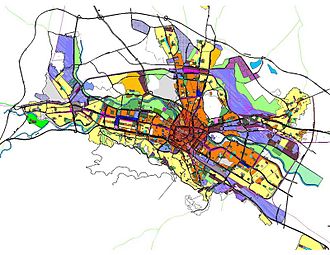
Boise metropolitan area
Q4938481 QID OVERLAP 0.720
QID OVERLAP: Q4938481 in interior_design_architecture (tier:branch) and beauty_salon (tier:branch). | SHARED TOKENS (11): "boise", "home", "idaho", "larger", "meridian", "metropolitan", "nampa", "population", "section", "treasure", "valley".
boisehomeidaholargermeridianmetropolitannampapopulationsectiontreasurevalley
The Boise, Idaho Metropolitan Statistical Area (MSA) (commonly known as the Boise Metropolitan Area or the Treasure Valley) is an area that encompasses Ada, Boise, Canyon, Gem, and Owyhee counties in southwestern Idaho, anchored by the cities of Boise and Nampa. It is the main component of the wider Boise–Mountain Home–Ontario, ID–OR Combined Statistical Area, which adds Elmore and Payette counties in Idaho and Malheur County, Oregon. It is the state's largest officially designated metropolitan area and includes Idaho's three largest cities: Boise, Nampa, and Meridian.
tistical Area, which adds Elmore and Payette counties in Idaho and Malheur County, Oregon. It is the state's largest officially designated metropolitan area and includes Idaho's three largest cities: Boise, Nampa, and Meridian. Nearly 40 percent of Idaho's total population lives in the area. As of the 2021 estimate, the Boise–Nampa, Idaho Metropolitan Statistical Area (MSA) had a population of 795,268, while the larger Boise City–Mountain Home–Ontario, ID–OR Combined Statistical Area (CSA) had a population of 850,341. The metro area is currently the third largest in the U.S.
ally designated metropolitan area and includes Idaho's three largest cities: Boise, Nampa, and Meridian. Nearly 40 percent of Idaho's total population lives in the area. As of the 2021 estimate, the Boise–Nampa, Idaho Metropolitan Statistical Area (MSA) had a population of 795,268, while the larger Boise City–Mountain Home–Ontario, ID–OR Combined Statistical Area (CSA) had a population of 850,341. The metro area is currently the third largest in the U.S.
Ada County, Idaho
Q109820 QID OVERLAP 0.720
QID OVERLAP: Q109820 in interior_design_architecture (tier:evergreen) and beauty_salon (tier:branch). | SHARED TOKENS (11): "boise", "capital", "district", "home", "idaho", "jurisdiction", "local", "metropolitan", "population", "private", "second".
boisecapitaldistricthomeidahojurisdictionlocalmetropolitanpopulationprivatesecond
94,967, which by 2025 was estimated to have risen to 546,141. Ada County is by far the state's most populous county; it is home to 26.8% of the state's population. The county seat and largest city is Boise, which is also the state capital. Ada County is included in the Boise metropolitan area. The Ada County Highway District has jurisdiction over all the local county and city streets, except for private roads and state roads.
the Cascade Range, Ada County ranks second in population, behind Spokane County, Washington. History Ada County was created by the Idaho Territory legislature on December 22, 1864, partitioned from Boise County. It is named for Ada Riggs, the daughter of H. C. Riggs, a member of the legislature; he established the county and was a co-founder of Boise.
History Ada County was created by the Idaho Territory legislature on December 22, 1864, partitioned from Boise County. It is named for Ada Riggs, the daughter of H. C. Riggs, a member of the legislature; he established the county and was a co-founder of Boise. Canyon County, which originally included Payette County and most of Gem County, was partitioned from western Ada County in 1891. Geography According to the United States Census Bureau, the county has a total area of 1,060 square miles (2,700 km2), of which 1,053 square miles (2,730 km2) is land and 7.9 square miles (20 km2) (0.7%) is water. The Boise River flows through the northern portion of the county, and the northwest border is bounded by the foothills of the Boise Range mountains; the summits are in adjacent Boise County.
Garden City, Idaho
Q1516892 QID OVERLAP 0.700
QID OVERLAP: Q1516892 in interior_design_architecture (tier:evergreen) and beauty_salon (tier:evergreen). | SHARED TOKENS (10): "boise", "century", "garden", "idaho", "metropolitan", "municipal", "population", "second", "separate", "studios".
boisecenturygardenidahometropolitanmunicipalpopulationsecondseparatestudios
Garden City is a city in Ada County, Idaho. The population was 12,316 at the time of the 2020 census. Garden City is nearly surrounded by Boise but retains a separate municipal government. Garden City was named for gardens raised by Chinese immigrants who lived in the area.
s only main street, Chinden Boulevard, is a portmanteau of the words "China" and "garden." In the second decade of the 21st century, it became a haven for artists' studios. Garden City is part of the Boise metropolitan area. Geography According to the United States Census Bureau, the city has a total area of 4.17 square miles (10.80 km2), of which 4.04 square miles (10.46 km2) is land and 0.13 square miles (0.34 km2) is water. Expo Idaho, which hosts the Western Idaho Fair, is part of unincorporated Ada County but the city limits completely surround the complex.
2000 census At the 2000 census there were 10,624 people, 4,331 households, and 2,784 families living in the city. The population density was 2,559.9 per square mile. There were 4,590 housing units at an average density of 1,106.0 per square mile. The racial makeup of the city was 89.3% White, 0.5% African American, 0.9% Native American, 1.4% Asian, 0.1% Pacific Islander, 4.9% from other races, and 2.9% from two or more races. Hispanic or Latino of any race were 9.6%. Of the 4,331 households 29.8% had children under the age of 18 living with them, 47.7% were married couples living together, 10.9% had a female householder with no husband present, and 35.7% were non-families. 27% of households were one person and 8.3% were one person aged 65 or older. The average household size was 2.43 and the average family size was 2.91. The age distribution was 24.3% under the age of 18, 10.8% from 18 to 24, 29.9% from 25 to 44, 22.6% from 45 to 64, and 12.5% 65 or older. The median age was 35 years. For every 100 females, there were 103.1 males. For every 100 females age 18 and over, there were 101.3 males. The median household income was $38,520 and the median family income was $46,463. Males had a median income of $30,499 versus $28,315 for females. The per capita income for the city was $24,242. About 9.8% of families and 12.7% of the population were below the poverty line, including 16.6% of those under age 18 and 4.0% of those age 65 or over. Education Most of Garden City is in Boise School District.
Meridian, Idaho
Q1085274 QID OVERLAP 0.660
QID OVERLAP: Q1085274 in interior_design_architecture (tier:branch) and beauty_salon (tier:branch). | SHARED TOKENS (8): "among", "boise", "capital", "idaho", "making", "meridian", "population", "second".
amongboisecapitalidahomakingmeridianpopulationsecond
population was 117,635 at the 2020 census, making it the second most populous city in the county and Idaho, after Boise, the state capital.
Irrigation (1890– ) Early settlers arriving in the area came with no knowledge of gravity flow irrigation. Their previous homes were in areas where rain provided the needed moisture to raise crops. Irrigation soon became a necessity, since having a water source was a requirement for receiving the patent for the land from the U.S. Land Office. Irrigation districts, such as the Nampa-Meridian and Settlers irrigation districts, continue to serve the immediate Meridian area. The town was established in 1891 on the Onweiler farm north of the present site and was called Hunter. Two years later an I.O.O.F. lodge was organized and called itself Meridian because it was located on the Boise Meridian, and the town was renamed. The Settlers' Irrigation Ditch, 1892, changed the arid region into a productive farming community which was incorporated in 1902. Village (1903–41) The original Meridian town site was filed in 1893 on homestead grant land belonging to Eliza Ann Zenger. Her husband, Christian, filed the plat with county officials and called it Meridian. The early settlers, many of whom were relatives, left their homes in Missouri to go west, either by wagon, train, or immigrant railroad car, bringing their lodge and church preferences with them. They established local institutions soon after arriving and filed for homestead lands. Meridian was incorporated in 1903. Around the start of the 20th century, settlers established fruit orchards and built fruit packing businesses and prune dryers along the railroad tracks. Local orchards produced many varieties of apples and Italian prunes. Production continued through the mid-1940s when it was no longer profitable and the businesses closed.
Rail transportation (1908–28) Following the raising of $4,000 to lay the Interurban rail line from Onweiler (Meridian and Ustick Roads), the tracks were completed into the village center. Turning east on Broadway and ending at East Second, the last car would spend the night in Meridian before returning to Boise early the next morning with passengers and freight. The interurban Station and Generator building (west one-third of the old library at Meridian and Idaho Streets) was built in 1912, and the line continued on to Nampa via Meridian. The tracks down Broadway were not used after 1912. The Interurban Company entered into receivership and closed in 1928 after 20 years of providing continuous transportation to neighboring towns. It was Meridian's main connection to the area outside the local community. The Union Pacific Railroad spur opened in 1900 and is currently operated by the Boise Valley Railroad.
Caldwell, Idaho
Q849592 QID OVERLAP 0.660
QID OVERLAP: Q849592 in interior_design_architecture (tier:branch) and beauty_salon (tier:branch). | SHARED TOKENS (8): "approximately", "boise", "caldwell", "college", "idaho", "locally", "metropolitan", "population".
approximatelyboisecaldwellcollegeidaholocallymetropolitanpopulation
city in Idaho. As of the 2020 census, Caldwell had a population of 59,996. Caldwell is considered part of the Boise metropolitan area, and is the location of the College of Idaho. The city is located approximately 24 miles (39 km) west of Boise, and approximately 17 miles (27 km) east of the Oregon border. History The present-day location of Caldwell is along a natural passageway to the Inland and Pacific Northwest. Native American tribes from the west coast, north Idaho and as far away as Colorado came to the banks of the Boise River for annual trading fairs, or rendezvous. European and some Hawaiian explorers and traders soon followed the paths left by Native Americans and hopeful emigrants later forged the Oregon Trail and followed those paths to seek a better life in the Oregon Territory. Pioneers of the Trail traveled along the Boise River to Canyon Hill and forded the river close to the Silver Bridge on Plymouth Street. During the Civil War, the discovery of gold in Idaho's mountains brought a variety of new settlers into the area. Many never made it to the mines but settled along the Boise River and run ferries, stage stations, and freighting businesses. These early entrepreneurs created small ranches and farms in the river valleys. Caldwell's inception occurred largely as a result of the construction of the Oregon Short Line Railroad, which connected Wyoming to Oregon through Idaho. Robert E. Strahorn came to the Boise River Valley in 1883 to select a route for the railroad. He rejected the grade into Boise City as too steep and chose a site 30 miles to the west. He drove a stake into an alkali flat of sagebrush and greasewood and the City of Caldwell was platted. Caldwell was named after one of Strahorn's business partners, Alexander Caldwell, a former senator from Kansas. When Caldwell was platted in August 1883, its founder, the Idaho and Oregon Land Improvement Company, started persuading settlers and businessmen to move to the area. Within four months, Caldwell had 600 residents living in 150 dwellings, 40 businesses, a school, a telephone exchange, and two newspapers. On January 15, 1890, the Board of Commissioners of Ada County issued a handwritten order incorporating the City of Caldwell. The College of Idaho was founded in Caldwell in 1891. In 1892, Canyon County was established from a portion of Ada County, and Caldwell was named the county seat. Irrigation canals and waterways were constructed throughout Canyon County, providing the foundation for an agricultural economy. The Oregon Short Line Railroad became part of the larger Union Pacific Railroad network and in 1906 the Caldwell freight and passenger depot was constructed. Caldwell experienced moderate growth as an agricultural processing, commercial retail and educational center during the 20th century. In 2009, the City of Caldwell completed a revitalization project to restore Indian Creek, which runs through downtown Caldwell, but had been used for sewage disposal by local industries and been covered over.
History The present-day location of Caldwell is along a natural passageway to the Inland and Pacific Northwest. Native American tribes from the west coast, north Idaho and as far away as Colorado came to the banks of the Boise River for annual trading fairs, or rendezvous. European and some Hawaiian explorers and traders soon followed the paths left by Native Americans and hopeful emigrants later forged the Oregon Trail and followed those paths to seek a better life in the Oregon Territory. Pioneers of the Trail traveled along the Boise River to Canyon Hill and forded the river close to the Silver Bridge on Plymouth Street. During the Civil War, the discovery of gold in Idaho's mountains brought a variety of new settlers into the area. Many never made it to the mines but settled along the Boise River and run ferries, stage stations, and freighting businesses. These early entrepreneurs created small ranches and farms in the river valleys. Caldwell's inception occurred largely as a result of the construction of the Oregon Short Line Railroad, which connected Wyoming to Oregon through Idaho. Robert E. Strahorn came to the Boise River Valley in 1883 to select a route for the railroad. He rejected the grade into Boise City as too steep and chose a site 30 miles to the west. He drove a stake into an alkali flat of sagebrush and greasewood and the City of Caldwell was platted. Caldwell was named after one of Strahorn's business partners, Alexander Caldwell, a former senator from Kansas. When Caldwell was platted in August 1883, its founder, the Idaho and Oregon Land Improvement Company, started persuading settlers and businessmen to move to the area. Within four months, Caldwell had 600 residents living in 150 dwellings, 40 businesses, a school, a telephone exchange, and two newspapers. On January 15, 1890, the Board of Commissioners of Ada County issued a handwritten order incorporating the City of Caldwell. The College of Idaho was founded in Caldwell in 1891. In 1892, Canyon County was established from a portion of Ada County, and Caldwell was named the county seat. Irrigation canals and waterways were constructed throughout Canyon County, providing the foundation for an agricultural economy. The Oregon Short Line Railroad became part of the larger Union Pacific Railroad network and in 1906 the Caldwell freight and passenger depot was constructed. Caldwell experienced moderate growth as an agricultural processing, commercial retail and educational center during the 20th century. In 2009, the City of Caldwell completed a revitalization project to restore Indian Creek, which runs through downtown Caldwell, but had been used for sewage disposal by local industries and been covered over.
location of the College of Idaho. The city is located approximately 24 miles (39 km) west of Boise, and approximately 17 miles (27 km) east of the Oregon border. History The present-day location of Caldwell is along a natural passageway to the Inland and Pacific Northwest. Native American tribes from the west coast, north Idaho and as far away as Colorado came to the banks of the Boise River for annual trading fairs, or rendezvous. European and some Hawaiian explorers and traders soon followed the paths left by Native Americans and hopeful emigrants later forged the Oregon Trail and followed those paths to seek a better life in the Oregon Territory. Pioneers of the Trail traveled along the Boise River to Canyon Hill and forded the river close to the Silver Bridge on Plymouth Street. During the Civil War, the discovery of gold in Idaho's mountains brought a variety of new settlers into the area. Many never made it to the mines but settled along the Boise River and run ferries, stage stations, and freighting businesses. These early entrepreneurs created small ranches and farms in the river valleys. Caldwell's inception occurred largely as a result of the construction of the Oregon Short Line Railroad, which connected Wyoming to Oregon through Idaho. Robert E. Strahorn came to the Boise River Valley in 1883 to select a route for the railroad. He rejected the grade into Boise City as too steep and chose a site 30 miles to the west. He drove a stake into an alkali flat of sagebrush and greasewood and the City of Caldwell was platted. Caldwell was named after one of Strahorn's business partners, Alexander Caldwell, a former senator from Kansas. When Caldwell was platted in August 1883, its founder, the Idaho and Oregon Land Improvement Company, started persuading settlers and businessmen to move to the area. Within four months, Caldwell had 600 residents living in 150 dwellings, 40 businesses, a school, a telephone exchange, and two newspapers. On January 15, 1890, the Board of Commissioners of Ada County issued a handwritten order incorporating the City of Caldwell. The College of Idaho was founded in Caldwell in 1891. In 1892, Canyon County was established from a portion of Ada County, and Caldwell was named the county seat. Irrigation canals and waterways were constructed throughout Canyon County, providing the foundation for an agricultural economy. The Oregon Short Line Railroad became part of the larger Union Pacific Railroad network and in 1906 the Caldwell freight and passenger depot was constructed. Caldwell experienced moderate growth as an agricultural processing, commercial retail and educational center during the 20th century. In 2009, the City of Caldwell completed a revitalization project to restore Indian Creek, which runs through downtown Caldwell, but had been used for sewage disposal by local industries and been covered over.
Kuna, Idaho
Q1515177 QID OVERLAP 0.620
QID OVERLAP: Q1515177 in interior_design_architecture (tier:branch) and beauty_salon (tier:branch). | SHARED TOKENS (6): "additional", "boise", "idaho", "kuna", "metropolitan", "population".
additionalboiseidahokunametropolitanpopulation
metropolitan area. The population was 24,011 at the time of the 2020 census. Kuna is one of the fastest-growing areas in Idaho, having nearly tripled in population between 2000 and 2010 and a nearly additional 60 percent gain between 2010 and 2020. History Kuna originated as a railroad stop with coach transport to Boise. It is popularly believed, as cited by the Kuna Chamber of Commerce, that the translation of the name "Kuna" means "the end of the trail", but Charles S.
History Kuna originated as a railroad stop with coach transport to Boise. It is popularly believed, as cited by the Kuna Chamber of Commerce, that the translation of the name "Kuna" means "the end of the trail", but Charles S. Walgamott cites the origin of the name as a Shoshone Indian word meaning "green leaf, good to smoke." The Western Heritage Historic Byway, designated as a national as well as a state scenic byway, travels around a number of historic sites in the area. Geography Kuna's business center is approximately 18 miles (29 km) southwest of downtown Boise, the state capital. According to the United States Census Bureau, the city has a total area of 18.18 square miles (47.09 km2), of which 18.08 square miles (46.83 km2) is land and 0.10 square miles (0.26 km2) is water. South of Kuna is the Kuna Caves, a lava tube. A small seasonal creek, Indian Creek, runs through the city. It is now used as an irrigation canal, filled by the New York Canal from the Boise River Diversion Dam.
Geography Kuna's business center is approximately 18 miles (29 km) southwest of downtown Boise, the state capital. According to the United States Census Bureau, the city has a total area of 18.18 square miles (47.09 km2), of which 18.08 square miles (46.83 km2) is land and 0.10 square miles (0.26 km2) is water. South of Kuna is the Kuna Caves, a lava tube. A small seasonal creek, Indian Creek, runs through the city. It is now used as an irrigation canal, filled by the New York Canal from the Boise River Diversion Dam. One of the few small floatable waterways in the region, Indian Creek is a favorite swimming spot for local residents. Demographics 2020 census As of the 2020 census, Kuna had a population of 24,011. The median age was 30.9 years. 31.8% of residents were under the age of 18 and 8.1% of residents were 65 years of age or older. For every 100 females there were 97.8 males, and for every 100 females age 18 and over there were 96.2 males age 18 and over. 97.1% of residents lived in urban areas, while 2.9% lived in rural areas. There were 7,736 households in Kuna, of which 48.2% had children under the age of 18 living in them. Of all households, 62.3% were married-couple households, 11.6% were households with a male householder and no spouse or partner present, and 17.4% were households with a female householder and no spouse or partner present. About 13.9% of all households were made up of individuals and 4.6% had someone living alone who was 65 years of age or older. There were 7,948 housing units, of which 2.7% were vacant. The homeowner vacancy rate was 0.8% and the rental vacancy rate was 5.9%. As of the 2020 census, the median income for a household in the city was $68,017. Families had a median income of $75,296 versus $91,364 for married-couple families and $33,512 for nonfamily households.
Boise River
Q891080 QID OVERLAP 0.620
QID OVERLAP: Q891080 in interior_design_architecture (tier:branch) and beauty_salon (tier:branch). | SHARED TOKENS (6): "approximately", "boise", "idaho", "portion", "urban", "western".
approximatelyboiseidahoportionurbanwestern
the Northwestern United States. It drains a rugged portion of the Sawtooth Range in southwestern Idaho northeast of Boise, as well as part of the western Snake River Plain. The watershed encompasses approximately 4,100 square miles (11,000 km2) of highly diverse habitats, including alpine canyons, forest, rangeland, agricultural lands, and urban areas. Description The Boise River rises in three separate forks in the Sawtooth Range at elevations exceeding 10,000 feet (3,050 m), and is formed by the confluence of its North and Middle forks. The North Fork, 50 miles (80 km) long, rises in the Sawtooth Wilderness Area, along the Boise–Elmore county line, 60 miles (100 km) northeast of Boise. It flows generally southwest through the remote mountains in the Boise National Forest. The Middle Fork, approximately 52 miles (84 km) in length, rises within 12 miles (19 km) of the North Fork in the southern Sawtooth Wilderness Area in northeastern Elmore County. It flows west-southwest near the town of Atlanta, joining the North Fork to form the Boise River, approximately 15 miles (24 km) southeast of Idaho City.
Description The Boise River rises in three separate forks in the Sawtooth Range at elevations exceeding 10,000 feet (3,050 m), and is formed by the confluence of its North and Middle forks. The North Fork, 50 miles (80 km) long, rises in the Sawtooth Wilderness Area, along the Boise–Elmore county line, 60 miles (100 km) northeast of Boise. It flows generally southwest through the remote mountains in the Boise National Forest. The Middle Fork, approximately 52 miles (84 km) in length, rises within 12 miles (19 km) of the North Fork in the southern Sawtooth Wilderness Area in northeastern Elmore County. It flows west-southwest near the town of Atlanta, joining the North Fork to form the Boise River, approximately 15 miles (24 km) southeast of Idaho City.
The watershed encompasses approximately 4,100 square miles (11,000 km2) of highly diverse habitats, including alpine canyons, forest, rangeland, agricultural lands, and urban areas. Description The Boise River rises in three separate forks in the Sawtooth Range at elevations exceeding 10,000 feet (3,050 m), and is formed by the confluence of its North and Middle forks. The North Fork, 50 miles (80 km) long, rises in the Sawtooth Wilderness Area, along the Boise–Elmore county line, 60 miles (100 km) northeast of Boise. It flows generally southwest through the remote mountains in the Boise National Forest. The Middle Fork, approximately 52 miles (84 km) in length, rises within 12 miles (19 km) of the North Fork in the southern Sawtooth Wilderness Area in northeastern Elmore County. It flows west-southwest near the town of Atlanta, joining the North Fork to form the Boise River, approximately 15 miles (24 km) southeast of Idaho City.
Eagle, Idaho
Q1516870 QID OVERLAP 0.600
QID OVERLAP: Q1516870 in interior_design_architecture (tier:branch) and beauty_salon (tier:branch). | SHARED TOKENS (5): "boise", "downtown", "eagle", "idaho", "population".
boisedowntowneagleidahopopulation
Eagle is a city in Ada County, Idaho, ten miles (16 km) northwest of downtown Boise. The population was 30,346 at the 2020 census. History 19th century Eagle Island in Idaho was settled in 1863 by Truman Coe Catlin, who later shifted from crop farming to dairy farming, starting the island's dairy tradition. He also pioneered irrigation in the area by constructing a wide irrigation ditch. The most notable early community developer was Thomas Hugh Aiken, a Canadian surveyor, who helped establish the Eagle community in the 1870s.
Parks and recreation The city features numerous parks, including Arboretum Park, Friendship Park, Heritage Park, Orval Krasen Park, Reid W. Merrill Sr. Community Park, and Stephen C. Guerber Park, among others. The Parks and Recreation department offers youth sports leagues, camps, special events (such as Eagle Fun Days), and maintains extensive trails. Nearby Eagle Island State Park provides a swimming beach, trails, disc golf, and winter sports. Education Most of Eagle is in the West Ada School District, with a small portion in the Boise School District. The portion in the Boise School District is zoned to: Shadow Hills Elementary School, Riverglen Middle School, and Capital High School. In popular culture The 2008 show The Baby Borrowers was filmed in Eagle.
20th century The Eagle Fish Hatchery, established in the late 1940s in Idaho, was originally part of a trout program until the 1980s. In 1991, it was restructured to support the conservation of Snake River sockeye salmon, an endangered species listed that year. The hatchery's mission shifted to preserving the species and its genetic diversity through the development of eight broodstocks derived from smolts, anadromous adults, and residual populations.
◈ Cross-Vertical Edge Ledger
All Additional Edges — Deterministic Matching
216 EDGES
◈ ADDITIONAL CROSS EDGES · NON-OVERLAP216 edges
🌲 EVERGREEN1 edges
0.650
applicationapplicationsclientclientscombinationcourseidentifyingitselflicensedproductsprofessionalshapetechniciantrainingtreatmenttreatmentswhosework
SHARED TOKENS (18): "application", "applications", "client", "clients", "combination", "course", "identifying", "itself", "licensed", "products", "professional", "shape", "technician", "training", "treatment", "treatments", "whose", "work". | URL->B (1): https://www.cdc.gov/niosh/nail-technicians/about/index.html. | EXACT TITLE in beauty_salon: "Nail technician".
🌿 BRANCH165 edges
0.500
Houzz ↗ Q17055479 EXACT TITLE
applicationsbusinesscommunityconsumer-facingdesignfoundedhomelandscapemanagementonlineplatformprofessionalsprojectsoftwareusers
SHARED TOKENS (15): "applications", "business", "community", "consumer-facing", "design", "founded", "home", "landscape", "management", "online", "platform", "professionals", "project", "software", "users". | EXACT TITLE in interior_design_architecture: "Houzz".
0.500
amongapproximatelyboisecampuscampusesdivisiongraduateidaholaterofficesoperatesprofessionalpublicresearchschoolsstatewidestudents
SHARED TOKENS (17): "among", "approximately", "boise", "campus", "campuses", "division", "graduate", "idaho", "later", "offices", "operates", "professional", "public", "research", "schools", "statewide", "students". | EXACT TITLE in interior_design_architecture: "University of Idaho".
0.500
accessadministrativeaestheticcommercialdevelopmentdistricthistoricalhomelargerlegalownerspotentialprotectionregionrelatedsectionseparatesmallstatusstructures
SHARED TOKENS (23): "access", "administrative", "aesthetic", "commercial", "development", "district", "historical", "home", "larger", "legal", "owners", "potential", "protection", "region", "related", "section", "separate", "small", "status", "structures".... | EXACT TITLE in interior_design_architecture: "Historic district".
0.500
applicationscodeconsumptioncustomerdatadesigndevelopmentformformshealthcareimpactsimprovementslargemodelsnetworksnewsproductsalessectorssoftware
SHARED TOKENS (26): "applications", "code", "consumption", "customer", "data", "design", "development", "form", "forms", "healthcare", "impacts", "improvements", "large", "models", "networks", "news", "product", "sales", "sectors", "software".... | EXACT TITLE in interior_design_architecture: "Generative AI".
0.500
applicationsdataformgraphmodernnodeoperationoperationsprocessprogramsrelatedrepresentationsetsinglespatialstructuretogether
SHARED TOKENS (17): "applications", "data", "form", "graph", "modern", "node", "operation", "operations", "process", "programs", "related", "representation", "set", "single", "spatial", "structure", "together". | EXACT TITLE in interior_design_architecture: "Scene graph".
0.500
Photography ↗ Q11633 EXACT TITLE
applicationbusinesscreatecreatingdevelopeddirectelectricalforminsidelatermaterialmeansoperatesphotographypracticerealstudentsusesvisible
SHARED TOKENS (19): "application", "business", "create", "creating", "developed", "direct", "electrical", "form", "inside", "later", "material", "means", "operates", "photography", "practice", "real", "students", "uses", "visible". | EXACT TITLE in interior_design_architecture: "Photography". | EXACT TITLE in beauty_salon: "Photography".
0.500
againstcontrolsdesigndevelopmentexternalmedicalprocessproductproductsregulatedrequirementsreviewreviewsthereforeverifywork
SHARED TOKENS (16): "against", "controls", "design", "development", "external", "medical", "process", "product", "products", "regulated", "requirements", "review", "reviews", "therefore", "verify", "work". | EXACT TITLE in interior_design_architecture: "Design review".
0.500
constructioncontractorcontractorsdifferentdocumentselectricalfirehandlinginformationownerplumbingprimaryproductproductsprotectionrequiredsetshopshowssubject
SHARED TOKENS (21): "construction", "contractor", "contractors", "different", "documents", "electrical", "fire", "handling", "information", "owner", "plumbing", "primary", "product", "products", "protection", "required", "set", "shop", "shows", "subject".... | EXACT TITLE in interior_design_architecture: "Shop drawing".
0.500
academicanalysisanotherapplicationsbodybroaderbusinessdatadisciplineengineeringgeographicindexindustryinformationinstitutionalinsuranceintegratedknowledgelogisticsmanagement
SHARED TOKENS (38): "academic", "analysis", "another", "applications", "body", "broader", "business", "data", "discipline", "engineering", "geographic", "index", "industry", "information", "institutional", "insurance", "integrated", "knowledge", "logistics", "management".... | EXACT TITLE in interior_design_architecture: "Geographic information system".
0.500
alonebeyondbuildingcodecodesconditionsconsumptioncontroldemanddependdesigndirectdirectlyhealthimpactimpactsissuemaintainingmeansmodern
SHARED TOKENS (37): "alone", "beyond", "building", "code", "codes", "conditions", "consumption", "control", "demand", "depend", "design", "direct", "directly", "health", "impact", "impacts", "issue", "maintaining", "means", "modern".... | EXACT TITLE in beauty_salon: "Ventilation (architecture)".
0.500
Office ↗ EXACT TITLE
additionaladministrativebusinesscenturycontroldesignformfunctionsgrowthhomeinsurancelargelawmodernofficesofficialorganizationsrecordsrequiredrequiring
SHARED TOKENS (31): "additional", "administrative", "business", "century", "control", "design", "form", "functions", "growth", "home", "insurance", "large", "law", "modern", "offices", "official", "organizations", "records", "required", "requiring".... | EXACT TITLE in interior_design_architecture: "Office". | EXACT TITLE in beauty_salon: "Office".
0.500
AutoCAD ↗ EXACT TITLE
accessapplicationapplicationsarchitectscommercialdesigndevelopedgeneralindustrylaterlicensedlicensesonlineplannersplatformsprofessionalsprojectseparatelysoftwaretechnical
SHARED TOKENS (21): "access", "application", "applications", "architects", "commercial", "design", "developed", "general", "industry", "later", "licensed", "licenses", "online", "planners", "platforms", "professionals", "project", "separately", "software", "technical".... | EXACT TITLE in interior_design_architecture: "AutoCAD".
0.500
actassociatedbuildingchangescommercialcommunitydesigneducationalemploymentexperienceinfluenceinstitutionsinstructioninvestmentlargerprimaryschoolschoolssignificantspecialized
SHARED TOKENS (21): "act", "associated", "building", "changes", "commercial", "community", "design", "educational", "employment", "experience", "influence", "institutions", "instruction", "investment", "larger", "primary", "school", "schools", "significant", "specialized".... | EXACT TITLE in interior_design_architecture: "Educational architecture".
0.500
centralchangescombinationconcentrationdevelopmenteconomicexpansionformsgrowthmodelmovementplannedpopulationprocesssuburbanurban
SHARED TOKENS (16): "central", "changes", "combination", "concentration", "development", "economic", "expansion", "forms", "growth", "model", "movement", "planned", "population", "process", "suburban", "urban". | EXACT TITLE in beauty_salon: "Suburbanization".
0.500
associatedcannotcommunityconditionsexpertisefacilitieshomeincreasinglylong-termmedicalmultiplepractitionerspreparationprovideprovidingqualityrequiressafe
SHARED TOKENS (18): "associated", "cannot", "community", "conditions", "expertise", "facilities", "home", "increasingly", "long-term", "medical", "multiple", "practitioners", "preparation", "provide", "providing", "quality", "requires", "safe". | EXACT TITLE in beauty_salon: "Long-term care".
0.500
Carpentry ↗ Q203605 EXACT TITLE
apprenticeshipbuildingcenturyconstructioncustomdesignexperienceformalmaterialsplacesprimaryprogramstructuretradetrainingwork
SHARED TOKENS (16): "apprenticeship", "building", "century", "construction", "custom", "design", "experience", "formal", "materials", "places", "primary", "program", "structure", "trade", "training", "work". | EXACT TITLE in interior_design_architecture: "Carpentry".
0.500
Architect ↗ Q42973 EXACT TITLE
academicarchitectsconnectionconstructiondecisionsdesigndevelopmenteducationexperienceformalinstitutionsjurisdictionlicensemeansoccupancyplanspracticalpracticeprofessionalprovide
SHARED TOKENS (28): "academic", "architects", "connection", "construction", "decisions", "design", "development", "education", "experience", "formal", "institutions", "jurisdiction", "license", "means", "occupancy", "plans", "practical", "practice", "professional", "provide".... | EXACT TITLE in interior_design_architecture: "Architect". | EXACT TITLE in beauty_salon: "Architect".
0.500
Laundry ↗ Q852100 EXACT TITLE
buildingbusinesscommercialdifferentfacilityhistoryhomeindividualitselflaternorthresponsibilityroomsharedstudentuniversalwork
SHARED TOKENS (17): "building", "business", "commercial", "different", "facility", "history", "home", "individual", "itself", "later", "north", "responsibility", "room", "shared", "student", "universal", "work". | EXACT TITLE in beauty_salon: "Laundry".
0.500
Fashion ↗ Q12684 EXACT TITLE
allowingalongsideamongannualbrandingconsumersdescribesdifferentdistrictecosystemgeneralimpactindustryinfluenceissuemajormeansmetropolitanonlineparticipate
SHARED TOKENS (23): "allowing", "alongside", "among", "annual", "branding", "consumers", "describes", "different", "district", "ecosystem", "general", "impact", "industry", "influence", "issue", "major", "means", "metropolitan", "online", "participate".... | EXACT TITLE in beauty_salon: "Fashion".
0.500
anotherarrangementchainconsolidationconsumersdifferentdirectlyeconomyintegratedlargemakingmanagementmarketownershipproblemproductproductsratherrelatedsupplies
SHARED TOKENS (22): "another", "arrangement", "chain", "consolidation", "consumers", "different", "directly", "economy", "integrated", "large", "making", "management", "market", "ownership", "problem", "product", "products", "rather", "related", "supplies".... | EXACT TITLE in interior_design_architecture: "Vertical integration".
0.500
accesschangecommunityconditionsdefineddevelopmentdifferentdistincteconomiceconomyeducationalelectricalenforcementespeciallyfacilitiesfirmsgeneralhealthindustryinfrastructure
SHARED TOKENS (39): "access", "change", "community", "conditions", "defined", "development", "different", "distinct", "economic", "economy", "educational", "electrical", "enforcement", "especially", "facilities", "firms", "general", "health", "industry", "infrastructure".... | EXACT TITLE in interior_design_architecture: "Infrastructure". | EXACT TITLE in beauty_salon: "Infrastructure".
0.500
Skin care ↗ Q1294114 EXACT TITLE
appearanceconditionshealthinclusionindividualmaintainingmanagementmarketedpracticepracticesprocessproductsprofessionalsregulatedsupport
SHARED TOKENS (15): "appearance", "conditions", "health", "inclusion", "individual", "maintaining", "management", "marketed", "practice", "practices", "process", "products", "professionals", "regulated", "support". | EXACT TITLE in beauty_salon: "Skin care".
0.500
Tourism ↗ Q49389 EXACT TITLE
activitybeyondbusinesscommercialdefinesdevelopmenteconomicgrowthhoursimpactslimitedlocalmarketsorganizationsplacespotentialpracticesprogramsprovidingreal
SHARED TOKENS (26): "activity", "beyond", "business", "commercial", "defines", "development", "economic", "growth", "hours", "impacts", "limited", "local", "markets", "organizations", "places", "potential", "practices", "programs", "providing", "real".... | EXACT TITLE in interior_design_architecture: "Tourism". | EXACT TITLE in beauty_salon: "Tourism".
0.500
Yelp ↗ Q2299611 EXACT TITLE
acquiredannualapproximatelybusinesscomcomplaintsdirectoryexternalformerfoundedinformationlateronlineoperatespracticepracticespublicpublishedpublishesrevenue
SHARED TOKENS (27): "acquired", "annual", "approximately", "business", "com", "complaints", "directory", "external", "former", "founded", "information", "later", "online", "operates", "practice", "practices", "public", "published", "publishes", "revenue".... | EXACT TITLE in beauty_salon: "Yelp".
0.500
Stormwater ↗ Q1421263 EXACT TITLE
bodiescreatedemanddevelopeddirectlylargemajorpopulationpotentialreducerelatedresourcetreatmenturbanvolumewritten
SHARED TOKENS (16): "bodies", "create", "demand", "developed", "directly", "large", "major", "population", "potential", "reduce", "related", "resource", "treatment", "urban", "volume", "written". | EXACT TITLE in interior_design_architecture: "Stormwater".
0.500
aestheticarchitectsconditionsconstructioncontroldesignengineeringestateexpertisegeneralgovernmentalinfrastructurelandscapelicenselicensedlicensesmanagementplanningprivateprocesses
SHARED TOKENS (30): "aesthetic", "architects", "conditions", "construction", "control", "design", "engineering", "estate", "expertise", "general", "governmental", "infrastructure", "landscape", "license", "licensed", "licenses", "management", "planning", "private", "processes".... | EXACT TITLE in interior_design_architecture: "Landscape architecture".
0.500
Disinfectant ↗ Q73984 EXACT TITLE
bodybuildingdefineddentaldifferentespeciallyformformshistoricallymedicalphysicalprocessreducesectorsimultaneouslytreatmentwork
SHARED TOKENS (17): "body", "building", "defined", "dental", "different", "especially", "form", "forms", "historically", "medical", "physical", "process", "reduce", "sector", "simultaneously", "treatment", "work". | EXACT TITLE in beauty_salon: "Disinfectant".
0.500
administrativeapproximatelycenturychangecompetitivecreatecreatescurrentdescribesdevelopeddevelopmenteconomiceconomicseducationgrowthhealthimpactinstitutionallargerlinked
SHARED TOKENS (43): "administrative", "approximately", "century", "change", "competitive", "create", "creates", "current", "describes", "developed", "development", "economic", "economics", "education", "growth", "health", "impact", "institutional", "larger", "linked".... | EXACT TITLE in interior_design_architecture: "Urbanization". | EXACT TITLE in beauty_salon: "Urbanization".
0.500
accessaddressingalreadyamongcapacitycenturychangescommunitydevelopmenteconomiceducationformformalformsfoundedhistoricallyhistoryhomeindustryneighborhood
SHARED TOKENS (42): "access", "addressing", "already", "among", "capacity", "century", "changes", "community", "development", "economic", "education", "form", "formal", "forms", "founded", "historically", "history", "home", "industry", "neighborhood".... | EXACT TITLE in interior_design_architecture: "Workforce development".
0.500
Architecture ↗ Q12271 EXACT TITLE
aestheticarchitectsbuildingcenturyconstructiondesigndevelopedeconomicengineeringespeciallyformformshistoricalidentifieditselflaterlocalmaterialmaterialsmeeting
SHARED TOKENS (33): "aesthetic", "architects", "building", "century", "construction", "design", "developed", "economic", "engineering", "especially", "form", "forms", "historical", "identified", "itself", "later", "local", "material", "materials", "meeting".... | EXACT TITLE in interior_design_architecture: "Architecture".
0.500
Textile ↗ Q28823 EXACT TITLE
amongappearanceapplicationsconsumerdevelopeddifferentdirectlyformgroupslatermaterialmaterialsmedicalphysicalproductproductspropertyselectedstructuressystems
SHARED TOKENS (21): "among", "appearance", "applications", "consumer", "developed", "different", "directly", "form", "groups", "later", "material", "materials", "medical", "physical", "product", "products", "property", "selected", "structures", "systems".... | EXACT TITLE in interior_design_architecture: "Textile".
0.500
chainclientconsumerconsumersconvertcreatingdirectdirectlyfacilitiesindependentlinkedlogisticsmanagementmaterialsnetworkproductproductspublishedstructuresupply
SHARED TOKENS (22): "chain", "client", "consumer", "consumers", "convert", "creating", "direct", "directly", "facilities", "independent", "linked", "logistics", "management", "materials", "network", "product", "products", "published", "structure", "supply".... | EXACT TITLE in interior_design_architecture: "Supply chain". | EXACT TITLE in beauty_salon: "Supply chain".
0.500
applicationsbusinessdifferenteducationexperiencelargemedicalmultiplephysicalresearchsafetysmallsystemstechnologytraining
SHARED TOKENS (15): "applications", "business", "different", "education", "experience", "large", "medical", "multiple", "physical", "research", "safety", "small", "systems", "technology", "training". | EXACT TITLE in interior_design_architecture: "Virtual reality".
0.500
Urban design ↗ Q63100 EXACT TITLE
communityconnectdesigneconomichistoricalimpactlandscapelocalpagephysicalplanningprocessesprojectpublicregionalrelatedscopespaceurban
SHARED TOKENS (19): "community", "connect", "design", "economic", "historical", "impact", "landscape", "local", "page", "physical", "planning", "processes", "project", "public", "regional", "related", "scope", "space", "urban". | EXACT TITLE in interior_design_architecture: "Urban design".
0.500
Procurement ↗ Q829492 EXACT TITLE
accountacquisitionactivityagencybodiesbusinesscompetitivecorporatedecisionsdefinedeliveryexternalhandlingpracticepracticesprocessprocessesprocurementprovidepublic
SHARED TOKENS (26): "account", "acquisition", "activity", "agency", "bodies", "business", "competitive", "corporate", "decisions", "define", "delivery", "external", "handling", "practice", "practices", "process", "processes", "procurement", "provide", "public".... | EXACT TITLE in interior_design_architecture: "Procurement". | EXACT TITLE in beauty_salon: "Procurement".
0.500
analysiscenturycombinesdesigndevelopmentdisciplineelectricalengineeringmanagementmaterialsmedicalmovementphysicalproductrequiresspecificallystudysystemswork
SHARED TOKENS (19): "analysis", "century", "combines", "design", "development", "discipline", "electrical", "engineering", "management", "materials", "medical", "movement", "physical", "product", "requires", "specifically", "study", "systems", "work". | EXACT TITLE in interior_design_architecture: "Mechanical engineering".
0.500
accreditationagainstapprovedassociationboardbodiesbodycertificationcouncildemonstrateevaluationformalindependentinspectionnationalprimaryprovidequalityregionregional
SHARED TOKENS (24): "accreditation", "against", "approved", "association", "board", "bodies", "body", "certification", "council", "demonstrate", "evaluation", "formal", "independent", "inspection", "national", "primary", "provide", "quality", "region", "regional".... | EXACT TITLE in interior_design_architecture: "Accreditation". | EXACT TITLE in beauty_salon: "Accreditation".
0.500
alreadybuildingchangedconnectionconstructiondesigngeneralhomeinsideknowledgelaterlicensedmeansoccupancyphysicalplanpracticepracticesprocessprofessional
SHARED TOKENS (27): "already", "building", "changed", "connection", "construction", "design", "general", "home", "inside", "knowledge", "later", "licensed", "means", "occupancy", "physical", "plan", "practice", "practices", "process", "professional".... | EXACT TITLE in interior_design_architecture: "Interior architecture".
0.500
Accessibility ↗ EXACT TITLE
accessaccessibilityaccessiblecompatibilitycreatingdesigndevelopmentdirectentitygeneralknowledgeoperatingpopulationpracticeprocessproductproductsrelatedresearchsingle
SHARED TOKENS (26): "access", "accessibility", "accessible", "compatibility", "creating", "design", "development", "direct", "entity", "general", "knowledge", "operating", "population", "practice", "process", "product", "products", "related", "research", "single".... | EXACT TITLE in interior_design_architecture: "Accessibility". | EXACT TITLE in beauty_salon: "Accessibility".
0.500
Real estate ↗ Q684740 EXACT TITLE
acquisitionbusinesscommercialdifferententityestategenerallawlegalmeansownershippersonalprivatepropertypublicrealresidentialresourcesstatus
SHARED TOKENS (19): "acquisition", "business", "commercial", "different", "entity", "estate", "general", "law", "legal", "means", "ownership", "personal", "private", "property", "public", "real", "residential", "resources", "status". | EXACT TITLE in interior_design_architecture: "Real estate". | EXACT TITLE in beauty_salon: "Real estate".
0.500
architectsbusinessdevelopmenteducationholdlicensesmanagementprofessionalprovidingpublicrequirerequiringsectorsectorssupporttraining
SHARED TOKENS (16): "architects", "business", "development", "education", "hold", "licenses", "management", "professional", "providing", "public", "require", "requiring", "sector", "sectors", "support", "training". | EXACT TITLE in interior_design_architecture: "Professional services".
0.500
businesscapacitycommercialcustomerdefinedhomeofficesoperateoperatedoperatesownerparkingregulationsresidentialsecondshopsmallworkzoning
SHARED TOKENS (19): "business", "capacity", "commercial", "customer", "defined", "home", "offices", "operate", "operated", "operates", "owner", "parking", "regulations", "residential", "second", "shop", "small", "work", "zoning". | EXACT TITLE in beauty_salon: "Home business".
0.500
Surveying ↗ Q816425 EXACT TITLE
analysisbeginningboundariesconstructiondevelopmentengineeringestablishformshistorylawlegalownershipplanningprofessionalpropertyrequiredresearchsalessoftwaretransportation
SHARED TOKENS (21): "analysis", "beginning", "boundaries", "construction", "development", "engineering", "establish", "forms", "history", "law", "legal", "ownership", "planning", "professional", "property", "required", "research", "sales", "software", "transportation".... | EXACT TITLE in interior_design_architecture: "Surveying".
0.500
architectsassociationboardscertificatecouncildistrictexaminationexperiencehealthlawlegallylicensinglicensuremaintainsmodelnationalprofessionalprogrampublicregistration
SHARED TOKENS (24): "architects", "association", "boards", "certificate", "council", "district", "examination", "experience", "health", "law", "legally", "licensing", "licensure", "maintains", "model", "national", "professional", "program", "public", "registration".... | EXACT TITLE in interior_design_architecture: "National Council of Architectural Registration Boards".
0.500
activityamongboisebusinesscollegedivisioneconomicseducationengineeringfoundedgraduatehealthidahoindependentprogramprogramspublicreportedresearchschool
SHARED TOKENS (21): "activity", "among", "boise", "business", "college", "division", "economics", "education", "engineering", "founded", "graduate", "health", "idaho", "independent", "program", "programs", "public", "reported", "research", "school".... | EXACT TITLE in interior_design_architecture: "Boise State University".
0.500
Retail ↗ Q126793 EXACT TITLE
accessaffectingalongsideanalysisbroaderbusinesschainconsumerscostscreditcustomerdecisionsdeliverydesigndirectlyeconomicallyexperiencefirmshandlinghistory
SHARED TOKENS (49): "access", "affecting", "alongside", "analysis", "broader", "business", "chain", "consumers", "costs", "credit", "customer", "decisions", "delivery", "design", "directly", "economically", "experience", "firms", "handling", "history".... | EXACT TITLE in interior_design_architecture: "Retail". | EXACT TITLE in beauty_salon: "Retail".
0.500
actadministrationagencyamongapprovalbuildingcampuscontroldepartmentdistinctdivisionengineeringevaluationfederalfoundedfunctionshealthinformationintegratedknowledge
SHARED TOKENS (42): "act", "administration", "agency", "among", "approval", "building", "campus", "control", "department", "distinct", "division", "engineering", "evaluation", "federal", "founded", "functions", "health", "information", "integrated", "knowledge".... | EXACT TITLE in beauty_salon: "National Institute for Occupational Safety and Health".
0.500
aestheticanalysisarchitectsbuildingcodescomplianceconstructiondefineddesignhealthlandscapemanagementplanplanningpolicypracticequalityregulatorysitetechnical
SHARED TOKENS (20): "aesthetic", "analysis", "architects", "building", "codes", "compliance", "construction", "defined", "design", "health", "landscape", "management", "plan", "planning", "policy", "practice", "quality", "regulatory", "site", "technical". | EXACT TITLE in interior_design_architecture: "Landscape architect".
0.500
accessiblecodeconsumerdatadetaileddevelopmentmodelmodelsnetworkorganizationsproductpubliclytechnologytexttraining
SHARED TOKENS (15): "accessible", "code", "consumer", "data", "detailed", "development", "model", "models", "network", "organizations", "product", "publicly", "technology", "text", "training". | EXACT TITLE in interior_design_architecture: "Stable Diffusion".
0.500
Furniture ↗ Q14745 EXACT TITLE
beginningcenturyconstructiondefineddesignformholdlocalmaterialsproductreflectsresearchshowssupporttwentiethwork
SHARED TOKENS (16): "beginning", "century", "construction", "defined", "design", "form", "hold", "local", "materials", "product", "reflects", "research", "shows", "support", "twentieth", "work". | EXACT TITLE in interior_design_architecture: "Furniture".
0.500
Irrigation ↗ Q11453 EXACT TITLE
alteredapplicationappliescentralchangesconditionsconsolidationcontroldevelopeddirectlyformgrowthimprovementslandscapeleadmanagementnetworkoperationoperationspractice
SHARED TOKENS (32): "altered", "application", "applies", "central", "changes", "conditions", "consolidation", "control", "developed", "directly", "form", "growth", "improvements", "landscape", "lead", "management", "network", "operation", "operations", "practice".... | EXACT TITLE in interior_design_architecture: "Irrigation".
0.500
actadministrationannualbusinesscertificationdefinedhomeindustryinspectionlargelicensemedicaloperateoperationsorganizationspolicyprofessionalsprogramsqualificationsregulated
SHARED TOKENS (29): "act", "administration", "annual", "business", "certification", "defined", "home", "industry", "inspection", "large", "license", "medical", "operate", "operations", "organizations", "policy", "professionals", "programs", "qualifications", "regulated".... | EXACT TITLE in beauty_salon: "Small business".
0.500
alreadyarchitectsbuildingcenturyclientsconstructioncontractorcreatedesigndevelopmentdocumentformhistoricallyimpactmajormakingmaterialsopeningplannedplans
SHARED TOKENS (27): "already", "architects", "building", "century", "clients", "construction", "contractor", "create", "design", "development", "document", "form", "historically", "impact", "major", "making", "materials", "opening", "planned", "plans".... | EXACT TITLE in interior_design_architecture: "Architectural drawing".
0.500
additionalbodiescostcreateeconomicgeneralhealthimposejurisdictionlawoccupationalofficialproductprogramspublicrelatedrequiredsafetystatutewelfare
SHARED TOKENS (21): "additional", "bodies", "cost", "create", "economic", "general", "health", "impose", "jurisdiction", "law", "occupational", "official", "product", "programs", "public", "related", "required", "safety", "statute", "welfare".... | EXACT TITLE in beauty_salon: "Occupational safety and health".
0.500
anotherassociationbusinesschangesconditionsconnectiondatadefineddescribesdesigndevelopeddevelopmentdifferentdocumenteddocumentsengineeringexplicitlygenericguideinformation
SHARED TOKENS (43): "another", "association", "business", "changes", "conditions", "connection", "data", "defined", "describes", "design", "developed", "development", "different", "documented", "documents", "engineering", "explicitly", "generic", "guide", "information".... | EXACT TITLE in interior_design_architecture: "Specification (technical standard)". | EXACT TITLE in beauty_salon: "Specification (technical standard)".
0.500
constructiondefineddesigndisciplinedistinguishengineeringfirmsinfrastructurelocallymaintenancemunicipalnationalphysicalprivateprofessionalpublicsectorsystems
SHARED TOKENS (18): "construction", "defined", "design", "discipline", "distinguish", "engineering", "firms", "infrastructure", "locally", "maintenance", "municipal", "national", "physical", "private", "professional", "public", "sector", "systems". | EXACT TITLE in interior_design_architecture: "Civil engineering".
0.500
Cosmetics ↗ Q131207 EXACT TITLE
alterappearanceapplicationapprovalbodychangecolorcommercialdifferenthealthleadmarketedmodernpersonalproductsregulationsregulatoryrequiresafetyvisible
SHARED TOKENS (20): "alter", "appearance", "application", "approval", "body", "change", "color", "commercial", "different", "health", "lead", "marketed", "modern", "personal", "products", "regulations", "regulatory", "require", "safety", "visible". | EXACT TITLE in beauty_salon: "Cosmetics".
0.500
actdisciplinedistinguishesdocumentengineeringfunctionsindustrypageprecisepreparationprofessionalstandardssystemstechnicaltechniciantogether
SHARED TOKENS (16): "act", "discipline", "distinguishes", "document", "engineering", "functions", "industry", "page", "precise", "preparation", "professional", "standards", "systems", "technical", "technician", "together". | EXACT TITLE in interior_design_architecture: "Technical drawing".
0.500
academicboardboisecampuscareercollegecommunitycreditdevelopmenteducationgovernedidaholargenampanorthpopulationprimaryprogramspublicreported
SHARED TOKENS (27): "academic", "board", "boise", "campus", "career", "college", "community", "credit", "development", "education", "governed", "idaho", "large", "nampa", "north", "population", "primary", "programs", "public", "reported".... | EXACT TITLE in interior_design_architecture: "College of Western Idaho".
0.500
activitybusinesscontractoreconomicemploymentindependentindividualissueoperateplacingprovisionratherrealthereforetradeviewwork
SHARED TOKENS (17): "activity", "business", "contractor", "economic", "employment", "independent", "individual", "issue", "operate", "placing", "provision", "rather", "real", "therefore", "trade", "view", "work". | EXACT TITLE in beauty_salon: "Self-employment".
0.500
additionalagainstapprovedassociationconfirmationcreditenablesfederalhistoryinformationissueoperationpaymentsupplysystemtransactionverified
SHARED TOKENS (17): "additional", "against", "approved", "association", "confirmation", "credit", "enables", "federal", "history", "information", "issue", "operation", "payment", "supply", "system", "transaction", "verified". | EXACT TITLE in beauty_salon: "Payment processor".
0.500
accessibledesignexperiencefeesgeneralgroupslandscapelargerlegallimitedownersownershipparticipationphotographyplacesprivatepropertypublicrequirerequired
SHARED TOKENS (25): "accessible", "design", "experience", "fees", "general", "groups", "landscape", "larger", "legal", "limited", "owners", "ownership", "participation", "photography", "places", "private", "property", "public", "require", "required".... | EXACT TITLE in interior_design_architecture: "Public space".
0.500
architectsboisebuildingcapitalcareerconstructioncostdepartmentdesigndistrictexteriorfederalhomeidahojulylaterlistsmaterialsnationalplaces
SHARED TOKENS (23): "architects", "boise", "building", "capital", "career", "construction", "cost", "department", "design", "district", "exterior", "federal", "home", "idaho", "july", "later", "lists", "materials", "national", "places".... | EXACT TITLE in interior_design_architecture: "Idaho State Capitol".
0.480
applicationsbuildingconstructioncontractorsdesignengineeringlargerlicensedplanningprofessionalprofessionalsrequirespecificationstechnical
SHARED TOKENS (14): "applications", "building", "construction", "contractors", "design", "engineering", "larger", "licensed", "planning", "professional", "professionals", "require", "specifications", "technical". | EXACT TITLE in interior_design_architecture: "Building design".
0.460
Employment ↗ EXACT TITLE
annualconditionsemployeeemploymententityhealthinsuranceoptionspaymentprovisionsectorsectorswork
SHARED TOKENS (13): "annual", "conditions", "employee", "employment", "entity", "health", "insurance", "options", "payment", "provision", "sector", "sectors", "work". | EXACT TITLE in interior_design_architecture: "Employment". | EXACT TITLE in beauty_salon: "Employment".
0.460
applicationcertificatecosthourslicensemakingoccupationalprocessesrequiredschoolspecialtystudytreatment
SHARED TOKENS (13): "application", "certificate", "cost", "hours", "license", "making", "occupational", "processes", "required", "school", "specialty", "study", "treatment". | EXACT TITLE in beauty_salon: "Cosmetology".
0.460
annualapproximatelyblsbureaubusinessdocumentedemploymentlaboroccupationaloesofficesregionalstatistics
SHARED TOKENS (13): "annual", "approximately", "bls", "bureau", "business", "documented", "employment", "labor", "occupational", "oes", "offices", "regional", "statistics". | EXACT TITLE in beauty_salon: "Occupational Employment and Wage Statistics".
0.440
buildingconstructiondesigndevelopmentinspectionsmanagementplanningplansprojectresearchsitespace
SHARED TOKENS (12): "building", "construction", "design", "development", "inspections", "management", "planning", "plans", "project", "research", "site", "space". | EXACT TITLE in interior_design_architecture: "Interior design".
0.440
Manicure ↗ Q747493 EXACT TITLE
applicationedgehomeinfectionlicensedregulationssmalltechniciansthereforetogethertreatmenttreatments
SHARED TOKENS (12): "application", "edge", "home", "infection", "licensed", "regulations", "small", "technicians", "therefore", "together", "treatment", "treatments". | EXACT TITLE in beauty_salon: "Manicure".
0.440
Millwork ↗ Q17141333 EXACT TITLE
applicationsarchitectsbuildingconstructioncreatedesignexteriorhistoricallymaterialproductsroomspecified
SHARED TOKENS (12): "applications", "architects", "building", "construction", "create", "design", "exterior", "historically", "material", "products", "room", "specified". | EXACT TITLE in interior_design_architecture: "Millwork".
0.440
Beauty ↗ Q7242 EXACT TITLE
aestheticconnectiondefinedefiningintegratedpropertyrathersidestandardsstudysubjecttoward
SHARED TOKENS (12): "aesthetic", "connection", "define", "defining", "integrated", "property", "rather", "side", "standards", "study", "subject", "toward". | EXACT TITLE in beauty_salon: "Beauty".
0.420
Acetone ↗ Q49546 EXACT TITLE
bodiesbodybuildinghomeindustrylargermedicalprocessesproductssmallstatus
SHARED TOKENS (11): "bodies", "body", "building", "home", "industry", "larger", "medical", "processes", "products", "small", "status". | EXACT TITLE in beauty_salon: "Acetone".
0.420
Oncology ↗ Q162555 EXACT TITLE
amongformmedicalpracticesprofessionalquestionsresearchspecialtystudytreatmenttreatments
SHARED TOKENS (11): "among", "form", "medical", "practices", "professional", "questions", "research", "specialty", "study", "treatment", "treatments". | EXACT TITLE in beauty_salon: "Oncology".
0.420
Tile ↗ Q468402 EXACT TITLE
anotherapplicationsconstructioncoveringdurableformimpactsmaterialmaterialsrequireuses
SHARED TOKENS (11): "another", "applications", "construction", "covering", "durable", "form", "impacts", "material", "materials", "require", "uses". | EXACT TITLE in interior_design_architecture: "Tile". | EXACT TITLE in beauty_salon: "Tile".
0.400
Procore ↗ Q25831309 EXACT TITLE
connectconstructionfoundedindustrymanagementplatformproductsprojectsoftwareview
SHARED TOKENS (10): "connect", "construction", "founded", "industry", "management", "platform", "products", "project", "software", "view". | EXACT TITLE in interior_design_architecture: "Procore".
0.400
Nail salon ↗ Q8007048 EXACT TITLE
boardformalgeneralholdoptionsqualificationsspecialtytechnicianstreatmentswork
SHARED TOKENS (10): "board", "formal", "general", "hold", "options", "qualifications", "specialty", "technicians", "treatments", "work". | EXACT TITLE in beauty_salon: "Nail salon".
0.400
Dermatology ↗ Q171171 EXACT TITLE
beyondconditionsmedicalphysicalpopulationrelatedrequiringschoolspecialtytraining
SHARED TOKENS (10): "beyond", "conditions", "medical", "physical", "population", "related", "requiring", "school", "specialty", "training". | EXACT TITLE in beauty_salon: "Dermatology".
0.400
SketchUp ↗ Q79604 EXACT TITLE
accessacquiredapplicationscreatingdesignfoundedmodelsproductsetsoftware
SHARED TOKENS (10): "access", "acquired", "applications", "creating", "design", "founded", "models", "product", "set", "software". | EXACT TITLE in interior_design_architecture: "SketchUp".
0.400
Lighting ↗ Q210064 EXACT TITLE
aestheticappearanceconsumptiondesignfixtureslandscapemajorpracticalrepresentssource
SHARED TOKENS (10): "aesthetic", "appearance", "consumption", "design", "fixtures", "landscape", "major", "practical", "represents", "source". | EXACT TITLE in interior_design_architecture: "Lighting".
0.400
activityamongcampusfoundedidahomeridianprogramspublicresearchstudents
SHARED TOKENS (10): "activity", "among", "campus", "founded", "idaho", "meridian", "programs", "public", "research", "students". | EXACT TITLE in interior_design_architecture: "Idaho State University".
0.400
alterchangecolorcreatehomeindependentlypracticeprocessesreportedsales
SHARED TOKENS (10): "alter", "change", "color", "create", "home", "independently", "practice", "processes", "reported", "sales". | EXACT TITLE in beauty_salon: "Hair coloring".
0.380
aestheticbecomesbodydifferentformsgrowthmedicalprocessvisible
SHARED TOKENS (9): "aesthetic", "becomes", "body", "different", "forms", "growth", "medical", "process", "visible". | EXACT TITLE in beauty_salon: "Hair removal".
0.380
Drafting ↗ Q5304779 EXACT TITLE
actdisciplineelectricalengineeringfunctionsplumbingratherteamstechnical
SHARED TOKENS (9): "act", "discipline", "electrical", "engineering", "functions", "plumbing", "rather", "teams", "technical". | EXACT TITLE in interior_design_architecture: "Drafting".
0.360
Day spa ↗ Q11290050 EXACT TITLE
associationbusinessfacilityhealthitselfpersonalprovidingtreatments
SHARED TOKENS (8): "association", "business", "facility", "health", "itself", "personal", "providing", "treatments". | EXACT TITLE in beauty_salon: "Day spa".
0.360
differentespeciallylawlegalphysicalsourcesystemsusers
SHARED TOKENS (8): "different", "especially", "law", "legal", "physical", "source", "systems", "users". | EXACT TITLE in interior_design_architecture: "Water right".
0.360
acquisitionbusinessconsolidationdefinedentitylargertogethertreatment
SHARED TOKENS (8): "acquisition", "business", "consolidation", "defined", "entity", "larger", "together", "treatment". | EXACT TITLE in interior_design_architecture: "Consolidation (business)". | EXACT TITLE in beauty_salon: "Consolidation (business)".
0.360
actcollegeeducationalfacilitiesformmovementnorthschool
SHARED TOKENS (8): "act", "college", "educational", "facilities", "form", "movement", "north", "school". | EXACT TITLE in interior_design_architecture: "Collegiate Gothic".
0.340
distinctformsmeansprocessratherreducevolume
SHARED TOKENS (7): "distinct", "forms", "means", "process", "rather", "reduce", "volume". | EXACT TITLE in beauty_salon: "Sterilization (microbiology)".
0.340
centurydevelopmenthistoricalmaintainsproductsspecificallytwentieth
SHARED TOKENS (7): "century", "development", "historical", "maintains", "products", "specifically", "twentieth". | EXACT TITLE in interior_design_architecture: "Historic preservation".
0.340
Facial ↗ Q2667974 EXACT TITLE
conditionsgeneralhealthphysicalproceduretreatmenttreatments
SHARED TOKENS (7): "conditions", "general", "health", "physical", "procedure", "treatment", "treatments". | EXACT TITLE in beauty_salon: "Facial".
0.340
Shampoo ↗ Q180204 EXACT TITLE
combiningconditionsformmarketedproductseparateusers
SHARED TOKENS (7): "combining", "conditions", "form", "marketed", "product", "separate", "users". | EXACT TITLE in beauty_salon: "Shampoo".
0.340
Flooring ↗ Q1433006 EXACT TITLE
coveringgeneralmaterialmaterialsprovidestructurework
SHARED TOKENS (7): "covering", "general", "material", "materials", "provide", "structure", "work". | EXACT TITLE in interior_design_architecture: "Flooring".
0.320
Barber ↗ Q107198 EXACT TITLE
developmentplacespublicsafetywhosework
SHARED TOKENS (6): "development", "places", "public", "safety", "whose", "work". | EXACT TITLE in beauty_salon: "Barber".
0.320
boiseidahometropolitanregiontreasurevalley
SHARED TOKENS (6): "boise", "idaho", "metropolitan", "region", "treasure", "valley". | EXACT TITLE in interior_design_architecture: "Southwestern Idaho".
0.320
Electrician ↗ Q165029 EXACT TITLE
dataelectricalinfrastructuremaintenanceplatformsrelated
SHARED TOKENS (6): "data", "electrical", "infrastructure", "maintenance", "platforms", "related". | EXACT TITLE in beauty_salon: "Electrician".
0.320
Balayage ↗ Q4850161 EXACT TITLE
boundarydisciplinemodernoperatorpotentialprocedure
SHARED TOKENS (6): "boundary", "discipline", "modern", "operator", "potential", "procedure". | EXACT TITLE in beauty_salon: "Balayage".
0.320
Hair loss ↗ Q181391 EXACT TITLE
bodycombinationexperienceinfectionsmalltreatment
SHARED TOKENS (6): "body", "combination", "experience", "infection", "small", "treatment". | EXACT TITLE in beauty_salon: "Hair loss".
0.320
Waxing ↗ Q269107 EXACT TITLE
bodycoveringdifferentformgrowthprocess
SHARED TOKENS (6): "body", "covering", "different", "form", "growth", "process". | EXACT TITLE in beauty_salon: "Waxing".
0.320
Aveda ↗ Q4827965 EXACT TITLE
bodycolorfoundedproductsstudentstrains
SHARED TOKENS (6): "body", "color", "founded", "products", "students", "trains". | EXACT TITLE in beauty_salon: "Aveda".
0.320
Hospitality ↗ Q815825 EXACT TITLE
describesdisciplinehospitalitypracticesalesvolume
SHARED TOKENS (6): "describes", "discipline", "hospitality", "practice", "sales", "volume". | EXACT TITLE in interior_design_architecture: "Hospitality". | EXACT TITLE in beauty_salon: "Hospitality".
0.300
Fire protection ↗ Q41399 KW CROSS HIGH
applicationbuildingcodecodescurrentdepartmentdevelopmentfacilitiesfirelawlocalmaintainingoperatorsownerspracticeprotectionrelatedresearchstructuresstudy
SHARED TOKENS (21): "application", "building", "code", "codes", "current", "department", "development", "facilities", "fire", "law", "local", "maintaining", "operators", "owners", "practice", "protection", "related", "research", "structures", "study"....
0.300
bodyelectricalpracticeprocessprofessional
SHARED TOKENS (5): "body", "electrical", "practice", "process", "professional". | EXACT TITLE in beauty_salon: "Electrology".
0.300
buildingconstructioncontractorcoursegeneralinformationlaborlargelegallylicensingmanagementnorthprojectrequirementssitesmallwork
SHARED TOKENS (17): "building", "construction", "contractor", "course", "general", "information", "labor", "large", "legally", "licensing", "management", "north", "project", "requirements", "site", "small", "work".
0.300
activityadditionalapproximatelychangecommercialconsumptiondevelopeddifferenteconomichealthitselflargemanagementmaterialmaterialsmunicipalportionpracticepracticesprocess
SHARED TOKENS (33): "activity", "additional", "approximately", "change", "commercial", "consumption", "developed", "different", "economic", "health", "itself", "large", "management", "material", "materials", "municipal", "portion", "practice", "practices", "process"....
0.300
Bleach ↗ Q11587 KW CROSS HIGH
activecolorconditionscontainingcontrolgenerichealthmakingmaterialsplacesprocessprocessesproductproductsrequiredspecificallyuseswork
SHARED TOKENS (18): "active", "color", "conditions", "containing", "control", "generic", "health", "making", "materials", "places", "process", "processes", "product", "products", "required", "specifically", "uses", "work".
0.300
alongsideanalysisappliesbeginningbuildingbusinesscapitalcommercialconstructioncontrolcostdesignestatefirmsincreasinglyinfrastructureknowledgemanagementnorthowner
SHARED TOKENS (31): "alongside", "analysis", "applies", "beginning", "building", "business", "capital", "commercial", "construction", "control", "cost", "design", "estate", "firms", "increasingly", "infrastructure", "knowledge", "management", "north", "owner"....
0.300
actagencyapplicationbuildingcriteriadefineddepartmentdistrictfederalformsgeneralgroupshistoricalhistoryinclusionindividualmultiplenationalofficialowners
SHARED TOKENS (30): "act", "agency", "application", "building", "criteria", "defined", "department", "district", "federal", "forms", "general", "groups", "historical", "history", "inclusion", "individual", "multiple", "national", "official", "owners"....
0.300
Gentrification ↗ Q119380 KW CROSS HIGH
businesschangescharactercommercialcommunitycostdevelopmenteconomicestateinfrastructureinvestmentlocalmetropolitanneighborhoodplanningpotentialprocesspublicrealresulting
SHARED TOKENS (21): "business", "changes", "character", "commercial", "community", "cost", "development", "economic", "estate", "infrastructure", "investment", "local", "metropolitan", "neighborhood", "planning", "potential", "process", "public", "real", "resulting"....
0.300
administrationagencyamongapplicantsarchitectscommercialcommissiondifferentfederalhealthindividualindustryjurisdictionlicenselicensedlicenseslicensurelinksmedicalnational
SHARED TOKENS (38): "administration", "agency", "among", "applicants", "architects", "commercial", "commission", "different", "federal", "health", "individual", "industry", "jurisdiction", "license", "licensed", "licenses", "licensure", "links", "medical", "national"....
0.300
anotherapproximatelyassociatedconsequentlyconsumptiondifferentissuelegallymajoritymakingpolicyproductsratherreduceregionalresearchstudytradewestern
SHARED TOKENS (19): "another", "approximately", "associated", "consequently", "consumption", "different", "issue", "legally", "majority", "making", "policy", "products", "rather", "reduce", "regional", "research", "study", "trade", "western".
0.300
SolidWorks ↗ Q751281 EXACT TITLE
applicationsbranddesignengineeringsoftware
SHARED TOKENS (5): "applications", "brand", "design", "engineering", "software". | EXACT TITLE in interior_design_architecture: "SolidWorks".
0.300
Green building ↗ Q242606 KW CROSS HIGH
accreditedadministrationapplicationarchitectsbuildingcertificationclientcommercialconstructionconsumptioncontainingcontractorcostcouncilcreatingcurrentdatadefineddesigndeveloped
SHARED TOKENS (77): "accredited", "administration", "application", "architects", "building", "certification", "client", "commercial", "construction", "consumption", "containing", "contractor", "cost", "council", "creating", "current", "data", "defined", "design", "developed"....
0.300
activityadministrationadministrativeanotherbodiescenturychangescontroldecisionsdivisioneconomiceducationenforcementgoverninginfluenceitselflawlegallegislativemodel
SHARED TOKENS (31): "activity", "administration", "administrative", "another", "bodies", "century", "changes", "control", "decisions", "division", "economic", "education", "enforcement", "governing", "influence", "itself", "law", "legal", "legislative", "model"....
0.300
Wig ↗ Q105507 EXACT TITLE
accessoryalterappearancecoveringprofessional
SHARED TOKENS (5): "accessory", "alter", "appearance", "covering", "professional". | EXACT TITLE in beauty_salon: "Wig".
0.300
annualbuildingbusinesscertificationconstructioncouncilcredentialsdesigndevelopmentexpertisefoundednationaloperationprivateprofessionalsystems
SHARED TOKENS (16): "annual", "building", "business", "certification", "construction", "council", "credentials", "design", "development", "expertise", "founded", "national", "operation", "private", "professional", "systems".
0.300
buildingcontainingcontractsdatadesigndevelopeddevelopmentdifferentfacilitiesindustryinformationmanagementmodelsoperatephysicalplanprocessprocessesrepresentingsoftware
SHARED TOKENS (23): "building", "containing", "contracts", "data", "design", "developed", "development", "different", "facilities", "industry", "information", "management", "models", "operate", "physical", "plan", "process", "processes", "representing", "software"....
0.300
businessconstructionconsumptioncriteriacurrentdesignecosystemguidehandlingimpactimpactsindividualmaterialobtainresourcesuses
SHARED TOKENS (16): "business", "construction", "consumption", "criteria", "current", "design", "ecosystem", "guide", "handling", "impact", "impacts", "individual", "material", "obtain", "resources", "uses".
0.300
amongappearanceassociatedbodycategoryconsumerconsumerscontainingdifferentexternalforminclusionindustrymarketmarketedmodernpersonalproductsprotectionremain
SHARED TOKENS (20): "among", "appearance", "associated", "body", "category", "consumer", "consumers", "containing", "different", "external", "form", "inclusion", "industry", "market", "marketed", "modern", "personal", "products", "protection", "remain".
0.300
beginningbusinesschangeclientcontractorscriteriadecisionsdefineddevelopmentdistinctinfluenceinformationmanagementoperationspracticeprimaryprocessproductproductsproject
SHARED TOKENS (26): "beginning", "business", "change", "client", "contractors", "criteria", "decisions", "defined", "development", "distinct", "influence", "information", "management", "operations", "practice", "primary", "process", "product", "products", "project"....
0.300
buildingclientconstructioncontractorcontractorscostsindustryknowledgelawprofessionalprojectsidesubmissiontitletradework
SHARED TOKENS (16): "building", "client", "construction", "contractor", "contractors", "costs", "industry", "knowledge", "law", "professional", "project", "side", "submission", "title", "trade", "work".
0.300
actaestheticapplicableassociationauthoritycentralchangechangescommunityconditionscostscreatingdefineddependdesigndevelopmenteconomicfacilitiesfoundedgovernmental
SHARED TOKENS (41): "act", "aesthetic", "applicable", "association", "authority", "central", "change", "changes", "community", "conditions", "costs", "creating", "defined", "depend", "design", "development", "economic", "facilities", "founded", "governmental"....
0.300
architectsbuildingconstructioncontractorscreatedesigndifferentengineeringformintegratedknowledgemakingmaterialsmedicalphysicalsafetyshapesitestructuressystems
SHARED TOKENS (21): "architects", "building", "construction", "contractors", "create", "design", "different", "engineering", "form", "integrated", "knowledge", "making", "materials", "medical", "physical", "safety", "shape", "site", "structures", "systems"....
0.300
Retail design ↗ Q2044769 KW CROSS HIGH
actchaincommercialconstructionconsumerconsumersdesigndisciplineespeciallyexperienceformindividualinsidelargeprimaryproductproductsrequiresresearchretail
SHARED TOKENS (26): "act", "chain", "commercial", "construction", "consumer", "consumers", "design", "discipline", "especially", "experience", "form", "individual", "inside", "large", "primary", "product", "products", "requires", "research", "retail"....
0.300
analysisconnectionconsumerconsumerscustomerdatadifferentdirectgrowthinformationmanagementmarketmaterialsmediaoperationsorganizationspotentialproceduresprocessrules
SHARED TOKENS (23): "analysis", "connection", "consumer", "consumers", "customer", "data", "different", "direct", "growth", "information", "management", "market", "materials", "media", "operations", "organizations", "potential", "procedures", "process", "rules"....
0.300
activeagainstanalysisapplicationapplicationsarchitectsbuildingcontrolcontrollingdesigndisciplineeconomicengineeringfacilitiesfireformallocalmaintainingmanagementowners
SHARED TOKENS (33): "active", "against", "analysis", "application", "applications", "architects", "building", "control", "controlling", "design", "discipline", "economic", "engineering", "facilities", "fire", "formal", "local", "maintaining", "management", "owners"....
0.300
accesscombinationdifferenteducationeducationalhistoricallyinstructionmultiplenetworkonlineparticipationprocessprogramschoolstudentstudents
SHARED TOKENS (16): "access", "combination", "different", "education", "educational", "historically", "instruction", "multiple", "network", "online", "participation", "process", "program", "school", "student", "students".
0.300
boardbroaderbusinesscannotcommunityexpansionfacilitiesfacilityfederalgeographichealthhomeindependentlyindustryinformationlimitedmeansmedicalmodeloptions
SHARED TOKENS (39): "board", "broader", "business", "cannot", "community", "expansion", "facilities", "facility", "federal", "geographic", "health", "home", "independently", "industry", "information", "limited", "means", "medical", "model", "options"....
0.300
applicationsbecomescentraldemonstratingformformslaterlinkedmedicalmodernpotentialpreparationprocessprocessesproductsresultingsafetysettingssignificantsystem
SHARED TOKENS (20): "applications", "becomes", "central", "demonstrating", "form", "forms", "later", "linked", "medical", "modern", "potential", "preparation", "process", "processes", "products", "resulting", "safety", "settings", "significant", "system".
0.300
Google Maps ↗ Q12013 KW CROSS HIGH
acquiredadditionalapplicationaugustconditionsconsumerdatadevelopedlocalorganizationsownersparkingphotographyplanningplatformprogrampublicreportreportedsettings
SHARED TOKENS (25): "acquired", "additional", "application", "august", "conditions", "consumer", "data", "developed", "local", "organizations", "owners", "parking", "photography", "planning", "platform", "program", "public", "report", "reported", "settings"....
0.300
addressingappliesconstructioncontrolcreatedesigndisciplineengineeringevaluatehealthimpactimposelawlicensinglocalmanagementmunicipalplansprofessionalproposed
SHARED TOKENS (31): "addressing", "applies", "construction", "control", "create", "design", "discipline", "engineering", "evaluate", "health", "impact", "impose", "law", "licensing", "local", "management", "municipal", "plans", "professional", "proposed"....
0.300
accountbuildingchangescodecodesconstructioncostcostscouncilcreatesfoundedhealthindustrymaterialsmodelorganizationspracticespublicregionalregulations
SHARED TOKENS (26): "account", "building", "changes", "code", "codes", "construction", "cost", "costs", "council", "creates", "founded", "health", "industry", "materials", "model", "organizations", "practices", "public", "regional", "regulations"....
0.300
acquisitionactactivityanotherbusinesscapitalcentralcommissioncompetitiveconsolidationcontrolcorporatecreatedepartmentdirecteconomicallyenablesentityfederalgoverned
SHARED TOKENS (39): "acquisition", "act", "activity", "another", "business", "capital", "central", "commission", "competitive", "consolidation", "control", "corporate", "create", "department", "direct", "economically", "enables", "entity", "federal", "governed"....
0.300
actalgorithmsanalysisanotherapplicationauthoritycannotcategorychangecreatedatadecisionsdescribesdesigndifferententerexpertiseformsgeneralhealthcare
SHARED TOKENS (52): "act", "algorithms", "analysis", "another", "application", "authority", "cannot", "category", "change", "create", "data", "decisions", "describes", "design", "different", "enter", "expertise", "forms", "general", "healthcare"....
0.300
Dermabrasion ↗ Q1200226 KW CROSS HIGH
advantageappearanceconditionscostlocalmeansmedicaloperatorprocedureproceduresprocessprofessionalproviderequiresmallspecificallystrong
SHARED TOKENS (17): "advantage", "appearance", "conditions", "cost", "local", "means", "medical", "operator", "procedure", "procedures", "process", "professional", "provide", "require", "small", "specifically", "strong".
0.300
complaintsconnectedcontrolcustomerdatafeesimposeindividualinfluencemanagementmarketsnetworksonlineorganizationspotentialproductproductsrelatedreputationreview
SHARED TOKENS (22): "complaints", "connected", "control", "customer", "data", "fees", "impose", "individual", "influence", "management", "markets", "networks", "online", "organizations", "potential", "product", "products", "related", "reputation", "review"....
0.300
alonearrangementbusinessentityindividuallegallegallyownerownersprocessresponsibilityseparatesubjecttradework
SHARED TOKENS (15): "alone", "arrangement", "business", "entity", "individual", "legal", "legally", "owner", "owners", "process", "responsibility", "separate", "subject", "trade", "work".
0.300
Subcontractor ↗ Q2144423 KW CROSS HIGH
anotherassignsbusinesscontractorcostsgeneralitselfprocurementprojectprovisionpublicreducerulessectorsmallsupport
SHARED TOKENS (16): "another", "assigns", "business", "contractor", "costs", "general", "itself", "procurement", "project", "provision", "public", "reduce", "rules", "sector", "small", "support".
0.300
distinguishformsmeansprocessset
SHARED TOKENS (5): "distinguish", "forms", "means", "process", "set". | EXACT TITLE in interior_design_architecture: "Perm (hairstyle)". | EXACT TITLE in beauty_salon: "Perm (hairstyle)".
0.300
academicappliesauthoritybrandbroaderinformationinfrastructuremultiplenewsonlinepracticeproductsqualityrathertechnicalusersverticalvisibility
SHARED TOKENS (18): "academic", "applies", "authority", "brand", "broader", "information", "infrastructure", "multiple", "news", "online", "practice", "products", "quality", "rather", "technical", "users", "vertical", "visibility".
0.300
academicaddressesamongconnectscontroldeliverydepartmentdisciplinehealthhealthcareinfectioninfrastructurelocalmedicalpracticalpracticeprotectionpublicpublishesrather
SHARED TOKENS (24): "academic", "addresses", "among", "connects", "control", "delivery", "department", "discipline", "health", "healthcare", "infection", "infrastructure", "local", "medical", "practical", "practice", "protection", "public", "publishes", "rather"....
0.300
availabilitybuildingbusinesscombinationdeliverydocumentdocumentsforminformationlegalonlinepdfpotentialprocessproductprovidepubliclysubmissionthereforewhose
SHARED TOKENS (21): "availability", "building", "business", "combination", "delivery", "document", "documents", "form", "information", "legal", "online", "pdf", "potential", "process", "product", "provide", "publicly", "submission", "therefore", "whose"....
0.300
Urban planning ↗ Q69883 KW CROSS HIGH
accessibilityaccountadministrationanalysisanotherbroaderbusinesscapitalcategorycenturycodescommunitycreatingdesigndevelopmentdifferentdisciplineeconomicengineeringgrowth
SHARED TOKENS (59): "accessibility", "account", "administration", "analysis", "another", "broader", "business", "capital", "category", "century", "codes", "community", "creating", "design", "development", "different", "discipline", "economic", "engineering", "growth"....
0.300
LEED ↗ Q1521623 KW CROSS HIGH
addressinganotherbuildingcertificationchangechoicesconstructionconsumptioncouncildesigndevelopeddistricteconomyfederalfeesframeworkhealthcareindustrylargerlead
SHARED TOKENS (44): "addressing", "another", "building", "certification", "change", "choices", "construction", "consumption", "council", "design", "developed", "district", "economy", "federal", "fees", "framework", "healthcare", "industry", "larger", "lead"....
0.300
actapplicationsbuildingchangeconditionsdependdevelopmentdistinctexperienceimpactlargerlocalmaterialsoccupyoptionspopulationqualityspaceurban
SHARED TOKENS (19): "act", "applications", "building", "change", "conditions", "depend", "development", "distinct", "experience", "impact", "larger", "local", "materials", "occupy", "options", "population", "quality", "space", "urban".
0.300
actanotherapplicationschangecommercialcurrentdemanddevelopmentespeciallygrowthimprovementslocalmanagementmunicipalpopulationpracticesprogramsqualityreduceregional
SHARED TOKENS (23): "act", "another", "applications", "change", "commercial", "current", "demand", "development", "especially", "growth", "improvements", "local", "management", "municipal", "population", "practices", "programs", "quality", "reduce", "regional"....
0.300
bodymedicalprocessprovidertreatment
SHARED TOKENS (5): "body", "medical", "process", "provider", "treatment". | EXACT TITLE in beauty_salon: "Chemical peel".
0.300
Nursing home ↗ Q837142 KW CROSS HIGH
associationdifferentfacilitiesfacilityhomehoursinstitutionsinsurancelong-termmedicaloccupationalphysicalplannedprivateprovidepublicrequireresidential
SHARED TOKENS (18): "association", "different", "facilities", "facility", "home", "hours", "institutions", "insurance", "long-term", "medical", "occupational", "physical", "planned", "private", "provide", "public", "require", "residential".
0.300
Parking lot ↗ Q6501349 KW CROSS HIGH
controldepartmentdurablefacilitiesfeeslimitedmajormodernnorthparkingpermitproviderequirerequiressuburbantransportation
SHARED TOKENS (16): "control", "department", "durable", "facilities", "fees", "limited", "major", "modern", "north", "parking", "permit", "provide", "require", "requires", "suburban", "transportation".
0.300
applicationbodycenturycertificationcommissioncontroldesigndevelopeddifferentdisciplineelectricalengineeringhistoricallyholdindividualmanagementmaterialsnationalprofessionalproject
SHARED TOKENS (27): "application", "body", "century", "certification", "commission", "control", "design", "developed", "different", "discipline", "electrical", "engineering", "historically", "hold", "individual", "management", "materials", "national", "professional", "project"....
0.300
actadministrationagencyconditionscostscreditdepartmenteducationemploymentfederalhealthinspectionslaborlawoccupationalprovidingreduceregulationsregulatorysafe
SHARED TOKENS (24): "act", "administration", "agency", "conditions", "costs", "credit", "department", "education", "employment", "federal", "health", "inspections", "labor", "law", "occupational", "providing", "reduce", "regulations", "regulatory", "safe"....
0.300
accessibilityassociatedbroaderbusinessdevelopmentlinkslocallocallypropertyprovideratherretailrulessafetysignificantsingleurban
SHARED TOKENS (17): "accessibility", "associated", "broader", "business", "development", "links", "local", "locally", "property", "provide", "rather", "retail", "rules", "safety", "significant", "single", "urban".
0.300
analysisappearanceapplicationsbuildingcreatecreatingdesigneconomicengineeringforminformationmajormaterialsmeansmodelsmodernoperationsprocessprocessesproduct
SHARED TOKENS (28): "analysis", "appearance", "applications", "building", "create", "creating", "design", "economic", "engineering", "form", "information", "major", "materials", "means", "models", "modern", "operations", "process", "processes", "product"....
0.300
againstalreadybuildingcenturydefineddevelopmentformmaintainsmodernmovementpublishedratherrecordssecondseparatethereforewestern
SHARED TOKENS (17): "against", "already", "building", "century", "defined", "development", "form", "maintains", "modern", "movement", "published", "rather", "records", "second", "separate", "therefore", "western".
0.300
academicanotherbecomescostsdevelopeddevelopmentdiscoveryformshomeinformationlargemaintenancemajormediamultiplenewsonlineoperateoperatorsoptions
SHARED TOKENS (35): "academic", "another", "becomes", "costs", "developed", "development", "discovery", "forms", "home", "information", "large", "maintenance", "major", "media", "multiple", "news", "online", "operate", "operators", "options"....
0.300
accountactivityanalysischainchangeconsumersconsumptioncontrolcurrentdemanddependdifferentdirectdistinguisheconomicimpactsindexindividualitselfnational
SHARED TOKENS (30): "account", "activity", "analysis", "chain", "change", "consumers", "consumption", "control", "current", "demand", "depend", "different", "direct", "distinguish", "economic", "impacts", "index", "individual", "itself", "national"....
0.300
addressesapplicationassociationauthoritybuildingcodecodesconstructiondocumentsfiregenerallawlegalnationaloccupancyprotectionpublishedsafetystatutorytitle
SHARED TOKENS (20): "addresses", "application", "association", "authority", "building", "code", "codes", "construction", "documents", "fire", "general", "law", "legal", "national", "occupancy", "protection", "published", "safety", "statutory", "title".
0.300
associatedbeginningcenturyconstructiongrowthincreasinglyinfluencelargelatermaterialsmovementplansrelatedsecondstructureswestern
SHARED TOKENS (16): "associated", "beginning", "century", "construction", "growth", "increasingly", "influence", "large", "later", "materials", "movement", "plans", "related", "second", "structures", "western".
0.300
amongbuildingconstructionconversioncosts
SHARED TOKENS (5): "among", "building", "construction", "conversion", "costs". | EXACT TITLE in interior_design_architecture: "Adaptive reuse".
0.300
administrationbuildingconditionsdepartmentdirectlyeconomicemploymentfederalgoverninghealthhistorylaboroccupationalregulationsreportssafetystandardsstatisticsworkers
SHARED TOKENS (19): "administration", "building", "conditions", "department", "directly", "economic", "employment", "federal", "governing", "health", "history", "labor", "occupational", "regulations", "reports", "safety", "standards", "statistics", "workers".
0.300
agencyanotherapplicableapplicantapprovedauthoritybuildingcertificatechangescodescommercialcomplianceconstructiondepartmentdocumentjurisdictionlawlocaloccupancyoccupy
SHARED TOKENS (31): "agency", "another", "applicable", "applicant", "approved", "authority", "building", "certificate", "changes", "codes", "commercial", "compliance", "construction", "department", "document", "jurisdiction", "law", "local", "occupancy", "occupy"....
0.300
accessacquiredapplicationarchitectsbuildingconstructioncontractorsdesigndevelopedelectricalfoundedinformationlatermaintenancemodelplanplumbingsoftwarestructuretechnology
SHARED TOKENS (21): "access", "acquired", "application", "architects", "building", "construction", "contractors", "design", "developed", "electrical", "founded", "information", "later", "maintenance", "model", "plan", "plumbing", "software", "structure", "technology"....
0.300
approximatelyarchitectschangesclientconstructioncontractorcontractscostsdeliverydesignentityformshistoricalindependentlyindustrylegalownerprimaryprocedureprocurement
SHARED TOKENS (31): "approximately", "architects", "changes", "client", "construction", "contractor", "contracts", "costs", "delivery", "design", "entity", "forms", "historical", "independently", "industry", "legal", "owner", "primary", "procedure", "procurement"....
0.300
activityanotherbodyeducationalgeneralhealthhoursidentifiedlawlegalmaterialmeetingnationaloccupationalpopulationpublishedreportreportedsafetyshow
SHARED TOKENS (24): "activity", "another", "body", "educational", "general", "health", "hours", "identified", "law", "legal", "material", "meeting", "national", "occupational", "population", "published", "report", "reported", "safety", "show"....
0.300
actapprovalapprovalsapprovedarchitectsbuildingcommercialconstructioncontractorscostscreatesdefineddesigndevelopmentdifferenteconomicestategrowthinspectorsleasing
SHARED TOKENS (40): "act", "approval", "approvals", "approved", "architects", "building", "commercial", "construction", "contractors", "costs", "creates", "defined", "design", "development", "different", "economic", "estate", "growth", "inspectors", "leasing"....
0.300
associatedcommunityconfirmationconsumerscontrolevaluationexpertisehealthindividualinfectionmanagementmodelsoccupationalphysicalprotectionworkworkers
SHARED TOKENS (17): "associated", "community", "confirmation", "consumers", "control", "evaluation", "expertise", "health", "individual", "infection", "management", "models", "occupational", "physical", "protection", "work", "workers".
🫐 BERRY50 edges
0.280
businessmedicaltreatmenttreatments
SHARED TOKENS (4): "business", "medical", "treatment", "treatments". | EXACT TITLE in beauty_salon: "Beauty salon".
0.280
3D modeling ↗ Q568742 KW CROSS HIGH
bodyconnecteddatadefinedengineeringforminformationmodelsphysicalprocessrepresentationsoftwarespacespecialized
SHARED TOKENS (14): "body", "connected", "data", "defined", "engineering", "form", "information", "models", "physical", "process", "representation", "software", "space", "specialized".
0.280
Make-up artist ↗ Q935666 KW CROSS HIGH
accessappliesbodycommunityindustrylargelicensesprofessionalprojectremainrequiredscheduleswhosework
SHARED TOKENS (14): "access", "applies", "body", "community", "industry", "large", "licenses", "professional", "project", "remain", "required", "schedules", "whose", "work".
0.280
activitybusinesscategorycodedirectoriesdirectoryinformationlistsonlineoptionsreviewssectionsoftwareusers
SHARED TOKENS (14): "activity", "business", "category", "code", "directories", "directory", "information", "lists", "online", "options", "reviews", "section", "software", "users".
0.280
associatedassociationcontrolsdesigneducationhealthpractitionersprofessionalrequirementsscopestudentssupportsystemswork
SHARED TOKENS (14): "associated", "association", "controls", "design", "education", "health", "practitioners", "professional", "requirements", "scope", "students", "support", "systems", "work".
0.280
Cabinetry ↗ Q2741056 EXACT TITLE
anothercommercialmaterialssmall
SHARED TOKENS (4): "another", "commercial", "materials", "small". | EXACT TITLE in interior_design_architecture: "Cabinetry".
0.280
accreditationgraduatelicenseprofessional
SHARED TOKENS (4): "accreditation", "graduate", "license", "professional". | EXACT TITLE in interior_design_architecture: "Master of Architecture".
0.280
changemanagementprojectwork
SHARED TOKENS (4): "change", "management", "project", "work". | EXACT TITLE in interior_design_architecture: "Change order".
0.260
productsschoolssystems
SHARED TOKENS (3): "products", "schools", "systems". | EXACT TITLE in beauty_salon: "Paul Mitchell (hairdresser)".
0.260
applicationcostscoveringeducationeducationalfederalinstitutionsmanagementorganizationsprivateprocessstudentstudents
SHARED TOKENS (13): "application", "costs", "covering", "education", "educational", "federal", "institutions", "management", "organizations", "private", "process", "student", "students".
0.260
Micron Technology ↗ KW CROSS HIGH
boisebrandconsumerdatademandfoundedidahomajormarketmarketedproductstechnologytogether
SHARED TOKENS (13): "boise", "brand", "consumer", "data", "demand", "founded", "idaho", "major", "market", "marketed", "products", "technology", "together".
0.260
largeprocessscale
SHARED TOKENS (3): "large", "process", "scale". | EXACT TITLE in beauty_salon: "Ethyl acetate".
0.260
Coworking ↗ Q869457 KW CROSS HIGH
arrangementcontractorscostdifferentexperiencehomeimpactindependentmajorofficesprovidespaceworkers
SHARED TOKENS (13): "arrangement", "contractors", "cost", "different", "experience", "home", "impact", "independent", "major", "offices", "provide", "space", "workers".
0.260
Hairdresser ↗ Q55187 EXACT TITLE
changecombinationwhose
SHARED TOKENS (3): "change", "combination", "whose". | EXACT TITLE in beauty_salon: "Hairdresser".
0.260
appearancerealrequire
SHARED TOKENS (3): "appearance", "real", "require". | EXACT TITLE in beauty_salon: "Artificial nails".
0.260
openingtransportationvisibility
SHARED TOKENS (3): "opening", "transportation", "visibility". | EXACT TITLE in interior_design_architecture: "Daylighting".
0.260
E-commerce ↗ Q484847 KW CROSS HIGH
businesschaincommercialdataindustrymanagementonlineplatformsproductsretailsupplysystemstransaction
SHARED TOKENS (13): "business", "chain", "commercial", "data", "industry", "management", "online", "platforms", "products", "retail", "supply", "systems", "transaction".
0.260
Scalp ↗ Q9622 EXACT TITLE
coveringstructuresstudy
SHARED TOKENS (3): "covering", "structures", "study". | EXACT TITLE in beauty_salon: "Scalp".
0.260
Spa ↗ Q1341387 EXACT TITLE
especiallyhealthtreatments
SHARED TOKENS (3): "especially", "health", "treatments". | EXACT TITLE in interior_design_architecture: "Spa". | EXACT TITLE in beauty_salon: "Spa".
0.220
Wedding ↗ Q49836 EXACT TITLE
authoritypublic
SHARED TOKENS (2): "authority", "public". | EXACT TITLE in beauty_salon: "Wedding".
0.220
Toluene ↗ Q15779 EXACT TITLE
potentialsingle
SHARED TOKENS (2): "potential", "single". | EXACT TITLE in beauty_salon: "Toluene".
0.220
Pedicure ↗ Q1161133 EXACT TITLE
meanstreatment
SHARED TOKENS (2): "means", "treatment". | EXACT TITLE in beauty_salon: "Pedicure".
0.210
Barbershop ↗ Q4345168 EXACT TITLE
work
SHARED TOKENS (1): "work". | EXACT TITLE in beauty_salon: "Barbershop".
0.200
Upholstery ↗ KW CROSS HIGH
applicablebuildingcoveringdesignespeciallylayermaterialsprovidinguseswork
SHARED TOKENS (10): "applicable", "building", "covering", "design", "especially", "layer", "materials", "providing", "uses", "work".
0.200
amongbroaderchangesengineeringformshistorylandscapepracticeprotectionspecialized
SHARED TOKENS (10): "among", "broader", "changes", "engineering", "forms", "history", "landscape", "practice", "protection", "specialized".
0.200
subdivision
EXACT TITLE in interior_design_architecture: "Subdivision".
0.200
Acoustics ↗ Q82811 KW CROSS HIGH
anotherapplicationcontroldevelopmentknowledgemeansmodernoverviewstudytechnology
SHARED TOKENS (10): "another", "application", "control", "development", "knowledge", "means", "modern", "overview", "study", "technology".
0.200
approximatelyboisedatadistrictidaholegislativenorthpopulationrepresentingsingle
SHARED TOKENS (10): "approximately", "boise", "data", "district", "idaho", "legislative", "north", "population", "representing", "single".
0.200
dataespeciallylargemodelmodernnetworksafetytechnologytexttraining
SHARED TOKENS (10): "data", "especially", "large", "model", "modern", "network", "safety", "technology", "text", "training".
0.200
Star, Idaho ↗ Q1516815 KW CROSS HIGH
boisecenturydistrictidahometropolitanpopulationschoolschoolssharedstar
SHARED TOKENS (10): "boise", "century", "district", "idaho", "metropolitan", "population", "school", "schools", "shared", "star".
0.200
buildingcostitselfmaterialproducingproductrealreplacementrequiredresources
SHARED TOKENS (10): "building", "cost", "itself", "material", "producing", "product", "real", "replacement", "required", "resources".
0.200
consumptionconversioneconomyelectricalpotentialprocesssourcetransportationvisiblework
SHARED TOKENS (10): "consumption", "conversion", "economy", "electrical", "potential", "process", "source", "transportation", "visible", "work".
0.200
industrial
EXACT TITLE in beauty_salon: "Butyl acetate".
0.180
changesdepartmentgenericincreasinglylargemixed-useretailshopsspecialized
SHARED TOKENS (9): "changes", "department", "generic", "increasingly", "large", "mixed-use", "retail", "shops", "specialized".
0.180
architectsassociationcommunityconstructiondesigneducationprofessionalprogramspublic
SHARED TOKENS (9): "architects", "association", "community", "construction", "design", "education", "professional", "programs", "public".
0.180
applicationsconstructionengineeringknowledgematerialsrelatedspecialtystudyuses
SHARED TOKENS (9): "applications", "construction", "engineering", "knowledge", "materials", "related", "specialty", "study", "uses".
0.160
Acrylic paint ↗ Q207849 KW CROSS HIGH
combinationcostcostsdifferentexteriormarketmediatechnical
SHARED TOKENS (8): "combination", "cost", "costs", "different", "exterior", "market", "media", "technical".
0.160
architectsdesignengineeringplanprogramsrecordssoftwarestructures
SHARED TOKENS (8): "architects", "design", "engineering", "plan", "programs", "records", "software", "structures".
0.160
agencycategoryestatehospitalityindustryplanningrealtourism
SHARED TOKENS (8): "agency", "category", "estate", "hospitality", "industry", "planning", "real", "tourism".
0.160
Hairstyle ↗ Q327496 KW CROSS HIGH
arrangementbodyespeciallyhomeinfluencepersonalpracticalshape
SHARED TOKENS (8): "arrangement", "body", "especially", "home", "influence", "personal", "practical", "shape".
0.140
agencycertificationeducationalprofessionalpublicqualificationtrade
SHARED TOKENS (7): "agency", "certification", "educational", "professional", "public", "qualification", "trade".
0.140
boisecaldwellidahomakingmetropolitannampapopulation
SHARED TOKENS (7): "boise", "caldwell", "idaho", "making", "metropolitan", "nampa", "population".
0.140
applicableauthorizesdistrictordinancepermituseszoning
SHARED TOKENS (7): "applicable", "authorizes", "district", "ordinance", "permit", "uses", "zoning".
0.140
differentdocumentlaterofficialphotographyprovidespecialty
SHARED TOKENS (7): "different", "document", "later", "official", "photography", "provide", "specialty".
0.140
colordifferentformsgrowthpracticeshowtherefore
SHARED TOKENS (7): "color", "different", "forms", "growth", "practice", "show", "therefore".
0.140
bodydifferentmakingstructuressupportsystemsystems
SHARED TOKENS (7): "body", "different", "making", "structures", "support", "system", "systems".
0.120
bookingmanagementmeetingonlineprofessionalssoftware
SHARED TOKENS (6): "booking", "management", "meeting", "online", "professionals", "software".
0.120
identifiedlinkedprimaryratherseparatelyset
SHARED TOKENS (6): "identified", "linked", "primary", "rather", "separately", "set".
0.100
buildingdevelopmentestatelandscapereal
SHARED TOKENS (5): "building", "development", "estate", "landscape", "real".
0.100
Stone veneer ↗ Q2470272 KW CROSS HIGH
buildingdesignlayermaterialstructure
SHARED TOKENS (5): "building", "design", "layer", "material", "structure".
◈ Frequently Asked Questions
Interior Design Architecture × Beauty Salon — Treasure Valley
HAIKU · HIGH GATE
How do Boise zoning regulations affect both interior design firms and beauty salons in mixed-use commercial property?
Boise's zoning code determines whether interior design architecture services and beauty salons can operate in the same mixed-use development or require separate commercial spaces. Both business types must obtain occupational licensing from Idaho and comply with planning permission requirements specific to Treasure Valley commercial districts. The Bureau of Labor Statistics tracks employment for both salon professionals and design architects across the Boise metropolitan area to monitor compliance with state vocational education standards.
What vocational training pathways exist for beauty salon franchises and interior design apprenticeships in the Treasure Valley?
Idaho vocational schools in Boise and across the Treasure Valley offer apprenticeship programs for both beauty professionals and interior design architects seeking occupational licensing. Franchising models for beauty salons often require employees to complete state-mandated vocational education, while interior design apprenticeships follow similar Bureau of Labor Statistics occupational guidelines. Both sectors use online marketplaces and local business networks to connect trained professionals with Boise-area commercial property owners and builders.
How does commercial property design in Boise impact the buildout requirements for beauty salon businesses?
Interior design architects in Boise must understand plumbing codes and building permits when designing beauty salon spaces, as these businesses require specialized water and ventilation systems under Idaho occupational licensing rules. Planning permission for mixed-use developments in the Treasure Valley requires coordination between interior designers and salon operators to ensure compliance with local commercial property standards. The Boise metropolitan area's commercial zoning classifications determine how salons can integrate into buildings designed by interior architecture firms.
Which Idaho state agencies regulate both interior design architecture firms and beauty salons operating in Boise's Treasure Valley market?
Idaho's Bureau of Labor Statistics and occupational licensing boards oversee both interior design professionals and beauty salon practitioners in the Treasure Valley, requiring each to meet distinct vocational certification standards. Boise commercial property developers must coordinate with licensed interior architects and ensure beauty salon tenants maintain proper state licensing for operation in mixed-use buildings. Planning permission and zoning compliance in the Treasure Valley applies equally to interior design businesses and salon franchises seeking to establish locations.
◈ Provenance Chain · refinery-treasurevalley-v1.0.0
Interior Design Architecture × Beauty Salon 30 QID bridges 246 edges 6,734 ext links 2026-07-17 21:33:12 UTC 0682e3b4e7a4fbce
Interior Design Architecture corridor ↗ Beauty Salon corridor ↗ Beauty Salon × Interior Design Architecture ↗ boisestandard.org/standard ↗
Parent Corridors
Interior Design Architecture × All Other Verticals