—°F Boise, ID
◈ Cross-Vertical Intelligence · Treasure Valley · Boise Standard

Healthcare ↔ relates to ↔ Mental Health

35 Wikipedia bridge articles confirmed in both vertical ledgers. 324 deterministic cross-vertical edges. 9,399 external source links harvested. Every edge provenance-stamped. Every claim auditable.

35 QID Bridge Articles
324 Cross Edges
9,399 External Sources
388 Wikipedia Articles
34 🌲 Evergreen
198 🌿 Branch
HIGH SIGNAL · refinery-treasurevalley-v1.0.0
◈ Machine-Readable Schema
Deterministic Cross-Vertical Summary
PASS 2 · ZERO LLM
Entities Compared
Healthcare
× Mental Health
QID Bridge Articles
35
confirmed Wikipedia overlap
Total Cross Edges
324
External Sources Harvested
9,399
from Wikipedia external links
Geography
Treasure Valley, Ada County, Canyon County, Idaho, United States
Gate Tier
high
Haiku FAQ generated
Strongest Edge
Residency (medicine)
score: 1.0000  ·  type: exact_title_cross  ·  20 shared tokens
QID Bridge Titles (20)
Residency (medicine)PsychotherapyPrimary careTelehealthFederally Qualified Health CenterEmergency departmentDual diagnosisPublic healthCommunity health centerMedicaidBoise State UniversityMedicare (United States)Substance use disorderIntensive outpatient programIdahoMental healthTreasure ValleyIdaho State UniversityHealth insurance in the United StatesDrug rehabilitation
Shared Semantics (20 tokens)
peopleidahosocialpopulationhealthcarepatientsprogramsboisementalsupporttreatmentpublicmedicaidprogramclinicalhospitalindividualphysicaltherapydisorders
Pipeline
refinery-treasurevalley-v1.0.0
Generated
2026-07-17 21:09:44 UTC
Content Hash
a72155249f9d7faf
◈ Wikipedia Bridge Articles
QID Overlap — Confirmed in Both Vertical Ledgers
35 BRIDGES
Residency (medicine)
Q256698 EXACT TITLE 1.000
QID OVERLAP: Q256698 in healthcare (tier:evergreen) and mental_health (tier:evergreen). | SHARED TOKENS (20): "clinic", "clinical", "direct", "education", "experience", "hospital", "individual", "medicine", "pharmacy", "physical", "physician", "physicians", "practice", "qualified", "residency", "school", "specialty", "specific", "supervised", "therapy". | EXACT TITLE in healthcare: "Residency (medicine)". | EXACT TITLE in mental_health: "Residency (medicine)".
clinicclinicaldirecteducationexperiencehospitalindividualmedicinepharmacyphysicalphysicianphysicianspracticequalifiedresidencyschoolspecialtyspecificsupervisedtherapy
cist (PharmD), physical therapist (DPT), or Medical Laboratory Scientist (Doctor of Medical Laboratory Science) who practices medicine or surgery, veterinary medicine, dentistry, optometry, podiatry, clinical pharmacy, physical therapy, or Clinical Laboratory Science, respectively, usually in a hospital or clinic, under the direct or indirect supervision of a senior medical clinician registered in that specialty such as an attending physician or consultant. The term residency is named as such due to resident physicians (resident doctors) of the 19th century residing at the dormitories of the hospital in which they received training. In many jurisdictions, successful completion of such training is a requirement in order to obtain an unrestricted license to practice medicine, and in particular a license to practice a chosen specialty. In the meantime, they practice "on" the license of their supervising physician. An individual engaged in such training may be referred to as a resident physician, house officer, registrar or trainee depending on the jurisdiction.
, optometry, podiatry, clinical pharmacy, physical therapy, or Clinical Laboratory Science, respectively, usually in a hospital or clinic, under the direct or indirect supervision of a senior medical clinician registered in that specialty such as an attending physician or consultant. The term residency is named as such due to resident physicians (resident doctors) of the 19th century residing at the dormitories of the hospital in which they received training. In many jurisdictions, successful completion of such training is a requirement in order to obtain an unrestricted license to practice medicine, and in particular a license to practice a chosen specialty. In the meantime, they practice "on" the license of their supervising physician. An individual engaged in such training may be referred to as a resident physician, house officer, registrar or trainee depending on the jurisdiction.
trainee depending on the jurisdiction. Residency training may be followed by fellowship or sub-specialty training. Whereas medical school teaches physicians a broad range of medical knowledge, basic clinical skills, and supervised experience practicing medicine in a variety of fields, medical residency gives in-depth training within a specific branch of medicine. Terminology A resident physician is more commonly referred to as a resident, senior house officer (in Commonwealth countries), or alternatively, a senior resident medical officer or house officer. Residents have graduated from an accredited medical school and hold a medical degree (MD, DO, MBBS, MBChB). Residents are, collectively, the house staff of a hospital. This term comes from the fact that resident physicians traditionally spend the majority of their training "in house" (i.e., the hospital). The similar term residency is named as such due to resident physicians of the 19th century residing at the dormitories of the hospital in which they received training. Duration of residencies can range from two years to seven years, depending upon the program and specialty. In the United States, the first year of residency is commonly called an internship with those physicians being termed interns. Depending on the number of years a specialty requires, the term junior resident may refer to residents who have not completed half their residency. Senior residents are residents in their final year of residency, although this can vary. Some residency programs refer to residents in their final year as chief residents (typically in surgical branches), while others select one or various residents to add administrative duties to the normal learning in the last year of residency. Alternatively, a chief resident may describe a resident who has been selected to extend his or her residency by one year and organize the activities and training of the other residents (typically in internal medicine and pediatrics). If a physician finishes a residency and decides to further his or her education in a fellowship, they are referred to as a "fellow". Physicians who have fully completed their training in a particular field are referred to as attending physicians, or consultants (in Commonwealth countries). However, the above nomenclature applies only in educational institutes in which the period of training is specified in advance.
Psychotherapy
Q183257 EXACT TITLE 1.000
QID OVERLAP: Q183257 in healthcare (tier:branch) and mental_health (tier:evergreen). | SHARED TOKENS (35): "adults", "approaches", "behavior", "change", "children", "clinical", "conditions", "counselors", "couples", "disorders", "families", "family", "general", "groups", "individual", "individualized", "licensed", "limited", "mental", "problems".... | EXACT TITLE in mental_health: "Psychotherapy".
adultsapproachesbehaviorchangechildrenclinicalconditionscounselorscouplesdisordersfamiliesfamilygeneralgroupsindividualindividualizedlicensedlimitedmentalproblemsprofessionalprofessionalspsychologistspsychologyratesrelationshipsresearchreviewreviewssocial+5
r mitigate troublesome behaviors, beliefs, compulsions, thoughts, or emotions, and to improve relationships and social skills. Numerous types of psychotherapy have been designed either for individual adults, families, or children and adolescents. Some types of psychotherapy are considered evidence-based for treating diagnosed mental disorders; other types have been criticized as pseudoscience. However, at least to some extent, psychotherapies are supported by neuroscience, tend to have longer-lasting effects than pharmacotherapies, and can improve the effects of pharmacotherapies, including those involving psychedelics. There are hundreds of psychotherapy techniques, some being minor variations; others are based on very different conceptions of psychology. Most approaches involve one-to-one sessions, between the client and therapist, but some are conducted with groups, including couples and families. Psychotherapists may be mental health professionals such as psychiatrists, psychologists, mental health nurses, clinical social workers, marriage and family therapists, or licensed professional counselors. Psychotherapists may also come from a variety of other backgrounds, and depending on the jurisdiction may be legally regulated, voluntarily regulated or unregulated (and the term itself may be protected or not). It has shown general efficacy across a range of conditions, although its efficacy varies by individual and condition. While large-scale reviews support its benefits, debates continue over the best methods for evaluating outcomes, including the use of randomized controlled trials versus individualized approaches. A 2022 umbrella review of 102 meta-analyses found that effect sizes for both psychotherapies and medications were generally small, leading researchers to recommend a paradigm shift in mental health research. Although many forms of therapy differ in technique, they often produce similar outcomes, leading to theories that common factors—such as the therapeutic relationship—are key drivers of efficacy. Challenges include high dropout rates, limited understanding of mechanisms of change, potential adverse effects, and concerns about therapist adherence to treatment fidelity.
Definitions The term psychotherapy is derived from Ancient Greek psyche (ψυχή meaning "breath; spirit; soul") and therapeia (θεραπεία "healing; medical treatment"). The Oxford English Dictionary defines it as "The treatment of disorders of the mind or personality by psychological means...", however, in earlier use, it denoted the treatment of disease through hypnotic suggestion. Psychotherapy is often dubbed as a "talking therapy" or "talk therapy", particularly for a general audience, though not all forms of psychotherapy rely on verbal communication. Children or adults who do not engage in verbal communication (or not in the usual way) are not excluded from psychotherapy; indeed some types are designed for such cases. The American Psychological Association adopted a resolution on the effectiveness of psychotherapy in 2012 based on a definition developed by American psychologist John C. Norcross: "Psychotherapy is the informed and intentional application of clinical methods and interpersonal stances derived from established psychological principles for the purpose of assisting people to modify their behaviors, cognitions, emotions, and/or other personal characteristics in directions that the participants deem desirable". Influential editions of a work by psychiatrist Jerome Frank defined psychotherapy as a healing relationship using socially authorized methods in a series of contacts primarily involving words, acts and rituals—which Frank regarded as forms of persuasion and rhetoric. Historically, psychotherapy has sometimes meant "interpretative" (i.e. Freudian) methods, namely psychoanalysis, in contrast with other methods to treat psychiatric disorders such as behavior modification. Some definitions of counseling overlap with psychotherapy (particularly in non-directive client-centered approaches), or counseling may refer to guidance for everyday problems in specific areas, typically for shorter durations with a less medical or "professional" focus. Somatotherapy refers to the use of physical changes as injuries and illnesses, and sociotherapy to the use of a person's social environment to effect therapeutic change.
Europe As of 2015, there are still a lot of variations between different European countries about the regulation and delivery of psychotherapy. Several countries have no regulation of the practice or no protection of the title. Some have a system of voluntary registration, with independent professional organizations, while other countries attempt to restrict the practice of psychotherapy to 'mental health professionals' (psychologists and psychiatrists) with state-certified training. The titles that are protected also vary. The European Association for Psychotherapy (EAP) established the 1990 Strasbourg Declaration on Psychotherapy, which is dedicated to establishing an independent profession of psychotherapy in Europe, with pan-European standards. The EAP has already made significant contacts with the European Union & European Commission towards this end. Given that the European Union has a primary policy about the free movement of labor within Europe, European legislation can overrule national regulations that are, in essence, forms of restrictive practices. In Germany, the practice of psychotherapy for adults is restricted to qualified psychologists and physicians (including psychiatrists) who have completed several years of specialist practical training and certification in psychotherapy. As psychoanalysis, psychodynamic therapy, cognitive behavioral therapy, and systemic therapy meet the requirements of German health insurance companies, mental health professionals regularly opt for one of these four specializations in their postgraduate training. For psychologists, this includes three years of full-time practical training (4,200 hours), encompassing a year-long internship at an accredited psychiatric institution, six months of clinical work at an outpatient facility, 600 hours of supervised psychotherapy in an outpatient setting, and at least 600 hours of theoretical seminars. Social workers may complete the specialist training for child and teenage clients. Similarly in Italy, the practice of psychotherapy is restricted to graduates in psychology or medicine who have completed four years of recognised specialist training. Sweden has a similar restriction on the title "psychotherapist", which may only be used by professionals who have gone through a post-graduate training in psychotherapy and then applied for a licence, issued by the National Board of Health and Welfare. Legislation in France restricts the use of the title "psychotherapist" to professionals on the National Register of Psychotherapists, which requires a training in clinical psychopathology and a period of internship which is only open to physicians or titulars of a master's degree in psychology or psychoanalysis. Austria and Switzerland (2011) have laws that recognize multi-disciplinary functional approaches. In the United Kingdom, the government and Health and Care Professions Council considered mandatory legal registration but decided that it was best left to professional bodies to regulate themselves, so the Professional Standards Authority for Health and Social Care (PSA) launched an Accredited Voluntary Registers scheme. Counseling and psychotherapy are not protected titles in the United Kingdom.
Primary care
Q3259956 EXACT TITLE 1.000
QID OVERLAP: Q3259956 in healthcare (tier:evergreen) and mental_health (tier:evergreen). | SHARED TOKENS (16): "clinical", "coordinates", "family", "general", "healthcare", "medicine", "nurse", "patient", "patients", "physical", "physician", "primary", "professional", "professionals", "provider", "system". | EXACT TITLE in healthcare: "Primary care". | EXACT TITLE in mental_health: "Primary care".
clinicalcoordinatesfamilygeneralhealthcaremedicinenursepatientpatientsphysicalphysicianprimaryprofessionalprofessionalsprovidersystem
an (general practitioner or family physician), a physician assistant, a physical therapist, or a nurse practitioner. In some localities, such a professional may be a registered nurse, a pharmacist, a clinical officer (as in parts of Africa), or an Ayurvedic or other traditional medicine professional (as in parts of Asia).
In the United Kingdom, patients can access primary care services through their local general practice, community pharmacy, optometrist, dental surgery and community hearing care providers. Services are generally provided free-at-the-point-contact through the National Health Service. In the UK, unlike many other countries, patients do not normally have direct access to hospital consultants and the GP controls access to secondary care. This practice is referred to as "gatekeeping"; the future of this role has been questioned by researchers who conclude "Gatekeeping policies should be revisited to accommodate the government's aim to modernise the NHS in terms of giving patients more choice and facilitate more collaborative work between GPs and specialists. At the same time, any relaxation of gatekeeping should be carefully evaluated to ensure the clinical and non-clinical benefits outweigh the costs". United States As of 2012, there were about six primary care professional societies in the United States, including American College of Physicians, American Academy of Family Physicians, the Society of General Internal Medicine, the American Academy of Pediatrics, the American Osteopathic Association, and the American Geriatrics Society. A 2009 report by the New England Healthcare Institute determined that increased demand for primary care by older, sicker patients and decreased supply of primary care practitioners has led to a crisis in primary care delivery. The research identified a set of innovations that could enhance the quality, efficiency, and effectiveness of primary care in the United States. On March 23, 2010, President Obama signed the Patient Protection and Affordable Care Act (ACA) into law. The law is estimated to have expanded health insurance coverage by 20 million people by early 2016 and is expected to expand health care to 34 million people by 2021. The success of the expansion of health insurance under the ACA in large measure depends on the availability of primary care physicians. The ACA has drastically exacerbated the projected deficit of primary care physicians needed to ensure care for insured Americans. According to the Association of American Medical Colleges (AAMC), without the ACA, the United States would have been short roughly 64,000 physicians by 2020; with the implementation of the ACA, it will be 91,000 physicians short. According to the AAMC's November 2009 physician work force report, nationally, the rate of physicians providing primary care is 79.4 physicians per 100,000 residents. Primary healthcare results in better health outcomes, reduced health disparities, and lower spending, including on avoidable emergency department visits and hospital care. That said, primary care physicians are an important component in ensuring that the healthcare system as a whole is sustainable. However, despite their importance to the healthcare system, the primary care position has suffered in terms of its prestige in part due to the differences in salary compared to doctors that decide to specialize. A 2010 national study of physician wages conducted by the UC Davis Health System found that specialists are paid as much as 52 percent more than primary care physicians, even though primary care physicians see far more patients. In 2005, primary care physicians earned $60.48 per hour; specialists, on average earned $88.34. A follow-up study conducted by the UC Davis Health System found that earnings throughout the careers of primary care physicians averaged as much as $2.8 million less than the earnings of their specialist colleagues. This discrepancy in pay has potentially made primary care a less attractive choice for medical school graduates. In 2015, almost 19,000 doctors graduated from American medical schools, and only 7 percent of graduates chose a career in primary care. The average age of a primary care physician in the United States is 47 years old, and one-quarter of all primary care physicians are nearing retirement.
re is the day-to-day healthcare given by a health care provider. Typically, this provider acts as the first contact and principal point of continuing care for patients within a healthcare system, and coordinates any additional care the patient may require. Patients commonly receive primary care from professionals such as a primary care physician (general practitioner or family physician), a physician assistant, a physical therapist, or a nurse practitioner. In some localities, such a professional may be a registered nurse, a pharmacist, a clinical officer (as in parts of Africa), or an Ayurvedic or other traditional medicine professional (as in parts of Asia).
Telehealth
Q46994 EXACT TITLE 1.000
QID OVERLAP: Q46994 in healthcare (tier:evergreen) and mental_health (tier:evergreen). | SHARED TOKENS (34): "access", "case", "clinical", "clinicians", "conditions", "continuous", "data", "education", "funding", "healthcare", "information", "integration", "limited", "management", "medicine", "patient", "patients", "physical", "physician", "practice".... | EXACT TITLE in healthcare: "Telehealth". | EXACT TITLE in mental_health: "Telehealth".
accesscaseclinicalcliniciansconditionscontinuousdataeducationfundinghealthcareinformationintegrationlimitedmanagementmedicinepatientpatientsphysicalphysicianpracticepractitionersprofessionalproviderpublicrecordsruralsupportsystemtechnologytelehealth+4
t an intervening health care provider." When rural settings, lack of transport, a lack of mobility, conditions due to outbreaks, epidemics or pandemics, decreased funding, or a lack of staff restrict access to care, telemedicine may bridge the gap and can even improve retention in treatment as well as provide distance-learning; meetings, supervision, and presentations between practitioners; online information and health data management and healthcare system integration.
gration. EHealth encompasses a wide range of applications, including but not limited to the following: Two clinicians discussing a case via video conference; Robotic surgery performed through remote access; Physical therapy conducted using digital monitoring instruments, live feed, and application combinations; Diagnostic tests transferred between facilities for interpretation by a higher specialist; Home monitoring through continuous transmission of patient health data; Online consultations between patients and practitioners; Video remote interpretation services for clinical visits.
Telehealth versus telemedicine Telehealth is sometimes discussed interchangeably with telemedicine, the latter being more common than the former. Telehealth has been described as a disruptive innovation in healthcare because it enables medical services to be delivered remotely using communication technologies. The Health Resources and Services Administration distinguishes telehealth from telemedicine in its scope, defining telemedicine only as describing remote clinical services, such as diagnosis and monitoring, while telehealth includes preventative, promotive, and curative care delivery. This includes the above-mentioned non-clinical applications, like administration and provider education. The United States Department of Health and Human Services states that the term telehealth includes "non-clinical services, such as provider training, administrative meetings, and continuing medical education", and that the term telemedicine means "remote clinical services". The World Health Organization uses telemedicine to describe all aspects of health care including preventive care. The American Telemedicine Association uses the terms telemedicine and telehealth interchangeably, although it acknowledges that telehealth is sometimes used more broadly for remote health not involving active clinical treatments. eHealth is another related term, used particularly in the U.K. and Europe, as an umbrella term that includes telehealth, electronic medical records, and other components of health information technology. Methods and modalities Telehealth requires good Internet access by participants, usually in the form of a strong, reliable broadband connection, and broadband mobile communication technology of at least the fourth generation (4G) or long-term evolution (LTE) standard to overcome issues with video stability and bandwidth restrictions. As broadband infrastructure has improved, telehealth usage has become more widely feasible. Healthcare providers often begin telehealth with a needs assessment which assesses hardships that can be improved by telehealth such as travel time, costs or time off work. Collaborators such as technology companies can ease the transition. Delivery can come within four distinct domains: live video (synchronous), store-and-forward (asynchronous), remote patient monitoring, and mobile health. Audio-based telemedicine, primarily through telephone consultations, has been studied as a tool for managing chronic conditions.
F
Q5440668 EXACT TITLE 1.000
QID OVERLAP: Q5440668 in healthcare (tier:evergreen) and mental_health (tier:evergreen). | SHARED TOKENS (40): "access", "agencies", "barriers", "board", "center", "centers", "clinic", "clinical", "clinics", "communities", "community", "consumer", "coverage", "defining", "federally", "insurance", "local", "medicaid", "medically", "members".... | EXACT TITLE in healthcare: "Federally Qualified Health Center". | EXACT TITLE in mental_health: "Federally Qualified Health Center".
accessagenciesbarriersboardcentercentersclinicclinicalclinicscommunitiescommunityconsumercoveragedefiningfederallyinsurancelocalmedicaidmedicallymembersnurseoutpatientpatientsphysicianpractitionersprimaryprovidedpsychologistspublicqualified+10
ers serve patients regardless of immigration status, insurance coverage, or ability to pay. FQHCs are a key component of the nation's primary care safety net and aim to reduce barriers to health care access for low/moderate-income and minority populations. The majority of FQHCs are local health centers operated by non-profits, but public agencies, such as municipal governments, also operate clinics, accounting for 7% of all FQHCS. Consumer governance is a defining feature of FQHCs, mandating that at least 51% of governing board members must be patients of the center. Defined by Medicare and Medicaid statutes, FQHCs include organizations i) receiving grants under Section 330 of the Public Health Service Act (PHSA), ii) clinics meeting certification requirements (known as FQHC "Look-Alikes"), and iii) outpatient facilities operated by tribal or urban Indian organizations.
vices mandated under Section 330 of the PHSA. History Federally Qualified Health Centers (FQHCs) were established in 1965 as part of President Lyndon Johnson's War on Poverty to improve health care access in low-income and medically underserved areas. During the 1980s, local health centers faced challenges in securing reimbursements from Medicare and Medicaid due to restrictive state payment rates and eligibility criteria, limiting their financial resources. A major turning point came at the end of the decade with the creation of the Federally Qualified Health Center designation, under the Omnibus Budget Reconciliation Act. Introduced for Medicaid in 1989 and Medicare in 1990, this designation allowed HRSA-funded health centers to receive cost-based reimbursement rates. Covered services included those provided by physicians, physician assistants, nurse practitioners, certified nurse midwives, clinical psychologists, and clinical social workers. The FQHC designation also introduced "Health Center Program look-alikes," which meet all HRSA funding requirements under Section 330 of the Public Health Service Act but do not receive direct HRSA funding. These look-alikes are eligible for FQHC reimbursement rates and other benefits available to HRSA-funded centers. FQHCs demonstrated notable success in delivering high-quality, cost-effective health care to vulnerable populations despite the challenges involved. In recognition of this, Congress permanently authorized the program. The Affordable Care Act (ACA) significantly expanded FQHCs by allocating $11 billion through the Community Health Center Fund between 2011 and 2015, supporting the establishment and expansion of delivery sites. By 2014, the number of FQHCs grew by 82.7% to 6,376, with most new sites in urban areas. A 2019 study shows that new markets were less likely to serve rural or high-poverty populations compared to earlier ones. FQHCs have evolved into comprehensive medical homes offering person-centered care and addressing disparities among low/moderate-income and minority populations. Federal initiatives, including the Health Center Growth Initiative in 2002, the $11 billion Community Health Center Fund under the 2010 Affordable Care Act, the 2009 American Recovery and Reinvestment Act, and subsequent investments, have further increased the number of FQHC sites to over 8,000, serving approximately 1 in 13 Americans. In June 2011, the Department of Health and Human Services announced the Federally Qualified Health Center Advanced Primary Care Practice (FQHC APCP) demonstration project. This demonstration project is conducted under the authority of Section 1115A of the Social Security Act, which was added by section 3021 of the ACA and establishes the Center for Medicare and Medicaid Innovation (Innovation Center). The CMS and Innovation Center in partnership with HRSA would operate the demonstration.
Overview FQHCs adhere to an "open door" policy, offering care regardless of patients' financial ability to pay, and predominantly serve low-income and uninsured individuals and Medicaid beneficiaries. As defined under Medicare and Medicaid statutes, FQHCs include organizations receiving grants under Section 330 of the Public Health Service Act (PHSA), FQHC Look-Alikes (certified clinics meeting Section 330 requirements but without HRSA funding), and outpatient facilities operated by tribal or urban Indian organizations. These centers provide a range of services, including those offered by physicians, physician assistants, nurse practitioners, nurse midwives, clinical psychologists, social workers, and other health professionals. They also deliver diabetes self-management training, medical nutrition therapy, and preventive primary health services mandated by Section 330. FQHCs serve as essential health care providers, offering medical, dental and behavioral health care to individuals irrespective of their insurance status or income. They also address non-financial barriers to health care through enabling services, such as housing support, transportation, and nutritional assistance. FQHCs must comply with standards set by the HRSA, including governance, quality reporting, and operational criteria, and ensure accessibility through a sliding fee scale based on patients' income. Federal regulations partially determine FQHC locations, requiring them to be situated in medically underserved areas (MUAs) or regions with medically underserved populations (MUPs). According to the HRSA, MUAs are characterized by a shortage of primary care providers, elevated infant mortality rates, high poverty levels, or a significant elderly population.
Emergency department
Q1295316 EXACT TITLE 1.000
QID OVERLAP: Q1295316 in healthcare (tier:branch) and mental_health (tier:evergreen). | SHARED TOKENS (17): "access", "appointment", "become", "center", "department", "departments", "emergency", "facility", "hospital", "hospitals", "initial", "medicine", "patient", "patients", "primary", "staffing", "treatment". | EXACT TITLE in mental_health: "Emergency department".
accessappointmentbecomecenterdepartmentdepartmentsemergencyfacilityhospitalhospitalsinitialmedicinepatientpatientsprimarystaffingtreatment
esses and injuries, some of which may be life-threatening and require immediate attention. In some countries, emergency departments have become important entry points for those without other means of access to medical care. The emergency departments of most hospitals operate 24 hours a day, although staffing levels may be varied in an attempt to reflect patient volume. History Accident services were provided by workmen's compensation plans, railway companies, and municipalities in Europe and the United States by the late mid-nineteenth century, but the world's first specialized trauma care center was opened in 1911 in the United States at the University of Louisville Hospital in Louisville, Kentucky. It was further developed in the 1930s by surgeon Arnold Griswold, who also equipped police and fire vehicles with medical supplies and trained officers to give emergency care while en route to the hospital. Today, a typical hospital has its emergency department in its own section of the ground floor of the grounds, with its own dedicated entrance. As patients can arrive at any time and with any complaint, a key part of the operation of an emergency department is the prioritization of cases based on clinical need. This process is called triage. Triage is normally the first stage the patient passes through, and consists of a brief assessment, including a set of vital signs, and the assignment of a "chief complaint" (e.g. chest pain, abdominal pain, difficulty breathing, etc.). Most emergency departments have a dedicated area for this process to take place and may have staff dedicated to performing nothing but a triage role. In most departments, this role is fulfilled by a triage nurse, although dependent on training levels in the country and area, other health care professionals may perform the triage sorting, including paramedics and physicians. Triage is typically conducted face-to-face when the patient presents, or a form of triage may be conducted via radio with an ambulance crew; in this method, the paramedics will call the hospital's triage center with a short update about an incoming patient, who will then be triaged to the appropriate level of care. Most patients will be initially assessed at triage and then passed to another area of the department, or another area of the hospital, with their waiting time determined by their clinical need. However, some patients may complete their treatment at the triage stage, for instance, if the condition is very minor and can be treated quickly, if only advice is required, or if the emergency department is not a suitable point of care for the patient. Conversely, patients with evidently serious conditions, such as cardiac arrest, will bypass triage altogether and move straight to the appropriate part of the department. The resuscitation area, commonly referred to as "Trauma" or "Resus", is a key area in most departments. The most seriously ill or injured patients will be dealt with in this area, as it contains the equipment and staff required for dealing with immediately life-threatening illnesses and injuries. In such situations, the time in which the patient is treated is crucial. Typical resuscitation staffing involves at least one attending physician, and at least one and usually two nurses with trauma and Advanced Cardiac Life Support training. These personnel may be assigned to the resuscitation area for the entirety of the shift or may be "on call" for resuscitation coverage (i.e. if a critical case presents via walk-in triage or ambulance, the team will be paged to the resuscitation area to deal with the case immediately). Resuscitation cases may also be attended by residents, radiographers, ambulance personnel, respiratory therapists, hospital pharmacists and students of any of these professions depending upon the skill mix needed for any given case and whether or not the hospital provides teaching services. Patients who exhibit signs of being seriously ill but are not in immediate danger of life or limb will be triaged to "acute care" or "majors", where they will be seen by a physician and receive a more thorough assessment and treatment. Examples of "majors" include chest pain, difficulty breathing, abdominal pain and neurological complaints. Advanced diagnostic testing may be conducted at this stage, including laboratory testing of blood and/or urine, ultrasonography, CT or MRI scanning. Medications appropriate to manage the patient's condition will also be given. Patients may be discharged home from this area or admitted to the hospital for further treatment depending on underlying causes of the patient's chief complaint. Patients whose condition is not immediately life-threatening will be sent to an area suitable to deal with them, and these areas might typically be termed a "prompt care" or "minors" area. Such patients may still have been found to have significant problems, including fractures, dislocations, and lacerations requiring suturing. Children can present particular challenges in treatment. Some departments have dedicated pediatrics areas, and some departments employ a play therapist whose job is to put children at ease to reduce the anxiety caused by visiting the emergency department, as well as provide distraction therapy for simple procedures. Many hospitals have a separate area for evaluation of psychiatric problems. These are often staffed by psychiatrists and mental health nurses and social workers. There is typically at least one room for people who are actively a risk to themselves or others (e.g. suicidal). Fast decisions on life-and-death cases are critical in hospital emergency departments. As a result, doctors face great pressures to overtest and overtreat.
Emergency departments in the military benefit from the added support of enlisted personnel who are capable of performing a wide variety of tasks they have been trained for through specialized military schooling. For example, in United States military hospitals, Air Force Aerospace Medical Technicians and Navy Hospital Corpsmen perform tasks that fall under the scope of practice of both doctors (i.e. sutures, staples and incision and drainages) and nurses (i.e. medication administration, foley catheter insertion, and obtaining intravenous access) and also perform splinting of injured extremities, nasogastric tube insertion, intubation, wound cauterizing, eye irrigation, and much more. Often, some civilian education and/or certification will be required, such as an EMT certification, in case of the need to provide care outside the base where the member is stationed.
Type 1 department – major A&E, providing a consultant-led 24 hour service with full resuscitation facilities Type 2 department – single specialty A&E service (e.g. ophthalmology, dentistry) Type 3 department – other A&E/minor injury unit/walk-in centre, treating minor injuries and illnesses Historically, waits for assessment in A&E were very long in some areas of the UK. In October 2002, the Department of Health introduced a four-hour target in emergency departments that required departments in England to assess and treat patients within four hours of arrival, with referral and assessment by other departments if deemed necessary. It was expected that the patients would have physically left the department within the four hours. Present policy is that 95% of all patient cases do not "breach" this four-hour wait. The busiest departments in the UK outside London include University Hospital of Wales in Cardiff, The North Wales Regional Hospital in Wrexham, the Royal Infirmary of Edinburgh and Queen Alexandra Hospital in Portsmouth. In July 2014, the QualityWatch research programme published in-depth analysis which tracked 41 million A&E attendances from 2010 to 2013. This showed that the number of patients in a department at any one time was closely linked to waiting times, and that crowding in A&E had increased as a result of a growing and ageing population, compounded by the freezing or reduction of A&E capacity. Between 2010/11 and 2012/13 crowding increased by 8%, despite a rise of just 3% in A&E visits, and this trend looks set to continue. Other influential factors identified by the report included temperature (with both hotter and colder weather pushing up A&E visits), staffing and inpatient bed numbers. A&E services in the UK are often the focus of a great deal of media and political interest, and data on A&E performance is published weekly. However, this is only one part of a complex urgent and emergency care system. Reducing A&E waiting times therefore requires a comprehensive, coordinated strategy across a range of related services. Many A&E departments are crowded and confusing. Many of those attending are understandably anxious, and some are mentally ill, and especially at night are under the influence of alcohol or other substances. Pearson Lloyd's redesign – 'A Better A&E' – is claimed to have reduced aggression against hospital staff in the departments by 50 per cent. A system of environmental signage provides location-specific information for patients. Screens provide live information about how many cases are being handled and the current status of the A&E department. Waiting times for patients to be seen at A&E were rising in the years leading up to 2020, and were hugely worsened during the COVID-19 pandemic that started in 2020. In response to the year-on-year increasing pressure on A&E units, followed by the unprecedented effects of the COVID-19 pandemic, the NHS in late 2020 proposed a radical change to handling of urgent and emergency care, separating "emergency" and "urgent". Emergencies are life-threatening illnesses or accidents which require immediate, intensive treatment. Services that should be accessed in an emergency include ambulance (via 999) and emergency departments. Urgent requirements are for an illness or injury that requires urgent attention but is not a life-threatening situation. Urgent care services include a phone consultation through the NHS111 Clinical Assessment Service, pharmacy advice, out-of-hours GP appointments, and/or referral to an urgent treatment centre (UTC). As part of the response, walk-in Urgent Treatment Centres (UTC) were created. People potentially needing A&E treatment are recommended to phone the NHS111 line, which will either book an arrival time for A&E, or recommend a more appropriate procedure.
D
Q2914812 EXACT TITLE 1.000
QID OVERLAP: Q2914812 in healthcare (tier:evergreen) and mental_health (tier:branch). | SHARED TOKENS (18): "alcohol", "co-occurring", "depression", "diagnosis", "disorder", "disorders", "drug", "dual", "group", "individuals", "mental", "needs", "people", "primary", "problems", "psychiatric", "rates", "substance". | EXACT TITLE in healthcare: "Dual diagnosis".
alcoholco-occurringdepressiondiagnosisdisorderdisordersdrugdualgroupindividualsmentalneedspeopleprimaryproblemspsychiatricratessubstance
the appropriateness of using a single category for a heterogeneous group of individuals with complex needs and a varied range of problems. The concept can be used broadly, for example depression and alcohol use disorder, or it can be restricted to specify severe mental illness (e.g. psychosis, schizophrenia) and substance use disorder (e.g. cannabis use), or a person who has a milder mental illness and a drug dependency, such as panic disorder or generalized anxiety disorder and is dependent on opioids. Diagnosing a primary psychiatric illness in people who use substances is challenging as substance use disorder itself often induces psychiatric symptoms, thus making it necessary to differentiate between substance induced and pre-existing mental illness. Those with co-occurring disorders face complex challenges.
Differentiating pre-existing and substance induced The identification of substance-induced versus independent psychiatric symptoms or disorders has important treatment implications and often constitutes a challenge in daily clinical practice. Similar patterns of comorbidity and risk factors in individuals with substance induced disorder and those with independent non-substance induced psychiatric symptoms suggest that the two conditions may share underlying etiologic factors. Substance use disorders, including those of alcohol and prescription medications, can induce a set of symptoms which resembles mental illness, which can make it difficult to differentiate between substance induced psychiatric syndromes and pre-existing mental health problems. More often than not psychiatric disorders among people who use alcohol or illicit substances disappear with prolonged abstinence. Substance induced psychiatric symptoms can occur both in the intoxicated state and also during the withdrawal state. In some cases, these substance induced psychiatric disorders can persist long after detoxification, such as prolonged psychosis or depression after amphetamine or cocaine use. Use of hallucinogens can trigger delusional and other psychotic phenomena long after cessation of use and cannabis may trigger panic attacks during intoxication and with use it may cause a state similar to dysthymia. Severe anxiety and depression are commonly induced by sustained alcohol use which in most cases abates with prolonged abstinence. Even moderate sustained use of alcohol may increase anxiety and depression levels in some individuals. In most cases these drug induced psychiatric disorders fade away with prolonged abstinence. A protracted withdrawal syndrome can also occur with psychiatric and other symptoms persisting for months after cessation of use. Among the currently prevalent medications, benzodiazepines are the most notable drug for inducing prolonged withdrawal effects with symptoms sometimes persisting for years after cessation of use. Prospective epidemiological studies do not support the hypotheses that comorbidity of substance use disorders with other psychiatric illnesses is primarily a consequence of substance use or dependence or that increasing comorbidity is largely attributable to increasing use of substances. Yet emphasis is often on the effects of substances on the brain creating the impression that dual disorders are a natural consequence of these substances. However, addictive drugs or exposure to gambling will not lead to addictive behaviors or drug dependence in most individuals but only in vulnerable ones, although, according to some researchers, neuroadaptation or regulation of neuronal plasticity, and molecular changes, may alter gene expression in some cases and subsequently lead to substance use disorders. Research instruments are also often insufficiently sensitive to discriminate between independent, true dual pathology, and substance-induced symptoms. Structured instruments, as Global Appraisal of Individual Needs - Short Screener-GAIN-SS and Psychiatric Research Interview for Substance and Mental Disorders for DSM-IV-PRISM, have been developed to increase the diagnostic validity.
Prevalence Comorbidity of addictive disorders and other psychiatric disorders, i.e., dual disorders, is very common and a large body of literature has accumulated demonstrating that mental disorders are strongly associated with substance use disorders. Adolescents and young adults are particularly at risk for dual diagnosis, as early substance use can interfere with brain development and exacerbate emerging mental health conditions. The 2011 USA National Survey on Drug Use and Health found that 17.5% of adults with a mental illness had a co-occurring substance use disorder; this works out to 7.98 million people. Estimates of co-occurring disorders in Canada are even higher, with an estimated 40-60% of adults with a severe and persistent mental illness experiencing a substance use disorder in their lifetime. A study by Kessler et al. in the United States attempting to assess the prevalence of dual diagnosis found that 47% of clients with schizophrenia had a substance misuse disorder at some time in their life, and the chances of developing a substance misuse disorder was significantly higher among patients with a psychotic illness than in those without a psychotic illness. Another study looked at the extent of substance misuse in a group of 187 chronically mentally ill patients living in the community. According to the clinician's ratings, around a third of the sample used alcohol, street drugs, or both during the six months before evaluation. Further UK studies have shown slightly more moderate rates of substance misuse among mentally ill individuals. One study found that individuals with schizophrenia showed just a 7% prevalence of problematic drug use in the year prior to being interviewed and 21% reported problematic use some time before that. Wright and colleagues identified individuals with psychotic illnesses who had been in contact with services in the London borough of Croydon over the previous 6 months. Cases of alcohol or substance misuse and dependence were identified through standardized interviews with clients and keyworkers. Results showed that prevalence rates of dual diagnosis were 33% for the use of any substance, 20% for alcohol misuse only and 5% for drug misuse only.
Public health
Q189603 EXACT TITLE 1.000
QID OVERLAP: Q189603 in healthcare (tier:branch) and mental_health (tier:evergreen). | SHARED TOKENS (33): "access", "behavioral", "case", "cases", "communities", "community", "delivery", "disease", "education", "field", "healthcare", "individuals", "limited", "major", "management", "mental", "occupational", "organized", "people", "physical".... | EXACT TITLE in mental_health: "Public health".
accessbehavioralcasecasescommunitiescommunitydeliverydiseaseeducationfieldhealthcareindividualslimitedmajormanagementmentaloccupationalorganizedpeoplephysicalpolicypopulationprimaryprivatepublicresourcesrisksafetysocialsuicide+3
and breastfeeding, delivery of vaccinations, promoting ventilation and improved air quality both indoors and outdoors, suicide prevention, smoking cessation, obesity education, increasing healthcare accessibility and distribution of condoms to control the spread of sexually transmitted diseases. There is a significant disparity in access to health care and public health initiatives between developed countries and developing countries, as well as within developing countries. In developing countries, public health infrastructures are still forming. There may not be enough trained healthcare workers, monetary resources, or, in some cases, sufficient knowledge to provide even a basic level of medical care and disease prevention. A major public health concern in developing countries is poor maternal and child health, exacerbated by malnutrition and poverty and limited implementation of comprehensive public health policies. Developed nations are at greater risk of certain public health crises, including childhood obesity, although overweight populations in low- and middle-income countries are catching up. From the beginnings of human civilization, communities promoted health and fought disease at the population level. In complex, pre-industrialized societies, interventions designed to reduce health risks could be the initiative of different stakeholders, such as army generals, the clergy or rulers. Great Britain became a leader in the development of public health initiatives, beginning in the 19th century, due to the fact that it was the first modern urban nation worldwide. The public health initiatives that began to emerge initially focused on sanitation (for example, the Liverpool and London sewerage systems), control of infectious diseases (including vaccination and quarantine) and an evolving infrastructure of various sciences, e.g.
tion, smoking cessation, obesity education, increasing healthcare accessibility and distribution of condoms to control the spread of sexually transmitted diseases. There is a significant disparity in access to health care and public health initiatives between developed countries and developing countries, as well as within developing countries. In developing countries, public health infrastructures are still forming. There may not be enough trained healthcare workers, monetary resources, or, in some cases, sufficient knowledge to provide even a basic level of medical care and disease prevention. A major public health concern in developing countries is poor maternal and child health, exacerbated by malnutrition and poverty and limited implementation of comprehensive public health policies. Developed nations are at greater risk of certain public health crises, including childhood obesity, although overweight populations in low- and middle-income countries are catching up. From the beginnings of human civilization, communities promoted health and fought disease at the population level. In complex, pre-industrialized societies, interventions designed to reduce health risks could be the initiative of different stakeholders, such as army generals, the clergy or rulers. Great Britain became a leader in the development of public health initiatives, beginning in the 19th century, due to the fact that it was the first modern urban nation worldwide. The public health initiatives that began to emerge initially focused on sanitation (for example, the Liverpool and London sewerage systems), control of infectious diseases (including vaccination and quarantine) and an evolving infrastructure of various sciences, e.g.
Components Public health is a complex term, composed of many elements and different practices. It is a multi-faceted, interdisciplinary field. For example, epidemiology, biostatistics, social sciences and management of health services are all relevant. Other important sub-fields include environmental health, community health, behavioral health, health economics, public policy, mental health, health education, health politics, occupational safety, disability, gender issues in health, and sexual and reproductive health. Modern public health practice requires multidisciplinary teams of public health workers and professionals. Teams might include epidemiologists, biostatisticians, physician assistants, public health nurses, midwives, medical microbiologists, pharmacists, economists, sociologists, geneticists, data managers, environmental health officers (public health inspectors), bioethicists, gender experts, sexual and reproductive health specialists, physicians, and veterinarians. The elements and priorities of public health have evolved over time, and are continuing to evolve. Common public health initiatives include promotion of hand-washing and breastfeeding, delivery of vaccinations, suicide prevention, smoking cessation, obesity education, increasing healthcare accessibility and distribution of condoms to control the spread of sexually transmitted diseases. Methods Public health aims are achieved through surveillance of cases and the promotion of healthy behaviors, communities and environments. Analyzing the determinants of health of a population and the threats it faces is the basis for public health. Many diseases are preventable through simple, nonmedical methods. For example, research has shown that the simple act of handwashing with soap can prevent the spread of many contagious diseases. In other cases, treating a disease or controlling a pathogen can be vital to preventing its spread to others, either during an outbreak of infectious disease or through contamination of food or water supplies. Public health, together with primary care, secondary care, and tertiary care, is part of a country's overall health care system.
Community health center
Q569500 EXACT TITLE 1.000
QID OVERLAP: Q569500 in healthcare (tier:evergreen) and mental_health (tier:evergreen). | SHARED TOKENS (23): "access", "center", "centers", "clinic", "clinics", "community", "covered", "dental", "expanded", "family", "general", "group", "healthcare", "local", "medicine", "network", "people", "pharmacy", "practice", "practitioners".... | EXACT TITLE in healthcare: "Community health center".
accesscentercentersclinicclinicscommunitycovereddentalexpandedfamilygeneralgrouphealthcarelocalmedicinenetworkpeoplepharmacypracticepractitionersprimaryprovidinguniversal
versal healthcare, most people use the healthcare centers. In countries without universal healthcare, the clients include the uninsured, underinsured, low-income or those living in areas where little access to primary health care is available.
Bertrand Dawson was commissioned by Christopher Addison to produce a report on "schemes requisite for the systematised provision of such forms of medical and allied services as should... be available for the inhabitants of a given area". The Interim Report on the Future Provision of Medical and Allied Services was produced in 1920, though no further report ever appeared. The report laid down detailed plans for a network of Primary and Secondary Health Centres, together with detailed architectural drawings of different sorts of centers. By 1939 the term health center was widely used to refer to new buildings housing local health authority services. The Dawson report was very influential in debates about the National Health Service when it was set up in 1948, but few centers were built because "it was not practicable for local authorities to establish health centers without the full compliance of general practitioners" – which was not forthcoming. Far more attention and resources were devoted to hospital services than to primary care. From 1948 to 1974 local authorities were responsible for the building of health centers. A well known center was opened at Woodberry Down in October 1952. It had provision for 6 GPs, 2 dentists, a pharmacist and two nurses. It cost about £163,000, which included the cost of a day nursery and child guidance clinic. This was regarded as extravagant and used as an excuse by critics for not building more. Harlow, where 4 centers were built by the new town corporation, was the only community in Britain served exclusively by doctors working from health centers. The few centers that were built "functioned as isolated islands in a sea of General Practitioners generally indifferent to their success". There were later calls to establish a network of centers to include not only GPs but also dentists and diagnostic facilities. In 1965 there were only 30 health centers in England and Wales, and 3 in Scotland. By 1974 there were 566 in England, 29 in Wales and 59 in Scotland. After the National Health Service Reorganisation Act 1973, responsibility for promoting health centers was transferred to Area Health Authorities and there were renewed calls to establish more Health Centres. It was suggested that these centers could arrange alternative medical care for patients "when their doctor is off duty, or for emergency calls when he is engaged elsewhere". Lord Darzi set up a network of Polyclinics in England when he was a minister in 2008. These clinics had some features in common with earlier proposals for health centers, but shared with them considerable resistance from GPs. See also Community diagnostic centre. United States A community health center is a not-for-profit, consumer directed healthcare organization that provides access to high quality, affordable, and comprehensive primary and preventive medical, dental, and mental health care. Community health centers have a unique mission of ensuring access for underserved, under-insured and uninsured patients. In the U.S., Community Health Centers (CHCs) are neighborhood health centers generally serving Medically Underserved Areas (MUAs) which includes persons who are uninsured, underinsured, low-income or those living in areas where little access to primary health care is available. Largely federally and locally funded, some health clinics are modernized with new equipment and electronic medical records. In 2006, the National Association of Community Health Centers implemented a model for offering free, rapid HIV testing to all patients between the ages of 13 and 64 during routine primary medical and dental care visits. Medically Underserved Areas/Populations are areas or populations designated by the Health Resources and Services Administration (HRSA) as having: too few primary care providers, high infant mortality, high poverty and/or high elderly population.
A community health center is a not-for-profit, consumer directed healthcare organization that provides access to high quality, affordable, and comprehensive primary and preventive medical, dental, and mental health care. Community health centers have a unique mission of ensuring access for underserved, under-insured and uninsured patients. In the U.S., Community Health Centers (CHCs) are neighborhood health centers generally serving Medically Underserved Areas (MUAs) which includes persons who are uninsured, underinsured, low-income or those living in areas where little access to primary health care is available. Largely federally and locally funded, some health clinics are modernized with new equipment and electronic medical records. In 2006, the National Association of Community Health Centers implemented a model for offering free, rapid HIV testing to all patients between the ages of 13 and 64 during routine primary medical and dental care visits. Medically Underserved Areas/Populations are areas or populations designated by the Health Resources and Services Administration (HRSA) as having: too few primary care providers, high infant mortality, high poverty and/or high elderly population.
Medicaid
Q1141363 EXACT TITLE 1.000
QID OVERLAP: Q1141363 in healthcare (tier:evergreen) and mental_health (tier:evergreen). | SHARED TOKENS (41): "access", "adult", "adults", "annual", "become", "children", "coverage", "covered", "dual", "economic", "eligibility", "established", "expanded", "families", "formed", "funding", "general", "government", "healthcare", "income".... | EXACT TITLE in healthcare: "Medicaid". | EXACT TITLE in mental_health: "Medicaid".
accessadultadultsannualbecomechildrencoveragecovereddualeconomiceligibilityestablishedexpandedfamiliesformedfundinggeneralgovernmenthealthcareincomeinsurancelimitedmedicaidmembernursingpeoplepolicyprogramprogramsproviders+11
Medicaid is the largest source of funding for medical and health-related services for people with low income in the United States, providing taxpayer-funded health insurance to 85 million low-income and disabled people as of 2022; in 2019, the program paid for half of all U.S. births. In 2023, the total (federal and state) annual cost of Medicaid was $870 billion, with an average cost per enrollee of $7,600 for 2021. 37% of enrollees were children, but they only accounted for 15% of the spending, ($3,000 per person) while seniors and disabled persons accounted for 21% of enrollees and 52% of spending (more than $18,000 per person). In general, Medicaid recipients must be U.S. citizens or qualified non-citizens, and may include low-income adults, their children, and people with certain disabilities. Medicaid also covers long-term services and supports, including both nursing home care and home- and community-based services, for those with low incomes and minimal assets. Of the 7.7 million Americans who used long-term services and supports in 2020, about 5.6 million were covered by Medicaid. Along with Medicare, Tricare, ChampVA, and CHIP, Medicaid is one of the several Federal Government-sponsored medical insurance programs in the United States. Medicaid covers healthcare costs for people with low incomes; Medicare is a universal program providing health coverage for the elderly; and the CHIP program covers uninsured children in families with incomes that are too high to be covered by Medicaid. Medicaid offers elder care benefits not normally covered by Medicare, including nursing home care and personal care services. There are also dual health plans for people who have both Medicaid and Medicare. Research shows that existence of the Medicaid program improves health outcomes, health insurance coverage, access to health care, and recipients' financial security and provides economic benefits to states and health providers.
2025 Medicaid cuts in the second Trump administration In 2025, Republican Congressional leaders John Thune and Mike Johnson announced goals of cutting 1.5 to 2 trillion dollars of the US federal budget, with President Donald Trump stating that cuts to Medicaid would only include "abuse or waste". The 2025 budget resolution, which was passed by the House of Representatives with only Republicans votes, proposed cutting $880 billion from the Standing Committee for Energy and Commerce, which includes many areas, such as Medicaid and Medicare. On July 4, 2025, President Donald Trump signed the One Big Beautiful Bill Act, intended in part to implement this resolution. The act cut Medicaid in a number of ways: while it did not repeal the ACA's Medicaid expansion, it mandated work requirements for able-bodied Medicaid recipients. It also requires Medicaid recipients above the federal poverty line to pay more fees for coverage; adds new verification requirements; increases the number of times states need to check the eligibility of their Medicaid expansion recipients; prohibits Medicaid from funding nonprofits that provide abortion care; makes it harder for illegal immigrants to use Medicaid; bans pharmacy benefit managers from using spread pricing; and puts limits on so-called "provider taxes" that states impose on healthcare providers to fund their portion of Medicaid spending. The non-partisan Congressional Budget Office (CBO) estimated that it will reduce the number of people on Medicaid by several million.; the CBO estimates that the work requirements in particular will lead 11 million to lose their Medicaid coverage, many of whom already work or qualify for exemptions but will not be able to get through the red tape. The bill prompted claims that undocumented immigrants are on Medicaid. Undocumented immigrants are already ineligible for full Medicaid benefits, and many undocumented immigrants access state-funded health programs rather than federal Medicaid. According to a CBO analysis, the bill's provisions could lead some states to cut back those state-funded health programs, potentially causing an estimated 1.4 million people to lose state-level health coverage, including undocumented immigrants. When commenting on the Trump administration's One Big Beautiful Bill Act and the impact of the Medicaid provisions on the economy, USDA Secretary Brooke Rollins stated that 34 million able-bodied adults on Medicaid should be working.
Arizona: AHCCCS California: Medi-Cal Connecticut: HUSKY D Illinois: HealthChoice Illinois Iowa: Hawk-i Healthy and Well-Kids in Iowa Maine: MaineCare Massachusetts: MassHealth New Jersey: NJ FamilyCare Oregon: Oregon Health Plan Oklahoma: Soonercare Tennessee: TennCare Washington: Washington Apple Health Wisconsin: BadgerCare As of January 2012, Medicaid and/or CHIP funds could be obtained to help pay employer health care premiums in Alabama, Alaska, Arizona, Colorado, Florida, and Georgia. Differences by state While states have significant autonomy in implementing the Medicaid program, their flexibility is bounded by federal requirements designed to ensure a baseline of coverage and access. For example, federal law mandates that certain services, such as inpatient and outpatient hospital services, laboratory and X-ray services, and physician services, must be covered by all state Medicaid programs. Additionally, states must adhere to federal guidelines regarding beneficiary protections and quality standards.
Boise State University
Q891082 EXACT TITLE 1.000
QID OVERLAP: Q891082 in healthcare (tier:evergreen) and mental_health (tier:evergreen). | SHARED TOKENS (16): "boise", "business", "classified", "division", "doctoral", "education", "idaho", "independent", "member", "program", "programs", "public", "reported", "research", "school", "university". | EXACT TITLE in mental_health: "Boise State University".
boisebusinessclassifieddivisiondoctoraleducationidahoindependentmemberprogramprogramspublicreportedresearchschooluniversity
Boise State University (BSU) is a public research university in Boise, Idaho, United States. Founded in 1932 by the Episcopal Church, it became an independent junior college in 1934 and has been awarding baccalaureate and master's degrees since 1965. It became a public institution in 1969. Boise State offers more than 100 graduate programs, including a variety of MBA programs and the MAcc program in the College of Business and Economics; master's and PhD programs in the Colleges of Engineering, Arts & Sciences, and Education; MPA program in the School of Public Service; and the MPH program in the College of Health Sciences. It is classified among "R2: Doctoral Universities – High research activity".
A program in the School of Public Service; and the MPH program in the College of Health Sciences. It is classified among "R2: Doctoral Universities – High research activity".
CAA Division I as a member of the Mountain West Conference. History The school became Idaho's third state university in 1974, after the University of Idaho (1889) and Idaho State University (1963). Boise State awards associate, bachelor's, master's, and doctoral degrees, and is accredited by the Northwest Commission on Colleges and Universities. As of 2010, it has over 75,000 living alumni. Campus The 285-acre (1.15 km2) campus is located near downtown Boise, on the south bank of the Boise River, opposite Julia Davis Park. With more than 170 buildings, the campus is at an elevation of 2,700 feet (825 m) above sea level, bounded by Capitol Boulevard on the west and Broadway Avenue to the east.
Medicare (United States)
Q559392 EXACT TITLE 1.000
QID OVERLAP: Q559392 in healthcare (tier:evergreen) and mental_health (tier:branch). | SHARED TOKENS (24): "age", "alternative", "annual", "centers", "covered", "disease", "drug", "government", "group", "healthcare", "hospital", "individuals", "insurance", "medicaid", "nursing", "outpatient", "patients", "people", "plan", "private".... | EXACT TITLE in healthcare: "Medicare (United States)".
agealternativeannualcenterscovereddiseasedruggovernmentgrouphealthcarehospitalindividualsinsurancemedicaidnursingoutpatientpatientspeopleplanprivateprogramprovidedresearchsocial
Medicare is a federal health insurance program in the United States for people age 65 or older and younger people with disabilities, including those with end stage renal disease and amyotrophic lateral sclerosis (ALS or Lou Gehrig's disease). It started in 1965 under the Social Security Administration and is now administered by the Centers for Medicare and Medicaid Services (CMS). Medicare is divided into four parts: A, B, C, and D. Part A covers hospital, skilled nursing, and hospice services. Part B covers outpatient services. Part C is an alternative that allows patients to choose private plans with different benefit structures that provide the same services as Parts A and B, usually with additional benefits. Part D is for self-administered prescription drugs. In 2022, Medicare provided health insurance for 65.0 million individuals—more than 57 million people aged 65 and older and about 8 million younger people. According to annual Medicare Trustees reports and research by Congress' MedPAC group, Medicare covers about half of healthcare expenses of those enrolled. Enrollees cover most of the remaining costs by taking additional private insurance (medi-gap insurance), by enrolling in a Medicare Part D prescription drug plan, or by joining a private Medicare Part C (Medicare Advantage) plan. In 2022, spending by the Medicare Trustees topped $900 billion per the Trustees report Table II.B.1, of which $423 billion came from the U.S. Treasury and the rest primarily from the Part A Trust Fund (which is funded by payroll taxes) and premiums paid by beneficiaries.
rts A and B, usually with additional benefits. Part D is for self-administered prescription drugs. In 2022, Medicare provided health insurance for 65.0 million individuals—more than 57 million people aged 65 and older and about 8 million younger people. According to annual Medicare Trustees reports and research by Congress' MedPAC group, Medicare covers about half of healthcare expenses of those enrolled. Enrollees cover most of the remaining costs by taking additional private insurance (medi-gap insurance), by enrolling in a Medicare Part D prescription drug plan, or by joining a private Medicare Part C (Medicare Advantage) plan. In 2022, spending by the Medicare Trustees topped $900 billion per the Trustees report Table II.B.1, of which $423 billion came from the U.S. Treasury and the rest primarily from the Part A Trust Fund (which is funded by payroll taxes) and premiums paid by beneficiaries.
t of the remaining costs by taking additional private insurance (medi-gap insurance), by enrolling in a Medicare Part D prescription drug plan, or by joining a private Medicare Part C (Medicare Advantage) plan. In 2022, spending by the Medicare Trustees topped $900 billion per the Trustees report Table II.B.1, of which $423 billion came from the U.S. Treasury and the rest primarily from the Part A Trust Fund (which is funded by payroll taxes) and premiums paid by beneficiaries.
Substance use disorder
Q7632070 EXACT TITLE 1.000
QID OVERLAP: Q7632070 in healthcare (tier:evergreen) and mental_health (tier:evergreen). | SHARED TOKENS (20): "adults", "age", "alcohol", "behavioral", "co-occurring", "diagnosis", "direct", "directly", "disorder", "disorders", "drug", "individual", "mental", "operating", "people", "physical", "problems", "qualified", "related", "substance". | EXACT TITLE in healthcare: "Substance use disorder".
adultsagealcoholbehavioralco-occurringdiagnosisdirectdirectlydisorderdisordersdrugindividualmentaloperatingpeoplephysicalproblemsqualifiedrelatedsubstance
tic criteria are met. The ICD-11 divides substance use disorders into two categories: (1) harmful pattern of substance use; and (2) substance dependence. In 2017, globally 271 million people (5.5% of adults) were estimated to have used one or more illicit drugs. Of these, 35 million had a substance use disorder. An additional 237 million men and 46 million women have alcohol use disorder as of 2016. In 2017, substance use disorders from illicit substances directly resulted in 585,000 deaths. Direct deaths from drug use, other than alcohol, have increased over 60 percent from 2000 to 2015.
Substance use disorders (SUDs) are highly prevalent and exact a large toll on individuals' health, well-being, and social functioning. Long-lasting changes in brain networks involved in reward, executive function, stress reactivity, mood, and self-awareness underlie the intense drive to consume substances and the inability to control this urge in a person who suffers from addiction (moderate or severe SUD). Biological (including genetics and developmental life stages) and social (including adverse childhood experiences) determinants of health are recognized factors that contribute to vulnerability to or resilience against developing a SUD. Consequently, prevention strategies that target social risk factors can improve outcomes and, when deployed in childhood and adolescence, can decrease the risk for these disorders. This section divides substance use disorder causes into categories consistent with the biopsychosocial model.
Psychological causal factors include cognitive, affective, and developmental determinants, among others. For example, individuals who begin using alcohol or other drugs in their teens are more likely to have a substance use disorder as adults. Other common risk factors are being male, being under 25, having other mental health problems (with the latter two being related to symptomatic relapse, impaired clinical and psychosocial adjustment, reduced medication adherence, and lower response to treatment), and lack of familial support and supervision. (As mentioned above, some of these causal factors can also be categorized as social or biological).
I
Q13416552 EXACT TITLE 1.000
QID OVERLAP: Q13416552 in healthcare (tier:branch) and mental_health (tier:evergreen). | SHARED TOKENS (25): "addiction", "counseling", "disorders", "facility", "family", "group", "groups", "hospital", "individual", "mental", "operates", "outpatient", "patients", "program", "programming", "programs", "psychiatric", "residential", "structured", "substance".... | EXACT TITLE in mental_health: "Intensive outpatient program".
addictioncounselingdisordersfacilityfamilygroupgroupshospitalindividualmentaloperatesoutpatientpatientsprogramprogrammingprogramspsychiatricresidentialstructuredsubstancesupporttherapythroughouttreatmentwork
es typically offered by larger, more comprehensive treatment facilities. A typical IOP program offers group therapy and generally facilitates 9 to 19 hours a week of programming for mental health and addiction treatment. IOP allows patients to participate in their daily affairs, such as work, and in treatment at an appropriate facility in the morning or the end of the day. With an IOP, classes, sessions, meetings, and workshops are scheduled throughout the day, and patients are expected to adhere to the program's structure. Online IOP has also been shown to be effective. Typical IOP programs also encourage active participation in 12-step programs.
ogram that addresses mental health disorders and substance use disorders (SUDs) that do not require detoxification through a combination of group-based psychotherapy, individual psychotherapy, family counseling, educational groups, and strategies for encouraging motivation and engagement in treatment. IOP operates on a small scale and does not require the intensive residential or partial day services typically offered by larger, more comprehensive treatment facilities. A typical IOP program offers group therapy and generally facilitates 9 to 19 hours a week of programming for mental health and addiction treatment. IOP allows patients to participate in their daily affairs, such as work, and in treatment at an appropriate facility in the morning or the end of the day. With an IOP, classes, sessions, meetings, and workshops are scheduled throughout the day, and patients are expected to adhere to the program's structure. Online IOP has also been shown to be effective. Typical IOP programs also encourage active participation in 12-step programs.
facilitates 9 to 19 hours a week of programming for mental health and addiction treatment. IOP allows patients to participate in their daily affairs, such as work, and in treatment at an appropriate facility in the morning or the end of the day. With an IOP, classes, sessions, meetings, and workshops are scheduled throughout the day, and patients are expected to adhere to the program's structure. Online IOP has also been shown to be effective. Typical IOP programs also encourage active participation in 12-step programs.
Idaho
Q1221 EXACT TITLE 0.980
QID OVERLAP: Q1221 in healthcare (tier:evergreen) and mental_health (tier:evergreen). | SHARED TOKENS (14): "boise", "capital", "early", "east", "gem", "idaho", "july", "national", "organized", "people", "population", "technology", "washington", "western". | EXACT TITLE in healthcare: "Idaho". | EXACT TITLE in mental_health: "Idaho".
boisecapitalearlyeastgemidahojulynationalorganizedpeoplepopulationtechnologywashingtonwestern
gton and Oregon to the west; the state shares a small portion of the Canada–United States border to the north with the Canadian province of British Columbia. Idaho's state capital and largest city is Boise. With an area of 83,569 square miles (216,440 km2), Idaho is the 14th-largest state by land area. The state has a population of approximately two million people; it ranks as the 13th-least populous and the seventh-least densely populated of the 50 U.S. states. For thousands of years, and prior to European colonization, Idaho had been inhabited by natives. In the early 19th century, Idaho was considered part of the Oregon Country, an area which was disputed between the U.S. and the British Empire. Idaho officially became a U.S. territory with the signing of the Oregon Treaty of 1846, but a separate Idaho Territory was not organized until 1863, instead being included for periods in Oregon Territory and Washington Territory. The state was eventually admitted to the Union on July 3, 1890, becoming the 43rd state. Forming part of the Pacific Northwest (and the associated Cascadia bioregion), Idaho is divided into several distinct geographic and climatic regions. The state's north, the relatively isolated Idaho Panhandle, is closely linked with Eastern Washington, with which it shares the Pacific Time Zone—the rest of the state uses the Mountain Time Zone. The state's south includes the Snake River Plain (which has most of the population and agricultural land), and the southeast incorporates part of the Great Basin. Idaho is quite mountainous and contains several stretches of the Rocky Mountains. The United States Forest Service holds about 38% of Idaho's land, the highest proportion of any state. Industries significant for the state economy include manufacturing, agriculture, mining, forestry, science and technology, and tourism. Idaho has been a predominantly Republican state since statehood, with the Republican Party dominating in both state and national elections; abortion is severely restricted and the state retains the death penalty, including methods like the firing squad. The state contains the Idaho National Laboratory. Idaho's agricultural sector supplies many products, but the state is best known for its potato crop, which comprises around one-third of the nationwide yield.
The most parsimonious explanation we think is that people came down the Pacific Coast, and as they encountered the mouth of the Columbia River, they essentially found an off-ramp from this coastal migration and also found their first viable interior route to the areas that are south of the ice sheet. An early presence of French-Canadian trappers is visible in names and toponyms: Nez Percé, Cœur d'Alène, Boisé, Payette. Some of these names appeared prior to the Lewis and Clark and Astorian expeditions, which included significant numbers of French and Métis guides recruited for their familiarity with the terrain. Idaho, as part of the Oregon Country, was claimed by both the United States and Great Britain until the United States gained undisputed jurisdiction in 1846. From 1843 to 1859, present-day Idaho was under the de facto jurisdiction of the Provisional Government of Oregon. When Oregon became a state in 1859, what is now Idaho was situated in what remained of the original Oregon Territory, designated as the Washington Territory. Between 1849 and the creation of the Idaho Territory in 1863, parts of present-day Idaho were included in the Oregon, Washington, and Dakota Territories. The new Idaho territory included present-day Idaho, Montana, and most of Wyoming. The Lewis and Clark expedition crossed Idaho in 1805 on the way to the Pacific, and in 1806, on the return trip, largely following the Clearwater River in both directions, making it one the last states settled by European Americans. The first non-indigenous settlement was Kullyspell House, established on the shore of Lake Pend Oreille in 1809 by David Thompson of the North West Company for fur trading. In 1812 Donald Mackenzie, working for the Pacific Fur Company at the time, established a post on the lower Clearwater River near present-day Lewiston. This post, known as "MacKenzie's Post" or "Clearwater", operated until the Pacific Fur Company was bought out by the North West Company in 1813, after which the post was abandoned. The first organized non-indigenous communities within the present borders of Idaho were established by Mormon pioneers in 1860. The first permanent, substantial incorporated community was Lewiston, in 1861. Early in its history, Idaho saw a large influx of Chinese immigrants, who by 1870 made up about 28.5% of the territory's population. Idaho achieved statehood in 1890, following a difficult start as a territory, including the transfer of the territorial capital from Lewiston to Boise, disenfranchisement of Mormon polygamists upheld by the U.S. Supreme Court in 1890, and a federal attempt to split the territory between Washington Territory, which gained statehood in 1889, a year before Idaho, and the state of Nevada which had been a state since 1864. Idaho was one of the hardest hit of the Pacific Northwest states during the Great Depression. Prices plummeted for Idaho's major crops: in 1932 a bushel of potatoes brought only ten cents compared to 1919 for $1.51, while Idaho farmers saw their annual income of $685 in 1929 drop to $250 by 1932. Between 1991 and 2002, Idaho expanded its commercial base to include the science and technology sector which accounted for over 25% of its gross state product in 2001. During the COVID-19 pandemic, Idaho enacted statewide crisis standards of care as COVID-19 patients overwhelmed hospitals.
The landscape is rugged, with some of the largest unspoiled natural areas in the United States. For example, at 2.3 million acres (930,000 ha), the Frank Church-River of No Return Wilderness Area is the largest contiguous area of protected wilderness in the continental United States. Idaho is a Rocky Mountain state with abundant natural resources and scenic areas. The state has snow-capped mountain ranges, rapids, vast lakes and steep canyons. The waters of the Snake River run through Hells Canyon, the deepest gorge in the United States. Shoshone Falls falls down cliffs from a height greater than Niagara Falls. By far, the most important river in Idaho is the Snake River, a major tributary of the Columbia River. The Snake River flows from Yellowstone in northwestern Wyoming through the Snake River Plain in southern Idaho before turning north, leaving the state at Lewiston before joining the Columbia in Kennewick. Other major rivers are the Clark Fork/Pend Oreille River, the Spokane River, and, many major tributaries of the Snake River, including the Clearwater River, the Salmon River, the Boise River, and the Payette River. The Salmon River empties into the Snake in Hells Canyon and forms the southern boundary of Nez Perce County on its north shore, of which Lewiston is the county seat. The Port of Lewiston, at the confluence of the Clearwater and the Snake Rivers is the farthest inland seaport on the West Coast at 465 river miles from the Pacific at Astoria, Oregon. The vast majority of Idaho's population lives in the Snake River Plain, a valley running from across the entirety of southern Idaho from east to west. The valley contains the major cities of Boise, Meridian, Nampa, Caldwell, Twin Falls, Idaho Falls, and Pocatello. The plain served as an easy pass through the Rocky Mountains for westward-bound settlers on the Oregon Trail, and many settlers chose to settle the area rather than risking the treacherous route through the Blue Mountains and the Cascade Range to the west. The western region of the plain is known as the Treasure Valley, bound between the Owyhee Mountains to the southwest and the Boise Mountains to the northeast.
Mental health
Q317309 EXACT TITLE 0.940
QID OVERLAP: Q317309 in healthcare (tier:evergreen) and mental_health (tier:evergreen). | SHARED TOKENS (12): "behavior", "community", "competing", "individual", "mental", "people", "professional", "psychology", "relationships", "resilience", "social", "work". | EXACT TITLE in healthcare: "Mental health". | EXACT TITLE in mental_health: "Mental health".
behaviorcommunitycompetingindividualmentalpeopleprofessionalpsychologyrelationshipsresiliencesocialwork
Mental health encompasses emotional, psychological, and social well-being, influencing cognition, perception, and behavior. Mental health plays a crucial role in an individual's daily life when managing stress, engaging with others, and contributing to life overall. According to the World Health Organization (WHO), it is a "state of well-being in which the individual realizes their abilities, can cope with the normal stresses of life, can work productively and fruitfully, and can contribute to their community". It likewise determines how an individual handles stress, interpersonal relationships, and decision-making. Mental health includes subjective well-being, perceived self-efficacy, autonomy, competence, intergenerational dependence, and self-actualization of one's intellectual and emotional potential, among others. Mental health also includes emotional, psychological, and social well-being, and it affects how people manage stress and make everyday decisions. From the perspectives of positive psychology or holism, mental health is thus not merely the absence of mental illness. Rather, it is a broader state of well-being that includes an individual's ability to enjoy life and to create a balance between life activities and efforts to achieve psychological resilience.
Mental health, as defined by the Public Health Agency of Canada, is an individual's capacity to feel, think, and act in ways to achieve a better quality of life while respecting personal, social, and cultural boundaries. Impairment of any of these is a risk factor for mental disorders, or mental illnesses, which is a component of mental health. In 2019, about 970 million people worldwide suffered from a mental disorder, with anxiety and depression being the most common. The number of people diagnosed with mental disorders has risen significantly over the years. Mental disorders are defined as health conditions that affect and alter cognitive functioning, emotional responses, and behavior associated with distress and/or impaired functioning. The ICD-11 is the global standard used to diagnose, treat, research, and report various mental disorders. In the United States, the DSM-5 is used as the classification system of mental disorders. Mental health is associated with a number of lifestyle factors such as diet, exercise, stress, drug use and abuse, social connections, and interactions.
Mental illnesses are more common than cancer, diabetes, or heart disease. As of 2021, over 22 percent of all Americans over the age of 18 meet the criteria for having a mental illness. Evidence suggests that 970 million people worldwide have a mental disorder. Major depression ranks third among the top 10 leading causes of disease worldwide. By 2030, it is predicted to become the leading cause of disease worldwide. Over 700 thousand people commit suicide every year and around 14 million attempt it. A World Health Organization (WHO) report estimates the global cost of mental illness at nearly $2.5 trillion (two-thirds in indirect costs) in 2010, with a projected increase to over $6 trillion by 2030. Evidence from the WHO suggests that nearly half of the world's population is affected by mental illness with an impact on their self-esteem, relationships and ability to function in everyday life. An individual's emotional health can impact their physical health. Poor mental health can lead to problems such as the inability to make adequate decisions and substance use disorders. Good mental health can improve life quality whereas poor mental health can worsen it. According to Richards, Campania, & Muse-Burke, "There is growing evidence that is showing emotional abilities are associated with pro-social behaviors such as stress management and physical health." Their research also concluded that people who lack emotional expression are inclined to anti-social behaviors (e.g., substance use disorder and alcohol use disorder, physical fights, vandalism), which reflects one's mental health and suppressed emotions.
Treasure Valley
Q7836726 EXACT TITLE 0.940
QID OVERLAP: Q7836726 in healthcare (tier:evergreen) and mental_health (tier:evergreen). | SHARED TOKENS (12): "association", "boise", "idaho", "local", "owyhee", "payette", "region", "resources", "rural", "treasure", "valley", "western". | EXACT TITLE in healthcare: "Treasure Valley". | EXACT TITLE in mental_health: "Treasure Valley".
associationboiseidaholocalowyheepayetteregionresourcesruraltreasurevalleywestern
ern Oregon to Boise, and is the most populated area in Idaho. Historically, the valley had been known as the Lower Snake River Valley or the Boise River Valley. Pete Olesen, president of the valley's association of local Chambers of Commerce, coined the name "Treasure Valley" in 1959 to reflect the treasure chest of resources and opportunities that the region offered. The valley has a very diverse terrain, from sage flatlands, to mesas, agricultural areas, and urbanized areas.
The Treasure Valley is a valley in the western United States, primarily in southwestern Idaho, where the Payette, Boise, Weiser, Malheur, and Owyhee rivers drain into the Snake River. It includes all the lowland areas from Vale in rural eastern Oregon to Boise, and is the most populated area in Idaho. Historically, the valley had been known as the Lower Snake River Valley or the Boise River Valley. Pete Olesen, president of the valley's association of local Chambers of Commerce, coined the name "Treasure Valley" in 1959 to reflect the treasure chest of resources and opportunities that the region offered. The valley has a very diverse terrain, from sage flatlands, to mesas, agricultural areas, and urbanized areas.
eflect the treasure chest of resources and opportunities that the region offered. The valley has a very diverse terrain, from sage flatlands, to mesas, agricultural areas, and urbanized areas. As the Boise Metropolitan Area grows, more and more undeveloped and agricultural land is being urbanized. History Settling the region The tribes that roamed the area, specifically, were the Northern Paiute and Shoshone. In 1834, Thomas McKay built the original Fort Boise, in the area near present-day Parma, which was run for a time by Francois Payette. It later was moved because of flooding troubles and was abandoned in 1854. The Oregon Trail runs through the Treasure Valley. The valley was settled for the most part by ranchers and farmers, initially to supply the gold and silver mining communities in the higher elevations nearby: Idaho City in the Boise Basin and Silver City in the Owyhees. A new Fort Boise was constructed by the U.S. Army in 1863 in present-day Boise, from which the city grew.
Idaho State University
Q1656608 EXACT TITLE 0.940
QID OVERLAP: Q1656608 in healthcare (tier:evergreen) and mental_health (tier:evergreen). | SHARED TOKENS (12): "academy", "campus", "classified", "doctoral", "idaho", "isu", "meridian", "programs", "public", "research", "students", "university". | EXACT TITLE in healthcare: "Idaho State University". | EXACT TITLE in mental_health: "Idaho State University".
academycampusclassifieddoctoralidahoisumeridianprogramspublicresearchstudentsuniversity
Idaho State University (ISU) is a public research university in Pocatello, Idaho, United States. Founded in 1901 as the Academy of Idaho, Idaho State offers more than 250 programs at its main campus in Pocatello and locations in Meridian, Idaho Falls, and Twin Falls. It is classified among "R2: Doctoral Universities – High research activity ". More than 12,000 students attend Idaho State, with 57 percent of enrollment female and 43 percent male.
male. The student-teacher ratio at Idaho State is 13:1 and 58 percent of students take classes full-time. History On March 11, 1901, Governor Frank W. Hunt signed Senate Bill 53, to establish the Academy of Idaho, contingent upon private land donations being made for its site. Theodore F. Turner, mayor of Pocatello, settled the issue (Battle of the Blocks) by securing a permanent location for the academy. The Academy of Idaho officially opened its doors on September 22, 1902. Theodore Swanson, a member of the board of trustees, secured the services of John W. Faris as the first administrator, with the title of principal. By 1910, enrollment had reached nearly 300 students, and the academy had purchased four additional city blocks in Pocatello to meet its growing needs. The Academy of Idaho was renamed Idaho Technical Institute in 1915. The end of World War I brought an influx of students to the school, and enrollment surged to more than 1,000 students. In the early 1920s, the institution officially adopted the Bengal as the school's mascot. Ralph Hutchinson was head football coach from 1920 to 1927, and he pushed to establish the tiger mascot and incorporate orange and black as the official colors. Hutchinson was an alumnus of Princeton, a university with a tiger mascot. The institution was renamed in 1927, this time as the University of Idaho–Southern Branch, and continued as a two-year school, overseen by John R. Nichols. an executive dean. During World War II, Idaho was one of 131 colleges and universities nationally that took part in the V-12 Navy College Training Program, which offered students a path to a Navy commission. After Nichols left in 1946, Carl McIntosh, an associate professor of speech, was named the acting executive dean in January 1947. That March, the school was elevated to four-year status and officially became Idaho State College. At the age of 32, McIntosh was appointed the first president of Idaho State College, and he was one of the youngest college presidents in the United States. Although McIntosh was not originally interested in being an administrator, once the school became an independent college, he decided to remain president and see the institution through its early growing pains. Idaho State College was accredited as a four-year degree granting institution in December 1948, after much work by McIntosh and the faculty. Enrollment reached 2,000 in 1949. McIntosh left ISC in 1959 to become president of Long Beach State College, and he was succeeded by Donald E. Walker. On July 1, 1963, ISC was renamed for the fifth and final time to Idaho State University, reflecting its new status as a four-year public university. In the ensuing years, Idaho State continuously expanded both its enrollment and the programs it offered. The presidency of Richard (Dick) Bowen, from 1985 to 2005, is particularly regarded as an era of growth. Bowen served as the president of Idaho State for 20 years, and Connie, his wife, dedicated her time to cultivating community relationships and enhancing long-standing campus traditions. During their tenure at ISU, the Bowens brought several projects forward, including the Stephens Performing Arts Center and Rendezvous Center. Bowen resigned after a vote of no confidence from the faculty, who were angered by generous pay raises for administration members in the midst of calls for fiscal austerity. Arthur Vailas, former vice chancellor of the University of Houston System and vice president of the University of Houston in Texas, became president of Idaho State on July 1, 2006. He succeeded Michael Gallagher, who had served as interim president for one year during the transition. In February 2011, a majority of ISU faculty voted no confidence in Vailas and called for his resignation. This was also followed by a vote of no confidence by the students. Although Vailas faced mounting criticism and pressure from faculty and students to step down, he refused to resign and campus tension intensified. In February 2011, the Idaho State Board of Education decided to suspend the University's faculty senate. As a result of the move, in June 2011, the American Association of University Professors censured ISU. In June 2019, the AAUP removed Idaho State from the list of sanctioned institutions. Vailas announced his retirement in August 2017, but he continued to serve as president until the expiration of his contract on June 17, 2018. He was succeeded by Kevin D.
Established in 2011, the Career Path Internship (CPI) program provides students an opportunity to gain professional experience while in school. All CPI internships are paid positions that are aligned with the student's major or career goals. In 2016 the CPI program provided professional experience in approximately 1,000 internships both on and off campus. The CPI program has seen exceptional growth in past years with a 2016 budget estimated at $2.3 million. ISU offers two doctoral level nursing programs after the Idaho State Board of Education approved a doctoral degree in advanced nursing practice, which will now give ISU two doctoral-level nursing programs. The first offered is a Doctor of Philosophy (Ph.D.) degree in nursing beginning summer 2013 and the only one in the state. ISU received top designation for nuclear training and was tagged Regional Center of Excellence. The Energy Systems Technology and Education Center (ESTEC) at the ISU College of Technology will soon be coordinating the nuclear energy education and training for technicians in a nine-state region. The Nuclear Energy Institute (NEI) has designated ESTEC as the Northwest Regional Center of Excellence for Nuclear Education and Training. The top designation includes the states of Idaho, Montana, Washington, Oregon, South Dakota, North Dakota, Utah, and Nebraska. ESTEC is one of five regional NEI-designated centers in the country. ISU's new doctoral experimental psychology program, the only program of its type in Idaho, accepted its first three students fall 2011. The new experimental psychology doctoral program complements ISU's doctoral clinical psychology program, created in the early 1990s. Eventually, the experimental psychology program plans to accept six students annually. A new Idaho State University geosciences doctoral program is approved to begin in August 2013. The Center for Sports Concussion at ISU, opened in 2009, is housed within the Department of Sport Science and Physical Education. The purpose of the Center for Sports Concussion is to offer educational outreach on concussion identification and management practices to athletic administrators, coaches, and parent groups throughout Idaho in accordance with Idaho law and demonstrated need, and to facilitate baseline and post-concussion neuro-cognitive testing to athletes participating in sports programs throughout eastern Idaho. The university awards The Teaching Literature Book Award for the best book on teaching literature at the post-secondary or graduate level. The prize is conferred in odd numbered years, and the inaugural award was conferred in 2015.
Health insurance in the United States
Q5691099 QID OVERLAP 0.800
QID OVERLAP: Q5691099 in healthcare (tier:evergreen) and mental_health (tier:branch). | SHARED TOKENS (30): "against", "children", "coverage", "covering", "expansion", "government", "individuals", "insurance", "major", "medicaid", "needs", "nursing", "people", "population", "private", "program", "programs", "providing", "public", "purchased"....
againstchildrencoveragecoveringexpansiongovernmentindividualsinsurancemajormedicaidneedsnursingpeoplepopulationprivateprogramprogramsprovidingpublicpurchasedreducedregulatoryreportedresourcesrisksocialsupportsystemtimeswelfare
r this usage include health coverage, health care coverage, and health benefits. In a more technical sense, the term "health insurance" is used to describe any form of insurance providing protection against the costs of medical services. This usage includes both private insurance programs and social insurance programs such as Medicare, which pools resources and spreads the financial risk associated with major medical expenses across the entire population to protect everyone, as well as social welfare programs like Medicaid and the Children's Health Insurance Program, which both provide assistance to people who cannot afford health coverage. In addition to medical expense insurance, "health insurance" may also refer to insurance covering disability or long-term nursing or custodial care needs. Different health insurance provides different levels of financial protection and the scope of coverage can vary widely, with more than 40% of insured individuals reporting that their plans do not adequately meet their needs as of 2007. Major federal regulatory reforms, such as the enactment of Medicare and Medicaid in 1965 and the Affordable Care Act in 2010, have substantially reduced the number of uninsured Americans. In American politics, the Democratic Party tends to support public expansions in health insurance coverage while the Republican Party opposes it, with Republicans opposing Medicaid Expansion and supporting Affordable Care Act repeal. In 2023, it has been reported that approximately 25.3 million non-elderly Americans lacked health insurance, a decrease compared to 2019. The United States spends vastly more on health care than comparable countries, which has been attributed in large part to inefficiencies and anti-competitive practices in its health insurance system.
The first health coverage in the United States was established by Congress in 1798, when the Marine Hospital Fund was financed through a tax on maritime sailors' pay. Accident insurance was first offered in the United States by the Franklin Health Assurance Company of Massachusetts. This firm, founded in 1850, offered insurance against injuries arising from railroad and steamboat accidents. Sixty organizations were offering accident insurance in the US by 1866, but the industry consolidated rapidly soon thereafter. While there were earlier experiments, sickness coverage in the US effectively dates from 1890. The first employer-sponsored group disability policy was issued in 1911, but this plan's primary purpose was replacing wages lost because the worker was unable to work, not medical expenses. Before the development of medical expense insurance, patients were expected to pay all other health care costs out of their own pockets, under what is known as the fee-for-service business model. During the middle to late 20th century, traditional disability insurance evolved into modern health insurance programs. Today, most comprehensive private health insurance programs cover the cost of routine, preventive, and emergency health care procedures, and also most prescription drugs, but this was not always the case. The rise of private insurance was accompanied by the gradual expansion of public insurance programs for those who could not acquire coverage through the market. Hospital and medical expense policies were introduced during the first half of the 20th century. During the 1920s, individual hospitals began offering services to individuals on a pre-paid basis, eventually leading to the development of Blue Cross organizations in the 1930s. The first employer-sponsored hospitalization plan was created by teachers in Dallas, Texas, in 1929. Because the plan only covered members' expenses at a single hospital (Baylor Hospital), it is also the forerunner of today's health maintenance organizations (HMOs). In 1935, the Roosevelt Administration decided not to include a large-scale health insurance program as part of the new Social Security program. The problem was not an attack by any organized opposition, such as the opposition from the American Medical Association (AMA) that later derailed Truman's proposals in 1949. Instead, there was a lack of active popular, congressional, or interest group support. Roosevelt's strategy was to wait for a demand and a program to materialize and then, if he thought it popular enough, throw his support behind it. His Committee on Economic Security (CES) deliberately limited the health segment of Social Security to the expansion of medical care and facilities. It considered unemployment insurance to be the major priority. Roosevelt assured the medical community that medicine would be kept out of politics. Jaap Kooijman says he succeeded in "pacifying the opponents without discouraging the reformers." The right moment never came for him to reintroduce the topic. In 1942, following its mandate to control inflation, the National War Labor Board partially denied an increase in wages to the unions of the four "Little Steel" companies. This established the Little Steel formula. Under the formula, non-wage fringe benefits, like health insurance, were exempt from price controls. The result was that unions demanding increased compensation and employers competing for labor increasingly turned to non-controlled fringe benefits, like paid sick time and health insurance, as a primary compensation for labor.
State risk pools Prior to the Patient Protection and Affordable Care Act, effective from 2014, about 34 states offered guaranteed-issuance risk pools, which enabled individuals who are medically uninsurable through private health insurance to purchase a state-sponsored health insurance plan, usually at higher cost, with high deductibles and possibly lifetime maximums. Plans varied greatly from state to state, both in their costs and benefits to consumers and in their methods of funding and operations. The first such plan was implemented In 1976. Efforts to pass a national pool were unsuccessful for many years. With the Patient Protection and Affordable Care Act, it became easier for people with pre-existing conditions to afford regular insurance, since all insurers are fully prohibited from discriminating against or charging higher rates for any individuals based on pre-existing medical conditions. Therefore, most of the state-based pools shut down.
D
Q1260022 QID OVERLAP 0.800
QID OVERLAP: Q1260022 in healthcare (tier:branch) and mental_health (tier:branch). | SHARED TOKENS (20): "alcohol", "behavioral", "co-occurring", "conditions", "counseling", "disorders", "drug", "general", "groups", "legal", "patient", "people", "professionals", "psychiatric", "recovery", "rehabilitation", "social", "street", "substance", "treatment".
alcoholbehavioralco-occurringconditionscounselingdisordersdruggeneralgroupslegalpatientpeopleprofessionalspsychiatricrecoveryrehabilitationsocialstreetsubstancetreatment
Drug rehabilitation is the process of medical or psychotherapeutic treatment for dependency on psychoactive substances such as alcohol, prescription drugs, and street drugs such as cannabis, cocaine, heroin, and amphetamines.
Types Various types of programs offer help in drug rehabilitation, including residential treatment (in-patient/out-patient), local support groups, extended care centers, recovery or sober houses, addiction counselling, mental health, and medical care. Some rehab centers offer age- and gender-specific programs. In an American survey by three separate institutions (the National Association of Alcoholism and Drug Abuse Counselors, Rational Recovery Systems and the Society of Psychologists in Addictive Behaviors) measuring treatment responses on the Spiritual Belief Scale (a scale measuring belief in the four spiritual characteristics Alcoholics Anonymous identified by Ernest Kurtz); the scores were found to explain 41% of the variance in the treatment provider's responses on the Addiction Belief Scale (a scale measuring adherence to the disease model or the free-will model addiction). Effective treatment addresses the multiple needs of the patient rather than treating addiction alone. In addition, medically assisted drug detoxification or alcohol detoxification alone is ineffective as a treatment for addiction. The National Institute on Drug Abuse (NIDA) recommends detoxification followed by both medication (where applicable) and behavioral therapy, followed by relapse prevention. According to NIDA, effective treatment must address medical and mental health services as well as follow-up options, such as community or family-based recovery support systems. Whatever the methodology, patient motivation is an important factor in treatment success. For individuals addicted to prescription drugs, treatments tend to be similar to those who are addicted to drugs affecting the same brain systems.
Cognitive behavioral therapy, which seeks to help patients to recognize, avoid and cope with situations in which they are most likely to relapse. Multidimensional family therapy, which is designed to support the recovery of the patient by improving family functioning. Motivational interviewing, which is designed to increase patient motivation to change behavior and enter treatment. Motivational incentives, which uses positive reinforcement to encourage abstinence from the addictive substance. EEG Biofeedback augmented treatment improves abstinence rates of 12-step, faith-based, and medically assisted addiction for cocaine, methamphetamine, alcohol use disorder, and opioid addictions. Treatment can be a long process and the duration is dependent upon the patient's needs and history of substance use.
Opioid use disorder
Q1639178 QID OVERLAP 0.800
QID OVERLAP: Q1639178 in healthcare (tier:branch) and mental_health (tier:branch). | SHARED TOKENS (35): "addiction", "age", "association", "begin", "behavioral", "clinicians", "current", "diagnosis", "disorder", "disorders", "family", "group", "history", "individual", "january", "medication", "mental", "people", "physical", "problems"....
addictionageassociationbeginbehavioralclinicianscurrentdiagnosisdisorderdisordersfamilygrouphistoryindividualjanuarymedicationmentalpeoplephysicalproblemsprofessionalprofessionalsprogramspsychiatricrelativereportedrisksocialstandardsubstance+5
ion, increased tolerance with use, and withdrawal symptoms after discontinuing opioids. Opioid withdrawal symptoms include nausea, muscle aches, diarrhea, trouble sleeping, agitation, and a low mood. Addiction and dependence are important components of opioid use disorder. Risk factors include a history of opioid misuse, current opioid misuse, young age, socioeconomic status, race, untreated psychiatric disorders, and environments that promote misuse (social, family, professional, etc.). Complications may include opioid overdose, suicide, HIV/AIDS, hepatitis C, and problems meeting social or professional responsibilities. Diagnosis may be based on criteria by the American Psychiatric Association in the DSM-5. Opioids include substances such as heroin, morphine, fentanyl, codeine, dihydrocodeine, oxycodone, hydrocodone, and tramadol. A useful standard for the relative strength of different opioids is morphine milligram equivalents (MME). It is recommended for clinicians to refer to daily MMEs when prescribing opioids to decrease the risk of misuse and adverse effects. Long-term opioid use occurs in about 4% of people following their use for trauma or surgery-related pain. In the United States, most heroin users begin by using prescription opioids that may also be bought illegally. People with opioid use disorder are often treated with opioid replacement therapy using methadone or buprenorphine. Such treatment reduces the risk of death. Additionally, they may benefit from cognitive behavioral therapy, other forms of support from mental health professionals such as individual or group therapy, twelve-step programs, and other peer support programs. The medication naltrexone may also be useful to prevent relapse. Naloxone is useful for treating an opioid overdose and giving those at risk naloxone to take home is beneficial. This disorder is much more prevalent than first realized. In 2020, the CDC estimated that nearly 3 million people in the U.S. were living with OUD and more than 65,000 people died by opioid overdose, of whom more than 15,000 overdosed on heroin. In 2022, the U.S. reported 81,806 deaths caused by opioid-related overdoses.
Cause Opioid use disorder can develop for many reasons, including systemic failures such as pervasive marketing strategies, over-prescribing, and self-medication. Scoring systems have been derived to assess the likelihood of opiate addiction in chronic pain patients. Healthcare practitioners have long been aware that despite the effective use of opioids for managing pain, empirical evidence supporting long-term opioid use is minimal. Many studies of patients with chronic pain have failed to show any sustained improvement in their pain or ability to function with long-term opioid use. A 2024 literature review suggests that adverse childhood experiences (ACEs) are significantly associated with opioid use disorder later in life.
Addiction Addiction is a chronic brain disorder characterized by compulsive drug use despite adverse consequences. Addiction involves the overstimulation of the brain's mesocorticolimbic reward circuit (reward system), essential for motivating behaviors linked to survival and reproductive fitness, like seeking food and sex. This reward system encourages associative learning and goal-directed behavior. In addiction, substances overactivate this circuit, causing compulsive behavior due to changes in brain synapses. In the brain's mesolimbic region, Nucleus Accumbens (NAc) accepts releases of dopamine triggered by the neurotransmitters. The brain reward circuitry is rooted in these networks, interacting between the mesolimbic and prefrontal cortex; these systems link motivation, anti-stress, incentive salience, and wellbeing. The incentive-sensitization theory differentiates between "wanting" (driven by dopamine in the reward circuit) and "liking" (related to brain pleasure centers). This explains the addictive potential of non-pleasurable substances and the persistence of opioid addiction despite tolerance to their euphoric effects. Addiction surpasses mere avoidance of withdrawal, involving cues and stress that reactivate reward-driven behaviors.
Emergency Medical Treatment and Active Labor Act
Q5370620 QID OVERLAP 0.800
QID OVERLAP: Q5370620 in healthcare (tier:branch) and mental_health (tier:evergreen). | SHARED TOKENS (21): "accept", "centers", "covered", "department", "departments", "directly", "emergency", "government", "hospital", "hospitals", "labor", "law", "legal", "medicaid", "patient", "patients", "program", "provisions", "regardless", "statute"....
acceptcenterscovereddepartmentdepartmentsdirectlyemergencygovernmenthospitalhospitalslaborlawlegalmedicaidpatientpatientsprogramprovisionsregardlessstatutetreatment
ctive Labor Act (EMTALA) is an act of the United States Congress, passed in 1986 as part of the Consolidated Omnibus Budget Reconciliation Act (COBRA). It requires hospital emergency departments that accept payments from Medicare to provide an appropriate medical screening examination (MSE) for anyone seeking treatment for a medical condition regardless of citizenship, legal status, or ability to pay. Participating hospitals may not transfer or discharge patients needing emergency treatment except with the informed consent or stabilization of the patient or when the patient's condition requires transfer to a hospital better equipped to administer the treatment. EMTALA applies to "participating hospitals," which the statute defines as those that accept payment from the Department of Health and Human Services' Centers for Medicare and Medicaid Services (CMS) under the Medicare program. Because there are very few hospitals that do not accept Medicare, the law applies to nearly all hospitals. The combined payments of Medicare and Medicaid, $602 billion in 2004, or roughly 44% of all medical expenditures in the United States, make not participating in EMTALA impractical for nearly all hospitals. EMTALA's provisions apply to all patients, not just to Medicare patients. The cost of emergency care required by EMTALA is not covered directly by the federal government, so it has been characterized as an unfunded mandate.
tient or when the patient's condition requires transfer to a hospital better equipped to administer the treatment. EMTALA applies to "participating hospitals," which the statute defines as those that accept payment from the Department of Health and Human Services' Centers for Medicare and Medicaid Services (CMS) under the Medicare program. Because there are very few hospitals that do not accept Medicare, the law applies to nearly all hospitals. The combined payments of Medicare and Medicaid, $602 billion in 2004, or roughly 44% of all medical expenditures in the United States, make not participating in EMTALA impractical for nearly all hospitals. EMTALA's provisions apply to all patients, not just to Medicare patients. The cost of emergency care required by EMTALA is not covered directly by the federal government, so it has been characterized as an unfunded mandate.
ose that accept payment from the Department of Health and Human Services' Centers for Medicare and Medicaid Services (CMS) under the Medicare program. Because there are very few hospitals that do not accept Medicare, the law applies to nearly all hospitals. The combined payments of Medicare and Medicaid, $602 billion in 2004, or roughly 44% of all medical expenditures in the United States, make not participating in EMTALA impractical for nearly all hospitals. EMTALA's provisions apply to all patients, not just to Medicare patients. The cost of emergency care required by EMTALA is not covered directly by the federal government, so it has been characterized as an unfunded mandate.
Health Insurance Portability and Accountability Act
Q606563 QID OVERLAP 0.800
QID OVERLAP: Q606563 in healthcare (tier:evergreen) and mental_health (tier:branch). | SHARED TOKENS (24): "august", "cases", "change", "coverage", "covered", "families", "family", "governs", "group", "healthcare", "individuals", "information", "insurance", "law", "limited", "members", "national", "patient", "patients", "providers"....
augustcaseschangecoveragecoveredfamiliesfamilygovernsgrouphealthcareindividualsinformationinsurancelawlimitedmembersnationalpatientpatientsprovidersprovisionsstandardstitleworkers
ity and Accountability Act of 1996 (HIPAA or the Kennedy–Kassebaum Act) is a United States Act of Congress enacted by the 104th United States Congress and signed into law by President Bill Clinton on August 21, 1996. It aimed to alter the transfer of healthcare information and stipulated guidelines by which personally identifiable information maintained by the healthcare and healthcare insurance industries should be protected from fraud and theft, and addressed some limitations on healthcare insurance coverage. It generally prohibits healthcare providers and businesses called covered entities from disclosing protected information to anyone other than a patient and the patient's authorized representatives without their consent. The law does not restrict patients from accessing their own information, except in limited cases.
Effects on research and clinical care The enactment of the Privacy and Security Rules caused major changes to how physicians and medical centers operate. The complex legalities and potentially stiff penalties associated with HIPAA, as well as the increase in paperwork and the cost of its implementation, were causes for concern among physicians and medical centers. An August 2006 article in the journal Annals of Internal Medicine detailed some such concerns over the implementation and effects of HIPAA. Effects on research HIPAA restrictions on researchers have affected their ability to perform retrospective, chart-based research as well as their ability to prospectively evaluate patients by contacting them for follow-up. A study from the University of Michigan demonstrated that implementation of the HIPAA Privacy rule resulted in a drop from 96% to 34% in the proportion of follow-up surveys completed by study patients being followed after a heart attack. Another study, detailing the effects of HIPAA on recruitment for a study on cancer prevention, demonstrated that HIPAA-mandated changes led to a 73% decrease in patient accrual, a tripling of time spent recruiting patients, and a tripling of mean recruitment costs. Under HIPAA, informed consent forms for research studies must document how protected health information will be kept private, potentially increasing barriers to participation. These data suggest that HIPAA privacy rules may have negative effects on the cost and quality of medical research. Dr. Kim Eagle, professor of internal medicine at the University of Michigan, was quoted in the Annals article as saying, "Privacy is important, but research is also important for improving care.
formation to anyone other than a patient and the patient's authorized representatives without their consent. The law does not restrict patients from accessing their own information, except in limited cases.
G
Q5592059 QID OVERLAP 0.800
QID OVERLAP: Q5592059 in healthcare (tier:branch) and mental_health (tier:branch). | SHARED TOKENS (21): "board", "center", "centers", "children", "department", "education", "funding", "government", "hospital", "hospitals", "licensure", "medicaid", "medicine", "physician", "physicians", "practice", "program", "programs", "relative", "residency"....
boardcentercenterschildrendepartmenteducationfundinggovernmenthospitalhospitalslicensuremedicaidmedicinephysicianphysicianspracticeprogramprogramsrelativeresidencyschool
training, pursued after receipt of the M.D. or D.O. degree in the United States. This education includes internship, residency, subspecialty and fellowship programs, and leads to state licensure and board certification. Physicians must complete GME training before they can practice medicine independently. Graduate medical education is part of what's known as the continuum of medical education, following undergraduate medical education (UME)—the training that leads to the M.D. or D.O. degree—and preceding continuing medical education (CME). The federal government significantly invests in GME, primarily through Medicare payments administered by the Centers for Medicare & Medicaid Services (CMS). The federal government also supports physician GME training through the Medicaid program, the children's hospital GME program, the teaching health center GME program, the Department of Defense, and the Department of Veterans Affairs. Total federal GME funding was about $15 billion per year as of 2012 and 2018.
Medicare funding The Social Security Amendments of 1983 authorized Medicare indirect GME (IME) funding as add-ons to inpatient prospective payment system (IPPS) payments. The Consolidated Omnibus Budget Reconciliation Act of 1985 authorized Medicare direct GME (DGME) funding. The Balanced Budget Act of 1997 capped payments because of an anticipation of a surplus of physicians and a concern that the IME adjustment overpaid hospitals relative to their additional teaching costs. The Medicare administrative contractor (MAC) calculates funding using the hospital's cost report data (intern/resident counts, FTE caps, per resident amounts, Medicare patient load, rotations, provider agreements). Disputes are preserved in the MAC cost report audit and settlement process, and if unresolved the provider appeals to the Provider Reimbursement Review Board (PRRB), which has jurisdiction over factual, legal, and methodological disputes, including cap-building, redistribution, and regulatory interpretation.
ng that leads to the M.D. or D.O. degree—and preceding continuing medical education (CME). The federal government significantly invests in GME, primarily through Medicare payments administered by the Centers for Medicare & Medicaid Services (CMS). The federal government also supports physician GME training through the Medicaid program, the children's hospital GME program, the teaching health center GME program, the Department of Defense, and the Department of Veterans Affairs. Total federal GME funding was about $15 billion per year as of 2012 and 2018.
Healthcare in the United States
Q1358017 QID OVERLAP 0.800
QID OVERLAP: Q1358017 in healthcare (tier:evergreen) and mental_health (tier:evergreen). | SHARED TOKENS (36): "access", "association", "business", "coverage", "covered", "early", "education", "established", "expansion", "full", "funding", "government", "groups", "healthcare", "hospital", "income", "individuals", "insurance", "introduced", "medicaid"....
accessassociationbusinesscoveragecoveredearlyeducationestablishedexpansionfullfundinggovernmentgroupshealthcarehospitalincomeindividualsinsuranceintroducedmedicaidmodelpatientspeoplepopulationpractitionersprivateprofessionalsprogramsprovidedpublic+6
gislation such as the Affordable Care Act of 2010 has sought to address some of these issues, though challenges and reform debate remain. Uninsured rates have fluctuated over time, and disparities in access to care exist based on factors such as income, race, and geographical location. The private insurance model predominates, and employer-sponsored insurance is a common way for individuals to obtain coverage. The complex nature of the system, as well as its high costs, has led to ongoing discussions about the future of healthcare in the United States. At the same time, the United States is a global leader in medical innovation, measured either in terms of revenue or the number of new drugs and medical devices introduced. The Foundation for Research on Equal Opportunity concluded that the United States dominates science and technology, which "was on full display during the COVID-19 pandemic, as the U.S. government delivered coronavirus vaccines far faster than anyone had ever done before", but lags behind in fiscal sustainability, with "government spending ... growing at an unsustainable rate." In the early 20th century, advances in medical technology and a focus on public health contributed to a shift in healthcare. The American Medical Association (AMA) worked to standardize medical education, and the introduction of employer-sponsored insurance plans marked the beginning of the modern health insurance system. More people were starting to get involved in healthcare, such as state actors, other professionals/practitioners, patients and clients, the judiciary, and business interests and employers. They had interest in medical regulations of professionals to ensure that services were provided by trained and educated people to minimize harm. The post–World War II era saw a significant expansion in healthcare where more opportunities were offered to increase accessibility of services.
sure that services were provided by trained and educated people to minimize harm. The post–World War II era saw a significant expansion in healthcare where more opportunities were offered to increase accessibility of services.
According to a statistical brief by the Healthcare Cost and Utilization Project (HCUP), there were 35.7 million hospitalizations in 2016, a significant decrease from the 38.6 million in 2011. For every 1,000 in the population, there was an average of 104.2 stays and each stay averaged $11,700 (equivalent to $15,696 in 2025), an increase from the $10,400 (equivalent to $14,585 in 2025) cost per stay in 2012. Approximately 7.6% of the population had overnight stays in 2017, each stay lasting an average of 4.6 days. A study by the National Institutes of Health reported that the lifetime per capita expenditure at birth, using the year 2000 dollars, showed a large difference between the healthcare costs of females ($361,192, equivalent to $675,272 in 2025) and males ($268,679, equivalent to $502,313 in 2025). A large portion of this cost difference is in the shorter lifespan of men, but, even after adjustment for age (assuming men live as long as women), there still is a 20% difference in lifetime healthcare expenditures. Health insurance and accessibility Unlike most developed nations, the US health system does not provide healthcare to the country's entire population. In 1977, the United States was said to be the only industrialized country not to have some form of national health insurance or direct healthcare provision to citizens through a nationalized healthcare system. A 1978 study argued that "Today every government in the world – including Red China with its squadrons of semi-trained 'barefoot doctors' – realizes it has a responsibility to keep its citizens in good physical and mental health. Unlike the U.S., nations like Scandinavia, the U.K., Ireland, Japan and others have opted for a universal health care system in which the state pays everyone's medical bills." Instead, most citizens are covered by a combination of private insurance and various federal and state programs. As of 2017, health insurance was most commonly acquired through a group plan tied to an employer, covering 150 million people. Other major sources include Medicaid, covering 70 million, Medicare, 50 million, and health insurance marketplaces created by the ACA covering around 17 million. In 2017, a study found that 73% of plans on ACA marketplaces had narrow networks, limiting access and choice in providers. Healthcare coverage is provided through a combination of private health insurance and public health coverage (e.g., Medicare, Medicaid). In 2013, 64% of health spending was paid for by the government, and funded via programs such as Medicare, Medicaid, the Children's Health Insurance Program, Tricare, and the Veterans Health Administration. People aged under 65 acquire insurance via their or a family member's employer, by purchasing health insurance on their own, getting government and/or other assistance based on income or another condition, or are uninsured. Health insurance for public sector employees is primarily provided by the government in its role as employer.
Alcoholism
Q15326 QID OVERLAP 0.800
QID OVERLAP: Q15326 in healthcare (tier:branch) and mental_health (tier:branch). | SHARED TOKENS (28): "alcohol", "behavioral", "clinical", "definitions", "diagnosis", "directly", "disorder", "disorders", "group", "groups", "individual", "information", "medically", "mental", "people", "physical", "problems", "rates", "records", "review"....
alcoholbehavioralclinicaldefinitionsdiagnosisdirectlydisorderdisordersgroupgroupsindividualinformationmedicallymentalpeoplephysicalproblemsratesrecordsreviewrisksocialsupportsystemsystemstherapytimestreatment
Alcoholism is the continued drinking of alcohol despite the problems it causes. Some definitions require evidence of dependence and withdrawal. Problematic alcohol use has been mentioned in the earliest historical records. The World Health Organization (WHO) estimated there were 283 million people with alcohol use disorders worldwide as of 2016. The term alcoholism was first coined in 1852, but alcoholism and alcoholic are considered stigmatizing and likely to discourage seeking treatment, so diagnostic terms such as alcohol use disorder and alcohol dependence are often used instead in a clinical context. Other terms, some slurs and some informal, have been used to refer to people affected by alcoholism such as tippler, sot, drunk, drunkard, dipsomaniac, and souse. Alcohol is addictive, and heavy long-term use results in many negative health and social consequences. It can damage all organ systems, but especially affects the brain, heart, liver, pancreas, and immune system. Heavy usage can result in trouble sleeping, and severe cognitive issues like dementia, brain damage, or Wernicke–Korsakoff syndrome. Physical effects include irregular heartbeat, impaired immune response, cirrhosis, increased cancer risk, and severe withdrawal symptoms if stopped suddenly. These effects can reduce life expectancy by 10 years. Drinking during pregnancy may harm the child's health, and drunk driving increases the risk of traffic accidents. Alcoholism is associated with violent and non-violent crime. While alcoholism directly resulted in 139,000 deaths worldwide in 2013, in 2012, 3.3 million deaths may have been attributable globally to alcohol. The development of alcoholism is attributed to environment and genetics equally. Someone with a parent or sibling with an alcohol use disorder is 3-4 times more likely to develop alcohol use disorder, but only a minority do. Environmental factors include social, cultural and behavioral influences. High stress levels and anxiety, as well as alcohol's low cost and easy accessibility, increase the risk. Medically, alcoholism is considered both a physical and mental illness. Questionnaires are usually used to detect possible alcoholism. Further information is then collected to confirm the diagnosis. Treatment takes several forms. Due to medical problems that can occur during withdrawal, alcohol cessation should often be controlled carefully. Benzodiazepine is used to mitigate withdrawal symptoms, and acamprosate, naltrexone, or disulfiram to reduce cravings and make consumption less rewarding or unpleasant. Mental illness or other addictions may complicate treatment. Individual, group therapy, or support groups are used to attempt to keep a person from returning to alcoholism. Among them is the abstinence-based mutual aid fellowship Alcoholics Anonymous (AA).
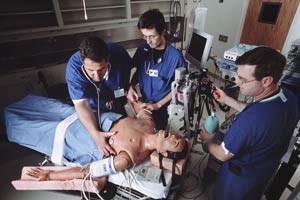
records. The World Health Organization (WHO) estimated there were 283 million people with alcohol use disorders worldwide as of 2016. The term alcoholism was first coined in 1852, but alcoholism and alcoholic are considered stigmatizing and likely to discourage seeking treatment, so diagnostic terms such as alcohol use disorder and alcohol dependence are often used instead in a clinical context. Other terms, some slurs and some informal, have been used to refer to people affected by alcoholism such as tippler, sot, drunk, drunkard, dipsomaniac, and souse. Alcohol is addictive, and heavy long-term use results in many negative health and social consequences. It can damage all organ systems, but especially affects the brain, heart, liver, pancreas, and immune system. Heavy usage can result in trouble sleeping, and severe cognitive issues like dementia, brain damage, or Wernicke–Korsakoff syndrome. Physical effects include irregular heartbeat, impaired immune response, cirrhosis, increased cancer risk, and severe withdrawal symptoms if stopped suddenly. These effects can reduce life expectancy by 10 years. Drinking during pregnancy may harm the child's health, and drunk driving increases the risk of traffic accidents. Alcoholism is associated with violent and non-violent crime. While alcoholism directly resulted in 139,000 deaths worldwide in 2013, in 2012, 3.3 million deaths may have been attributable globally to alcohol. The development of alcoholism is attributed to environment and genetics equally. Someone with a parent or sibling with an alcohol use disorder is 3-4 times more likely to develop alcohol use disorder, but only a minority do. Environmental factors include social, cultural and behavioral influences. High stress levels and anxiety, as well as alcohol's low cost and easy accessibility, increase the risk. Medically, alcoholism is considered both a physical and mental illness. Questionnaires are usually used to detect possible alcoholism. Further information is then collected to confirm the diagnosis. Treatment takes several forms. Due to medical problems that can occur during withdrawal, alcohol cessation should often be controlled carefully. Benzodiazepine is used to mitigate withdrawal symptoms, and acamprosate, naltrexone, or disulfiram to reduce cravings and make consumption less rewarding or unpleasant. Mental illness or other addictions may complicate treatment. Individual, group therapy, or support groups are used to attempt to keep a person from returning to alcoholism. Among them is the abstinence-based mutual aid fellowship Alcoholics Anonymous (AA).
nostic terms such as alcohol use disorder and alcohol dependence are often used instead in a clinical context. Other terms, some slurs and some informal, have been used to refer to people affected by alcoholism such as tippler, sot, drunk, drunkard, dipsomaniac, and souse. Alcohol is addictive, and heavy long-term use results in many negative health and social consequences. It can damage all organ systems, but especially affects the brain, heart, liver, pancreas, and immune system. Heavy usage can result in trouble sleeping, and severe cognitive issues like dementia, brain damage, or Wernicke–Korsakoff syndrome. Physical effects include irregular heartbeat, impaired immune response, cirrhosis, increased cancer risk, and severe withdrawal symptoms if stopped suddenly. These effects can reduce life expectancy by 10 years. Drinking during pregnancy may harm the child's health, and drunk driving increases the risk of traffic accidents. Alcoholism is associated with violent and non-violent crime. While alcoholism directly resulted in 139,000 deaths worldwide in 2013, in 2012, 3.3 million deaths may have been attributable globally to alcohol. The development of alcoholism is attributed to environment and genetics equally. Someone with a parent or sibling with an alcohol use disorder is 3-4 times more likely to develop alcohol use disorder, but only a minority do. Environmental factors include social, cultural and behavioral influences. High stress levels and anxiety, as well as alcohol's low cost and easy accessibility, increase the risk. Medically, alcoholism is considered both a physical and mental illness. Questionnaires are usually used to detect possible alcoholism. Further information is then collected to confirm the diagnosis. Treatment takes several forms. Due to medical problems that can occur during withdrawal, alcohol cessation should often be controlled carefully. Benzodiazepine is used to mitigate withdrawal symptoms, and acamprosate, naltrexone, or disulfiram to reduce cravings and make consumption less rewarding or unpleasant. Mental illness or other addictions may complicate treatment. Individual, group therapy, or support groups are used to attempt to keep a person from returning to alcoholism. Among them is the abstinence-based mutual aid fellowship Alcoholics Anonymous (AA).
I
Q30253346 EXACT TITLE 0.780
QID OVERLAP: Q30253346 in healthcare (tier:evergreen) and mental_health (tier:evergreen). | SHARED TOKENS (4): "department", "idaho", "public", "welfare". | EXACT TITLE in mental_health: "Idaho Department of Health and Welfare".
departmentidahopublicwelfare
Idaho Department of Health and Welfare is a public health agency in the state of Idaho. History The department was founded in 1972. Functions The department provides healthcare services, records management, children and family services, food assistance programs, and healthcare services.
Centers for Medicare & Medicaid Services
Q5060058 QID OVERLAP 0.780
QID OVERLAP: Q5060058 in healthcare (tier:branch) and mental_health (tier:branch). | SHARED TOKENS (14): "administers", "centers", "children", "clinical", "department", "gov", "healthcare", "insurance", "medicaid", "nursing", "program", "programs", "standards", "system".
administerscenterschildrenclinicaldepartmentgovhealthcareinsurancemedicaidnursingprogramprogramsstandardssystem
The Centers for Medicare & Medicaid Services (CMS) is a federal agency within the United States Department of Health and Human Services (HHS) that administers the Medicare program and works in partnership with state governments to administer Medicaid, the Children's Health Insurance Program (CHIP), and health insurance portability standards. In addition to these programs, CMS has other responsibilities, including the administrative simplification standards from the Health Insurance Portability and Accountability Act of 1996 (HIPAA), quality standards in long-term care facilities (more commonly referred to as nursing homes) through its survey and certification process, clinical laboratory quality standards under the Clinical Laboratory Improvement Amendments, and oversight of HealthCare.gov. CMS was previously known as the Health Care Financing Administration (HCFA) until 2001. CMS actively inspects and reports on every nursing home in the United States.
Quality Rating System. Organization The agency carries out its responsibilities from its national headquarters located in Woodlawn, Maryland, and its 10 regional offices. It is organized around six centers to support its key functions. Numerous other offices throughout the agency support these centers. The centers: Center for Medicare (CM) Center for Medicaid and CHIP Services (CMCS) Center for Medicare and Medicaid Innovation (CMMI, a.k.a.
Workforce CMS employs over 6,000 people, of whom about 4,000 are located at its headquarters in Woodlawn, Maryland. The remaining employees are located in the Hubert H. Humphrey Building in Washington, D.C., the 10 regional offices listed below, and in various field offices located throughout the United States. The head of CMS is the administrator of the Centers for Medicare & Medicaid Services. The position is appointed by the president and confirmed by the Senate.
Boise, Idaho
Q35775 QID OVERLAP 0.740
QID OVERLAP: Q35775 in healthcare (tier:branch) and mental_health (tier:branch). | SHARED TOKENS (12): "ada", "annual", "boise", "capital", "counties", "east", "idaho", "major", "population", "technology", "treasure", "valley".
adaannualboisecapitalcountieseastidahomajorpopulationtechnologytreasurevalley
Boise (locally also ) is the capital and most populous city in the U.S. state of Idaho. It is the county seat of Ada County. The population of the city was 235,685 at the 2020 census. The Boise metropolitan area, located in the Treasure Valley, includes five counties of Idaho with an estimated population of 846,000, the most populous metropolitan area in Idaho and 95th-most populous in the United States. Located on the Boise River in southwestern Idaho, it is 41 miles (66 km) east of the Oregon border and 110 miles (177 km) north of the Nevada border. Downtown Boise's elevation is 2,704 feet (824 m) above sea level. Boise is home to major employers in the technology, manufacturing, and service sectors, including companies such as Micron Technology and Hewlett-Packard.
an area in Idaho and 95th-most populous in the United States. Located on the Boise River in southwestern Idaho, it is 41 miles (66 km) east of the Oregon border and 110 miles (177 km) north of the Nevada border. Downtown Boise's elevation is 2,704 feet (824 m) above sea level. Boise is home to major employers in the technology, manufacturing, and service sectors, including companies such as Micron Technology and Hewlett-Packard.
...that the military should continue killing Indians 'until the last Indian in the Territories was either on his reservation or enriched the sagebrush with his decaying carcass.' ...if the Indians refused to move there, 'they will be killed or put on the reservation by force, and certainly shot if they don't stay there.' Furthermore, the editor continues, 'The idea that the Indians have any right to the soil is ridiculous. ...They have no more rights to the soil of the Territories of the United States than wolves or coyotes...' This would be our plan of establishing friendship upon an eternal basis with our Indians: Let all the hostile bands of Idaho Territory be called in (they will not be caught in any other manner) to attend a grand treaty; plenty of blankets and nice little trinkets distributed among them; plenty of grub on hand; have a real jolly time with them; then just before the big feast put strychnine in their meat and poison to death the last mother's son of them. At the same time, native warriors around the valley, under the leadership of Howluck also known as "Bigfoot" among white settlers, among others, waged an escalating and intensified guerrilla campaign of harassment of passerby caravans along the Oregon Trail. The United States Army also escalated and intensified "punitive expeditions" against formations of warriors and against civilian communities as well. This marked the start of the "unofficial" Snake War in 1866. This war lasted until 1868, and is statistically the deadliest of the Indian Wars in the West in terms of casualties. In the end, 1,762 men were counted as the casualties of this war from both sides. In 1868, Fort Hall Indian Reservation was established in Southeastern Idaho, about 220 miles upstream, according to the terms of Fort Bridger Treaty. The Boise Valley Shoshone and Bannock Tribes were not party to this treaty. Nevertheless, in April 1869, the United States Military embarked on a campaign of "Removal, rounding up of natives in the region including in and around Boise, and expelling them with cavalry escort to Fort Hall Indian Reservation. This period is known among the Shoshone and Bannock people as Idaho's Trail of Tears. Some of the natives managed to escape, and they ran to either Duck Valley or Fort McDermitt in Nevada. Incorporation and growth Boise's early growth was significantly driven by its role in supplying the nearby gold towns that sprung up in the 1860s northeast and then southwest of the town. Miners sometimes wintered in Boise and a number of early prominent businessmen were miners who settled in town in the years after the gold rush waned. By 1864 substantial agricultural production was underway on easily irrigated lands near the river and three canal companies had been incorporated. Early transportation improvements were largely a result of toll road franchises awarded by the territorial legislature starting in the 1860s. These first ran from Fort Boise to the mining centers in the Boise Basin and east to Rocky Bar and to Rattlesnake Station where they connected to the Oregon Trail. Territorial census records from a special 1864 enumeration list the population of Boise as 1,658, and an act of December 12, 1864, was the first attempt by the Idaho Territorial Legislature to incorporate the city. This was rejected by voters the following March. Two more unsuccessful attempts were made to organize a city administration by election before the 1866 version of the city charter was approved by voters on January 6, 1868. The growing number of homes and businesses, for which owners wanted proper legal title, may have contributed to the eventual success of incorporation. All of these rejected efforts to incorporate the city came after Boise had been controversially made the state capital in 1864 over strong opposition from northern Idaho interests. This decision reflected the rapid shift of population growth from north to south after the discovery of gold in southern Idaho. By 1868 Boise had over 400 permanent buildings with a wide range of commercial services. 1868 also marked the formal beginning of a long advocacy for railroad connections to other Idaho communities and, just as importantly, to other growing cities in the west such as Portland, Oregon. Competing railroad and western state government interests frustrated these efforts for many years. Designed by Alfred B. Mullett, the U.S. Assay Office at 210 Main Street was built in 1871 and today is a National Historic Landmark. It first began accepting gold and silver for purchase on March 2, 1872, largely eliminating the need to transport ore to the mint in San Francisco. A territorial penitentiary, now known as the Old Idaho State Penitentiary, opened the same month several miles east of town. Mining continued to be important to Boise's economic growth and periodic booms contributed to population growth as well, though production of gold and silver probably peaked in the 1860s. 1882's gold and silver production of $3,500,000 declined to $1,488,315 (including lead) by 1899. Boise began to earn its City of Trees nickname in this period with a popular focus on a range of tree planting projects. Thomas J. Davis planted several thousand fruit trees in 1864 and several other early businessmen either founded nurseries or orchards of their own. In the 1870s tree planting began in earnest in downtown Boise led by prominent hotels as well as businessmen and residents. In 1907 Davis donated 43 acres of his orchard property to the city for use as a park in the name of his wife Julia. Commercial agriculture continued to expand, but was slowed by the lack of reliable rail links to regional and national markets and by a lack of large scale irrigation projects, which themselves were often tied to hoped-for railroad projects for financing. A.D. Foote, a successful mining engineer, drew up plans to irrigate up to 500,000 acres immediately south of Boise in 1882, but progress was halting and smaller farms were the norm until after the turn of the century with most located near to the river bottom where soil was productive and irrigation more easily achieved. Fruit orchards proliferated and sugar beets, still an important agricultural industry in Idaho, began to be widely cultivated in the 1890s. Cattle and sheep farming became increasingly important as the century closed. With the exception of dairy, most livestock products were exported from Idaho, unlike other agricultural products which were still largely scaled to support local markets. The timber industry also increasingly thrived in the Boise market in the 1880s and 1890s. Large quantities of timber were exported from elsewhere in Idaho, but a growing Boise supported the expansion of Alexander Rossi's sawmill, first established in 1865. Prominent early Boisean William Ridenbaugh had inherited control of the canal now bearing his name from his uncle William Morris in 1878 and later partnered with Rossi to expand the sawmill capacity under the name Rossi and Ridenbaugh Lumber Company. Their materials supported bridge building and the rapid expansion of Boise in the 1890s. As with many early infrastructure ventures, electrification succeeded only after at least one false start. July 4, 1887, marked the start of electrical transmission from a plant located on the Bench. William Ridenbaugh provided expertise and manpower for the water supply and several months were spent rigging poles and lines from the Bench to the service area across the river. Additional electrical supplies allowed the building of an electric streetcar line in 1891. This ran without interruption until buses replaced the lines in 1927, tracking—and sometimes driving—the development of Boise and nearby communities. This system expanded over several decades, reaching into the North End, South Boise and across the river on Front St. A loop line, completed in 1912, ran as far as Caldwell and Nampa, providing transport throughout the valley. Three early trolley companies merged in 1912 to form the Idaho Traction Company with a depot at 7th and Bannock Streets downtown. Additional services and urban amenities arrived in the 1890s as Boise grew. Exploratory drilling for hot water was successful in 1890 and by the end of the decade many homes along Warm Springs avenue were being heated by this source. A natatorium was built in 1892 close to the source of the hot water near the Idaho State Penitentiary. Churches serving several denominations, a Jewish synagogue, a major hardware store and department store, a Masonic hall, the Columbia Theater, Saint Alphonsus' Hospital, a number of parochial and secular schools, a City Hall and a new Union Pacific passenger station, constructed when service was finally extended to downtown, were all built during the 1890s. Falk's Department Store sponsored a semi-professional baseball team representing Boise from at least 1892 and the city supported other organized sports as they became popular.
Ada County, Idaho
Q109820 QID OVERLAP 0.680
QID OVERLAP: Q109820 in healthcare (tier:branch) and mental_health (tier:branch). | SHARED TOKENS (9): "ada", "boise", "capital", "east", "idaho", "local", "population", "private", "washington".
adaboisecapitaleastidaholocalpopulationprivatewashington
Ada County is located in the southwestern part of Idaho, United States. As of the 2020 census, the county had a population of 494,967, which by 2025 was estimated to have risen to 546,141. Ada County is by far the state's most populous county; it is home to 26.8% of the state's population. The county seat and largest city is Boise, which is also the state capital. Ada County is included in the Boise metropolitan area. The Ada County Highway District has jurisdiction over all the local county and city streets, except for private roads and state roads.
populous county; it is home to 26.8% of the state's population. The county seat and largest city is Boise, which is also the state capital. Ada County is included in the Boise metropolitan area. The Ada County Highway District has jurisdiction over all the local county and city streets, except for private roads and state roads.
ea. The Ada County Highway District has jurisdiction over all the local county and city streets, except for private roads and state roads. In the interior Pacific Northwest east of the Cascade Range, Ada County ranks second in population, behind Spokane County, Washington. History Ada County was created by the Idaho Territory legislature on December 22, 1864, partitioned from Boise County. It is named for Ada Riggs, the daughter of H. C. Riggs, a member of the legislature; he established the county and was a co-founder of Boise.
Nampa, Idaho
Q622633 QID OVERLAP 0.660
QID OVERLAP: Q622633 in healthcare (tier:branch) and mental_health (tier:branch). | SHARED TOKENS (8): "boise", "canyon", "idaho", "meridian", "nampa", "population", "university", "western".
boisecanyonidahomeridiannampapopulationuniversitywestern
pa ( ) is the most populous city in Canyon County, Idaho, United States. The population was 100,200 at the 2020 census. It is Idaho's third-most populous city. Nampa is about 20 miles (32 km) west of Boise along Interstate 84, and 6 miles (9.7 km) west of Meridian. It is the second principal city of the Boise metropolitan area. The name "Nampa" may have come from a Shoshoni word meaning 'moccasin' or 'footprint'. According to toponymist William O. Bright, the name comes from the Shoshoni word /nampai/, meaning "foot".
History Nampa had its beginnings in the early 1880s when the Oregon Short Line Railroad built a line from Granger, Wyoming, to Huntington, Oregon, that passed through Nampa. In Nampa there is a history museum that marks the railroad's significance. More railroad lines sprang up through Nampa, making it an important railroad town. Alexander and Hannah Duffes established one of the town's first homesteads, eventually forming the Nampa Land and Improvement Company with the help of their friend and co-founder, James McGee. Despite the name, many early settlers called the town "New Jerusalem" because of its citizens' strong religious focus. After only a year the town grew from 15 homes to 50. As amenities were added, Nampa continued to grow, and it was incorporated in 1891. Downtown Nampa's street grid is oriented with the railroad tracks, which run northwest–southeast; this was done intentionally by Alexander Duffes to prevent accidents like one that occurred earlier in a town he had platted near Toronto, where a woman and her two children were killed by a train when their buggy wheel got stuck as they crossed the tracks. As the Oregon Short Line railroad originally bypassed Boise, Nampa has the fanciest of many railroad depots built in the area. Nampa gained attention in 1889 due to a purported archaeological discovery known as the Nampa figurine. George Frederick Wright wrote up details that year for the Boston Society of Natural History. The first elementary school was built in the 1890s. Lakeview School was on a hill on 6th Street and 12th Avenue North, with a view of Lake Ethel. Just after the school's centennial celebration, it was condemned as a school and sold to the First Mennonite Church. In 2008 the building was refurbished, and it is now used by the Idaho Arts Charter School. Lake Ethel, an irrigation reservoir, had long been the site of community picnics, and many citizens fished, swam, boated, and even hunted on it and its surrounding property. But the hunting didn't last long, as O. F. Persons, owner of the adjoining homestead, took offense when local hunters started shooting his pet ducks. The city later auctioned off the lake. E. H. Dewey (a former Nampa mayor) was the only bidder. But occasional flooding led to a series of lawsuits from neighbors. Dewey eventually drained Lake Ethel. Not long after, the city council became interested in buying back the Fritz Miller property as well as the Dewey home. Pressure had been building for more than four years. Nampa citizens wanted another park. On August 7, 1924, the city council passed an ordinance to purchase the Miller property and name it Lakeview Park. A bandstand was completed in 1928, and the municipal swimming pool opened on August 13, 1934. It is Nampa's largest park and many community celebrations are held there. Colonel William H. Dewey, a man who made a fortune mining in Silver City, built the Dewey Palace Hotel in 1902 for $250,000. He died in his hotel in 1903, leaving his son $1 million. The hotel survived the great fire of 1909, which burned several blocks of downtown Nampa, but was razed in 1963 after redevelopment plans failed. Relics from the hotel such as the chandelier and the hotel safe can be found at the Canyon County Historical Museum, which is in the old train depot on Front Street and Nampa City Hall. After demolition the location on First Street between 11th and 12th Ave. South was sold to private enterprise, including a bank and tire store, replacing this building with modern structures. A public-use postage stamp sized park was later placed across the street from the old palace property as a collaboration between the Downtown Alliance of Nampa (the local business council) and an Eagle Scout Project for the Boy Scouts of America. The park includes a large mural/wall sculpture of running horses commissioned for the project. A Carnegie library was built downtown in 1908; it burned down after the library moved in 1966. Nampa Public Library was then on the corner of 1st Street and 11th Avenue South in the old bank building. A new library, on 12th Avenue South, opened in 2015. Deer Flat Reservoir, an offstream irrigation storage reservoir, was constructed by the United States Bureau of Reclamation between 1906 and 1911. Known locally as Lake Lowell, it is surrounded by the Deer Flat National Wildlife Refuge, established in 1909 by President Theodore Roosevelt. The refuge is administered by the U.S. Fish and Wildlife Service. Lake Lowell is filled by the concrete New York Canal; the water is diverted from the Boise River a few miles below Lucky Peak Dam. In 1910, the Idaho State School and Hospital was built northwest of Nampa for the state's developmentally challenged population. It opened in 1918. The institution was largely self-sufficient, with a large farm staffed by the residents. The higher-functioning residents also cared for residents who could not care for themselves. The land for the farm was sold and is now golf courses (Centennial and Ridgecrest), and the residents no longer give primary care to other residents. The institution is modernized and remains in operation, though a few of the oldest buildings now house juvenile offenders. Nampa held an annual harvest festival and farmers' market from about 1908, a time of celebration and community fun. From this festival emerged the Snake River Stampede Rodeo in 1937, which continues to this day. It is one of the top 12 rodeos in the pro rodeo circuits. In 1913, a local congregation of the Church of the Nazarene built a small elementary school, which became to Northwest Nazarene College in 1915 and finally Northwest Nazarene University. As of 2025, the university has approximately 1,800 undergraduate and graduate students. Karcher Mall opened in 1965, the first enclosed shopping mall in the Treasure Valley. It was "the place to gather" for several decades until the Boise Towne Square mall was built in Boise in 1988, drawing business away. Karcher Mall was renamed District 208 in 2022. The Idaho Press-Tribune is the local newspaper for the Canyon County area.
Idaho Hispanic Community Center (IH2C) In 2003, the Hispanic Cultural Center of Idaho (HCCI) opened thanks to community support. It has recently transitioned back to the City of Nampa and was renamed the Idaho Hispanic Community Center (IH2C) and is home to the Idaho Hispanic Foundation. It hosts events, classes, and festivals, including Día de los Muertos, Hispanic Heritage Month, and Día Internacional de la Mujer. It serves as a meeting place for associations and groups. Displays of cultural history are available to the public. Nampa Train Depot Museum The Nampa Train Depot Museum is a historical depot with displays and archives of the area's railroad and cultural history. The Canyon County Historical Society saved the depot from demolition in 1972. Annual Festival of the Arts Nampa's Festival of the Arts, which began in 1987, is held in Lakeview Park every year and includes local art, music, dance, and food.
Meridian, Idaho
Q1085274 QID OVERLAP 0.620
QID OVERLAP: Q1085274 in healthcare (tier:branch) and mental_health (tier:branch). | SHARED TOKENS (6): "ada", "boise", "capital", "idaho", "meridian", "population".
adaboisecapitalidahomeridianpopulation
Meridian is a city located in Ada County, Idaho, United States. The population was 117,635 at the 2020 census, making it the second most populous city in the county and Idaho, after Boise, the state capital.
Rail transportation (1908–28) Following the raising of $4,000 to lay the Interurban rail line from Onweiler (Meridian and Ustick Roads), the tracks were completed into the village center. Turning east on Broadway and ending at East Second, the last car would spend the night in Meridian before returning to Boise early the next morning with passengers and freight. The interurban Station and Generator building (west one-third of the old library at Meridian and Idaho Streets) was built in 1912, and the line continued on to Nampa via Meridian. The tracks down Broadway were not used after 1912. The Interurban Company entered into receivership and closed in 1928 after 20 years of providing continuous transportation to neighboring towns. It was Meridian's main connection to the area outside the local community. The Union Pacific Railroad spur opened in 1900 and is currently operated by the Boise Valley Railroad. Many industrial customers continue to ship forest, agricultural, and chemical products along this corridor. Creamery (1929–70) The city's official website describes the history of the Ada County Dairymen's cooperative creamery as follows:The lowest days of the Great Depression brightened for area dairymen when the Ada County Dairymen's cooperative creamery began operation in 1929. It provided milk checks to those who were members of the cooperative, enabling them to pay their taxes and provide food for their families. Other community members hauled milk to the creamery and were employed by the creamery, whose product was Challenge Butter. The creamery ran seven days a week for 40 years. Additions and improvements were made while the plant was in full operation. Later years saw the Wyeth Laboratories affiliate with the creamery to manufacture SMA baby formula.
Creamery (1929–70) The city's official website describes the history of the Ada County Dairymen's cooperative creamery as follows:The lowest days of the Great Depression brightened for area dairymen when the Ada County Dairymen's cooperative creamery began operation in 1929. It provided milk checks to those who were members of the cooperative, enabling them to pay their taxes and provide food for their families. Other community members hauled milk to the creamery and were employed by the creamery, whose product was Challenge Butter. The creamery ran seven days a week for 40 years. Additions and improvements were made while the plant was in full operation. Later years saw the Wyeth Laboratories affiliate with the creamery to manufacture SMA baby formula.
Canyon County, Idaho
Q486078 QID OVERLAP 0.620
QID OVERLAP: Q486078 in healthcare (tier:branch) and mental_health (tier:branch). | SHARED TOKENS (6): "boise", "caldwell", "canyon", "idaho", "nampa", "population".
boisecaldwellcanyonidahonampapopulation
105, which by 2025 was estimated to have risen to 275,123, making it the second-most populous county in Idaho. The county seat is Caldwell, and its largest city is Nampa. Canyon County is part of the Boise metropolitan area. History Hudson's Bay Company established Fort Boise in 1834 near what is now Parma, but abandoned it in 1855. Emigrants traveled through Canyon County on the Oregon Trail. Discovery of gold in the Boise Basin in 1862 brought settlement to the region again. The lower Boise River was fully contained within Boise County from 1863 until the formation of Ada County in 1864. Settlement of the lower Boise River west of Boise City was limited prior to the completion of the Oregon Short Line Railroad. Middleton was the first European settlement of Canyon County, starting in 1863. The 1870 Census for Ada County listed 76 residents of the Boise Valley, excluding Boise City and the 1880 Census listed 44 residents at Middleton. The arrival of the railroad at Caldwell led to the establishment of a town there as of August 1883. Businessmen James A. McGee and Alexander Duffes filed the plat for nearby Nampa in 1886. Parma was settled around the same time, with the Old Fort Boise post office being moved to the town's location; it was incorporated in 1904. Ada County established precincts for each of the settlements with a combined 1890 Census population of 2,311. Significant settlement of Greenleaf and Notus started around 1904 with the two settlements listed as precincts at the 1910 census. Notus was incorporated in 1921 while Greenleaf was incorporated prior to 1980. Melba was incorporated in 1912 while Wilder was incorporated in 1919. The City of Star annexed a portion of territory in northeast Canyon County prior to 2007, becoming the county's ninth incorporated city. The majority of Star is located within Ada County. The Idaho Legislature created Canyon County from Ada County in an act approved March 7, 1891, effective at the November 26, 1892, election. Caldwell was established as the county seat. The county originally contained all of Canyon and Payette counties and part of Gem; Gem County formed in 1915 and Payette County in 1917.
History Hudson's Bay Company established Fort Boise in 1834 near what is now Parma, but abandoned it in 1855. Emigrants traveled through Canyon County on the Oregon Trail. Discovery of gold in the Boise Basin in 1862 brought settlement to the region again. The lower Boise River was fully contained within Boise County from 1863 until the formation of Ada County in 1864. Settlement of the lower Boise River west of Boise City was limited prior to the completion of the Oregon Short Line Railroad. Middleton was the first European settlement of Canyon County, starting in 1863. The 1870 Census for Ada County listed 76 residents of the Boise Valley, excluding Boise City and the 1880 Census listed 44 residents at Middleton. The arrival of the railroad at Caldwell led to the establishment of a town there as of August 1883. Businessmen James A. McGee and Alexander Duffes filed the plat for nearby Nampa in 1886. Parma was settled around the same time, with the Old Fort Boise post office being moved to the town's location; it was incorporated in 1904. Ada County established precincts for each of the settlements with a combined 1890 Census population of 2,311. Significant settlement of Greenleaf and Notus started around 1904 with the two settlements listed as precincts at the 1910 census. Notus was incorporated in 1921 while Greenleaf was incorporated prior to 1980. Melba was incorporated in 1912 while Wilder was incorporated in 1919. The City of Star annexed a portion of territory in northeast Canyon County prior to 2007, becoming the county's ninth incorporated city. The majority of Star is located within Ada County. The Idaho Legislature created Canyon County from Ada County in an act approved March 7, 1891, effective at the November 26, 1892, election. Caldwell was established as the county seat. The county originally contained all of Canyon and Payette counties and part of Gem; Gem County formed in 1915 and Payette County in 1917.
2000 census As of the 2000 census, there were 131,441 people, 45,018 households and 33,943 families living in the county. The population density was 223 people per square mile (86 people/km2). There were 47,965 housing units at an average density of 81 units per square mile (31 units/km2). The racial makeup of the county was 83.10% White, 0.32% Black or African American, 0.85% Native American, 0.80% Asian, 0.13% Pacific Islander, 12.17% from other races, and 2.62% from two or more races. Hispanic or Latino of any race were 18.61% of the population. 15.9% were of German, 12.7% English, 10.3% American and 7.6% Irish ancestry. There were 45,018 households, of which 39.80% had children under the age of 18 living with them, 60.70% were married couples living together, 10.10% had a female householder with no husband present, and 24.60% were non-families. 19.80% of all households were made up of individuals, and 8.40% had someone living alone who was 65 years of age or older. The average household size was 2.85 and the average family size was 3.28. 30.90% of the population were under the age of 18, 10.70% from 18 to 24, 28.30% from 25 to 44, 19.10% from 45 to 64, and 11.00% who were 65 years of age or older. The median age was 30 years. For every 100 females, there were 98.70 males. For every 100 females age 18 and over, there were 96.30 males. The median household income was $35,884 and the median family income was $40,377. Males had a median income of $29,418 compared with $22,044 for females. The per capita income for the county was $15,155. About 8.70% of families and 12.00% of the population were below the poverty line, including 14.50% of those under age 18 and 10.70% of those age 65 or over. Communities Cities Unincorporated communities Bowmont Huston Roswell Sunnyslope Walters Ferry, Idaho Politics Like the majority of Idaho, Canyon County is reliably Republican by comfortable margins. The last time a Democratic candidate carried the county was in 1936 by Franklin D. Roosevelt.
Caldwell, Idaho
Q849592 QID OVERLAP 0.620
QID OVERLAP: Q849592 in healthcare (tier:branch) and mental_health (tier:branch). | SHARED TOKENS (6): "boise", "caldwell", "canyon", "east", "idaho", "population".
boisecaldwellcanyoneastidahopopulation
the county seat of Canyon County, Idaho, United States. Caldwell is the 5th most populous city in Idaho. As of the 2020 census, Caldwell had a population of 59,996. Caldwell is considered part of the Boise metropolitan area, and is the location of the College of Idaho. The city is located approximately 24 miles (39 km) west of Boise, and approximately 17 miles (27 km) east of the Oregon border. History The present-day location of Caldwell is along a natural passageway to the Inland and Pacific Northwest. Native American tribes from the west coast, north Idaho and as far away as Colorado came to the banks of the Boise River for annual trading fairs, or rendezvous. European and some Hawaiian explorers and traders soon followed the paths left by Native Americans and hopeful emigrants later forged the Oregon Trail and followed those paths to seek a better life in the Oregon Territory. Pioneers of the Trail traveled along the Boise River to Canyon Hill and forded the river close to the Silver Bridge on Plymouth Street. During the Civil War, the discovery of gold in Idaho's mountains brought a variety of new settlers into the area. Many never made it to the mines but settled along the Boise River and run ferries, stage stations, and freighting businesses. These early entrepreneurs created small ranches and farms in the river valleys. Caldwell's inception occurred largely as a result of the construction of the Oregon Short Line Railroad, which connected Wyoming to Oregon through Idaho. Robert E. Strahorn came to the Boise River Valley in 1883 to select a route for the railroad. He rejected the grade into Boise City as too steep and chose a site 30 miles to the west. He drove a stake into an alkali flat of sagebrush and greasewood and the City of Caldwell was platted. Caldwell was named after one of Strahorn's business partners, Alexander Caldwell, a former senator from Kansas. When Caldwell was platted in August 1883, its founder, the Idaho and Oregon Land Improvement Company, started persuading settlers and businessmen to move to the area. Within four months, Caldwell had 600 residents living in 150 dwellings, 40 businesses, a school, a telephone exchange, and two newspapers. On January 15, 1890, the Board of Commissioners of Ada County issued a handwritten order incorporating the City of Caldwell. The College of Idaho was founded in Caldwell in 1891. In 1892, Canyon County was established from a portion of Ada County, and Caldwell was named the county seat. Irrigation canals and waterways were constructed throughout Canyon County, providing the foundation for an agricultural economy. The Oregon Short Line Railroad became part of the larger Union Pacific Railroad network and in 1906 the Caldwell freight and passenger depot was constructed. Caldwell experienced moderate growth as an agricultural processing, commercial retail and educational center during the 20th century. In 2009, the City of Caldwell completed a revitalization project to restore Indian Creek, which runs through downtown Caldwell, but had been used for sewage disposal by local industries and been covered over.
History The present-day location of Caldwell is along a natural passageway to the Inland and Pacific Northwest. Native American tribes from the west coast, north Idaho and as far away as Colorado came to the banks of the Boise River for annual trading fairs, or rendezvous. European and some Hawaiian explorers and traders soon followed the paths left by Native Americans and hopeful emigrants later forged the Oregon Trail and followed those paths to seek a better life in the Oregon Territory. Pioneers of the Trail traveled along the Boise River to Canyon Hill and forded the river close to the Silver Bridge on Plymouth Street. During the Civil War, the discovery of gold in Idaho's mountains brought a variety of new settlers into the area. Many never made it to the mines but settled along the Boise River and run ferries, stage stations, and freighting businesses. These early entrepreneurs created small ranches and farms in the river valleys. Caldwell's inception occurred largely as a result of the construction of the Oregon Short Line Railroad, which connected Wyoming to Oregon through Idaho. Robert E. Strahorn came to the Boise River Valley in 1883 to select a route for the railroad. He rejected the grade into Boise City as too steep and chose a site 30 miles to the west. He drove a stake into an alkali flat of sagebrush and greasewood and the City of Caldwell was platted. Caldwell was named after one of Strahorn's business partners, Alexander Caldwell, a former senator from Kansas. When Caldwell was platted in August 1883, its founder, the Idaho and Oregon Land Improvement Company, started persuading settlers and businessmen to move to the area. Within four months, Caldwell had 600 residents living in 150 dwellings, 40 businesses, a school, a telephone exchange, and two newspapers. On January 15, 1890, the Board of Commissioners of Ada County issued a handwritten order incorporating the City of Caldwell. The College of Idaho was founded in Caldwell in 1891. In 1892, Canyon County was established from a portion of Ada County, and Caldwell was named the county seat. Irrigation canals and waterways were constructed throughout Canyon County, providing the foundation for an agricultural economy. The Oregon Short Line Railroad became part of the larger Union Pacific Railroad network and in 1906 the Caldwell freight and passenger depot was constructed. Caldwell experienced moderate growth as an agricultural processing, commercial retail and educational center during the 20th century. In 2009, the City of Caldwell completed a revitalization project to restore Indian Creek, which runs through downtown Caldwell, but had been used for sewage disposal by local industries and been covered over.
location of the College of Idaho. The city is located approximately 24 miles (39 km) west of Boise, and approximately 17 miles (27 km) east of the Oregon border. History The present-day location of Caldwell is along a natural passageway to the Inland and Pacific Northwest. Native American tribes from the west coast, north Idaho and as far away as Colorado came to the banks of the Boise River for annual trading fairs, or rendezvous. European and some Hawaiian explorers and traders soon followed the paths left by Native Americans and hopeful emigrants later forged the Oregon Trail and followed those paths to seek a better life in the Oregon Territory. Pioneers of the Trail traveled along the Boise River to Canyon Hill and forded the river close to the Silver Bridge on Plymouth Street. During the Civil War, the discovery of gold in Idaho's mountains brought a variety of new settlers into the area. Many never made it to the mines but settled along the Boise River and run ferries, stage stations, and freighting businesses. These early entrepreneurs created small ranches and farms in the river valleys. Caldwell's inception occurred largely as a result of the construction of the Oregon Short Line Railroad, which connected Wyoming to Oregon through Idaho. Robert E. Strahorn came to the Boise River Valley in 1883 to select a route for the railroad. He rejected the grade into Boise City as too steep and chose a site 30 miles to the west. He drove a stake into an alkali flat of sagebrush and greasewood and the City of Caldwell was platted. Caldwell was named after one of Strahorn's business partners, Alexander Caldwell, a former senator from Kansas. When Caldwell was platted in August 1883, its founder, the Idaho and Oregon Land Improvement Company, started persuading settlers and businessmen to move to the area. Within four months, Caldwell had 600 residents living in 150 dwellings, 40 businesses, a school, a telephone exchange, and two newspapers. On January 15, 1890, the Board of Commissioners of Ada County issued a handwritten order incorporating the City of Caldwell. The College of Idaho was founded in Caldwell in 1891. In 1892, Canyon County was established from a portion of Ada County, and Caldwell was named the county seat. Irrigation canals and waterways were constructed throughout Canyon County, providing the foundation for an agricultural economy. The Oregon Short Line Railroad became part of the larger Union Pacific Railroad network and in 1906 the Caldwell freight and passenger depot was constructed. Caldwell experienced moderate growth as an agricultural processing, commercial retail and educational center during the 20th century. In 2009, the City of Caldwell completed a revitalization project to restore Indian Creek, which runs through downtown Caldwell, but had been used for sewage disposal by local industries and been covered over.
C
Q2105762 QID OVERLAP 0.520
QID OVERLAP: Q2105762 in healthcare (tier:branch) and mental_health (tier:branch). | SHARED TOKENS (2): "crisis", "specific".
crisisspecific
Crisis intervention is a time-limited intervention with a specific psychotherapeutic approach to immediately stabilize those in crisis. Cross-national approaches Across different countries, crisis intervention following mass trauma events such as natural disasters relies on trained professionals who provide immediate support, coping strategies, and resource coordination to help individuals navigate psychological distress. Intervention process often begins with an assessment. In countries such as the Czech Republic, crisis intervention is an individual therapy, usually lasting four to six weeks, and includes assistance with housing, food, and legal matters. Long waiting times for resident psychotherapists and in Germany, explicit exclusions of couples therapy and other therapies complicate implementation. In the United States, licensed professional counselors (LPCs) provide mental health care to those in need.
Crisis and Intervention A crisis can have physical or psychological effects. Usually significant and more widespread, the latter lacks the former's obvious signs, complicating diagnosis. It is defined as a breakdown of psychological equilibrium, and being unable to benefit from normal methods of coping. Three factors define crisis: negative events, feelings of hopelessness, and unpredictable events. People who experience a crisis perceive it as a negative event that generate physical emotion, pain, or both. They also feel helpless, powerless, trapped, and a loss of control over their lives. Crisis events tend to occur suddenly and without warning, leaving little time to respond and resulting in trauma. In intervention for individuals facing personal or societal crises, there are five universal principles to guide the process. Prompt intervention is essential as victims are initially at high risk for maladaptive coping or immobilization, such as displaying distress behaviours that carry varying levels of risk. Stabilization involves mobilizing resources to help victims regain a sense of order and normalcy, promoting independent functioning. Comprehension of the traumatic event is facilitated to aid the individual in understanding and expressing their feelings about the experience. Problem-solving is a crucial aspect where counselors assist victims in resolving issues within their unique circumstances, promoting self-efficacy and self-reliance. Lastly, the goal is to help individuals return to normalcy by actively facilitating problem-solving, supporting the development of appropriate coping strategies, and assisting in their implementation.
Critical incident debriefing Critical incident debriefing is a widespread approach to support those who experienced crisis. This technique is done in a group setting 24–72 hours after the event occurred, and is typically a one-time meeting that lasts 3–4 hours, but can be done over numerous sessions if needed. Debriefing is a process by which facilitators describe various symptoms related PTSD and other anxiety disorders that individuals are likely to experience due to exposure to a trauma. The group setting allows participants to process negative emotions surrounding the traumatic event collectively in a safe environment. Facilitators also guide participants through techniques that involve active cognitive engagement while introducing attentional tasks that may serve to distract and ground individuals as they recount distressing experiences, allowing for less stressful emotional processing. However, critical incident debriefing has been the subject of substantial academic criticism regarding its effectiveness in reducing the impact of harm from crisis situations. Some studies show that individuals exposed to debriefing are actually more likely to exhibit symptoms of PTSD at a 13-month follow-up than those who received no intervention. Most recipients of debriefing reported that they found the intervention helpful.
◈ Cross-Vertical Edge Ledger
All Additional Edges — Deterministic Matching
289 EDGES
◈ ADDITIONAL CROSS EDGES · NON-OVERLAP289 edges
🌿 BRANCH197 edges
0.500
academyaccessadultsassociationchildrencontinuousdeliverydescribedestablishedfamilyinformationmanagementmodelpatientpatientsphysiciansprimaryproviderprovidingresources
SHARED TOKENS (21): "academy", "access", "adults", "association", "children", "continuous", "delivery", "described", "established", "family", "information", "management", "model", "patient", "patients", "physicians", "primary", "provider", "providing", "resources".... | EXACT TITLE in healthcare: "Medical home".
0.500
agesbecomecommunitydiseasefamilyfieldgeneralindividualmedicinepatientphysicianpracticeprimaryschoolspecialtyspecific
SHARED TOKENS (16): "ages", "become", "community", "disease", "family", "field", "general", "individual", "medicine", "patient", "physician", "practice", "primary", "school", "specialty", "specific". | EXACT TITLE in healthcare: "Family medicine". | EXACT TITLE in mental_health: "Family medicine".
0.500
classifiedclinicalcliniciansclinicscommunitiescommunitycounselingdepartmentdiseaseeconomiceducationfamilyfieldgroupgroupshealthcarehospitalhospitalsmajormanagement
SHARED TOKENS (45): "classified", "clinical", "clinicians", "clinics", "communities", "community", "counseling", "department", "disease", "economic", "education", "family", "field", "group", "groups", "healthcare", "hospital", "hospitals", "major", "management".... | EXACT TITLE in healthcare: "Community health". | EXACT TITLE in mental_health: "Community health".
0.500
Grief ↗ Q1026040 EXACT TITLE
becomebehavioralbeyondcasesdepressiondisorderformedindividualindividualsmentalmodelpeoplephysicalrelatedresearchresiliencesocialthroughout
SHARED TOKENS (18): "become", "behavioral", "beyond", "cases", "depression", "disorder", "formed", "individual", "individuals", "mental", "model", "people", "physical", "related", "research", "resilience", "social", "throughout". | EXACT TITLE in mental_health: "Grief".
0.500
adultagebecomechildrencommunityconditionsdatadepressiondescribeddisordersfamiliesfamilyfieldgeneralgovernmentgrouplegalmemberpopulationprivate
SHARED TOKENS (37): "adult", "age", "become", "children", "community", "conditions", "data", "depression", "described", "disorders", "families", "family", "field", "general", "government", "group", "legal", "member", "population", "private".... | EXACT TITLE in mental_health: "Foster care".
0.500
becomeclinicalcoachingdirecteducationexperiencegeneralhealthcarementalnursingoccupationalpatientpatientspeopleperformancepracticepractitionersprofessionalpsychologistsreduced
SHARED TOKENS (26): "become", "clinical", "coaching", "direct", "education", "experience", "general", "healthcare", "mental", "nursing", "occupational", "patient", "patients", "people", "performance", "practice", "practitioners", "professional", "psychologists", "reduced".... | EXACT TITLE in mental_health: "Clinical supervision".
0.500
academydeliverydirectdirectlyfamilyhealthcareinsurancemodelnetworkspatientsphysiciansprimaryproviderprovidersrelationshipsstandardsystems
SHARED TOKENS (17): "academy", "delivery", "direct", "directly", "family", "healthcare", "insurance", "model", "networks", "patients", "physicians", "primary", "provider", "providers", "relationships", "standard", "systems". | EXACT TITLE in healthcare: "Direct primary care".
0.500
accesscommunitiescommunitycurrentdemandeducationhospitalsinformationlocalmembernursepatientspeoplepopulationprimaryprofessionalprogramsproviderprovidingrehabilitation
SHARED TOKENS (25): "access", "communities", "community", "current", "demand", "education", "hospitals", "information", "local", "member", "nurse", "patients", "people", "population", "primary", "professional", "programs", "provider", "providing", "rehabilitation".... | EXACT TITLE in mental_health: "Community health worker".
0.500
Health care ↗ Q31207 EXACT TITLE
accessbarrierscommunitiesconditionscoveragediagnosisdiseaseeconomicestablishedgeneralhealthcarehistoryincomeindividualsinformationinsurancemedicinementalneedsnursing
SHARED TOKENS (38): "access", "barriers", "communities", "conditions", "coverage", "diagnosis", "disease", "economic", "established", "general", "healthcare", "history", "income", "individuals", "information", "insurance", "medicine", "mental", "needs", "nursing".... | EXACT TITLE in healthcare: "Health care". | EXACT TITLE in mental_health: "Health care".
0.500
behaviorbehavioralclinicclinicalcommunitycounselingdepressiondisorderdisordersgroupsindividualindividualslicensedlicensinglimitedmedicationmentalpeopleprivateproblems
SHARED TOKENS (29): "behavior", "behavioral", "clinic", "clinical", "community", "counseling", "depression", "disorder", "disorders", "groups", "individual", "individuals", "licensed", "licensing", "limited", "medication", "mental", "people", "private", "problems".... | EXACT TITLE in healthcare: "Psychologist". | EXACT TITLE in mental_health: "Psychologist".
0.500
Assisted living ↗ EXACT TITLE
adultadultsarticleboardbusinesscommunitydefinitionsearlyexpansionfacilitygovernmentgrouphousingindustryinformationlimitedmedicationmodelnursingpeople
SHARED TOKENS (32): "adult", "adults", "article", "board", "business", "community", "definitions", "early", "expansion", "facility", "government", "group", "housing", "industry", "information", "limited", "medication", "model", "nursing", "people".... | EXACT TITLE in healthcare: "Assisted living".
0.500
Social work ↗ Q205398 EXACT TITLE
advocacyagenciesbecomechangecommunitiescommunitycounselingdepressiondirectlyeducationfamiliesfamilygovernmentgroupgroupsindividualindividualslaborlawmanagement
SHARED TOKENS (38): "advocacy", "agencies", "become", "change", "communities", "community", "counseling", "depression", "directly", "education", "families", "family", "government", "group", "groups", "individual", "individuals", "labor", "law", "management".... | EXACT TITLE in healthcare: "Social work". | EXACT TITLE in mental_health: "Social work".
0.500
Dentistry ↗ Q12128 EXACT TITLE
conditionsdentaldiagnosisdiseasedisordershistoryhospitalsmanagementmedicinepatientsprimaryprivateresearchspecializationspecialtiesspecialtystudytherapiststreatmentwork
SHARED TOKENS (20): "conditions", "dental", "diagnosis", "disease", "disorders", "history", "hospitals", "management", "medicine", "patients", "primary", "private", "research", "specialization", "specialties", "specialty", "study", "therapists", "treatment", "work". | EXACT TITLE in healthcare: "Dentistry".
0.500
agenciesbehavioralcenterscertifiedclinicalcodescommunitycounselorscovereddefiningdesignateddisordersdoctoralexperiencefamiliesfamilyfullgroupshospitalsindividuals
SHARED TOKENS (39): "agencies", "behavioral", "centers", "certified", "clinical", "codes", "community", "counselors", "covered", "defining", "designated", "disorders", "doctoral", "experience", "families", "family", "full", "groups", "hospitals", "individuals".... | EXACT TITLE in mental_health: "Licensed professional counselor".
0.500
Neurology ↗ Q83042 EXACT TITLE
clinicalconditionsdiagnosisdiseasedisordersfieldmedicinemultiplephysicianpracticeresearchspecialtystudysystemtreatment
SHARED TOKENS (15): "clinical", "conditions", "diagnosis", "disease", "disorders", "field", "medicine", "multiple", "physician", "practice", "research", "specialty", "study", "system", "treatment". | EXACT TITLE in mental_health: "Neurology".
0.500
Nursing ↗ Q121176 EXACT TITLE
clinicalcoordinatedemandeducationfamilieshealthcaremembersnursenursingpatientsperiodphysicianphysiciansplanpracticepractitionersproblemsprofessionalsprovidersproviding
SHARED TOKENS (25): "clinical", "coordinate", "demand", "education", "families", "healthcare", "members", "nurse", "nursing", "patients", "period", "physician", "physicians", "plan", "practice", "practitioners", "problems", "professionals", "providers", "providing".... | EXACT TITLE in healthcare: "Nursing". | EXACT TITLE in mental_health: "Nursing".
0.500
alternativeassociationcasecasesclinicalcounselingdatademanddepartmentdiagnosisdisordersearlyestablishedfieldgeneralhistorylimitedlocalmedicinephysical
SHARED TOKENS (33): "alternative", "association", "case", "cases", "clinical", "counseling", "data", "demand", "department", "diagnosis", "disorders", "early", "established", "field", "general", "history", "limited", "local", "medicine", "physical".... | EXACT TITLE in healthcare: "Chiropractic".
0.500
agenciescallcasedepartmentemergencyhospitalmembersmodelpatientpatientsphysiciansplacesprimaryprovidingpublicqualifiedresourcessearchsupportsystems
SHARED TOKENS (24): "agencies", "call", "case", "department", "emergency", "hospital", "members", "model", "patient", "patients", "physicians", "places", "primary", "providing", "public", "qualified", "resources", "search", "support", "systems".... | EXACT TITLE in mental_health: "Emergency medical services".
0.500
acquiredautismbecomecasesclassifiedconditionsdevelopmentaldiseasedisorderdisordersearlymajormedicationmentalprimarysocial
SHARED TOKENS (16): "acquired", "autism", "become", "cases", "classified", "conditions", "developmental", "disease", "disorder", "disorders", "early", "major", "medication", "mental", "primary", "social". | EXACT TITLE in mental_health: "Neurocognitive disorder".
0.500
Delirium ↗ Q160796 EXACT TITLE
adultsalcoholbehavioralcasesconditionsdepressiondiagnosisdirectdiseasedisorderdisordersexperiencehospitalindividualsinsidemedicationmentalmultiplenursingpatient
SHARED TOKENS (29): "adults", "alcohol", "behavioral", "cases", "conditions", "depression", "diagnosis", "direct", "disease", "disorder", "disorders", "experience", "hospital", "individuals", "inside", "medication", "mental", "multiple", "nursing", "patient".... | EXACT TITLE in mental_health: "Delirium".
0.500
alcoholbehaviorbehavioralclinicalconditionsdepressiondescribeddisorderdisordersdrugindividualsintegrationmentalpatientspeoplepracticepractitionersproblemspsychiatricpsychology
SHARED TOKENS (33): "alcohol", "behavior", "behavioral", "clinical", "conditions", "depression", "described", "disorder", "disorders", "drug", "individuals", "integration", "mental", "patients", "people", "practice", "practitioners", "problems", "psychiatric", "psychology".... | EXACT TITLE in healthcare: "Dialectical behavior therapy".
0.500
accesscasescentercentersdepartmentdesignatedemergencyestablishedhospitalhospitalsindividualinitiallawmajormedicineneednursingpatientpatientsprovisions
SHARED TOKENS (26): "access", "cases", "center", "centers", "department", "designated", "emergency", "established", "hospital", "hospitals", "individual", "initial", "law", "major", "medicine", "need", "nursing", "patient", "patients", "provisions".... | EXACT TITLE in healthcare: "Trauma center".
0.500
boardcaldwellcampuscounselingcrisisdirectorsfamiliesfundingidahooperatesoperatingprogramprogramsranchservetherapythroughout
SHARED TOKENS (17): "board", "caldwell", "campus", "counseling", "crisis", "directors", "families", "funding", "idaho", "operates", "operating", "program", "programs", "ranch", "serve", "therapy", "throughout". | EXACT TITLE in mental_health: "Idaho Youth Ranch".
0.500
boisecampusclassifieddivisionestablishedidahoofficesopenedoperatesprofessionalpublicresearchruralstatewidestudentsuniversity
SHARED TOKENS (16): "boise", "campus", "classified", "division", "established", "idaho", "offices", "opened", "operates", "professional", "public", "research", "rural", "statewide", "students", "university". | EXACT TITLE in healthcare: "University of Idaho".
0.500
Radiology ↗ Q77604 EXACT TITLE
diagnosiseducationhealthcaremedicinenursepatientsperformancephysicianspracticeproceduresprofessionalprofessionalsspecialtytherapytodaytreatment
SHARED TOKENS (16): "diagnosis", "education", "healthcare", "medicine", "nurse", "patients", "performance", "physicians", "practice", "procedures", "professional", "professionals", "specialty", "therapy", "today", "treatment". | EXACT TITLE in healthcare: "Radiology".
0.500
agesbecomeclinicsdepartmentsdirectlyearlyemergencygeneralhospitallimitedmedicinemodelpatientsphysicianspracticepractitionersprimaryprogramsprovidedproviders
SHARED TOKENS (27): "ages", "become", "clinics", "departments", "directly", "early", "emergency", "general", "hospital", "limited", "medicine", "model", "patients", "physicians", "practice", "practitioners", "primary", "programs", "provided", "providers".... | EXACT TITLE in mental_health: "Emergency medicine".
0.500
behaviorchangechildrenclinicianscounselingcouplesdirectearlyfamiliesfamilyfieldindividualmemberspeoplepsychologyregardlessrelatedrelationshipsstudysupport
SHARED TOKENS (24): "behavior", "change", "children", "clinicians", "counseling", "couples", "direct", "early", "families", "family", "field", "individual", "members", "people", "psychology", "regardless", "related", "relationships", "study", "support".... | EXACT TITLE in mental_health: "Family therapy".
0.500
alternativearticleboardcapacitycasesclinicalconditionsdefinitionsdisorderfreehealthcareindividualinformationlawlegallimitedmarchmentalnationalpatient
SHARED TOKENS (30): "alternative", "article", "board", "capacity", "cases", "clinical", "conditions", "definitions", "disorder", "free", "healthcare", "individual", "information", "law", "legal", "limited", "march", "mental", "national", "patient".... | EXACT TITLE in mental_health: "Informed consent".
0.500
adultadultsclinicaldiagnosisdiseasefamilygeneralinpatientmedicineoutpatientpatientspeoplepharmacyphysicianspracticepractitionersqualifiedresearchspecialtysystems
SHARED TOKENS (21): "adult", "adults", "clinical", "diagnosis", "disease", "family", "general", "inpatient", "medicine", "outpatient", "patients", "people", "pharmacy", "physicians", "practice", "practitioners", "qualified", "research", "specialty", "systems".... | EXACT TITLE in healthcare: "Internal medicine".
0.500
clinicaldiseaseeducationhealthcaremanagementmedicationmedicinepatientphysicalpracticeprimaryprivateprovidedprovidingpublicresearchspecialtiestherapiststherapy
SHARED TOKENS (19): "clinical", "disease", "education", "healthcare", "management", "medication", "medicine", "patient", "physical", "practice", "primary", "private", "provided", "providing", "public", "research", "specialties", "therapists", "therapy". | EXACT TITLE in healthcare: "Physical therapy".
0.500
agecommunityconditionsindividualizedmultipleneedneededneedsnursingpatientspeopleperiodpractitionersprovidedproviding
SHARED TOKENS (15): "age", "community", "conditions", "individualized", "multiple", "need", "needed", "needs", "nursing", "patients", "people", "period", "practitioners", "provided", "providing". | EXACT TITLE in healthcare: "Long-term care".
0.500
Cancer ↗ Q12078 EXACT TITLE
againstageagesalcoholannualcaseschildrendetectiondiagnosisdirectdirectlydiseaseearlyeconomicfieldgroupmanagementpatientpeoplerate
SHARED TOKENS (28): "against", "age", "ages", "alcohol", "annual", "cases", "children", "detection", "diagnosis", "direct", "directly", "disease", "early", "economic", "field", "group", "management", "patient", "people", "rate".... | EXACT TITLE in healthcare: "Cancer".
0.500
adultsassociationcasechildrenclinicaldescribeddisorderdisordersdocumentedearlyeventexperienceindividualsmedicationmentalpeoplephysicalprovidedpsychiatricrates
SHARED TOKENS (27): "adults", "association", "case", "children", "clinical", "described", "disorder", "disorders", "documented", "early", "event", "experience", "individuals", "medication", "mental", "people", "physical", "provided", "psychiatric", "rates".... | EXACT TITLE in mental_health: "Post-traumatic stress disorder".
0.500
Psychosis ↗ Q170082 EXACT TITLE
alcoholdescribeddiagnosisdisorderdrugearlymedicationmentalpeopleprimaryproblemspsychiatricrealrelatedsocialsupportsystemtreatment
SHARED TOKENS (18): "alcohol", "described", "diagnosis", "disorder", "drug", "early", "medication", "mental", "people", "primary", "problems", "psychiatric", "real", "related", "social", "support", "system", "treatment". | EXACT TITLE in mental_health: "Psychosis".
0.500
Dementia ↗ Q83030 EXACT TITLE
behaviorbehavioralcaseschangedepressiondescribeddiagnosisdiseasedisorderdisordersgeneralhistoryidentifyindividualmajorpeopleproblemsrelationshipsreportedrisk
SHARED TOKENS (22): "behavior", "behavioral", "cases", "change", "depression", "described", "diagnosis", "disease", "disorder", "disorders", "general", "history", "identify", "individual", "major", "people", "problems", "relationships", "reported", "risk".... | EXACT TITLE in mental_health: "Dementia".
0.500
classifiedclinicalcommunitiescouncilearlyexperiencegrouphealthcarenationalneedneedsoccupationalpeoplephysicalprimaryschoolsocialstudysupporttherapists
SHARED TOKENS (23): "classified", "clinical", "communities", "council", "early", "experience", "group", "healthcare", "national", "need", "needs", "occupational", "people", "physical", "primary", "school", "social", "study", "support", "therapists".... | EXACT TITLE in healthcare: "Occupational therapy".
0.500
Hospice ↗ Q608152 EXACT TITLE
accessalternativediseasefacilityfamilieshospitalinpatientinsuranceneedspatientpatientspeoplephysiciansprovidersprovidingsettingsupportsystemtreatment
SHARED TOKENS (19): "access", "alternative", "disease", "facility", "families", "hospital", "inpatient", "insurance", "needs", "patient", "patients", "people", "physicians", "providers", "providing", "setting", "support", "system", "treatment". | EXACT TITLE in healthcare: "Hospice".
0.500
accessbecomebehavioralcertifiedcliniccommunitydesignateddisordersformedinsurancemedicaidmentaloperatingpatientprivateprogramregardlesssubstance
SHARED TOKENS (18): "access", "become", "behavioral", "certified", "clinic", "community", "designated", "disorders", "formed", "insurance", "medicaid", "mental", "operating", "patient", "private", "program", "regardless", "substance". | EXACT TITLE in mental_health: "Certified Community Behavioral Health Clinic".
0.500
emergencyexperiencefamilygovernmenthousingindividualslegalneedspeopleprimaryprivatepublicshelterstodaywork
SHARED TOKENS (15): "emergency", "experience", "family", "government", "housing", "individuals", "legal", "needs", "people", "primary", "private", "public", "shelters", "today", "work". | EXACT TITLE in mental_health: "Homelessness".
0.500
becomediagnosisdisordersfieldhistorymedicineneededphysicianprimaryresearchresidencyschoolspecialtytherapytreatment
SHARED TOKENS (15): "become", "diagnosis", "disorders", "field", "history", "medicine", "needed", "physician", "primary", "research", "residency", "school", "specialty", "therapy", "treatment". | EXACT TITLE in healthcare: "Ophthalmology".
0.500
Pharmacy ↗ Q614304 EXACT TITLE
becomeclassifiedclinicalcommunitydirectdruginformationlinksmedicationofficepatientpatientspharmacypracticeprimaryprofessionalprofessionalsprovidingrelatedsafety
SHARED TOKENS (23): "become", "classified", "clinical", "community", "direct", "drug", "information", "links", "medication", "office", "patient", "patients", "pharmacy", "practice", "primary", "professional", "professionals", "providing", "related", "safety".... | EXACT TITLE in healthcare: "Pharmacy". | EXACT TITLE in mental_health: "Pharmacy".
0.500
ageagesassociationcasesclassifiedclinicalconditionsdepressiondisorderearlyexperiencefullgeneralhistoryhospitalindividualmajormakesmedicationmental
SHARED TOKENS (44): "age", "ages", "association", "cases", "classified", "clinical", "conditions", "depression", "disorder", "early", "experience", "full", "general", "history", "hospital", "individual", "major", "makes", "medication", "mental".... | EXACT TITLE in mental_health: "Bipolar disorder".
0.500
adultageagenciesbeyonddivisioneconomiceducationgeneralgovernmentinitialintegratedprofessionalprogramsschoolstudentssupportuniversityworkforce
SHARED TOKENS (18): "adult", "age", "agencies", "beyond", "division", "economic", "education", "general", "government", "initial", "integrated", "professional", "programs", "school", "students", "support", "university", "workforce". | EXACT TITLE in mental_health: "Continuing education".
0.500
capacitycommunitydisorderdisordersemergencyestablishedfacilityhospitalindividualinpatientlegalmeanmentaloutpatientpeopleperiodphysicianspressureproceduresprofessionals
SHARED TOKENS (23): "capacity", "community", "disorder", "disorders", "emergency", "established", "facility", "hospital", "individual", "inpatient", "legal", "mean", "mental", "outpatient", "people", "period", "physicians", "pressure", "procedures", "professionals".... | EXACT TITLE in mental_health: "Involuntary commitment".
0.500
adultagenciescommunitycounselingcounselorsdiagnosisdisordersdualeducationemploymentfamilyfieldhospitalshousingindividualindividualsmedicationmentalmodeloffice
SHARED TOKENS (36): "adult", "agencies", "community", "counseling", "counselors", "diagnosis", "disorders", "dual", "education", "employment", "family", "field", "hospitals", "housing", "individual", "individuals", "medication", "mental", "model", "office".... | EXACT TITLE in healthcare: "Mental health professional".
0.500
Disability ↗ Q12131 EXACT TITLE
accessacquiredagainstbarrierscenterscommunitydevelopmentalexperienceframeworkfullhistoryindividualindividualsintegrationlawlegalmakesmentalmodelmultiple
SHARED TOKENS (30): "access", "acquired", "against", "barriers", "centers", "community", "developmental", "experience", "framework", "full", "history", "individual", "individuals", "integration", "law", "legal", "makes", "mental", "model", "multiple".... | EXACT TITLE in mental_health: "Disability".
0.500
clinicalcompetitivedirectoryeducationformedgeneralgovernmentgraduateshospitalslicensedlicensinglocalmedicinemodelphysicianphysiciansplacespracticeprofessionalprogram
SHARED TOKENS (26): "clinical", "competitive", "directory", "education", "formed", "general", "government", "graduates", "hospitals", "licensed", "licensing", "local", "medicine", "model", "physician", "physicians", "places", "practice", "professional", "program".... | EXACT TITLE in healthcare: "Medical school".
0.500
accreditationassociationboardcentercenterscertifiedcommissiondepartmentdesignateddiagnosisdirectlydivisionearlyemergencyeventfacilityhealthcarehistoryhospitalmanagement
SHARED TOKENS (37): "accreditation", "association", "board", "center", "centers", "certified", "commission", "department", "designated", "diagnosis", "directly", "division", "early", "emergency", "event", "facility", "healthcare", "history", "hospital", "management".... | EXACT TITLE in healthcare: "Stroke center".
0.500
ageagesalcoholbeyondcaseschangechildrenclinicaldiagnosisdiseaseearlyfamilyhistoryindividualsphysicalratesreviewrisktherapytimes
SHARED TOKENS (21): "age", "ages", "alcohol", "beyond", "cases", "change", "children", "clinical", "diagnosis", "disease", "early", "family", "history", "individuals", "physical", "rates", "review", "risk", "therapy", "times".... | EXACT TITLE in healthcare: "Breast cancer".
0.500
associationcasedentalestablishedfulllawpracticeprimaryprocedurespublicratesrelatedstudysupporttherapytreatment
SHARED TOKENS (16): "association", "case", "dental", "established", "full", "law", "practice", "primary", "procedures", "public", "rates", "related", "study", "support", "therapy", "treatment". | EXACT TITLE in healthcare: "Dental implant".
0.500
Psychology ↗ Q9418 EXACT TITLE
behaviorbehavioralclassifiedclinicalcounselingeducationfamilyfieldgroupgroupshospitalsindividualindividualsmentalproblemsprofessionalpsychologistspsychologyrelatedrelationships
SHARED TOKENS (27): "behavior", "behavioral", "classified", "clinical", "counseling", "education", "family", "field", "group", "groups", "hospitals", "individual", "individuals", "mental", "problems", "professional", "psychologists", "psychology", "related", "relationships".... | EXACT TITLE in healthcare: "Psychology". | EXACT TITLE in mental_health: "Psychology".
0.500
Urology ↗ Q105650 EXACT TITLE
clinicalcompetitiveconditionsdisordersemploymentfieldgeneralgraduatesmajormanagementmedicinemultiplephysicianspractitionersproceduresprogramrelatedresidencyspecialtiesspecialty
SHARED TOKENS (24): "clinical", "competitive", "conditions", "disorders", "employment", "field", "general", "graduates", "major", "management", "medicine", "multiple", "physicians", "practitioners", "procedures", "program", "related", "residency", "specialties", "specialty".... | EXACT TITLE in healthcare: "Urology". | EXACT TITLE in mental_health: "Urology".
0.500
accessalcoholbarrierscommunitiescoveragedeliverydiseasedisordereducationexperiencefundinghealthcarehousingidentifyinsurancemedicineneedsnursingpeoplepolicy
SHARED TOKENS (30): "access", "alcohol", "barriers", "communities", "coverage", "delivery", "disease", "disorder", "education", "experience", "funding", "healthcare", "housing", "identify", "insurance", "medicine", "needs", "nursing", "people", "policy".... | EXACT TITLE in healthcare: "Rural health".
0.500
Concussion ↗ Q326921 EXACT TITLE
adultsalcoholapproachesbehavioralcaseschildrenclassifiedconcentrationconditionsdepressiondirectdiseasehistoryinformationnurseorganizedpeopleperiodphysicalphysician
SHARED TOKENS (36): "adults", "alcohol", "approaches", "behavioral", "cases", "children", "classified", "concentration", "conditions", "depression", "direct", "disease", "history", "information", "nurse", "organized", "people", "period", "physical", "physician".... | EXACT TITLE in healthcare: "Concussion".
0.500
Pathology ↗ Q7208 EXACT TITLE
analysiscasecasesclinicalconditionsdiagnosisdiseasefieldgeneralmajorphysicalphysicianpracticeresearchspecialtiesspecialtystructuralstudysystemstreatment
SHARED TOKENS (20): "analysis", "case", "cases", "clinical", "conditions", "diagnosis", "disease", "field", "general", "major", "physical", "physician", "practice", "research", "specialties", "specialty", "structural", "study", "systems", "treatment". | EXACT TITLE in healthcare: "Pathology".
0.500
ageassociationcoveredemergencyfacilitygrouphospitalinsuranceneedneedsnursingoccupationalpatientspeoplephysicalprivatepublicresidentialresidentssetting
SHARED TOKENS (21): "age", "association", "covered", "emergency", "facility", "group", "hospital", "insurance", "need", "needs", "nursing", "occupational", "patients", "people", "physical", "private", "public", "residential", "residents", "setting".... | EXACT TITLE in healthcare: "Nursing home".
0.500
Pediatrics ↗ Q123028 EXACT TITLE
academyadultsagecenterschildrenclinicscoveragegeneralhospitalsinsurancemeanmedicinepatientspeoplepracticeresearchresourceswork
SHARED TOKENS (18): "academy", "adults", "age", "centers", "children", "clinics", "coverage", "general", "hospitals", "insurance", "mean", "medicine", "patients", "people", "practice", "research", "resources", "work". | EXACT TITLE in mental_health: "Pediatrics".
0.500
accessapproachesbeyondchangecommunitiescommunitycreatingcrisiscurrentdirectfamiliesgeneralindividualindividualsinstitutelifelinemedicinementalnationalpatients
SHARED TOKENS (34): "access", "approaches", "beyond", "change", "communities", "community", "creating", "crisis", "current", "direct", "families", "general", "individual", "individuals", "institute", "lifeline", "medicine", "mental", "national", "patients".... | EXACT TITLE in mental_health: "Suicide prevention".
0.500
associationbehavioralboardclinicaldiagnosisdisordersfamilygrouphealthcareindividualmentalnationalpracticeproblemsprovidingsocialspecialtytherapytreatmentwork
SHARED TOKENS (21): "association", "behavioral", "board", "clinical", "diagnosis", "disorders", "family", "group", "healthcare", "individual", "mental", "national", "practice", "problems", "providing", "social", "specialty", "therapy", "treatment", "work".... | EXACT TITLE in mental_health: "Clinical social work".
0.500
Hospital ↗ Q16917 EXACT TITLE
bedscampuscentercenterschildrenclassifiedclinicdepartmentdepartmentsdirectemergencyestablishedfacilityfundinggeneralgeriatricgovernmentgraduateshealthcarehospital
SHARED TOKENS (62): "beds", "campus", "center", "centers", "children", "classified", "clinic", "department", "departments", "direct", "emergency", "established", "facility", "funding", "general", "geriatric", "government", "graduates", "healthcare", "hospital".... | EXACT TITLE in healthcare: "Hospital". | EXACT TITLE in mental_health: "Hospital".
0.500
adultadultsdepressiondiagnosisdisorderdisordersexperiencefamilyhealthcareindividualsmentalpeopleplanpopulationproblemsregardlessreportedrisksuicidesystems
SHARED TOKENS (21): "adult", "adults", "depression", "diagnosis", "disorder", "disorders", "experience", "family", "healthcare", "individuals", "mental", "people", "plan", "population", "problems", "regardless", "reported", "risk", "suicide", "systems".... | EXACT TITLE in mental_health: "Suicidal ideation".
0.500
codesenforcementgovernmentlawlegalmembersorganizedpeoplepublicrecordrulessocialsystemthroughouttimes
SHARED TOKENS (15): "codes", "enforcement", "government", "law", "legal", "members", "organized", "people", "public", "record", "rules", "social", "system", "throughout", "times". | EXACT TITLE in healthcare: "Law enforcement". | EXACT TITLE in mental_health: "Law enforcement".
0.500
ageanalysiscasescounselingdepressiondiagnosisdisorderdisordersearlyexperiencefoodgroupindividualsmentalneededpatientpeopleperiodphysicalprovided
SHARED TOKENS (27): "age", "analysis", "cases", "counseling", "depression", "diagnosis", "disorder", "disorders", "early", "experience", "food", "group", "individuals", "mental", "needed", "patient", "people", "period", "physical", "provided".... | EXACT TITLE in mental_health: "Eating disorder".
0.500
Psychiatry ↗ Q7867 EXACT TITLE
approachesassociationbehaviorcaseclinicalcommunityconditionsdiagnosisdisordersemploymenthistoryindividualindustryinitialinpatientinstitutemedicinementalnationaloccupational
SHARED TOKENS (36): "approaches", "association", "behavior", "case", "clinical", "community", "conditions", "diagnosis", "disorders", "employment", "history", "individual", "industry", "initial", "inpatient", "institute", "medicine", "mental", "national", "occupational".... | EXACT TITLE in mental_health: "Psychiatry".
0.480
educationidahomedicinenetworknewsprimarypublicregionresearchresidentsschoolstudentsuniversitywashington
SHARED TOKENS (14): "education", "idaho", "medicine", "network", "news", "primary", "public", "region", "research", "residents", "school", "students", "university", "washington". | EXACT TITLE in healthcare: "University of Washington School of Medicine".
0.480
clinicshealthcarehospitalhospitalsidahonetworkoperatesoperatingoutpatientpatientspeoplephysicianssupportsystem
SHARED TOKENS (14): "clinics", "healthcare", "hospital", "hospitals", "idaho", "network", "operates", "operating", "outpatient", "patients", "people", "physicians", "support", "system". | EXACT TITLE in healthcare: "Trinity Health".
0.480
approachesclinicaldisordersmanagementmentalnursingoccupationalpatientsphysicalphysicianpsychologistssocialtherapistsworkers
SHARED TOKENS (14): "approaches", "clinical", "disorders", "management", "mental", "nursing", "occupational", "patients", "physical", "physician", "psychologists", "social", "therapists", "workers". | EXACT TITLE in mental_health: "Psychiatrist".
0.480
behaviorcounselorsdirectoryfamilyinsuranceprofessionalpsychologistspsychologyreportedsocialtherapiststherapytodayworkers
SHARED TOKENS (14): "behavior", "counselors", "directory", "family", "insurance", "professional", "psychologists", "psychology", "reported", "social", "therapists", "therapy", "today", "workers". | EXACT TITLE in healthcare: "Psychology Today". | EXACT TITLE in mental_health: "Psychology Today".
0.460
approachescasecommunitygeneralindividualslawlegalmanagementmentalprovidedspecificsystemtreatment
SHARED TOKENS (13): "approaches", "case", "community", "general", "individuals", "law", "legal", "management", "mental", "provided", "specific", "system", "treatment". | EXACT TITLE in mental_health: "Case management".
0.460
Naloxone ↗ Q282902 EXACT TITLE
begincompetitivedatadepressiondiseaseindividualslimitedlistmedicationproblemsratesafetysystem
SHARED TOKENS (13): "begin", "competitive", "data", "depression", "disease", "individuals", "limited", "list", "medication", "problems", "rate", "safety", "system". | EXACT TITLE in healthcare: "Naloxone".
0.460
counselingdiseasedisorderseducationfamiliesfamilyfieldindividualsmanagementmedicineresourcesrisksupport
SHARED TOKENS (13): "counseling", "disease", "disorders", "education", "families", "family", "field", "individuals", "management", "medicine", "resources", "risk", "support". | EXACT TITLE in healthcare: "Genetic counseling".
0.460
fieldmedicinephysicalphysicianphysicianspractitionersprimaryrelatedspecialtiesspecialtystandardstreatmentwork
SHARED TOKENS (13): "field", "medicine", "physical", "physician", "physicians", "practitioners", "primary", "related", "specialties", "specialty", "standards", "treatment", "work". | EXACT TITLE in healthcare: "Sports medicine".
0.460
agescertifiedcounselingcounselorseducationlicensedneededpositionsprofessionalprogramschoolstudentssupport
SHARED TOKENS (13): "ages", "certified", "counseling", "counselors", "education", "licensed", "needed", "positions", "professional", "program", "school", "students", "support". | EXACT TITLE in mental_health: "School counselor".
0.440
Parole ↗ Q5357120 EXACT TITLE
agesbehavioralcomplianceconditionsdesignatedearlyoriginalpeoplereleaseservedsupervisedsystem
SHARED TOKENS (12): "ages", "behavioral", "compliance", "conditions", "designated", "early", "original", "people", "release", "served", "supervised", "system". | EXACT TITLE in mental_health: "Parole".
0.440
Oncology ↗ Q162555 EXACT TITLE
clinicaldescribeddiagnosisgeriatricmedicinepeopleprofessionalresearchspecialtystudytherapytreatment
SHARED TOKENS (12): "clinical", "described", "diagnosis", "geriatric", "medicine", "people", "professional", "research", "specialty", "study", "therapy", "treatment". | EXACT TITLE in healthcare: "Oncology".
0.440
Probation ↗ Q13961 EXACT TITLE
alcoholbehaviorcasecommunityconditionsdruglawlimitedperiodprogramrulestreatment
SHARED TOKENS (12): "alcohol", "behavior", "case", "community", "conditions", "drug", "law", "limited", "period", "program", "rules", "treatment". | EXACT TITLE in mental_health: "Probation".
0.440
becomeeducationfieldinitialphysicianpracticeprofessionalrelatedresearchresidencyschoolspecific
SHARED TOKENS (12): "become", "education", "field", "initial", "physician", "practice", "professional", "related", "research", "residency", "school", "specific". | EXACT TITLE in healthcare: "Medical education".
0.430
adaboisecanyoncountiesdesignatedgemidahomeridiannampaowyheepayettepopulationtreasurevalley
SHARED TOKENS (14): "ada", "boise", "canyon", "counties", "designated", "gem", "idaho", "meridian", "nampa", "owyhee", "payette", "population", "treasure", "valley". | URL->A (2): https://www.stlukesonline.org/, https://saintalphonsus.org/.
0.420
Cardiology ↗ Q10379 EXACT TITLE
diagnosisdiseasedisordersfieldgeneralmedicinephysiciansspecialtystudysystemtreatment
SHARED TOKENS (11): "diagnosis", "disease", "disorders", "field", "general", "medicine", "physicians", "specialty", "study", "system", "treatment". | EXACT TITLE in healthcare: "Cardiology".
0.420
annualbureaubusinessdocumentedemploymentlaboroccupationalofficeofficesregionalwashington
SHARED TOKENS (11): "annual", "bureau", "business", "documented", "employment", "labor", "occupational", "office", "offices", "regional", "washington". | EXACT TITLE in mental_health: "Occupational Employment and Wage Statistics".
0.420
boardcentersclinicsdirectorsemergencyhealthcarehospitalhospitalsphysiciansitesurgent
SHARED TOKENS (11): "board", "centers", "clinics", "directors", "emergency", "healthcare", "hospital", "hospitals", "physician", "sites", "urgent". | EXACT TITLE in healthcare: "HCA Healthcare".
0.420
behavioralconditionsdisorderdisordersfacilityhospitalmajormentalpatientspsychiatrictreatment
SHARED TOKENS (11): "behavioral", "conditions", "disorder", "disorders", "facility", "hospital", "major", "mental", "patients", "psychiatric", "treatment". | EXACT TITLE in mental_health: "Psychiatric hospital".
0.400
againstbehaviorconditionsdisorderdisordersindividualintegrationmajormentaltrauma
SHARED TOKENS (10): "against", "behavior", "conditions", "disorder", "disorders", "individual", "integration", "major", "mental", "trauma". | EXACT TITLE in mental_health: "Dissociative disorder".
0.400
conditionsdiseasedisordersmedicinephysiciansproblemsspecialtystudysystemthroughout
SHARED TOKENS (10): "conditions", "disease", "disorders", "medicine", "physicians", "problems", "specialty", "study", "system", "throughout". | EXACT TITLE in healthcare: "Gastroenterology".
0.400
Farmworker ↗ Q5060555 EXACT TITLE
adoptionconditionseconomiclaborlaworganizedrelatedtechnologyvalleywork
SHARED TOKENS (10): "adoption", "conditions", "economic", "labor", "law", "organized", "related", "technology", "valley", "work". | EXACT TITLE in healthcare: "Farmworker".
0.380
adultadultsagecaseschildrenhospitalhospitalsmedicinespecialties
SHARED TOKENS (9): "adult", "adults", "age", "cases", "children", "hospital", "hospitals", "medicine", "specialties". | EXACT TITLE in healthcare: "Children's hospital".
0.380
Massage ↗ Q179415 EXACT TITLE
clinicalindividualsindustryintegrationlimitedprofessionalstructuraltherapiststreatment
SHARED TOKENS (9): "clinical", "individuals", "industry", "integration", "limited", "professional", "structural", "therapists", "treatment". | EXACT TITLE in healthcare: "Massage".
0.380
alcoholbehaviorclinicaldepressiondisordermodelpsychologysubstancetreatment
SHARED TOKENS (9): "alcohol", "behavior", "clinical", "depression", "disorder", "model", "psychology", "substance", "treatment". | EXACT TITLE in mental_health: "Relapse prevention".
0.380
generalpeopleperiodphysicalrecoveryrehabilitationreturnrisktrauma
SHARED TOKENS (9): "general", "people", "period", "physical", "recovery", "rehabilitation", "return", "risk", "trauma". | EXACT TITLE in healthcare: "Knee replacement".
0.370
academyalphonsusboisebuildinggrouphospitalidahonationalplacesstreetwashington
SHARED TOKENS (11): "academy", "alphonsus", "boise", "building", "group", "hospital", "idaho", "national", "places", "street", "washington". | URL->A (1): https://www.saintalphonsus.org/.
0.370
bedboisecenterclinicshealthcarehospitalhospitalsidaholukeregionalsystem
SHARED TOKENS (11): "bed", "boise", "center", "clinics", "healthcare", "hospital", "hospitals", "idaho", "luke", "regional", "system". | URL->A (1): https://www.stlukesonline.org/.
0.360
clinicshealthcarehospitalsidahointermountainpeoplesystemwestern
SHARED TOKENS (8): "clinics", "healthcare", "hospitals", "idaho", "intermountain", "people", "system", "western". | EXACT TITLE in healthcare: "Intermountain Health".
0.340
Criminal justice ↗ EXACT TITLE
agenciesdeliverygovernmentprimaryrehabilitationsupportsystem
SHARED TOKENS (7): "agencies", "delivery", "government", "primary", "rehabilitation", "support", "system". | EXACT TITLE in mental_health: "Criminal justice".
0.340
accreditationassociationcommissionlicensuremedicaidnonprofitprograms
SHARED TOKENS (7): "accreditation", "association", "commission", "licensure", "medicaid", "nonprofit", "programs". | EXACT TITLE in healthcare: "Joint Commission".
0.340
conditionsdisordersmanagementrehabilitationspecialtysystemtreatment
SHARED TOKENS (7): "conditions", "disorders", "management", "rehabilitation", "specialty", "system", "treatment". | EXACT TITLE in healthcare: "Neurosurgery".
0.340
againstcurrentdisorderfieldmajorpatientstreatment
SHARED TOKENS (7): "against", "current", "disorder", "field", "major", "patients", "treatment". | EXACT TITLE in healthcare: "Transcranial magnetic stimulation".
0.340
diseaseneedsnursepatientpracticeprovidertreatment
SHARED TOKENS (7): "disease", "needs", "nurse", "patient", "practice", "provider", "treatment". | EXACT TITLE in healthcare: "Nurse practitioner". | EXACT TITLE in mental_health: "Nurse practitioner".
0.340
behaviordrugfieldsitesspecificstudysystem
SHARED TOKENS (7): "behavior", "drug", "field", "sites", "specific", "study", "system". | EXACT TITLE in mental_health: "Psychopharmacology".
0.320
caseconditionsdiseasepatientpressuresystems
SHARED TOKENS (6): "case", "conditions", "disease", "patient", "pressure", "systems". | EXACT TITLE in healthcare: "Spinal fusion".
0.320
exchangefederallyidahoinsurancepeoplerates
SHARED TOKENS (6): "exchange", "federally", "idaho", "insurance", "people", "rates". | EXACT TITLE in healthcare: "Your Health Idaho".
0.320
deliveryhealthcareintegratedmodelsocialsystems
SHARED TOKENS (6): "delivery", "healthcare", "integrated", "model", "social", "systems". | EXACT TITLE in healthcare: "Integrated care".
0.300
againstassociationboardcodecodescurrentdataeducationestablishedgroupinsurancelicensinglistmanagementmedicinephysicianphysicianspracticeprofessionalproviders
SHARED TOKENS (28): "against", "association", "board", "code", "codes", "current", "data", "education", "established", "group", "insurance", "licensing", "list", "management", "medicine", "physician", "physicians", "practice", "professional", "providers"....
0.300
agencieshealthcarelabormagellanspecialty
SHARED TOKENS (5): "agencies", "healthcare", "labor", "magellan", "specialty". | EXACT TITLE in mental_health: "Magellan Health".
0.300
boardbureaucommunitiesdentaldepartmentdivisioneducationexchangegovernmentinsurancemembersnationalpositionsprimaryprofessionalsprogramprovidersprovidingresidencyresources
SHARED TOKENS (27): "board", "bureau", "communities", "dental", "department", "division", "education", "exchange", "government", "insurance", "members", "national", "positions", "primary", "professionals", "program", "providers", "providing", "residency", "resources"....
0.300
cliniciansdirecthealthcareintroducedmodelphysicianphysicianspracticeprovidedproviderprovidersqualifiedservesupporttreatmentwork
SHARED TOKENS (16): "clinicians", "direct", "healthcare", "introduced", "model", "physician", "physicians", "practice", "provided", "provider", "providers", "qualified", "serve", "support", "treatment", "work".
0.300
agenciesbusinesscasescertifiedhealthcarehospitalsindependentneednursingphysicianphysicianspositionspracticeprofessionalprofessionalssupportthroughoutwork
SHARED TOKENS (18): "agencies", "business", "cases", "certified", "healthcare", "hospitals", "independent", "need", "nursing", "physician", "physicians", "positions", "practice", "professional", "professionals", "support", "throughout", "work".
0.300
againstageconsumerearlyincomeindividualjanuaryneededpatientplanqualifiedsettingstandardsystemtreatment
SHARED TOKENS (15): "against", "age", "consumer", "early", "income", "individual", "january", "needed", "patient", "plan", "qualified", "setting", "standard", "system", "treatment".
0.300
centerscommunitycomplianceconsumerdisordersearlyfacilityfullgeneralgovernmentgroupshospitalhospitalshousingindividualslegallocalmentaloutpatientpatient
SHARED TOKENS (34): "centers", "community", "compliance", "consumer", "disorders", "early", "facility", "full", "general", "government", "groups", "hospital", "hospitals", "housing", "individuals", "legal", "local", "mental", "outpatient", "patient"....
0.300
analysisbehaviorbehavioralchildrencodescommunitycounselingcreatingdevelopmentalfamiliesfieldfulllegalmembersneedsprofessionalspsychologistspsychologyreachschool
SHARED TOKENS (24): "analysis", "behavior", "behavioral", "children", "codes", "community", "counseling", "creating", "developmental", "families", "field", "full", "legal", "members", "needs", "professionals", "psychologists", "psychology", "reach", "school"....
0.300
addictioncaseschangeconditionscontinuousdisorderdisordersearlyeventindividualmajormanagementmentalmultipleperformanceperiodprofessionalraterelatedrisk
SHARED TOKENS (22): "addiction", "cases", "change", "conditions", "continuous", "disorder", "disorders", "early", "event", "individual", "major", "management", "mental", "multiple", "performance", "period", "professional", "rate", "related", "risk"....
0.300
Immunotherapy ↗ Q1427096 KW CROSS HIGH
againstapproachesbeyondclinicalconditionsdiseasedisorderslicensedmedicinepatientsreportedstudysystemtherapytreatmentwork
SHARED TOKENS (16): "against", "approaches", "beyond", "clinical", "conditions", "disease", "disorders", "licensed", "medicine", "patients", "reported", "study", "system", "therapy", "treatment", "work".
0.300
adultbedcasesdiagnosisfullgroupindividualmajoroccupationalpeoplephysicalpressureproblemsrecoveryresearchsafetyservedsupporttherapytrauma
SHARED TOKENS (21): "adult", "bed", "cases", "diagnosis", "full", "group", "individual", "major", "occupational", "people", "physical", "pressure", "problems", "recovery", "research", "safety", "served", "support", "therapy", "trauma"....
0.300
agedatadetectiondiagnosisearlyfamilygroupshistoryindividualspopulationprovidingratesrisktreatmentuniversal
SHARED TOKENS (15): "age", "data", "detection", "diagnosis", "early", "family", "groups", "history", "individuals", "population", "providing", "rates", "risk", "treatment", "universal".
0.300
clinicaleducationgraduatesmedicineoperatingphysicianspracticeprogramprogramsresidencyschoolspecialtiesstudentsstudysystem
SHARED TOKENS (15): "clinical", "education", "graduates", "medicine", "operating", "physicians", "practice", "program", "programs", "residency", "school", "specialties", "students", "study", "system".
0.300
accessagenciesarticlebeyondchildrencommunitycreatingeconomiceducationfamiliesfamilyfreegovernmentgroupshealthcareidentifyindividualindividualslocalneeded
SHARED TOKENS (37): "access", "agencies", "article", "beyond", "children", "community", "creating", "economic", "education", "families", "family", "free", "government", "groups", "healthcare", "identify", "individual", "individuals", "local", "needed"....
0.300
agenciescentersclinicalcoordinatesdepartmentdiagnosisfamiliesfundinginformationinstitutenationalnetworkpatientsprogramprogramsrelatedresearchtreatment
SHARED TOKENS (18): "agencies", "centers", "clinical", "coordinates", "department", "diagnosis", "families", "funding", "information", "institute", "national", "network", "patients", "program", "programs", "related", "research", "treatment".
0.300
becomecompetitionconsolidationdescribeddirectlyfreeintegratedintegrationmanagementmarketmemberneedneededrelatedvertical
SHARED TOKENS (15): "become", "competition", "consolidation", "described", "directly", "free", "integrated", "integration", "management", "market", "member", "need", "needed", "related", "vertical".
0.300
accessagechildrencountiesdeliveryearlyestablishedexplicitlyfederallyformedframeworkindividuallawlegalmedicationpatientperiodpositionsprovidersrate
SHARED TOKENS (23): "access", "age", "children", "counties", "delivery", "early", "established", "explicitly", "federally", "formed", "framework", "individual", "law", "legal", "medication", "patient", "period", "positions", "providers", "rate"....
0.300
Lung cancer ↗ Q47912 KW CROSS HIGH
agecasesdiagnosisdiseasedrugearlyexperiencenationalpeopleproblemsratesspecifictherapythroughouttreatment
SHARED TOKENS (15): "age", "cases", "diagnosis", "disease", "drug", "early", "experience", "national", "people", "problems", "rates", "specific", "therapy", "throughout", "treatment".
0.300
Schizophrenia ↗ Q41112 KW CROSS HIGH
agebeginbehaviorcasecasescounselingdescribeddiagnosisdisorderdisordersexperiencegeneralhistoryhospitalhospitalsinitiallimitedmedicationmentalneed
SHARED TOKENS (33): "age", "begin", "behavior", "case", "cases", "counseling", "described", "diagnosis", "disorder", "disorders", "experience", "general", "history", "hospital", "hospitals", "initial", "limited", "medication", "mental", "need"....
0.300
annualcertifiedemergencyemployerexchangefederallygrouphealthcarehospitalsindividualsinsurancepatientsprofessionalsproviderprovidersregardless
SHARED TOKENS (16): "annual", "certified", "emergency", "employer", "exchange", "federally", "group", "healthcare", "hospitals", "individuals", "insurance", "patients", "professionals", "provider", "providers", "regardless".
0.300
adoptionageclinicalcliniciansconditionsdatadeliveryhealthcarehistoryidentifyinformationmedicationmultipleneednetworkspatientpatientspopulationproviderproviders
SHARED TOKENS (26): "adoption", "age", "clinical", "clinicians", "conditions", "data", "delivery", "healthcare", "history", "identify", "information", "medication", "multiple", "need", "networks", "patient", "patients", "population", "provider", "providers"....
0.300
accesscaseconditionsdepressiondiseaseeconomicemploymentfamilygroupsmajormentalphysicalpopulationratesrecordsrelatedrisksocialtimeswestern
SHARED TOKENS (20): "access", "case", "conditions", "depression", "disease", "economic", "employment", "family", "groups", "major", "mental", "physical", "population", "rates", "records", "related", "risk", "social", "times", "western".
0.300
conditionsdiseasedrugeducationindividualmanagementmedicationmedicinemultiplepeopleplanprovidedprovidingrecordreferralreviewtherapy
SHARED TOKENS (17): "conditions", "disease", "drug", "education", "individual", "management", "medication", "medicine", "multiple", "people", "plan", "provided", "providing", "record", "referral", "review", "therapy".
0.300
Sleep medicine ↗ Q744029 KW CROSS HIGH
alcoholbecomeboardclinicsdentaldiagnosisdirectlydisordersdivisioneconomicestablishedfieldhospitalindividualsinstitutemedicinemembernationalorganizedpatients
SHARED TOKENS (35): "alcohol", "become", "board", "clinics", "dental", "diagnosis", "directly", "disorders", "division", "economic", "established", "field", "hospital", "individuals", "institute", "medicine", "member", "national", "organized", "patients"....
0.300
acceptageconditionscoveragecovereddeliverydemographiceducationeligibilityemployerexpandedexpansionfundinghealthcareincomeindividualindividualsinsurancelawlegal
SHARED TOKENS (37): "accept", "age", "conditions", "coverage", "covered", "delivery", "demographic", "education", "eligibility", "employer", "expanded", "expansion", "funding", "healthcare", "income", "individual", "individuals", "insurance", "law", "legal"....
0.300
Juvenile court ↗ Q468501 KW CROSS HIGH
adultadultsagebehaviorcapacitychildrendataearlygenerallegalmodelneedspracticereportedrulessystems
SHARED TOKENS (16): "adult", "adults", "age", "behavior", "capacity", "children", "data", "early", "general", "legal", "model", "needs", "practice", "reported", "rules", "systems".
0.300
Roe v. Wade ↗ Q300950 KW CROSS HIGH
againstcaseclassifiedcommunitycompetingearlyfiledframeworkgovernmenthistoryjanuarylegallocalreviewstandard
SHARED TOKENS (15): "against", "case", "classified", "community", "competing", "early", "filed", "framework", "government", "history", "january", "legal", "local", "review", "standard".
0.300
adultsbeginchildrencounselingdentaldepressiondiseasedisorderseducationhealthcareidentifyindexindividualindividualsinformationpeoplepressureprimaryproviderrelated
SHARED TOKENS (22): "adults", "begin", "children", "counseling", "dental", "depression", "disease", "disorders", "education", "healthcare", "identify", "index", "individual", "individuals", "information", "people", "pressure", "primary", "provider", "related"....
0.300
centercliniccurrentdirecteducationhospitalhospitalsmedicinephysicianphysicianspracticeprofessionalsprogramprogramsprovidingqualifiedresidencysettingspecialtysupervised
SHARED TOKENS (21): "center", "clinic", "current", "direct", "education", "hospital", "hospitals", "medicine", "physician", "physicians", "practice", "professionals", "program", "programs", "providing", "qualified", "residency", "setting", "specialty", "supervised"....
0.300
adultsalcoholclinicaldepressiondisorderdisordersgeneralgroupindividualmentaloccupationalpeoplephysicalpopulationprofessionalratesocialspecificsubstancetreatment
SHARED TOKENS (20): "adults", "alcohol", "clinical", "depression", "disorder", "disorders", "general", "group", "individual", "mental", "occupational", "people", "physical", "population", "professional", "rate", "social", "specific", "substance", "treatment".
0.300
capacitycapitalcurrentdatademanddirectdrivenfacilitygovernmentgraduateshealthcareincomeintroducedlaborlicensedlimitedlocalmarketmedicineneed
SHARED TOKENS (35): "capacity", "capital", "current", "data", "demand", "direct", "driven", "facility", "government", "graduates", "healthcare", "income", "introduced", "labor", "licensed", "limited", "local", "market", "medicine", "need"....
0.300
accessanalysisbecomebehaviorclinicalcoachingcommunitiescomplianceconditionsdeliverydepartmentdetectionearlyemergencyhealthcarehospitalindividualindustryinformationmanagement
SHARED TOKENS (35): "access", "analysis", "become", "behavior", "clinical", "coaching", "communities", "compliance", "conditions", "delivery", "department", "detection", "early", "emergency", "healthcare", "hospital", "individual", "industry", "information", "management"....
0.300
behaviorcommunitiescommunitycrisisdrugindividualizedmentalneedspeopleproblemsprogramspublicsafetysystemtreatment
SHARED TOKENS (15): "behavior", "communities", "community", "crisis", "drug", "individualized", "mental", "needs", "people", "problems", "programs", "public", "safety", "system", "treatment".
0.300
academyadultsageapproachescasesconditionsdesignateddiseasefoodgeneralgroupindexmanagementoctoberpeopleperiodphysicalprimaryproceduresrelated
SHARED TOKENS (24): "academy", "adults", "age", "approaches", "cases", "conditions", "designated", "disease", "food", "general", "group", "index", "management", "october", "people", "period", "physical", "primary", "procedures", "related"....
0.300
approachesbehavioralcallclinicalidentifymanagementmeanmedicinementaloccupationalphysicalphysicianphysicianspracticepractitionersproceduresprofessionalspsychologistsspecialtyspecific
SHARED TOKENS (25): "approaches", "behavioral", "call", "clinical", "identify", "management", "mean", "medicine", "mental", "occupational", "physical", "physician", "physicians", "practice", "practitioners", "procedures", "professionals", "psychologists", "specialty", "specific"....
0.300
behaviorcasesclinicaldeliverydepressiondiagnosisdisorderdisordersemergencyfamilyhistoryindividualmedicationmentalpatientperiodphysicianprocedurespsychiatricrelated
SHARED TOKENS (27): "behavior", "cases", "clinical", "delivery", "depression", "diagnosis", "disorder", "disorders", "emergency", "family", "history", "individual", "medication", "mental", "patient", "period", "physician", "procedures", "psychiatric", "related"....
0.300
approachesassociationbehaviorbehavioralchildrenconditionsdepressiondisorderdisordersindividuallimitedmentalnationalpatientsproblemspsychiatricpsychologyratesresearchsubstance
SHARED TOKENS (22): "approaches", "association", "behavior", "behavioral", "children", "conditions", "depression", "disorder", "disorders", "individual", "limited", "mental", "national", "patients", "problems", "psychiatric", "psychology", "rates", "research", "substance"....
0.300
Health equity ↗ Q1512929 KW CROSS HIGH
accessbeginclassifieddemographicdescribeddiseaseeconomicgroupshealthcareindividualindividualsmentalneedphysicalpopulationprovidingrelatedresourcessocialsystems
SHARED TOKENS (20): "access", "begin", "classified", "demographic", "described", "disease", "economic", "groups", "healthcare", "individual", "individuals", "mental", "need", "physical", "population", "providing", "related", "resources", "social", "systems".
0.300
Stark Law ↗ Q7601961 KW CROSS HIGH
clinicaldesignateddurableemploymentfamilyhospitalinitialinpatientlawmedicaidmemberoccupationalofficeoutpatientpatientphysicalphysicianplanreferraltherapy
SHARED TOKENS (20): "clinical", "designated", "durable", "employment", "family", "hospital", "initial", "inpatient", "law", "medicaid", "member", "occupational", "office", "outpatient", "patient", "physical", "physician", "plan", "referral", "therapy".
0.300
centersclinicalclinicsdiagnosisdiseasehospitalsindependentinformationmanagementnursingofficespatientprovidedresearchtreatment
SHARED TOKENS (15): "centers", "clinical", "clinics", "diagnosis", "disease", "hospitals", "independent", "information", "management", "nursing", "offices", "patient", "provided", "research", "treatment".
0.300
Charity care ↗ Q5074539 KW CROSS HIGH
competitiondemandfreegovernmenthospitalsinsurancemedicaidpatientsphysicianpracticeprimaryprogramsprovidedprovidersprovidingreducedservesupport
SHARED TOKENS (18): "competition", "demand", "free", "government", "hospitals", "insurance", "medicaid", "patients", "physician", "practice", "primary", "programs", "provided", "providers", "providing", "reduced", "serve", "support".
0.300
callcentercenterscodecounselingcounselorscrisisemergencyjulylifelinelocalmentalnationalnetworkpeoplereferralsuicide
SHARED TOKENS (17): "call", "center", "centers", "code", "counseling", "counselors", "crisis", "emergency", "july", "lifeline", "local", "mental", "national", "network", "people", "referral", "suicide".
0.300
againstassociationfiledfreegovernmentgrouphospitalhospitalsindustryinsuranceofficespatientspeopleproviderspublicwashington
SHARED TOKENS (16): "against", "association", "filed", "free", "government", "group", "hospital", "hospitals", "industry", "insurance", "offices", "patients", "people", "providers", "public", "washington".
0.300
adultadultsageannualconditionsdefinitionsdepartmentdrugeducationfacilityhealthcareindividualindividualsinformationlimitedmedicationmultiplenationalpatientspeople
SHARED TOKENS (29): "adult", "adults", "age", "annual", "conditions", "definitions", "department", "drug", "education", "facility", "healthcare", "individual", "individuals", "information", "limited", "medication", "multiple", "national", "patients", "people"....
0.300
becomebehaviorcentersclinicalcurrentdepartmentestablishedexperiencefullgovernmentinstitutelawmentalnationalpeopleprimaryrecoveryresearchthroughouttreatment
SHARED TOKENS (20): "become", "behavior", "centers", "clinical", "current", "department", "established", "experience", "full", "government", "institute", "law", "mental", "national", "people", "primary", "recovery", "research", "throughout", "treatment".
0.300
academybecomecasescentersclinicalcommunitiescommunityconditionsconnectcontinuousdeliverydetectiondiseaseearlyeducationemergencyexperiencefamiliesfamilygeneral
SHARED TOKENS (52): "academy", "become", "cases", "centers", "clinical", "communities", "community", "conditions", "connect", "continuous", "delivery", "detection", "disease", "early", "education", "emergency", "experience", "families", "family", "general"....
0.300
Acupuncture ↗ Q121713 KW CROSS HIGH
alternativeapproachesclaimsconditionsearlyfoundationalhealthcareindustrymajormarketmedicinepractitionerspublishedratereachreportedreviewreviewsrisksupport
SHARED TOKENS (24): "alternative", "approaches", "claims", "conditions", "early", "foundational", "healthcare", "industry", "major", "market", "medicine", "practitioners", "published", "rate", "reach", "reported", "review", "reviews", "risk", "support"....
0.300
conditionsdiagnosisdiseaseearlygeneralinsidelimitedlocalpatientphysicianprimaryproceduresprovidedprovidingrelativeriskspecialtytherapytreatment
SHARED TOKENS (19): "conditions", "diagnosis", "disease", "early", "general", "inside", "limited", "local", "patient", "physician", "primary", "procedures", "provided", "providing", "relative", "risk", "specialty", "therapy", "treatment".
0.300
accessassociationcenterclaimscoveragedesignatedformedgovernmentindependentinsurancelicensesmembersnetworkoperatesoperatingparticipatespeopleprogramproviderspecific
SHARED TOKENS (22): "access", "association", "center", "claims", "coverage", "designated", "formed", "government", "independent", "insurance", "licenses", "members", "network", "operates", "operating", "participates", "people", "program", "provider", "specific"....
0.300
directlyeligibilityemployerestablishedexpansionfamiliesgovernmentincomeindividualsinsurancelawmedicaidpeopleplanprivateprovisionsresidents
SHARED TOKENS (17): "directly", "eligibility", "employer", "established", "expansion", "families", "government", "income", "individuals", "insurance", "law", "medicaid", "people", "plan", "private", "provisions", "residents".
0.300
Immunization ↗ Q1415366 KW CROSS HIGH
adultsagainstbecomechildrendirectdiseaseindividualmajorneverpeopleprofessionalspublicrisksystemsystemsthroughout
SHARED TOKENS (16): "adults", "against", "become", "children", "direct", "disease", "individual", "major", "never", "people", "professionals", "public", "risk", "system", "systems", "throughout".
0.300
adultsbureaucenterdepartmentdepartmentsdepressioneconomiceducationfamiliesfamilyfoodgovernmenthousingincomemedicaidnationaloctoberpeopleperiodpolicy
SHARED TOKENS (32): "adults", "bureau", "center", "department", "departments", "depression", "economic", "education", "families", "family", "food", "government", "housing", "income", "medicaid", "national", "october", "people", "period", "policy"....
0.300
buildingcommunitydirectfacilityfieldinformationmanagementnursingpatientpeopleperformancephysicianspolicyprimaryprofessionalsprovidersrecordsresearchresourcessocial
SHARED TOKENS (25): "building", "community", "direct", "facility", "field", "information", "management", "nursing", "patient", "people", "performance", "physicians", "policy", "primary", "professionals", "providers", "records", "research", "resources", "social"....
0.300
Mental disorder ↗ Q12135 KW CROSS HIGH
autismbehaviorbehavioralcasesclinicalclinicscommunitydepressiondevelopmentaldiagnosisdisorderdisordersearlyhospitalsindividualmajormedicationmentalnurseoutpatient
SHARED TOKENS (31): "autism", "behavior", "behavioral", "cases", "clinical", "clinics", "community", "depression", "developmental", "diagnosis", "disorder", "disorders", "early", "hospitals", "individual", "major", "medication", "mental", "nurse", "outpatient"....
0.300
agealternativebecomeclinicaldiseaseestablishedhealthcarehistoryindustryintegratedmedicinemultipleoriginalpatientspracticeprovidingresearchrisktreatmentwork
SHARED TOKENS (20): "age", "alternative", "become", "clinical", "disease", "established", "healthcare", "history", "industry", "integrated", "medicine", "multiple", "original", "patients", "practice", "providing", "research", "risk", "treatment", "work".
0.300
adoptionclinicaldepartmenteconomicindividualinformationmanagementnationalneednetworkpdfpopulationrecordsrecoveryreportedservetechnologytitlewashington
SHARED TOKENS (19): "adoption", "clinical", "department", "economic", "individual", "information", "management", "national", "need", "network", "pdf", "population", "records", "recovery", "reported", "serve", "technology", "title", "washington".
0.300
certifieddiagnosisdisordersemergencyfamilieslicensedmedicationmentalnursepatientpatientsphysicalphysicianpracticepractitionersproblemspsychiatricreducedservestandard
SHARED TOKENS (23): "certified", "diagnosis", "disorders", "emergency", "families", "licensed", "medication", "mental", "nurse", "patient", "patients", "physical", "physician", "practice", "practitioners", "problems", "psychiatric", "reduced", "serve", "standard"....
0.300
accesscommunitiescommunityconditionsdirectemergencyexperiencefamilylabormanagementmedicineobstetricperiodpopulationrateratesrelated
SHARED TOKENS (17): "access", "communities", "community", "conditions", "direct", "emergency", "experience", "family", "labor", "management", "medicine", "obstetric", "period", "population", "rate", "rates", "related".
0.300
healthcarehospitalmanagementreporteduniversal
SHARED TOKENS (5): "healthcare", "hospital", "management", "reported", "universal". | EXACT TITLE in mental_health: "Universal Health Services".
0.300
Mobile Crisis ↗ Q6886838 KW CROSS HIGH
agenciesalcoholcommunitycrisisemergencyhospitalindividuallegallocalmentalmobilenursingpeopleprovidingservesuicidesupporttreatment
SHARED TOKENS (18): "agencies", "alcohol", "community", "crisis", "emergency", "hospital", "individual", "legal", "local", "mental", "mobile", "nursing", "people", "providing", "serve", "suicide", "support", "treatment".
0.300
analysisclinicaldatadiagnosisdiseasedrughealthcarepatientpatientsprofessionalspublicregulatoryrelatedsupportsystemstreatment
SHARED TOKENS (16): "analysis", "clinical", "data", "diagnosis", "disease", "drug", "healthcare", "patient", "patients", "professionals", "public", "regulatory", "related", "support", "systems", "treatment".
0.300
addictionapproachescreatingeducationexpandingframeworkindividualsinformationintegratedlawmedicinementalmodelneedpeoplepracticepsychologyrelationshipssafetysupport
SHARED TOKENS (21): "addiction", "approaches", "creating", "education", "expanding", "framework", "individuals", "information", "integrated", "law", "medicine", "mental", "model", "need", "people", "practice", "psychology", "relationships", "safety", "support"....
0.300
clinicalclinicsdirectdiseasehealthcarehospitalsinsidemedicationnursepatientpatientspharmacyphysicianphysicianspracticepractitionersprofessionalsproviderwork
SHARED TOKENS (19): "clinical", "clinics", "direct", "disease", "healthcare", "hospitals", "inside", "medication", "nurse", "patient", "patients", "pharmacy", "physician", "physicians", "practice", "practitioners", "professionals", "provider", "work".
0.300
annualclinicclinicsdirectlyeducationexpansionfundinggovernmenthealthcarehistorymedicaidmembernonprofitopenedpatientsperformingproviderratesreportedresearch
SHARED TOKENS (23): "annual", "clinic", "clinics", "directly", "education", "expansion", "funding", "government", "healthcare", "history", "medicaid", "member", "nonprofit", "opened", "patients", "performing", "provider", "rates", "reported", "research"....
0.300
acquiredbedcasesclinicclinicalfacilityhealthcarehospitalhospitalsnursingoperatingoutpatientpatientproceduresrehabilitationsettingsystem
SHARED TOKENS (17): "acquired", "bed", "cases", "clinic", "clinical", "facility", "healthcare", "hospital", "hospitals", "nursing", "operating", "outpatient", "patient", "procedures", "rehabilitation", "setting", "system".
0.300
analysiscentersconsumerdataexchangeexpandedgroupgroupshealthcareindustryinstituteinsurancemedicinenationalpatientpatientspolicyprivateprofessionalprograms
SHARED TOKENS (23): "analysis", "centers", "consumer", "data", "exchange", "expanded", "group", "groups", "healthcare", "industry", "institute", "insurance", "medicine", "national", "patient", "patients", "policy", "private", "professional", "programs"....
0.300
casecentercentersdepartmentearlyfacilityhospitalhospitalsinpatientoutpatientpatientsphysicianratesreducedsafetyunit
SHARED TOKENS (16): "case", "center", "centers", "department", "early", "facility", "hospital", "hospitals", "inpatient", "outpatient", "patients", "physician", "rates", "reduced", "safety", "unit".
0.300
Palliative care ↗ Q29483 KW CROSS HIGH
ageclinicsdefinitionsearlyfamiliesfieldhealthcarehospitalsindividualslimitedmodelneedsoccupationaloutpatientpatientpatientspeoplephysicalphysiciansproblems
SHARED TOKENS (29): "age", "clinics", "definitions", "early", "families", "field", "healthcare", "hospitals", "individuals", "limited", "model", "needs", "occupational", "outpatient", "patient", "patients", "people", "physical", "physicians", "problems"....
0.300
accessannouncedassociationcapacitycentersdepartmentdiseasefebruaryfoodgovernmentinformationinstitutemajormembernationaloccupationalprogramprogramspublicresearch
SHARED TOKENS (22): "access", "announced", "association", "capacity", "centers", "department", "disease", "february", "food", "government", "information", "institute", "major", "member", "national", "occupational", "program", "programs", "public", "research"....
0.300
boardclinicaldirectformedhealthcarehospitalinstituteintegratedmanagementnetworkoperatingpatientsprofessionalresearchschoolsystem
SHARED TOKENS (16): "board", "clinical", "direct", "formed", "healthcare", "hospital", "institute", "integrated", "management", "network", "operating", "patients", "professional", "research", "school", "system".
0.300
ageagescaseschildrendiagnosiseducationgeneralincomemanagementmedicinepatientspopulationratessocialstandardsupporttreatment
SHARED TOKENS (17): "age", "ages", "cases", "children", "diagnosis", "education", "general", "income", "management", "medicine", "patients", "population", "rates", "social", "standard", "support", "treatment".
0.300
againstagebeyondcasesdetectiondiagnosisearlyfamilymakesnationalpeopleprogramsprovidedpublicratesreducedresearchrisksystemtherapy
SHARED TOKENS (21): "against", "age", "beyond", "cases", "detection", "diagnosis", "early", "family", "makes", "national", "people", "programs", "provided", "public", "rates", "reduced", "research", "risk", "system", "therapy"....
0.300
accessageapproachesbecomeclinicalcommunityconditionsdiseaseeconomiceducationfoodgovernmenthealthcarementalpeoplephysicalpolicypublicregionrelated
SHARED TOKENS (23): "access", "age", "approaches", "become", "clinical", "community", "conditions", "disease", "economic", "education", "food", "government", "healthcare", "mental", "people", "physical", "policy", "public", "region", "related"....
0.300
agebeyondcasecasesdescribeddiagnosisdiseasedrugfamilyhistoryneedprimaryproblemsratesrisksitessystemtherapytreatment
SHARED TOKENS (19): "age", "beyond", "case", "cases", "described", "diagnosis", "disease", "drug", "family", "history", "need", "primary", "problems", "rates", "risk", "sites", "system", "therapy", "treatment".
0.300
articlebehavioralcompetitioneducationexperiencemajormentalmultiplepeopleperformancephysicalprofessionalprogrampsychologistspsychologyrehabilitationrelatedrelationshipsriskschool
SHARED TOKENS (23): "article", "behavioral", "competition", "education", "experience", "major", "mental", "multiple", "people", "performance", "physical", "professional", "program", "psychologists", "psychology", "rehabilitation", "related", "relationships", "risk", "school"....
0.300
adultboardcertifiedclinicalcliniciansclinicsconditionsdepartmentsdiseasedisorderdurableemergencyhealthcarehospitalsmanagementmedicinenationaloutpatientpatientpeople
SHARED TOKENS (32): "adult", "board", "certified", "clinical", "clinicians", "clinics", "conditions", "departments", "disease", "disorder", "durable", "emergency", "healthcare", "hospitals", "management", "medicine", "national", "outpatient", "patient", "people"....
0.300
agenciesalternativecentersconditionsdentaldrugfieldfoodhealthcaremajormedicinepeoplepracticeregionrelatedtreatment
SHARED TOKENS (16): "agencies", "alternative", "centers", "conditions", "dental", "drug", "field", "food", "healthcare", "major", "medicine", "people", "practice", "region", "related", "treatment".
0.300
advocacycommunityeducationfamiliesfamilyfundinggroupindividualindividualslocalmembersmentalnationalnonprofitpeopleprofessionalsprovidingpublicsupportwashington
SHARED TOKENS (20): "advocacy", "community", "education", "families", "family", "funding", "group", "individual", "individuals", "local", "members", "mental", "national", "nonprofit", "people", "professionals", "providing", "public", "support", "washington".
0.300
acquiredclinicalconditionsdiseasedrugearlyinsurancemanagementmarketneednetworkpatientpatientspharmacyprovidersrelatedservespecializationspecialtytreatment
SHARED TOKENS (20): "acquired", "clinical", "conditions", "disease", "drug", "early", "insurance", "management", "market", "need", "network", "patient", "patients", "pharmacy", "providers", "related", "serve", "specialization", "specialty", "treatment".
0.300
adoptionadultsbusinesscoveragedescribedeligibilityemployerestablishedexpandedexpansionfamilyfundinggovernmenthealthcareincomeindependentinsurancelimitedmarchmedicaid
SHARED TOKENS (32): "adoption", "adults", "business", "coverage", "described", "eligibility", "employer", "established", "expanded", "expansion", "family", "funding", "government", "healthcare", "income", "independent", "insurance", "limited", "march", "medicaid"....
0.300
addictionadultadultsagecenterdemandfacilitygeneralgrouphospitalmodelneedneedsprovidedrehabilitationreturnsettingsocialtreatment
SHARED TOKENS (19): "addiction", "adult", "adults", "age", "center", "demand", "facility", "general", "group", "hospital", "model", "need", "needs", "provided", "rehabilitation", "return", "setting", "social", "treatment".
0.300
accessadultsannualaugustcenterschildrencoveragecovereddepartmenteligibilityemergencyexpandedexpansionfamiliesgrouphealthcareindividualinsurancelawmedicaid
SHARED TOKENS (31): "access", "adults", "annual", "august", "centers", "children", "coverage", "covered", "department", "eligibility", "emergency", "expanded", "expansion", "families", "group", "healthcare", "individual", "insurance", "law", "medicaid"....
0.300
behavioralclinicclinicalcliniciansdiagnosisdisordersfamilyfieldidahointegrationmedicinementalmodelneedpracticepractitionersprimaryproceduresprogramproviding
SHARED TOKENS (29): "behavioral", "clinic", "clinical", "clinicians", "diagnosis", "disorders", "family", "field", "idaho", "integration", "medicine", "mental", "model", "need", "practice", "practitioners", "primary", "procedures", "program", "providing"....
0.300
academyassociationchildrencounselingdentaldetectionearlyinformationneededpatientprogramresourcesriskservespecialty
SHARED TOKENS (15): "academy", "association", "children", "counseling", "dental", "detection", "early", "information", "needed", "patient", "program", "resources", "risk", "serve", "specialty".
0.300
Sepsis ↗ Q183134 KW CROSS HIGH
accessagecaseschangechildrenconditionsdatadiagnosisdiseaseincomeinitialmajorneedneededpeoplepressureprimaryrateratesreduced
SHARED TOKENS (29): "access", "age", "cases", "change", "children", "conditions", "data", "diagnosis", "disease", "income", "initial", "major", "need", "needed", "people", "pressure", "primary", "rate", "rates", "reduced"....
0.300
accessalternativeapproachesautismbehavioralcommunitydevelopmentaldisorderdisorderseducationgeneralindividualindividualsintegrationneedsphysicalpracticeproceduresschoolserved
SHARED TOKENS (24): "access", "alternative", "approaches", "autism", "behavioral", "community", "developmental", "disorder", "disorders", "education", "general", "individual", "individuals", "integration", "needs", "physical", "practice", "procedures", "school", "served"....
0.300
centercentersclinicdeliverydepartmentemergencyexpandedfacilityhospitalmedicinenationalnetworkprovidedservedtreatmenturgent
SHARED TOKENS (16): "center", "centers", "clinic", "delivery", "department", "emergency", "expanded", "facility", "hospital", "medicine", "national", "network", "provided", "served", "treatment", "urgent".
0.300
associationbecomebehaviorcasesclinicalcliniciansconditionsdepressiondiagnosisdisorderdisorderseducationfamilygeneralgrouphistoryintroducedmajormedicationmental
SHARED TOKENS (28): "association", "become", "behavior", "cases", "clinical", "clinicians", "conditions", "depression", "diagnosis", "disorder", "disorders", "education", "family", "general", "group", "history", "introduced", "major", "medication", "mental"....
0.300
MHealth ↗ Q17069079 KW CROSS HIGH
accessannualcapacityclinicalcommunitydatadeliverydirecteducationexpandedfieldhealthcareinformationmarketmedicinemobilepatientpatientspopulationpractice
SHARED TOKENS (28): "access", "annual", "capacity", "clinical", "community", "data", "delivery", "direct", "education", "expanded", "field", "healthcare", "information", "market", "medicine", "mobile", "patient", "patients", "population", "practice"....
0.300
addictionagesbecomebuildingcommunitydisorderdisordersmedicationmentalnursenursingpeopleprogrampsychiatricspecificwork
SHARED TOKENS (16): "addiction", "ages", "become", "building", "community", "disorder", "disorders", "medication", "mental", "nurse", "nursing", "people", "program", "psychiatric", "specific", "work".
0.300
Deductible ↗ Q132560103 KW CROSS HIGH
claimscompetitiveconsumercoveragecoveredcoveringeventgeneralhousinginsurancemultipleplanpolicyprogramsprovidedprovider
SHARED TOKENS (16): "claims", "competitive", "consumer", "coverage", "covered", "covering", "event", "general", "housing", "insurance", "multiple", "plan", "policy", "programs", "provided", "provider".
0.300
businessclaimscommissionconcentrationconsolidationcoveringdrugemployergeneralgovernmentgrouphealthcareinsideinsuranceintegratedmanagementmarketnetworkpeoplepharmacy
SHARED TOKENS (27): "business", "claims", "commission", "concentration", "consolidation", "covering", "drug", "employer", "general", "government", "group", "healthcare", "inside", "insurance", "integrated", "management", "market", "network", "people", "pharmacy"....
0.300
alternativecampuscapitalcasedatadirecteconomichospitalmarketneedednurseoperatingpatientperformingprimaryproceduresratesreducedsystemsystems
SHARED TOKENS (21): "alternative", "campus", "capital", "case", "data", "direct", "economic", "hospital", "market", "needed", "nurse", "operating", "patient", "performing", "primary", "procedures", "rates", "reduced", "system", "systems"....
0.300
addictionadultbuildingcenterchildrencommunitydepressiondiseasedisorderdisordersfamiliesgeriatricgroupgroupshospitalindividuallocalmentalpatientpatients
SHARED TOKENS (30): "addiction", "adult", "building", "center", "children", "community", "depression", "disease", "disorder", "disorders", "families", "geriatric", "group", "groups", "hospital", "individual", "local", "mental", "patient", "patients"....
0.300
boardcommunitiesdualemergencyfullgovernmenthealthcarehospitalsmanagementmedicallymedicinenationalneveroccupationalplanpolicypracticeprivateprofessionalprofessionals
SHARED TOKENS (29): "board", "communities", "dual", "emergency", "full", "government", "healthcare", "hospitals", "management", "medically", "medicine", "national", "never", "occupational", "plan", "policy", "practice", "private", "professional", "professionals"....
0.300
analysisassociationclinicsconditionsdiagnosisemergencyhealthcareoperatingphysicianplacespracticeprofessionalprogramsrehabilitationtreatmentwork
SHARED TOKENS (16): "analysis", "association", "clinics", "conditions", "diagnosis", "emergency", "healthcare", "operating", "physician", "places", "practice", "professional", "programs", "rehabilitation", "treatment", "work".
🫐 BERRY92 edges
0.280
approachesbehaviordatafieldhealthcarehospitalsinformationmanagementpatientproblemsresearchstudysystemstechnology
SHARED TOKENS (14): "approaches", "behavior", "data", "field", "healthcare", "hospitals", "information", "management", "patient", "problems", "research", "study", "systems", "technology".
0.280
Buprenorphine ↗ KW CROSS HIGH
addictiondepressiondisorderdisordersdrugfullhistorylistmedicationmedicinepressurereportedrisktreatment
SHARED TOKENS (14): "addiction", "depression", "disorder", "disorders", "drug", "full", "history", "list", "medication", "medicine", "pressure", "reported", "risk", "treatment".
0.280
accessinformationplacesrules
SHARED TOKENS (4): "access", "information", "places", "rules". | EXACT TITLE in mental_health: "Confidentiality".
0.280
Neonatology ↗ Q898674 KW CROSS HIGH
clinicalcliniciansconditionsdeliverydisordersfamiliesmedicineneedperiodresearchsupporttechnologytherapytreatment
SHARED TOKENS (14): "clinical", "clinicians", "conditions", "delivery", "disorders", "families", "medicine", "need", "period", "research", "support", "technology", "therapy", "treatment".
0.280
adultscaseschildrenclinicaldescribeddiagnosisdisordergeneralindividualmentalneedpatientstraumatreatment
SHARED TOKENS (14): "adults", "cases", "children", "clinical", "described", "diagnosis", "disorder", "general", "individual", "mental", "need", "patients", "trauma", "treatment".
0.280
councileducationfieldfreehealthcarelicensedlicensingnursenursingpracticeprofessionalprogramschoolworkers
SHARED TOKENS (14): "council", "education", "field", "free", "healthcare", "licensed", "licensing", "nurse", "nursing", "practice", "professional", "program", "school", "workers".
0.280
Childbirth ↗ Q34581 KW CROSS HIGH
becomecasesdeliveryemergencyhospitalsmajorperiodpracticeproblemsproceduresrecoveryregardlessrisktrauma
SHARED TOKENS (14): "become", "cases", "delivery", "emergency", "hospitals", "major", "period", "practice", "problems", "procedures", "recovery", "regardless", "risk", "trauma".
0.280
Obstetrics ↗ Q5284418 EXACT TITLE
fieldperiodspecialtystudy
SHARED TOKENS (4): "field", "period", "specialty", "study". | EXACT TITLE in healthcare: "Obstetrics". | EXACT TITLE in mental_health: "Obstetrics".
0.280
becomebusinesscodeshealthcareinformationlawlegallistpatientpatientspeopleprofessionalssupporttreatment
SHARED TOKENS (14): "become", "business", "codes", "healthcare", "information", "law", "legal", "list", "patient", "patients", "people", "professionals", "support", "treatment".
0.260
casedisorderexperienceindividualmedicationpatientspeopleprogramsratessocialsubstancetherapytreatment
SHARED TOKENS (13): "case", "disorder", "experience", "individual", "medication", "patients", "people", "programs", "rates", "social", "substance", "therapy", "treatment".
0.260
ageagesalcoholbeyondcaseschangediseasedisordersmanagementphysicalraterisktherapy
SHARED TOKENS (13): "age", "ages", "alcohol", "beyond", "cases", "change", "disease", "disorders", "management", "physical", "rate", "risk", "therapy".
0.260
advocacyassociationeducationgeneralinformationinsurancemembersnationalprofessionalresearchresourcessocialworkers
SHARED TOKENS (13): "advocacy", "association", "education", "general", "information", "insurance", "members", "national", "professional", "research", "resources", "social", "workers".
0.260
agenciescounselingcounselorsemergencyfreegovernmentneedsproblemsprogramprogramssupporttraumawork
SHARED TOKENS (13): "agencies", "counseling", "counselors", "emergency", "free", "government", "needs", "problems", "program", "programs", "support", "trauma", "work".
0.260
Midwifery ↗ Q20862341 KW CROSS HIGH
directeducationgeneralindependentlabormeanobstetricperiodprofessionalreviewriskspecialtythroughout
SHARED TOKENS (13): "direct", "education", "general", "independent", "labor", "mean", "obstetric", "period", "professional", "review", "risk", "specialty", "throughout".
0.260
Immunology ↗ Q101929 KW CROSS HIGH
againstbecomedisordersearlymedicinephysicalphysiciansspecificstudysystemsystemsthroughoutwork
SHARED TOKENS (13): "against", "become", "disorders", "early", "medicine", "physical", "physicians", "specific", "study", "system", "systems", "throughout", "work".
0.260
covereddruggovernmenthospitalslawmedicationoutpatientpatientsprogramprovidingpublicreducedresources
SHARED TOKENS (13): "covered", "drug", "government", "hospitals", "law", "medication", "outpatient", "patients", "program", "providing", "public", "reduced", "resources".
0.260
Medical device ↗ KW CROSS HIGH
drugestablishedfieldfoodgeneralmajormarketpatientrisksafetystandardsstudytoday
SHARED TOKENS (13): "drug", "established", "field", "food", "general", "major", "market", "patient", "risk", "safety", "standards", "study", "today".
0.260
analysisexperiencefieldframeworkhealthcaremedicinemobilepatientpatientsratesresearchsafetytoday
SHARED TOKENS (13): "analysis", "experience", "field", "framework", "healthcare", "medicine", "mobile", "patient", "patients", "rates", "research", "safety", "today".
0.240
agenciescertifieddepartmentsemergencyhospitalsphysicianpracticeprofessionalprofessionalspublicruralwork
SHARED TOKENS (12): "agencies", "certified", "departments", "emergency", "hospitals", "physician", "practice", "professional", "professionals", "public", "rural", "work".
0.240
adaboisecanyoncountiesgemidahoowyheepayetteregiontreasurevalleywashington
SHARED TOKENS (12): "ada", "boise", "canyon", "counties", "gem", "idaho", "owyhee", "payette", "region", "treasure", "valley", "washington".
0.240
communitydepartmentsdisordersfamiliesfundinghousingindividualsmentalpeopleprofessionalsubstancework
SHARED TOKENS (12): "community", "departments", "disorders", "families", "funding", "housing", "individuals", "mental", "people", "professional", "substance", "work".
0.240
accessbedscertifiedemergencyfacilityhospitalhospitalsinpatientjulyprogramprogramsrural
SHARED TOKENS (12): "access", "beds", "certified", "emergency", "facility", "hospital", "hospitals", "inpatient", "july", "program", "programs", "rural".
0.240
associationconditionsdisordersmembersmentalpatientspopulationpracticeprofessionalpsychiatricresearchwashington
SHARED TOKENS (12): "association", "conditions", "disorders", "members", "mental", "patients", "population", "practice", "professional", "psychiatric", "research", "washington".
0.240
Methadone ↗ Q179996 KW CROSS HIGH
addictiondepressiondisorderlistmanagementmedicallymedicinepatientpeopleperiodtherapytreatment
SHARED TOKENS (12): "addiction", "depression", "disorder", "list", "management", "medically", "medicine", "patient", "people", "period", "therapy", "treatment".
0.240
Chemotherapy ↗ Q974135 KW CROSS HIGH
againstdivisionintroducedlocalmajormultiplespecificstandardsystemtherapytreatmentwork
SHARED TOKENS (12): "against", "division", "introduced", "local", "major", "multiple", "specific", "standard", "system", "therapy", "treatment", "work".
0.240
Caregiver ↗ Q553079 KW CROSS HIGH
agecentersfamilyhealthcarehospitalsnursingpeopleperformingprofessionalsproviderssupportworkers
SHARED TOKENS (12): "age", "centers", "family", "healthcare", "hospitals", "nursing", "people", "performing", "professionals", "providers", "support", "workers".
0.240
aprilcertifiedexchangeinsurancejanuarylawmedicaidoctoberoperationalpatientpeopleprivate
SHARED TOKENS (12): "april", "certified", "exchange", "insurance", "january", "law", "medicaid", "october", "operational", "patient", "people", "private".
0.240
clinicaldepressionearlyeconomiceventexperiencefamilyhistorymentalpatientplacesprovider
SHARED TOKENS (12): "clinical", "depression", "early", "economic", "event", "experience", "family", "history", "mental", "patient", "places", "provider".
0.240
businessdepartmentdiagnosisfacilityindividualinsurancelicensedmedicationprofessionalproviderproviderstreatment
SHARED TOKENS (12): "business", "department", "diagnosis", "facility", "individual", "insurance", "licensed", "medication", "professional", "provider", "providers", "treatment".
0.240
callchildrencounselingcrisisdisordersemergencyexpandedidentifymajorpeopleprovidingsuicide
SHARED TOKENS (12): "call", "children", "counseling", "crisis", "disorders", "emergency", "expanded", "identify", "major", "people", "providing", "suicide".
0.240
behavioralchangeexplicitlygroupgroupsmanagementrelationshipssocialsupporttherapiststherapytreatment
SHARED TOKENS (12): "behavioral", "change", "explicitly", "group", "groups", "management", "relationships", "social", "support", "therapists", "therapy", "treatment".
0.240
Nephrology ↗ Q177635 KW CROSS HIGH
adultbecomecertifiedconditionsdiseasemedicationmedicinephysicianspecialtystudytherapytreatment
SHARED TOKENS (12): "adult", "become", "certified", "conditions", "disease", "medication", "medicine", "physician", "specialty", "study", "therapy", "treatment".
0.240
departmenteducationemergencyenforcementhealthcarelawlicensingnationalpracticepractitionersprofessionalsafety
SHARED TOKENS (12): "department", "education", "emergency", "enforcement", "healthcare", "law", "licensing", "national", "practice", "practitioners", "professional", "safety".
0.240
becomeboardcertifieddisordersfieldgeneralidentifymedicinephysicianspracticeresidencystudy
SHARED TOKENS (12): "become", "board", "certified", "disorders", "field", "general", "identify", "medicine", "physicians", "practice", "residency", "study".
0.240
associationboardclinicalgovernmentlicensesmedicineoccupationalpeoplephysicianpracticeprofessionalschool
SHARED TOKENS (12): "association", "board", "clinical", "government", "licenses", "medicine", "occupational", "people", "physician", "practice", "professional", "school".
0.240
centersdeliveryexchangeinformationmanagementprovidersrecordssafetysitessystemsystemstechnology
SHARED TOKENS (12): "centers", "delivery", "exchange", "information", "management", "providers", "records", "safety", "sites", "system", "systems", "technology".
0.220
accessconditionsemergencymentalpeopleproblemspsychiatricresearchrisktechnologytelemedicine
SHARED TOKENS (11): "access", "conditions", "emergency", "mental", "people", "problems", "psychiatric", "research", "risk", "technology", "telemedicine".
0.220
adoptioncoveragecoveredemployergovernmenthealthcareinsuranceplanprovidedratesworkers
SHARED TOKENS (11): "adoption", "coverage", "covered", "employer", "government", "healthcare", "insurance", "plan", "provided", "rates", "workers".
0.220
Home care ↗ Q1642542 KW CROSS HIGH
communitygovernmentindividuallocalmarketnationalpatientpeopleprofessionalprovidedsocial
SHARED TOKENS (11): "community", "government", "individual", "local", "market", "national", "patient", "people", "professional", "provided", "social".
0.220
Paramedic ↗ Q330204 KW CROSS HIGH
emergencyhealthcarehospitalhospitalsmedicinemodelpatientspracticeprimaryprofessionalwork
SHARED TOKENS (11): "emergency", "healthcare", "hospital", "hospitals", "medicine", "model", "patients", "practice", "primary", "professional", "work".
0.220
becometreatment
SHARED TOKENS (2): "become", "treatment". | EXACT TITLE in healthcare: "Joint replacement".
0.220
accessagainstdeliverydiagnosisdirectmedicineproceduresreachrecoveryspecialtytreatment
SHARED TOKENS (11): "access", "against", "delivery", "diagnosis", "direct", "medicine", "procedures", "reach", "recovery", "specialty", "treatment".
0.220
Pulmonology ↗ Q203337 KW CROSS HIGH
conditionsdepartmentsmedicineneedpatientsrelatedspecialtiesspecialtystudysupportwork
SHARED TOKENS (11): "conditions", "departments", "medicine", "need", "patients", "related", "specialties", "specialty", "study", "support", "work".
0.220
alternativecentersformedgrouphealthcaremedicaidpatientspractitionersprogramprovidedprovider
SHARED TOKENS (11): "alternative", "centers", "formed", "group", "healthcare", "medicaid", "patients", "practitioners", "program", "provided", "provider".
0.220
bedscommunityhealthcarehospitalhospitalslegalneedneedsplanregulatorystudy
SHARED TOKENS (11): "beds", "community", "healthcare", "hospital", "hospitals", "legal", "need", "needs", "plan", "regulatory", "study".
0.220
dentalinsurance
SHARED TOKENS (2): "dental", "insurance". | EXACT TITLE in healthcare: "Dental insurance".
0.220
healthcarehospitalhospitalsneedsnetworkpeoplepublicregionresourcesservedsystem
SHARED TOKENS (11): "healthcare", "hospital", "hospitals", "needs", "network", "people", "public", "region", "resources", "served", "system".
0.220
clinicaldiagnosisdiseaseinsidemajormedicineproceduresrecordsspecialtytherapytreatment
SHARED TOKENS (11): "clinical", "diagnosis", "disease", "inside", "major", "medicine", "procedures", "records", "specialty", "therapy", "treatment".
0.220
Private equity ↗ Q476115 KW CROSS HIGH
businesscapitaldescribedexpansiongenerallimitedmanagementoperationalprivatepublicspecific
SHARED TOKENS (11): "business", "capital", "described", "expansion", "general", "limited", "management", "operational", "private", "public", "specific".
0.210
patient
SHARED TOKENS (1): "patient". | EXACT TITLE in healthcare: "Hip replacement".
0.200
alternativecasesclaimsdruglimitedmedicineperiodpractitionerssubstancetherapy
SHARED TOKENS (10): "alternative", "cases", "claims", "drug", "limited", "medicine", "period", "practitioners", "substance", "therapy".
0.200
Vaccine ↗ Q134808 KW CROSS HIGH
acquiredagainstdescribeddiseasefulllicensedpracticesafetysystemtitle
SHARED TOKENS (10): "acquired", "against", "described", "disease", "full", "licensed", "practice", "safety", "system", "title".
0.200
beyondcasesdiseaseexpandedinsidemajormultiplepatientpatientssystem
SHARED TOKENS (10): "beyond", "cases", "disease", "expanded", "inside", "major", "multiple", "patient", "patients", "system".
0.200
Dermatology ↗ Q171171 KW CROSS HIGH
beyondconditionsfieldmedicinephysicalpopulationrelatedschoolspecialtytherapy
SHARED TOKENS (10): "beyond", "conditions", "field", "medicine", "physical", "population", "related", "school", "specialty", "therapy".
0.180
againstclaimsgovernmentlawlistmedicaidpeopleprimaryprograms
SHARED TOKENS (9): "against", "claims", "government", "law", "list", "medicaid", "people", "primary", "programs".
0.180
Orthodontics ↗ Q118301 KW CROSS HIGH
casesdentaldiagnosismanagementpatientsplanreportedspecialtytreatment
SHARED TOKENS (9): "cases", "dental", "diagnosis", "management", "patients", "plan", "reported", "specialty", "treatment".
0.180
hospitalnurseoctoberopenedphysicianphysicianspractitionerstherapistsunit
SHARED TOKENS (9): "hospital", "nurse", "october", "opened", "physician", "physicians", "practitioners", "therapists", "unit".
0.180
childrendiagnosisdisordersfamiliesmedicationmentalpopulationpsychiatrictreatment
SHARED TOKENS (9): "children", "diagnosis", "disorders", "families", "medication", "mental", "population", "psychiatric", "treatment".
0.180
annualdirectexchangemedicinepatientphysicianpracticeprimaryprovided
SHARED TOKENS (9): "annual", "direct", "exchange", "medicine", "patient", "physician", "practice", "primary", "provided".
0.180
associationcounselingcounselorslicensedmemberpracticeprofessionalprofessionalsstudents
SHARED TOKENS (9): "association", "counseling", "counselors", "licensed", "member", "practice", "professional", "professionals", "students".
0.180
Gynaecology ↗ Q1221899 KW CROSS HIGH
communityconditionsfamilyfieldgroupsincomeindividualsmedicinesystem
SHARED TOKENS (9): "community", "conditions", "family", "field", "groups", "income", "individuals", "medicine", "system".
0.180
annualassociationcliniciansgroupsmembersprofessionalpsychologistspsychologystudents
SHARED TOKENS (9): "annual", "association", "clinicians", "groups", "members", "professional", "psychologists", "psychology", "students".
0.180
Naturopathy ↗ Q213403 KW CROSS HIGH
accreditationalternativecalllegalmedicinepatientspracticepractitionersprofessionals
SHARED TOKENS (9): "accreditation", "alternative", "call", "legal", "medicine", "patients", "practice", "practitioners", "professionals".
0.180
associationdisordersfieldhealthcarelicensingprofessionalsocialtherapytreatment
SHARED TOKENS (9): "association", "disorders", "field", "healthcare", "licensing", "professional", "social", "therapy", "treatment".
0.160
coveringfieldmanagementperiodprogramsspecializationspecialtysystem
SHARED TOKENS (8): "covering", "field", "management", "period", "programs", "specialization", "specialty", "system".
0.160
Medical error ↗ Q460433 KW CROSS HIGH
behaviordiagnosisdiseasehealthcarepatientpeoplesettingtreatment
SHARED TOKENS (8): "behavior", "diagnosis", "disease", "healthcare", "patient", "people", "setting", "treatment".
0.160
announcedbuildingdepartmentdirectlyintegratedmentalsubstancetreatment
SHARED TOKENS (8): "announced", "building", "department", "directly", "integrated", "mental", "substance", "treatment".
0.160
Blood bank ↗ Q763244 KW CROSS HIGH
agenciescenterclinicaldepartmenthospitalhospitalslistrelated
SHARED TOKENS (8): "agencies", "center", "clinical", "department", "hospital", "hospitals", "list", "related".
0.160
diagnosisdiseasedrugphysicianspracticeresearchspecialtytreatment
SHARED TOKENS (8): "diagnosis", "disease", "drug", "physicians", "practice", "research", "specialty", "treatment".
0.160
disordersmentalphysicalproblemsresourcesreviewtherapytreatment
SHARED TOKENS (8): "disorders", "mental", "physical", "problems", "resources", "review", "therapy", "treatment".
0.160
diagnosisgeneralmanagementphysiciansproceduresspecialtysystemtherapy
SHARED TOKENS (8): "diagnosis", "general", "management", "physicians", "procedures", "specialty", "system", "therapy".
0.160
annualcapacityfacilityfoodgroupidahoincomemajor
SHARED TOKENS (8): "annual", "capacity", "facility", "food", "group", "idaho", "income", "major".
0.160
conditionsmanagementmedicinepatientsphysiciansspecialtysystemtreatment
SHARED TOKENS (8): "conditions", "management", "medicine", "patients", "physicians", "specialty", "system", "treatment".
0.140
Endocrinology ↗ Q162606 KW CROSS HIGH
behavioraldevelopmentaldirectlyintegrationmedicinespecificsystem
SHARED TOKENS (7): "behavioral", "developmental", "directly", "integration", "medicine", "specific", "system".
0.140
againstagebehaviorcouplescurrenteconomicphysical
SHARED TOKENS (7): "against", "age", "behavior", "couples", "current", "economic", "physical".
0.140
Mammography ↗ Q324634 KW CROSS HIGH
ageageschangedetectiondiagnosisearlypatients
SHARED TOKENS (7): "age", "ages", "change", "detection", "diagnosis", "early", "patients".
0.140
conditionsestablishedneverphysicalspecialtiesspecialtytreatment
SHARED TOKENS (7): "conditions", "established", "never", "physical", "specialties", "specialty", "treatment".
0.140
Periodontology ↗ Q938196 KW CROSS HIGH
conditionsdentaldiagnosisdiseasefieldspecialtytreatment
SHARED TOKENS (7): "conditions", "dental", "diagnosis", "disease", "field", "specialty", "treatment".
0.140
clinicaldoctoralmedicinephysicianprofessionalresearchstandard
SHARED TOKENS (7): "clinical", "doctoral", "medicine", "physician", "professional", "research", "standard".
0.140
Régence ↗ Q1362712 KW CROSS HIGH
councilgovernmenthistoryintroducedlawperiodsystem
SHARED TOKENS (7): "council", "government", "history", "introduced", "law", "period", "system".
0.140
Hematology ↗ Q103824 KW CROSS HIGH
analysisdisordersmedicinemultiplerelatedstudytreatment
SHARED TOKENS (7): "analysis", "disorders", "medicine", "multiple", "related", "study", "treatment".
0.120
feesfundinghospitalhospitalspatientpublic
SHARED TOKENS (6): "fees", "funding", "hospital", "hospitals", "patient", "public".
0.120
estatemodelphysicianproviderrealregardless
SHARED TOKENS (6): "estate", "model", "physician", "provider", "real", "regardless".
0.120
establishedhospitalhospitalsnetworkspublishedstudy
SHARED TOKENS (6): "established", "hospital", "hospitals", "networks", "published", "study".
0.120
experienceprofessionalpurchasedreviewreviewssites
SHARED TOKENS (6): "experience", "professional", "purchased", "review", "reviews", "sites".
0.120
fieldmedicinephysiciansprimaryresidencywork
SHARED TOKENS (6): "field", "medicine", "physicians", "primary", "residency", "work".
0.120
accreditationcouncilcounselingeducationprogramsrelated
SHARED TOKENS (6): "accreditation", "council", "counseling", "education", "programs", "related".
0.120
Rheumatology ↗ Q327657 KW CROSS HIGH
currentdiagnosisdisordersmanagementmedicinesystem
SHARED TOKENS (6): "current", "diagnosis", "disorders", "management", "medicine", "system".
0.100
Medical debt ↗ Q6806499 KW CROSS HIGH
healthcareindividualspeopleplanrelated
SHARED TOKENS (5): "healthcare", "individuals", "people", "plan", "related".
0.100
Prenatal care ↗ Q3308829 KW CROSS HIGH
diagnosishealthcareproblemsprovidedthroughout
SHARED TOKENS (5): "diagnosis", "healthcare", "problems", "provided", "throughout".
0.100
Orthopedic surgery ↗ KW CROSS HIGH
alternativeconditionsdisorderssystemtrauma
SHARED TOKENS (5): "alternative", "conditions", "disorders", "system", "trauma".
0.100
alternativeenteringexperiencereachrelative
SHARED TOKENS (5): "alternative", "entering", "experience", "reach", "relative".
◈ Frequently Asked Questions
Healthcare × Mental Health — Treasure Valley
HAIKU · HIGH GATE
How do Federally Qualified Health Centers in Boise serve patients with both medical and mental health needs?
Federally Qualified Health Centers across the Treasure Valley integrate primary care and mental health services, allowing patients to address dual diagnosis cases without separate facility visits. These centers accept Medicaid and Medicare, making dual diagnosis treatment accessible to Idaho's uninsured and underinsured populations.
What role do Boise-area emergency departments play in mental health crises involving substance use?
Emergency departments in the Treasure Valley evaluate patients presenting with substance use disorder and acute mental health symptoms, often coordinating referrals to intensive outpatient programs for follow-up treatment. Boise State University research has documented these pathways as critical entry points for Medicaid-eligible patients who lack primary care access.
How does telehealth expand mental health treatment options for Treasure Valley residents in rural areas?
Telehealth services deployed through community health centers and primary care practices allow patients across Idaho's Treasure Valley to access psychotherapy and psychiatric evaluation without traveling to Boise. This model particularly benefits Medicaid patients whose transportation and scheduling barriers previously prevented consistent mental health treatment.
Why should primary care physicians in the Treasure Valley screen for mental health and substance use disorders?
Boise-area primary care practices that screen for dual diagnosis identify untreated mental health and substance use disorders early, reducing emergency department utilization and improving outcomes for Medicaid and Medicare populations. Public health data from Idaho demonstrates that integrated screening in primary care settings increases treatment initiation rates across the Treasure Valley.
◈ Provenance Chain · refinery-treasurevalley-v1.0.0
Healthcare × Mental Health 35 QID bridges 324 edges 9,399 ext links 2026-07-17 21:09:44 UTC b072a65a7ba9967d
Healthcare corridor ↗ Mental Health corridor ↗ Mental Health × Healthcare ↗ boisestandard.org/standard ↗
Parent Corridors
Healthcare × All Other Verticals
