—°F Boise, ID
◈ Cross-Vertical Intelligence · Treasure Valley · Boise Standard

Agriculture ↔ relates to ↔ Veterinary Animal Services

21 Wikipedia bridge articles confirmed in both vertical ledgers. 230 deterministic cross-vertical edges. 6,476 external source links harvested. Every edge provenance-stamped. Every claim auditable.

21 QID Bridge Articles
230 Cross Edges
6,476 External Sources
270 Wikipedia Articles
21 🌲 Evergreen
141 🌿 Branch
HIGH SIGNAL · refinery-treasurevalley-v1.0.0
◈ Machine-Readable Schema
Deterministic Cross-Vertical Summary
PASS 2 · ZERO LLM
Entities Compared
Agriculture
× Veterinary Animal Services
QID Bridge Articles
21
confirmed Wikipedia overlap
Total Cross Edges
230
External Sources Harvested
6,476
from Wikipedia external links
Geography
Treasure Valley, Ada County, Canyon County, Idaho, United States
Gate Tier
high
Haiku FAQ generated
Strongest Edge
Food safety
score: 1.0000  ·  type: exact_title_cross  ·  27 shared tokens
QID Bridge Titles (20)
Food safetyVeterinary medicineTreasure ValleyLand-use planningLivestockFeedlotUniversity of IdahoZoningSheepSnake RiverBoise, IdahoCattleAgricultural scienceDairy farmingNampa, IdahoAda County, IdahoStar, IdahoCaldwell, IdahoCanyon County, IdahoKuna, Idaho
Shared Semantics (20 tokens)
idahoboisepopulationlivestockagriculturalhealthwesternlargecanyonadadevelopedagriculturedairymajorrolelargestwestfoodgrowthmanagement
Pipeline
refinery-treasurevalley-v1.0.0
Generated
2026-07-17 19:21:27 UTC
Content Hash
5a9867d16d4f54a9
◈ Wikipedia Bridge Articles
QID Overlap — Confirmed in Both Vertical Ledgers
21 BRIDGES
Food safety
Q909821 EXACT TITLE 1.000
QID OVERLAP: Q909821 in agriculture (tier:branch) and veterinary_animal_services (tier:evergreen). | SHARED TOKENS (27): "affects", "cannot", "certification", "chain", "concern", "consumer", "creates", "developed", "disease", "enforcement", "export", "food", "growth", "handling", "health", "industry", "inspection", "management", "market", "physical".... | EXACT TITLE in veterinary_animal_services: "Food safety".
affectscannotcertificationchainconcernconsumercreatesdevelopeddiseaseenforcementexportfoodgrowthhandlinghealthindustryinspectionmanagementmarketphysicalpracticesrelatedsafetystandardsstoragesupplysystems
he concern is safe delivery and preparation of the food for the consumer. Food safety, nutrition and food security are closely related. Unhealthy food creates a cycle of disease and malnutrition that affects infants and adults as well. Food can transmit pathogens, which can result in the illness or death of the person or other animals. The main types of pathogens are bacteria, viruses, parasites, and fungus. The World Health Organization estimated that foodborne pathogens cause 600 million cases of diseases and 420,000 deaths per year. Food can also serve as a growth and reproductive medium for pathogens. In developed countries, there are intricate standards for food preparation, whereas in lesser developed countries there are fewer standards and less enforcement of those standards.
Agriculture and animal husbandry practices Food manufacturing practices Food additives Novel foods Genetically modified foods Food label Food contamination Chemical Contamination Chemical contamination in food happens when harmful chemicals make the food unsafe to eat. This occurs when chemicals enter food or are present at unsafe levels. This can happen at any of the four stages of production. Some of the most common chemical contaminants consist of pesticides, industrial chemicals, heavy metals, and chemicals that migrate from packaging materials. How Contamination Enters Food One of the two main reasons for chemical contamination occurring is through agricultural production and from environmental exposure. During agricultural production pesticides, fertilizers, and chemicals are used on crops. Farmers use those to protect the crops, but they can leave residues that can stay on or inside food. During environmental exposure, the plant is exposed to pollution, contaminated soil, and contaminated water. When these chemicals enter the plants, it can be absorbed naturally from polluted air, contaminated soil, or water sources. Animals can also absorb these substances through feed and environmental contact, which can even enter products such as meat and milk. Contamination is unintentional and could build up over time. Overall, contamination can come from multiple sources before food even reaches consumers. Processing and Packaging Contamination doesn't just originate from farms, it can still happen in the processing and the packaging stages. During processing, food is handled with machinery and industrial chemicals. Chemicals used during this process can contaminate the food. Chemicals from packaging itself can move into the food when using materials such as plastics, coatings, and adhesives, especially when it is hot or has been in storage for a long period of time. This is known as chemical migration, which also tends to happen with fatty foods, as they are able to absorb it more. This raises concerns about food safety. Health Effects Chemical contamination can have a big effect on human health. In the short term, people can get poisoning, nausea, and illnesses. In the long term, people can get chronic diseases and long term exposure risks. In many cases, people get effects such as endocrine disruption, which affects hormone function. Another one is neurological effects, which impacts your brain and nervous system. As effects are not the same on everyone, they all depend on the type of chemical, the amount consumed, and how long they've been exposed to it. Overall, this shows the importance of monitoring food safety. Prevention There are many ways chemical contamination in food can be reduced through the proper safety measures. First, this includes making sure that everything is going through the correct government regulations, which consists of laws enforced to have the correct safety standards, limit on chemicals such as pesticides, and an overall monitoring to make sure these regulations are being followed the correct way. Another is agricultural improvements, which can include using safer pesticides, possibly safer farming practices, and eliminating chemical overuse as much as possible. Packaging improvements can also be a great impact. This includes using safer materials and reducing chemical migration. Better technology can also help packaging production as a whole. Lastly, organization, making sure that public health agencies and global organizations help monitor and assess risks to overall improve food safety everywhere.
A number of US states have their own meat inspection programs that substitute for USDA inspection for meats that are sold only in-state. Certain state programs have been criticized for undue leniency to bad practices. Contrastingly, there are some state-level programs that supplement Federal inspections rather than replacing them. These programs generally operate with the goal of increasing consumer confidence in their state's produce, play a role in investigating outbreaks of food-borne disease bacteria such as in the 2006 outbreak of pathogenic Escherichia coli O157:H7 and in promoting better food processing practices to eliminate food-borne threats. Additionally, several states which are major producers of fresh fruits and vegetables (including California, Arizona and Florida) have their own state programs to test produce for pesticide residues. The food system represents one of the most significant components of the U.S. economy. It affects the social and economic well-being of nearly all Americans and plays a significant role in the well-being of the global community. The U.S. food and fiber system accounted for 18 percent of employment 4 percent of imported goods, and 11 percent of exports in 2011. The relative economic contribution of each various step of the U.S. food supply chain has changed significantly over the past 100 years. Generally speaking, the economic importance of the farm production subsector has steadily diminished relative to the shares of the other components of the food supply chain. Restaurants and other retail food establishments fall under state law and are regulated by state or local health departments. Typically these regulations require official inspections of specific design features, best food-handling practices, and certification of food handlers. In some places a letter grade or numerical score must be prominently posted following each inspection. In some localities, inspection deficiencies and remedial action are posted on the Internet. In addition, states may maintain and enforce their own model of the FDA Food Code.
Veterinary medicine
Q170201 EXACT TITLE 1.000
QID OVERLAP: Q170201 in agriculture (tier:branch) and veterinary_animal_services (tier:evergreen). | SHARED TOKENS (20): "affect", "conditions", "control", "diagnosis", "disease", "food", "health", "keep", "livestock", "management", "research", "roles", "safety", "science", "specialized", "supply", "treat", "treatment", "veterinary", "work". | EXACT TITLE in veterinary_animal_services: "Veterinary medicine".
affectconditionscontroldiagnosisdiseasefoodhealthkeeplivestockmanagementresearchrolessafetysciencespecializedsupplytreattreatmentveterinarywork
t, diagnosis, and treatment of disease, disorder, and injury in non-human animals. Its scope is wide, covering all animal species, both domesticated and wild, with a wide range of conditions that can affect different species. Veterinary medicine is practiced both with and without professional supervision. Professional care is most often led by a veterinary physician (also known as a veterinarian, veterinary surgeon, or "vet"), but also by paraveterinary workers, including veterinary nurses, veterinary technicians, and veterinary assistants. Other paraprofessionals may have specialized roles, such as animal physiotherapy or dentistry, and species-relevant roles such as farriers. Veterinary science helps human health through the monitoring and control of zoonotic disease (infectious disease transmitted from nonhuman animals to humans), food safety, and through human applications via medical research. They also help to maintain food supply through livestock health monitoring and treatment, and mental health by keeping pets healthy and long-living. Veterinary scientists often collaborate with epidemiologists and other health or natural scientists, depending on type of work. Ethically, veterinarians are usually obliged to look after animal welfare.
paraprofessionals may have specialized roles, such as animal physiotherapy or dentistry, and species-relevant roles such as farriers. Veterinary science helps human health through the monitoring and control of zoonotic disease (infectious disease transmitted from nonhuman animals to humans), food safety, and through human applications via medical research. They also help to maintain food supply through livestock health monitoring and treatment, and mental health by keeping pets healthy and long-living. Veterinary scientists often collaborate with epidemiologists and other health or natural scientists, depending on type of work. Ethically, veterinarians are usually obliged to look after animal welfare.
Mobile Veterinarians The veterinary profession was massively impacted by the arrival of automobiles. Due to the addition of automobiles, veterinarians can now have a mobile clinic and drive to assist animals in need. This is extremely helpful for large animal veterinarians (who typically specialize in larger animals) due to the issue of transporting the larger animals. There are also small animal veternarians (who typically specialize in smaller animals) who are mobile veterinarians as well, but it is more common in large animal veterinarians. The benefits of being a Mobile Veterinarian are massive, as it allows for the veterinarian to have a clinic and a practice without having a brick-and-mortar location. Veterinary research Veterinary research includes prevention, control, diagnosis, and treatment of diseases of animals, and basic biology, welfare, and care of animals. Veterinary research transcends species boundaries and includes the study of spontaneously occurring and experimentally induced models of both human and animal diseases and research at human-animal interfaces, such as food safety, wildlife and ecosystem health, zoonotic diseases, and public policy.
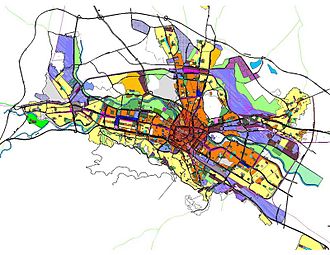
Treasure Valley
Q7836726 EXACT TITLE 1.000
QID OVERLAP: Q7836726 in agriculture (tier:evergreen) and veterinary_animal_services (tier:evergreen). | SHARED TOKENS (15): "agricultural", "association", "boise", "eastern", "historically", "idaho", "land", "local", "region", "resources", "river", "rural", "treasure", "valley", "western". | EXACT TITLE in agriculture: "Treasure Valley". | EXACT TITLE in veterinary_animal_services: "Treasure Valley".
agriculturalassociationboiseeasternhistoricallyidaholandlocalregionresourcesriverruraltreasurevalleywestern
, coined the name "Treasure Valley" in 1959 to reflect the treasure chest of resources and opportunities that the region offered. The valley has a very diverse terrain, from sage flatlands, to mesas, agricultural areas, and urbanized areas. As the Boise Metropolitan Area grows, more and more undeveloped and agricultural land is being urbanized. History Settling the region The tribes that roamed the area, specifically, were the Northern Paiute and Shoshone. In 1834, Thomas McKay built the original Fort Boise, in the area near present-day Parma, which was run for a time by Francois Payette. It later was moved because of flooding troubles and was abandoned in 1854. The Oregon Trail runs through the Treasure Valley. The valley was settled for the most part by ranchers and farmers, initially to supply the gold and silver mining communities in the higher elevations nearby: Idaho City in the Boise Basin and Silver City in the Owyhees. A new Fort Boise was constructed by the U.S. Army in 1863 in present-day Boise, from which the city grew.
ern Oregon to Boise, and is the most populated area in Idaho. Historically, the valley had been known as the Lower Snake River Valley or the Boise River Valley. Pete Olesen, president of the valley's association of local Chambers of Commerce, coined the name "Treasure Valley" in 1959 to reflect the treasure chest of resources and opportunities that the region offered. The valley has a very diverse terrain, from sage flatlands, to mesas, agricultural areas, and urbanized areas.
The Treasure Valley is a valley in the western United States, primarily in southwestern Idaho, where the Payette, Boise, Weiser, Malheur, and Owyhee rivers drain into the Snake River. It includes all the lowland areas from Vale in rural eastern Oregon to Boise, and is the most populated area in Idaho. Historically, the valley had been known as the Lower Snake River Valley or the Boise River Valley. Pete Olesen, president of the valley's association of local Chambers of Commerce, coined the name "Treasure Valley" in 1959 to reflect the treasure chest of resources and opportunities that the region offered. The valley has a very diverse terrain, from sage flatlands, to mesas, agricultural areas, and urbanized areas.
Land-use planning
Q60738778 EXACT TITLE 1.000
QID OVERLAP: Q60738778 in agriculture (tier:evergreen) and veterinary_animal_services (tier:branch). | SHARED TOKENS (35): "act", "american", "association", "authority", "behavior", "changes", "community", "comprehensive", "conditions", "conservation", "costs", "depends", "development", "districts", "economic", "environmental", "facilities", "function", "health", "land".... | EXACT TITLE in agriculture: "Land-use planning".
actamericanassociationauthoritybehaviorchangescommunitycomprehensiveconditionsconservationcostsdependsdevelopmentdistrictseconomicenvironmentalfacilitiesfunctionhealthlandland-usemeansneedspatternspeoplephysicalplanplanningregionalregulations+5
The American Planning Association states that the goal of land use planning is to further the welfare of people and their communities by creating convenient, equitable, healthful, efficient, and attractive environments for present and future generations.
able legislation applicable in Scotland and Northern Ireland. History Land use planning nearly always requires land use regulation, which typically encompasses zoning. Zoning regulates the types of activities that can be accommodated on a given piece of land, as well as the amount of space devoted to those activities, and the ways that buildings may be situated and shaped. The ambiguous nature of the term "planning", as it relates to land use, is historically tied to the practice of zoning. Zoning in the United States came about in the late 19th and early 20th centuries to protect the interests of property owners. The practice was found to be constitutionally sound by the Supreme Court decision of Village of Euclid v. Ambler Realty Co. in 1926. Soon after, the model law known as the Standard State Zoning Enabling Act was enacted by many state legislatures, which gave authority to the states and its subdivisions to regulate land use. Even so, the practice remains controversial today, particularly in its impact on economic and racial segregation, as some critics argue that zoning has often been used to exclude certain populations from particular neighborhoods. The "taking clause" of the Fifth Amendment to the United States Constitution prohibits the government from taking private property for public use without just compensation. The case of Dolan v. City of Tigard demonstrated the criteria that determine the threshold of what is considered taking. One interpretation of the taking clause is that any restriction on the development potential of land through zoning regulation is a "taking". A deep-rooted anti-zoning sentiment exists in America, that no one has the right to tell another what he can or cannot do with his land. Ironically, although people are often averse to being told how to develop their own land, they tend to expect the government to intervene when a proposed land use is undesirable. Conventional zoning has not typically regarded the manner in which buildings relate to one another or the public spaces around them, but rather has provided a pragmatic system for mapping jurisdictions according to permitted land use. This system, combined with the interstate highway system, widespread availability of mortgage loans, growth in the automobile industry, and the over-all post-World War II economic expansion, destroyed most of the character that gave distinctiveness to American cities. The urban sprawl that most US cities began to experience in the mid-twentieth century was, in part, created by a flat approach to land use regulations. Zoning without planning created unnecessarily exclusive zones. Thoughtless mapping of these zones over large areas was a big part of the recipe for suburban sprawl.
As America grew and urban sprawl was rampant, the much-loved America of the older towns, cities, or streetcar suburbs essentially became illegal through zoning. Unparalleled growth and unregulated development changed the look and feel of landscapes and communities. They strained commercial corridors and affected housing prices, causing citizens to fear a decline in the social, economic and environmental attributes that defined their quality of life. Zoning regulations became politically contentious as developers, legislators, and citizens struggled over altering zoning maps in a way that was acceptable to all parties. Land use planning practices evolved as an attempt to overcome these challenges.
Livestock
Q103459 EXACT TITLE 1.000
QID OVERLAP: Q103459 in agriculture (tier:evergreen) and veterinary_animal_services (tier:evergreen). | SHARED TOKENS (20): "agricultural", "agriculture", "breeding", "cattle", "commercial", "dairy", "economic", "environment", "health", "labor", "livestock", "major", "milk", "practices", "produce", "products", "provide", "public", "role", "source". | EXACT TITLE in agriculture: "Livestock". | EXACT TITLE in veterinary_animal_services: "Livestock".
agriculturalagriculturebreedingcattlecommercialdairyeconomicenvironmenthealthlaborlivestockmajormilkpracticesproduceproductsprovidepublicrolesource
Livestock are the domesticated animals that are raised in an agricultural setting mainly to provide labor and produce diversified animal products for human consumption such as meat, eggs, milk, fur, leather, and wool. The term is sometimes used to refer solely to animals which are raised for consumption, and sometimes used to refer solely to farmed ruminants, such as cattle, sheep, and goats. The breeding, maintenance, slaughter and general subjugation of livestock, called animal husbandry, is a part of modern agriculture and has been practiced in many cultures since humanity's transition to farming from hunter-gatherer lifestyles. Animal husbandry practices have varied widely across cultures and periods. They continue to play a major economic and cultural role in numerous communities. Livestock farming practices have largely shifted to intensive animal farming. Such farming increases the yield of the various commercial outputs, but also impairs animal welfare, the environment, and public health.
The word livestock was first used between 1650 and 1660, as a compound word combining the words "live" and "stock". In some periods, "cattle" and "livestock" have been used interchangeably. Over the 19th century, the meaning of livestock and cattle shifted, leading to the modern meaning of cattle referring to domesticated bovines, whilst livestock is used in a wider sense. United States federal legislation defines the term to make specified agricultural commodities eligible or ineligible for a program or activity. For example, the Livestock Mandatory Reporting Act of 1999 (P.L. 106–78, Title IX) defines livestock only as cattle, swine, and sheep, while the 1988 disaster assistance legislation defined the term as "cattle, sheep, goats, swine, poultry (including egg-producing poultry), equine animals used for food or in the production of food, fish used for food, and other animals designated by the Secretary". Horses are considered livestock in the United States. The USDA classifies pork, veal (meat of young cows, usually 5–8 months old), beef, and lamb (mutton) as livestock, and all livestock as red meat. Poultry and fish are not included in the category. The latter is likely because fish products are not governed by the USDA, but by the FDA. Deadstock is defined in contradistinction to or as the opposite of livestock as "animals that have died before slaughter, sometimes from illness or disease".
Since many livestock are herd animals, they were historically driven to market "on the hoof" to a town or other central location. The method is still used in some parts of the world. Truck transport is now common in developed countries. Local and regional livestock auctions and specialized agricultural markets facilitate trade in livestock. In Canada at the Cargill slaughterhouse in High River, Alberta, 2,000 workers process 4,500 cattle per day, or more than one-third of Canada's capacity. It closed when some of its workers became infected with coronavirus disease 2019. The Cargill plant together with the JBS plant in Brooks, Alberta and the Harmony Beef plant in Balzac, Alberta represent fully three-quarters of the Canadian beef supply. In other areas, livestock may be bought and sold in a bazaar or wet market, such as may be found in many parts of Central Asia. In non-Western countries, providing access to markets has encouraged farmers to invest in livestock, with the result being improved livelihoods.
Feedlot
Q1400937 EXACT TITLE 1.000
QID OVERLAP: Q1400937 in agriculture (tier:branch) and veterinary_animal_services (tier:evergreen). | SHARED TOKENS (39): "act", "added", "affect", "agency", "agricultural", "american", "approval", "around", "authority", "cattle", "controlled", "environment", "environmental", "farm", "farms", "feed", "food", "government", "increase", "individual".... | EXACT TITLE in veterinary_animal_services: "Feedlot".
actaddedaffectagencyagriculturalamericanapprovalaroundauthoritycattlecontrolledenvironmentenvironmentalfarmfarmsfeedfoodgovernmentincreaseindividualinspectionlargelawlivestockmanagementnationalobtainoperateplanpossible+9
lace to raise awareness about the environment and covers 23 different aspects around the farm that may affect the environment. The Environmental Protection Agency has authority under the Clean Water Act to regulate all animal feeding operations in the United States. This authority is delegated to individual states in some cases. In Canada, regulation of feedlots is shared between all levels of government. Certain provinces are required by law to have a nutrient management plan, which looks at everything the farm is going to feed to their animals, down to the minerals. New farms are required to complete and obtain a license under the livestock operations act, which looks at proper manure storage as well as proper distance away from other farms or dwellings. A mandatory RFID tag is required in every animal that passes through a Canadian feedlot, these are called CCIA tags (Canadian Cattle Identification Agency) which is controlled by the Canadian Food Inspection Agency CFIA.
ent management plan, which looks at everything the farm is going to feed to their animals, down to the minerals. New farms are required to complete and obtain a license under the livestock operations act, which looks at proper manure storage as well as proper distance away from other farms or dwellings. A mandatory RFID tag is required in every animal that passes through a Canadian feedlot, these are called CCIA tags (Canadian Cattle Identification Agency) which is controlled by the Canadian Food Inspection Agency CFIA.
Diet Typically the total mixed ration (TMR) consist of forage, grains, minerals, and supplements to benefit the animals' health and to maximize feed efficiency. These rations are also known to contain various other forms of feed such as a specialized animal feed which consists of corn, corn byproducts (some of which is derived from ethanol and high fructose corn syrup production), milo, barley, and various grains. Some rations may also contain roughage such as corn stalks, straw, sorghum, or other hay, cottonseed meal, premixes which may contain but not limited to antibiotics, fermentation products, micro & macro minerals and other essential ingredients that are purchased from mineral companies, usually in sacked form, for blending into commercial rations. Many feed companies are able to be prescribed a drug to be added into a farms feed if required by a vet. Farmers generally work with nutritionists who aid in the formulation of these rations to ensure their animals are getting the recommended levels of minerals and vitamins, but also to make sure the animals are not wasting feed in their manure. In the American northwest and Canada, barley, low grade durum wheat, chick peas (garbanzo beans), oats and occasionally potatoes are used as feed. In a typical feedlot, a cow's diet is roughly 62% roughage, 31% grain, 5% supplements (minerals and vitamins), and 2% premix. High-grain diets lower the pH in the animals' rumen. Due to the stressors of these conditions, and due to some illnesses, it may be necessary to give the animals antibiotics on occasion. Animal health and welfare A feedlot is highly dependent on the health of its livestock, as disease can have a great impact on the animals, and controlling sickness can be difficult with numerous animals living together. Many feedlots will have an entrance protocol in which new animals entering the lot are given vaccines to protect them against potential sickness that may arise in the first few weeks in the feedlot. These entrance protocols are usually discussed and created with the farm's veterinarian, as there are numerous factors that can impact the health of feedlot cattle. One challenging but crucial role on a feedlot is to identify any sick cattle, and treat them in order to rebound them back to health. Knowing when an animal is sick is sometimes difficult as cattle are prey animals and will try to hide their weakness from potential threats. A sick animal will generally look gaunt, may have a snotty nose and/or dry nose, and will have droopy ears, catching these symptoms early may be the key to successfully treating an animal. The best indicator of health is the body temperature of a cow, but this is not always possible when looking over many animals per day. The diet of the animals and the different ingredients within the ration are controversial. Cattle in feedlots are fed grain rather than more natural forage. This is designed to make them gain weight faster, but it leads to internal abscesses and discomfort. Grain-based diets can also lead to the growth of harmful bacteria such as Clostridium perfringens and E. coli. Too much grain in the diet can cause cattle to have issues such as bloating, diarrhea and digestive discomfort, which is why close monitoring of the animals, as well as working with ruminant nutritionists is very important for farmers. Animal welfare is a pressing subject in intensive agriculture today since consumers have voiced concerns over maltreatments and poor animal health. Indoor feedlots with concrete surfaces can cause leg problems including swollen joints. On outdoor feedlots, welfare issues include mud in rainy areas; heat stress in feedlots that are not shaded; insufficient water to drink; excessive cold, and problems with cattle handling (e.g.
U
Q1854488 EXACT TITLE 1.000
QID OVERLAP: Q1854488 in agriculture (tier:evergreen) and veterinary_animal_services (tier:evergreen). | SHARED TOKENS (16): "approximately", "boise", "established", "extension", "falls", "idaho", "later", "opened", "operates", "production", "public", "research", "rural", "statewide", "uidaho", "university". | EXACT TITLE in agriculture: "University of Idaho". | EXACT TITLE in veterinary_animal_services: "University of Idaho".
approximatelyboiseestablishedextensionfallsidaholateropenedoperatesproductionpublicresearchruralstatewideuidahouniversity
years ago in 1889 and opened three years later, it was the state's sole university for 71 years, until 1963. The university comprises ten undergraduate, graduate, and professional schools. It enrolls approximately 12,000 students across its campuses, with 11,000 on the Moscow campus. The university is classified among "R1: Very High Spending and Doctorate Production". Located on the rural Palouse, the university is represented in intercollegiate athletics by the Idaho Vandals, who compete in NCAA Division I, primarily in the Big Sky Conference.
legiate athletics by the Idaho Vandals, who compete in NCAA Division I, primarily in the Big Sky Conference. In addition to the main campus in Moscow, the U of I has branch campuses in Coeur d'Alene, Boise, and Idaho Falls; it also operates a research park in Post Falls, and dozens of extension offices statewide. History On January 30, 1889, Governor Edward Stevenson of the Idaho Territory signed the territorial legislature's Council Bill No. 20, which officially established the UI as the upcoming state's land-grant institution. Nearly four years later, the university opened for classes on October 3, 1892. The choice of location for the University of Idaho was an "Olive Branch of Peace" by Gov. Stevenson for his actions in styming the nearly successful effort to detach the north Idaho panhandle and join the state of Washington. Formed by the Idaho Territory legislature in 1889, the university opened its doors in 1892 with a class of 40 students.
Ridenbaugh Hall The Board of Regents authorized the construction of Ridenbaugh Hall as the first women's dormitory on campus. Completed in 1901 at a cost of $17,000, it is the oldest extant building on campus. It was designed by architect Willis A. Ritchie of Spokane, who also designed the Spokane County Courthouse. The building used stone quarried in Latah County for the exterior walls. It was also used as a space for domestic science classes until 1927 when it became a men's dormitory. The building was later used for music practice rooms and currently houses the Art and Architecture gallery. Ridenbaugh Hall was the first U of I campus structure to be named after a person. The hall was dedicated to "the young women of Idaho" in honor of Mary E. Ridenbaugh (1857–1926) of Boise, who was vice president of the U of I Board of Regents, and served as regent from 1901 to 1907.
Zoning
Q702232 EXACT TITLE 1.000
QID OVERLAP: Q702232 in agriculture (tier:branch) and veterinary_animal_services (tier:evergreen). | SHARED TOKENS (21): "allowing", "combine", "developed", "development", "form", "government", "growth", "land", "land-use", "local", "places", "planning", "policy", "property", "regulations", "regulatory", "rules", "scale", "shape", "size".... | EXACT TITLE in veterinary_animal_services: "Zoning".
allowingcombinedevelopeddevelopmentformgovernmentgrowthlandland-uselocalplacesplanningpolicypropertyregulationsregulatoryrulesscaleshapesizesystems
Mixed-use zoning combines residential, commercial, office, and public uses into a single space. Mixed-use zoning can be vertical, within a single building, or horizontal, involving multiple buildings. Planning and community activist Jane Jacobs wrote extensively on the connections between the separation of uses and the failure of urban renewal projects in New York City. She advocated dense mixed-use developments and walkable streets. In contrast to villages and towns, in which many residents know one another, and low-density outer suburbs that attract few visitors, cities and inner city areas have the problem of maintaining order between strangers. This order is maintained when, throughout the day and evening, there are sufficient people present with eyes on the street. This can be accomplished in successful urban districts that have a great diversity of uses, creating interest and attracting visitors. Jacobs' writings, along with increasing concerns about urban sprawl, are often credited with inspiring the New Urbanism movement. To accommodate the New Urbanist vision of walkable communities combining cafés, restaurants, offices and residential development in a single area, mixed-use zones have been created within some zoning systems. These still use the basic regulatory mechanisms of zoning, excluding incompatible uses such as heavy industry or sewage farms, while allowing compatible uses such as residential, commercial and retail activities so that people can live, work and socialise within a compact geographic area. The mixing of land uses is common throughout the world.
Inclusionary zoning refers to policies to increase the number of housing units within a development that are affordable to low and middle-income households. These policies can be mandatory as part of performance zoning or based on voluntary incentives, such as allowing greater density of development. Overlay zoning An overlay zone is a zoning district that overlaps one or more zoning districts to address a particular concern or feature of that area, such as wetlands, historic buildings or transit-oriented development. Overlay zoning has the advantage of providing targeted regulation to address a specific issue, such as a natural hazard, without having to significantly rewrite an existing zoning ordinance.
The United Kingdom does not use zoning as a technique for controlling land use. British land use control began its modern phase after the Town and Country Planning Act of 1947. Rather than dividing municipal maps into land use zones, English planning law places all development under the control of local and regional governments, effectively abolishing the ability to develop land by-right. However, existing development allows land use by-right as long as the use does not constitute a change in the type of land use. A property owner must apply to change land use type of any existing building, and such changes must be consistent with the local and regional land use plans. Development control or planning control is the element of the United Kingdom's system of town and country planning through which local government regulates land use and new building. There are 421 Local Planning Authorities (LPAs) in the United Kingdom. Generally they are the local borough or district council or a unitary authority. They each use a discretionary "plan-led system" whereby development plans are formed and the public consulted. Subsequent development requires planning permission, which will be granted or refused with reference to the development plan as a material consideration. The plan does not provide specific guidance on what type of buildings will be allowed in a given location, rather it provides general principles for development and goals for the management of urban change. Because planning committees (made up of directly elected local councillors) or in some cases planning officers themselves (via delegated decisions) have discretion on each application for development or change of use made, the system is considered a 'discretionary' one. Planning applications can differ greatly in scale, from airports and new towns to minor modifications to individual houses. In order to prevent local authorities from being overwhelmed by high volumes of small-scale applications from individual householders, a separate system of permitted development has been introduced. Permitted development rules are largely form-based, but in the absence of zoning, are applied at the national level. Examples include allowing a two-storey extension up to three metres at the rear of a property, extensions up to 50% of the original width at each side, and certain types of outbuildings in the garden, provided that no more than 50% of the land area is built over. These are appropriately sized for a typical three bedroom semi-detached property, but must be applied across a wide variety of housing types, from small terraces, to larger detached properties and manor houses. In August 2020, the UK Government published a consultation document called Planning for the Future. The proposals hinted at a move toward zoning in England, with areas given a Growth, Renewal or Protected designation, with the possibility of "sub-areas within each category", although the document did not elaborate on what the details of these might have been.
Sheep
EXACT TITLE 1.000
QID OVERLAP: Q7368 in agriculture (tier:branch) and veterinary_animal_services (tier:evergreen). | SHARED TOKENS (25): "agricultural", "agriculture", "around", "began", "center", "dairy", "history", "important", "large", "largest", "life", "livestock", "major", "making", "members", "milk", "model", "production", "region", "related".... | EXACT TITLE in veterinary_animal_services: "Sheep".
agriculturalagriculturearoundbegancenterdairyhistoryimportantlargelargestlifelivestockmajormakingmembersmilkmodelproductionregionrelatedsciencesmallersouthernspecificwestern
a lamb. Sheep are most likely descended from the wild mouflon of Europe and Asia, with Iran being a geographic envelope of the domestication center. One of the earliest animals to be domesticated for agricultural purposes, sheep are raised for fleeces, meat (lamb, hogget, or mutton), and sheep milk. A sheep's wool is the most widely used animal fiber, and is usually harvested by shearing. Ovine meat is called lamb and mutton, with lamb describing meat from younger animals and mutton meat from older ones. Sheep continue to be important for wool and meat today, and are also occasionally raised for pelts, as dairy animals, or as model organisms for science. Sheep husbandry is done throughout the majority of the inhabited world. It was central to agriculture and textiles throughout Eurasia for millennia. In the 21st century, Australia, New Zealand, nations of southern and western South America, South Africa, and the British Isles are most closely associated with sheep production. More recently, China and India host among the largest flocks by absolute count, if as a smaller proportion of their economy. There is a large lexicon of unique terms for sheep husbandry which vary considerably by region and dialect. Use of the word sheep began in Middle English as a derivation of the Old English word scēap. A group of sheep is called a flock. Many other specific terms for the various life stages of sheep exist, generally related to lambing, shearing, and age. As a key animal in the history of farming, sheep have an entrenched place in human culture. Sheep terminology and idiom are common in language and symbolism. As livestock, sheep are most often associated with pastoral, Arcadian imagery. Sheep figure in many mythologies—such as the Golden Fleece—and major religions, especially the Abrahamic traditions.
Sheep may fall victim to poisons, infectious diseases, and physical injuries. As a prey species, sheep try to hide signs of illness, to prevent being targeted by predators. This can cause unobservant shepherds to miss signs of a sheep in need. However, some signs of ill health are obvious, with sick sheep eating little, lying down excessively, and being generally listless. Throughout history, much of the money and labor of sheep husbandry has aimed to prevent sheep ailments. Historically, shepherds often created remedies by experimentation on the farm. In some developed countries, including the United States, sheep lack the economic importance for drug companies to perform expensive clinical trials required to approve more than a relatively limited number of drugs for ovine use. Extra-label drug use in sheep production is permitted in many jurisdictions, subject to certain restrictions. In the 20th and 21st centuries, a minority of sheep owners have turned to alternative treatments such as homeopathy and herbalism to treat sheep veterinary problems. The effectiveness of alternative veterinary medicine has been met with skepticism by agricultural scientists. Certified organic farming with sheep requires eschewing certain medications, resulting in some shepherds recommending keeping two flocks – the lucky and healthy sheep who aren't immediately treated and stay in the organic flock, while any sheep needing anti-parasite drugs or antibiotics are moved into a standard flock. Many breeders take a variety of preventive measures to ward off problems. Regulating sheep intermixing can check the spread of disease from flock to flock. This can mean verifying sheep health before they are transferred or purchased, and quarantining new sheep for two or three weeks. Good nutrition and good sanitation also greatly improve sheep health. Avoiding poisons is important; common poisons sheep can encounter are pesticide sprays, inorganic fertilizer, motor oil, and radiator coolant containing ethylene glycol. Reducing stress in sheep is also important for their health. Restraint, isolation, loud noises, novel situations, pain, heat, extreme cold, fatigue and other stressors can lead to secretion of cortisol, a stress hormone, in amounts that may indicate welfare problems. Excessive stress can compromise the immune system. "Shipping fever" (pneumonic mannheimiosis, formerly called pasteurellosis) is a disease of particular concern, that can occur as a result of stress, notably during transport and (or) handling. Pain, fear and several other stressors can cause secretion of epinephrine (adrenaline). Considerable epinephrine secretion in the final days before slaughter can adversely affect meat quality (by causing glycogenolysis, removing the substrate for normal post-slaughter acidification of meat) and result in meat becoming more susceptible to colonization by spoilage bacteria.
Other than parasites and disease, predation is a threat to sheep and the profitability of sheep raising. Sheep have little ability to defend themselves, compared with other species kept as livestock. Even if sheep survive an attack, they may die from their injuries or simply from panic. However, the impact of predation varies dramatically with region. In Africa, Australia, the Americas, and parts of Europe and Asia predators are a serious problem. In the United States, for instance, over one third of sheep deaths in 2004 were caused by predation. In contrast, other nations are virtually devoid of sheep predators, particularly islands known for extensive sheep husbandry. Worldwide, canids—including the domestic dog—are responsible for most sheep deaths. Other animals that occasionally prey on sheep include: felines, bears, birds of prey, ravens and feral hogs. Sheep producers have used a wide variety of measures to combat predation. Pre-modern shepherds used their own presence, livestock guardian dogs, and protective structures such as barns and fencing. Fencing (both regular and electric), penning sheep at night, and lambing indoors all continue to be widely used. More modern shepherds used guns, traps, and poisons to kill predators, causing significant decreases in predator populations. In the wake of the environmental and conservation movements, the use of these methods now usually falls under the purview of specially designated government agencies in most developed countries. The 1970s saw a resurgence in the use of livestock guardian dogs and the development of new methods of predator control by sheep producers, many of them non-lethal. Donkeys and guard llamas have been used since the 1980s in sheep operations, using the same basic principle as livestock guardian dogs. Interspecific pasturing, usually with larger livestock such as cattle or horses, may help to deter predators, even if such species do not actively guard sheep. In addition to animal guardians, contemporary sheep operations may use non-lethal predator deterrents such as motion-activated lights and noisy alarms. Economic importance Sheep are an important part of the global agricultural economy. While historically of top importance and relevance, their status has been eclipsed in the 20th century by other livestock species, especially the pig, chicken, and cow. China, Australia, India, Nigeria, and Iran have the largest modern flocks, and serve both local and exportation needs for wool and mutton. Other countries such as New Zealand have smaller flocks but retain a large international economic impact due to their export of sheep products. Sheep also play a role in local economies, such as niche markets focused on organic or sustainable agriculture and local food customers. Especially in developing countries, such flocks may be a part of subsistence agriculture rather than a system of trade.
Snake River
Q272074 EXACT TITLE 1.000
QID OVERLAP: Q272074 in agriculture (tier:evergreen) and veterinary_animal_services (tier:branch). | SHARED TOKENS (34): "agencies", "american", "canyon", "commercial", "construction", "control", "created", "developed", "eastern", "falls", "flood", "history", "idaho", "important", "lake", "large", "largest", "major", "national", "near".... | EXACT TITLE in agriculture: "Snake River".
agenciesamericancanyoncommercialconstructioncontrolcreateddevelopedeasternfallsfloodhistoryidahoimportantlakelargelargestmajornationalnearnorthnorthwestpolicyprivateprogramspublicregionriverrolesection+4
sh. The Snake and its tributary, the Salmon River, host the longest sockeye salmon run in the world, stretching 900 miles (1,400 km) from the Pacific to Redfish Lake in Idaho. Since the 1950s, public agencies, tribal governments and private utilities have invested heavily in fishery restoration and hatchery programs, with limited success.
As gold mining declined in the late 19th century, the wheat industry boomed in the Palouse of southeast Washington. By the 1870s, the Oregon Steam Navigation Company was operating seven steamboats transporting grain from the Snake River to lower Columbia River ports. These were the Harvest Queen, John Gates, Spokane, Annie Faxon, Mountain Queen, R.R. Thompson, and Wide West. In the 1890s, a huge copper deposit was discovered at Eureka Bar in Hells Canyon. Several ships transported ore from there to Lewiston, including Imnaha, Mountain Gem, and Norma. In 1893 the Annie Faxon suffered a boiler explosion and sank on the Snake below Lewiston, killing five people. Starting in the 1880s, the Army Corps began dredging the Snake River below Lewiston to maintain a 5-foot (1.5 m) deep navigation channel. River traffic declined rapidly once railroads arrived. By 1899, the Union Pacific line along the south bank of the Snake River had reached Riparia, Washington. It then joined forces with the Northern Pacific Railroad, which was building a line along the north bank, to build the shared Camas Prairie Railroad the rest of the way to Lewiston, which it reached in 1908. The Open River Transportation Company, which operated steamboats between Lewiston and Celilo Falls on the Columbia, went bankrupt in 1912. The 1915 completion of the Celilo Canal made it much easier for boats from the upper Columbia and Snake to reach Portland, and the Columbia River Transportation Company began operating a water route between Lewiston and Portland. Still, steamboats were unable to compete with railroads on speed and efficiency. The last steamboat on the lower Snake ran in 1920. Once the railroads monopolized grain shipments, they raised shipping rates, to farmers' consternation. In 1934, political activist Herbert G. West organized the Inland Empire Waterways Association (IEWA), to promote an "open river" – a deep-water shipping channel on the Snake and Columbia Rivers that could compete with rail. The IEWA initially pushed for improvements such as bigger locks at Bonneville Dam in 1938 and the construction of McNary Dam on the Columbia, which would improve navigation to the mouth of the Snake. In 1941 a bill was first introduced in Congress authorizing the Army Corps to develop the lower Snake River. The 1941 bill failed, but after several years of debate, Congress finally authorized the Snake River development in 1945. Early plans included anywhere from six to ten low dams for the lower Snake. Eventually this was reduced to four bigger dams, which would lower costs, but would require what at the time were the tallest navigation locks in the world, at over 100 feet (30 m). Tribes, state wildlife agencies and the fishing industry opposed the dams, arguing that they would kill too many salmon. In 1947, the U.S. Department of the Interior proposed a ten-year moratorium on dam construction while the fishery problem was studied. With the onset of the Cold War, rising electricity demand in the Pacific Northwest – particularly at the nearby Hanford nuclear site – turned the project's focus towards hydropower. By 1948, the Army Corps estimated that over 80 percent of the economic benefits would come from power, and only 15 percent from navigation. Dam opponents countered that if the primary objective was now power, other dam sites existed in the Northwest that would have less impact on fish. These objections proved futile, as the lower Snake River dams were already authorized, and the federal government had little interest in studying alternatives. While opponents continued to stall the project for a few more years, Washington Senator Warren G.
Populations of anadromous fish began to decline in the late 1800s due to the impact of commercial fishing, logging, mining and agriculture, but even in the 1930s, returning fall chinook alone numbered 500,000. Populations further collapsed once dams were built on the lower Snake and Columbia Rivers, and Hells Canyon Dam blocked access to the upper Snake. Wild Snake River spring and summer chinook returns declined from 130,000 in the 1950s to less than 5,000 in the 1990s. Wild steelhead returns followed a similar pattern, falling from 110,000 in the 1960s to less than 10,000 in the 1990s. Spring, summer and fall-run chinook were all listed as threatened in 1992. Snake River steelhead were also listed as threatened in 1997. Wild chinook salmon and steelhead continued to decline into the 1990s, but have begun an unsteady recovery since 2000, with both chinook and steelhead returns up to 20,000–30,000 in some years. Coho salmon had disappeared from the Snake River by the 1980s, they were reintroduced to the watershed in 1995. Snake River sockeye once numbered to up 150,000 adults. Between 24,000 and 30,000 sockeye returned to Wallowa Lake in the Grande Ronde River watershed, but the run was eliminated by 1905 due to overharvest and unscreened irrigation diversions. The Payette Lake population once numbering up to 100,000 was blocked by the Black Canyon Dam in 1924. Sockeye in the Yellowbelly, Stanley, and Pettit Lakes of the Sawtooth basin were eradicated by management actions of the Idaho Department of Fish and Game in the 1950s, and irrigation diversions lead to the extirpation of the Pettit Lake population. Snake River sockeye returns declined to 4,500 in the 1950s and only a few dozen by the late 1960s. Snake River sockeye were listed as endangered in 1991. Numerous hatcheries are operated by agencies such as the Army Corps, Idaho Power, the Bonneville Power Administration, the U.S. Bureau of Indian Affairs and the U.S. Fish and Wildlife Service, to supplement wild fish populations. Hatcheries release about 33 million salmon and steelhead smolt into the Snake River watershed each year. However, the survival rate for hatchery fish is poor. Just 0.4 percent of hatchery chinook and 1.5 percent of hatchery steelhead returned as adults, as measured at Lower Granite Dam between 2007 and 2016. Upstream of the four lower dams, the Snake River watershed contains some of the best remaining spawning habitat in the Columbia River system, particularly along the Clearwater and Salmon Rivers; the latter is one of the longest undammed rivers in the continental US. A much depleted sockeye salmon run continues to spawn in Redfish Lake near Stanley, Idaho, more than 900 miles (1,400 km) inland from the Pacific Ocean.
Boise, Idaho
Q35775 EXACT TITLE 0.980
QID OVERLAP: Q35775 in agriculture (tier:branch) and veterinary_animal_services (tier:evergreen). | SHARED TOKENS (14): "ada", "boise", "capital", "home", "idaho", "level", "locally", "major", "north", "population", "river", "technology", "treasure", "valley". | EXACT TITLE in veterinary_animal_services: "Boise, Idaho".
adaboisecapitalhomeidaholevellocallymajornorthpopulationrivertechnologytreasurevalley
Boise (locally also ) is the capital and most populous city in the U.S. state of Idaho. It is the county seat of Ada County. The population of the city was 235,685 at the 2020 census. The Boise metropolitan area, located in the Treasure Valley, includes five counties of Idaho with an estimated population of 846,000, the most populous metropolitan area in Idaho and 95th-most populous in the United States. Located on the Boise River in southwestern Idaho, it is 41 miles (66 km) east of the Oregon border and 110 miles (177 km) north of the Nevada border. Downtown Boise's elevation is 2,704 feet (824 m) above sea level. Boise is home to major employers in the technology, manufacturing, and service sectors, including companies such as Micron Technology and Hewlett-Packard.
an area in Idaho and 95th-most populous in the United States. Located on the Boise River in southwestern Idaho, it is 41 miles (66 km) east of the Oregon border and 110 miles (177 km) north of the Nevada border. Downtown Boise's elevation is 2,704 feet (824 m) above sea level. Boise is home to major employers in the technology, manufacturing, and service sectors, including companies such as Micron Technology and Hewlett-Packard.
...that the military should continue killing Indians 'until the last Indian in the Territories was either on his reservation or enriched the sagebrush with his decaying carcass.' ...if the Indians refused to move there, 'they will be killed or put on the reservation by force, and certainly shot if they don't stay there.' Furthermore, the editor continues, 'The idea that the Indians have any right to the soil is ridiculous. ...They have no more rights to the soil of the Territories of the United States than wolves or coyotes...' This would be our plan of establishing friendship upon an eternal basis with our Indians: Let all the hostile bands of Idaho Territory be called in (they will not be caught in any other manner) to attend a grand treaty; plenty of blankets and nice little trinkets distributed among them; plenty of grub on hand; have a real jolly time with them; then just before the big feast put strychnine in their meat and poison to death the last mother's son of them. At the same time, native warriors around the valley, under the leadership of Howluck also known as "Bigfoot" among white settlers, among others, waged an escalating and intensified guerrilla campaign of harassment of passerby caravans along the Oregon Trail. The United States Army also escalated and intensified "punitive expeditions" against formations of warriors and against civilian communities as well. This marked the start of the "unofficial" Snake War in 1866. This war lasted until 1868, and is statistically the deadliest of the Indian Wars in the West in terms of casualties. In the end, 1,762 men were counted as the casualties of this war from both sides. In 1868, Fort Hall Indian Reservation was established in Southeastern Idaho, about 220 miles upstream, according to the terms of Fort Bridger Treaty. The Boise Valley Shoshone and Bannock Tribes were not party to this treaty. Nevertheless, in April 1869, the United States Military embarked on a campaign of "Removal, rounding up of natives in the region including in and around Boise, and expelling them with cavalry escort to Fort Hall Indian Reservation. This period is known among the Shoshone and Bannock people as Idaho's Trail of Tears. Some of the natives managed to escape, and they ran to either Duck Valley or Fort McDermitt in Nevada. Incorporation and growth Boise's early growth was significantly driven by its role in supplying the nearby gold towns that sprung up in the 1860s northeast and then southwest of the town. Miners sometimes wintered in Boise and a number of early prominent businessmen were miners who settled in town in the years after the gold rush waned. By 1864 substantial agricultural production was underway on easily irrigated lands near the river and three canal companies had been incorporated. Early transportation improvements were largely a result of toll road franchises awarded by the territorial legislature starting in the 1860s. These first ran from Fort Boise to the mining centers in the Boise Basin and east to Rocky Bar and to Rattlesnake Station where they connected to the Oregon Trail. Territorial census records from a special 1864 enumeration list the population of Boise as 1,658, and an act of December 12, 1864, was the first attempt by the Idaho Territorial Legislature to incorporate the city. This was rejected by voters the following March. Two more unsuccessful attempts were made to organize a city administration by election before the 1866 version of the city charter was approved by voters on January 6, 1868. The growing number of homes and businesses, for which owners wanted proper legal title, may have contributed to the eventual success of incorporation. All of these rejected efforts to incorporate the city came after Boise had been controversially made the state capital in 1864 over strong opposition from northern Idaho interests. This decision reflected the rapid shift of population growth from north to south after the discovery of gold in southern Idaho. By 1868 Boise had over 400 permanent buildings with a wide range of commercial services. 1868 also marked the formal beginning of a long advocacy for railroad connections to other Idaho communities and, just as importantly, to other growing cities in the west such as Portland, Oregon. Competing railroad and western state government interests frustrated these efforts for many years. Designed by Alfred B. Mullett, the U.S. Assay Office at 210 Main Street was built in 1871 and today is a National Historic Landmark. It first began accepting gold and silver for purchase on March 2, 1872, largely eliminating the need to transport ore to the mint in San Francisco. A territorial penitentiary, now known as the Old Idaho State Penitentiary, opened the same month several miles east of town. Mining continued to be important to Boise's economic growth and periodic booms contributed to population growth as well, though production of gold and silver probably peaked in the 1860s. 1882's gold and silver production of $3,500,000 declined to $1,488,315 (including lead) by 1899. Boise began to earn its City of Trees nickname in this period with a popular focus on a range of tree planting projects. Thomas J. Davis planted several thousand fruit trees in 1864 and several other early businessmen either founded nurseries or orchards of their own. In the 1870s tree planting began in earnest in downtown Boise led by prominent hotels as well as businessmen and residents. In 1907 Davis donated 43 acres of his orchard property to the city for use as a park in the name of his wife Julia. Commercial agriculture continued to expand, but was slowed by the lack of reliable rail links to regional and national markets and by a lack of large scale irrigation projects, which themselves were often tied to hoped-for railroad projects for financing. A.D. Foote, a successful mining engineer, drew up plans to irrigate up to 500,000 acres immediately south of Boise in 1882, but progress was halting and smaller farms were the norm until after the turn of the century with most located near to the river bottom where soil was productive and irrigation more easily achieved. Fruit orchards proliferated and sugar beets, still an important agricultural industry in Idaho, began to be widely cultivated in the 1890s. Cattle and sheep farming became increasingly important as the century closed. With the exception of dairy, most livestock products were exported from Idaho, unlike other agricultural products which were still largely scaled to support local markets. The timber industry also increasingly thrived in the Boise market in the 1880s and 1890s. Large quantities of timber were exported from elsewhere in Idaho, but a growing Boise supported the expansion of Alexander Rossi's sawmill, first established in 1865. Prominent early Boisean William Ridenbaugh had inherited control of the canal now bearing his name from his uncle William Morris in 1878 and later partnered with Rossi to expand the sawmill capacity under the name Rossi and Ridenbaugh Lumber Company. Their materials supported bridge building and the rapid expansion of Boise in the 1890s. As with many early infrastructure ventures, electrification succeeded only after at least one false start. July 4, 1887, marked the start of electrical transmission from a plant located on the Bench. William Ridenbaugh provided expertise and manpower for the water supply and several months were spent rigging poles and lines from the Bench to the service area across the river. Additional electrical supplies allowed the building of an electric streetcar line in 1891. This ran without interruption until buses replaced the lines in 1927, tracking—and sometimes driving—the development of Boise and nearby communities. This system expanded over several decades, reaching into the North End, South Boise and across the river on Front St. A loop line, completed in 1912, ran as far as Caldwell and Nampa, providing transport throughout the valley. Three early trolley companies merged in 1912 to form the Idaho Traction Company with a depot at 7th and Bannock Streets downtown. Additional services and urban amenities arrived in the 1890s as Boise grew. Exploratory drilling for hot water was successful in 1890 and by the end of the decade many homes along Warm Springs avenue were being heated by this source. A natatorium was built in 1892 close to the source of the hot water near the Idaho State Penitentiary. Churches serving several denominations, a Jewish synagogue, a major hardware store and department store, a Masonic hall, the Columbia Theater, Saint Alphonsus' Hospital, a number of parochial and secular schools, a City Hall and a new Union Pacific passenger station, constructed when service was finally extended to downtown, were all built during the 1890s. Falk's Department Store sponsored a semi-professional baseball team representing Boise from at least 1892 and the city supported other organized sports as they became popular.
Cattle
Q830 EXACT TITLE 0.900
QID OVERLAP: Q830 in agriculture (tier:evergreen) and veterinary_animal_services (tier:evergreen). | SHARED TOKENS (10): "cattle", "dairy", "farm", "large", "livestock", "members", "products", "separate", "small", "western". | EXACT TITLE in agriculture: "Cattle". | EXACT TITLE in veterinary_animal_services: "Cattle".
cattledairyfarmlargelivestockmembersproductsseparatesmallwestern
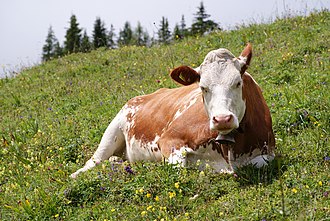
Cattle (Bos taurus) are large, domesticated, bovid ungulates widely kept as livestock. They are prominent modern members of the subfamily Bovinae and the most widespread species of the genus Bos. Mature female cattle are called cows, immature females are called heifers, mature intact males are called bulls, castrated males are called steers or oxen, and young animals of either sex are called calves. Taurine cattle are widely distributed across Europe and temperate areas of Asia, the Americas, and Australia. Zebus are found mainly in India and tropical areas of Asia, America, and Australia. Sanga cattle are found primarily in sub-Saharan Africa. These types, sometimes classified as separate species or subspecies, are further divided into over 1,000 recognized breeds. Cattle are commonly raised for meat, for dairy products, and for leather. As draft animals, they pull carts and farm implements. Cattle are considered sacred animals within Hinduism, and it is illegal to kill them in some parts of the Indian subcontinent. Small breeds such as the miniature Zebu are kept as pets. About 10,500 years ago, taurine cattle were domesticated from wild aurochs progenitors in central Anatolia, the Levant and Western Iran. A separate domestication event occurred in the Indian subcontinent, which gave rise to zebu. There were over 940 million cattle in the world by 2022. Cattle farming is responsible for about 7% of global greenhouse gas emissions.
attle are called cows, immature females are called heifers, mature intact males are called bulls, castrated males are called steers or oxen, and young animals of either sex are called calves. Taurine cattle are widely distributed across Europe and temperate areas of Asia, the Americas, and Australia. Zebus are found mainly in India and tropical areas of Asia, America, and Australia. Sanga cattle are found primarily in sub-Saharan Africa. These types, sometimes classified as separate species or subspecies, are further divided into over 1,000 recognized breeds. Cattle are commonly raised for meat, for dairy products, and for leather. As draft animals, they pull carts and farm implements. Cattle are considered sacred animals within Hinduism, and it is illegal to kill them in some parts of the Indian subcontinent. Small breeds such as the miniature Zebu are kept as pets. About 10,500 years ago, taurine cattle were domesticated from wild aurochs progenitors in central Anatolia, the Levant and Western Iran. A separate domestication event occurred in the Indian subcontinent, which gave rise to zebu. There were over 940 million cattle in the world by 2022. Cattle farming is responsible for about 7% of global greenhouse gas emissions.
Taurine cattle are widely distributed across Europe and temperate areas of Asia, the Americas, and Australia. Zebus are found mainly in India and tropical areas of Asia, America, and Australia. Sanga cattle are found primarily in sub-Saharan Africa. These types, sometimes classified as separate species or subspecies, are further divided into over 1,000 recognized breeds. Cattle are commonly raised for meat, for dairy products, and for leather. As draft animals, they pull carts and farm implements. Cattle are considered sacred animals within Hinduism, and it is illegal to kill them in some parts of the Indian subcontinent. Small breeds such as the miniature Zebu are kept as pets. About 10,500 years ago, taurine cattle were domesticated from wild aurochs progenitors in central Anatolia, the Levant and Western Iran. A separate domestication event occurred in the Indian subcontinent, which gave rise to zebu. There were over 940 million cattle in the world by 2022. Cattle farming is responsible for about 7% of global greenhouse gas emissions.
A
Q3606845 EXACT TITLE 0.820
QID OVERLAP: Q3606845 in agriculture (tier:branch) and veterinary_animal_services (tier:evergreen). | SHARED TOKENS (6): "academic", "agricultural", "agriculture", "economic", "field", "science". | EXACT TITLE in veterinary_animal_services: "Agricultural science".
academicagriculturalagricultureeconomicfieldscience
Agricultural science (or agriscience for short) is a broad multidisciplinary field of biology that encompasses the parts of exact, natural, economic and social sciences that are used in the practice and understanding of agriculture.
In the 18th century, Johann Friedrich Mayer conducted experiments on the use of gypsum (hydrated calcium sulfate) as a fertilizer. In 1843, John Bennet Lawes and Joseph Henry Gilbert began a set of long-term field experiments at Rothamsted Research in England, some of which are still running as of 2018. In the United States, a scientific revolution in agriculture began with the Hatch Act of 1887, which used the term "agricultural science". The Hatch Act was driven by farmers' interest in knowing the constituents of early artificial fertilizer. The Smith–Hughes Act of 1917 shifted agricultural education back to its vocational roots, but the scientific foundation had been built.
Environmental impact Climate change has had significant effects on modern agriculture, making weather patterns less predictable and increasing the frequency and intensity of extreme events such as prolonged droughts, floods and heatwaves. As a result, crop production has become more uncertain even in regions that were previously characterised by relatively stable climatic conditions. Changes in temperature and rainfall regimes are also contributing to soil erosion, desertification and the degradation of water resources, with implications for long-term agricultural productivity and rural livelihoods. To address these issues, there has been increasing interest in agricultural research and practice in the so-called climate-smart strategies aimed at adapting agricultural systems to the existing and the forecasted climate effects and the minimisation of greenhouse gas emissions wherever feasible. These measures involve more efficient use of water and nutrients, crop and agriculture system diversification, soil and water protection, and creating crops and livestock strains more resistant to heat and drought among other challenges.
Dairy farming
Q14096331 QID OVERLAP 0.800
QID OVERLAP: Q14096331 in agriculture (tier:branch) and veterinary_animal_services (tier:branch). | SHARED TOKENS (34): "agricultural", "agriculture", "around", "concern", "consequences", "control", "created", "dairy", "developed", "disposal", "environmental", "expansion", "farm", "farms", "growth", "health", "history", "important", "increase", "industry"....
agriculturalagriculturearoundconcernconsequencescontrolcreateddairydevelopeddisposalenvironmentalexpansionfarmfarmsgrowthhealthhistoryimportantincreaseindustryissueslargelivestocklong-termmilkplantproducersproductionrolescale+4
o the FAO. There has been substantial concern over the amount of waste output created by dairy industries, seen through manure disposal and air pollution caused by methane gas. The industry's role in agricultural greenhouse gas emissions has also been noted to implicate environmental consequences. Various measures have been put in place in order to control the amount of phosphorus excreted by dairy livestock. The usage of rBST has also been controversial.
Nutritional management Feed for their cattle is by far one of the largest expenses for dairy producer whether it be provided by the land they graze or crops grown or purchased. Pasture based dairy producers invest much time and effort into maintaining their pastures and thus feed for their cattle. Pasture management techniques such as rotational grazing are common for dairy production. Many large dairies that deliver food to their cattle have a dedicated nutritionist who is responsible for formulating diets with animal health, milk production, and cost efficiency in mind. For maximum productivity diets must be formulated differently depending on the growth rate, milk production, and reproductive status of each animal. Cattle are classified as ruminants (suborder ruminantia belonging to the order artiodactyl) as they are able to acquire nutrients from even low quality plant-based food, thanks mainly to their symbiotic relationship with the microbes that ferment it in a chamber of their stomachs called the rumen. The rumen is a literal micro-ecosystem within each dairy cow. For optimal digestion, the environment of the rumen must be ideal for the microbes. In this way, the job of a ruminant nutritionist is to feed the microbes not the cow. The nutritional requirements of cattle are usually divided into maintenance requirements, which depend on the cow's weight; and milk production requirements, which in turn depend on the volume of milk the cow is producing. The nutritional contents of each available feed are used to formulate a diet that meets all nutritional needs in the most cost effective way. Notably, cattle must be fed a diet high in fiber to maintain a proper environment for the rumen microbes. Farmers typically grow their own forage for their cattle. Crops grown may include corn, alfalfa, timothy, wheat, oats, sorghum and clover. These plants are often processed after harvest to preserve or improve nutrient value and prevent spoiling. Corn, alfalfa, wheat, oats, and sorghum crops are often anaerobically fermented to create silage. Many crops such as alfalfa, timothy, oats, and clover are allowed to dry in the field after cutting before being baled into hay. To increase the energy density of their diet, cattle are commonly fed cereal grains. In many areas of the world, dairy rations also commonly include byproducts from other agricultural sectors. For example, in California cattle are commonly fed almond hulls and cotton seed. Feeding of byproducts can reduce the environmental impact of other agricultural sectors by keeping these materials out of landfills. To meet all of their nutritional requirements cows must eat their entire ration. Unfortunately, much like humans, cattle have their favorite foods. To keep cattle from selectively eating the most desirable parts of the diet, most produces feed a total mixed ration (TMR). In this system all the components of the feed are well mixed in a mixing truck before being delivered to the cattle.
The practice of dairy production in a factory farm environment has been criticized by animal welfare activists. Some of the ethical complaints regarding dairy production cited include how often the dairy cattle must remain pregnant, the separation of calves from their mothers (called cow-calf separation), how dairy cattle are housed, and environmental concerns regarding dairy production. The production of milk requires that the cow be in lactation, which is a result of the cow having given birth to a calf. The cycle of insemination, pregnancy, parturition, and lactation, followed by a "dry" period of about two months of forty-five to fifty days, before calving which allows udder tissue to regenerate. A dry period that falls outside this time frame can result in decreased milk production in subsequent lactation. An important part of the dairy industry is the removal of the calves off the mother's milk after the three days of needed colostrum, allowing for the collection of the milk produced. On some dairies, in order for this to take place, the calves are fed milk replacer, a substitute for the whole milk produced by the cow. Milk replacer is generally a powder, which comes in large bags, and is added to precise amounts of water, and then fed to the calf via bucket, bottle or automated feeder. Milk replacers are classified by three categories: protein source, protein/fat (energy) levels, and medication or additives (e.g. vitamins and minerals). Proteins for the milk replacer come from different sources; the more favorable and more expensive all milk protein (e.g. whey protein- a by-product of the cheese industry) and alternative proteins including soy, animal plasma and wheat gluten. The ideal levels for fat and protein in milk replacer are 10-28% and 18-30%, respectively. The higher the energy levels (fat and protein), the less starter feed (feed which is given to young animals) the animal will consume. Weaning can take place when a calf is consuming at least two pounds of starter feed a day and has been on starter for at least three weeks. Milk replacer has climbed in cost US$15–20 a bag in recent years, so early weaning is economically crucial to effective calf management. Common ailments affecting dairy cows include infectious disease (e.g. mastitis, endometritis and digital dermatitis), metabolic disease (e.g. milk fever and ketosis) and injuries caused by their environment (e.g. hoof and hock lesions). Lameness is commonly considered one of the most significant animal welfare issues for dairy cattle, and is best defined as any abnormality that causes an animal to change its gait. It can be caused by a number of sources, including infections of the hoof tissue (e.g. fungal infections that cause dermatitis) and physical damage causing bruising or lesions (e.g. ulcers or hemorrhage of the hoof). Housing and management features common in modern dairy farms (such as concrete barn floors, limited access to pasture and suboptimal bed-stall design) have been identified as contributing risk factors to infections and injuries. A mobility scoring system is commonly used to assess cattle Lameness combined with scoring systems to assess adjacent risk factors. Greenhouse gas emissions Milk is estimated to have been responsible for 18% of agricultural greenhouse gas emissions in 2014. Market Worldwide There is a great deal of variation in the pattern of dairy production worldwide. Many countries which are large producers consume most of this internally, while others (in particular New Zealand), export a large percentage of their production. Internal consumption is often in the form of liquid milk, while the bulk of international trade is in processed dairy products such as milk powder. The milking of cows was traditionally a labor-intensive operation and still is in less developed countries. Small farms need several people to milk and care for only a few dozen cows, though for many farms these employees have traditionally been the children of the farm family, giving rise to the term "family farm". Advances in technology have mostly led to the radical redefinition of "family farms" in industrialized countries such as Australia, New Zealand, and the United States. With farms of hundreds of cows producing large volumes of milk, the larger and more efficient dairy farms are more able to weather severe changes in milk price and operate profitably, while "traditional" family farms generally do not have the equity or income other larger scale farms do. The common public perception of large corporate farms supplanting smaller ones is generally a misconception, as many small family farms expand to take advantage of economies of scale, and incorporate the business to limit the legal liabilities of the owners and simplify such things as tax management.The transition from family farms to farms with employed staff who carry out the day-to-day management of the herd's animals has changed the farmer's duties and role on the farm. New questions have arisen concerning how the development of bigger farms places greater demands on strategies focused on financial control, leadership, and personnel issues. Before large scale mechanization arrived in the 1950s, keeping a dozen milk cows for the sale of milk was profitable. Now most dairies must have more than one hundred cows being milked at a time in order to be profitable, with other cows and heifers waiting to be "freshened" to join the milking herd. In New Zealand, the average herd size increased from 113 cows in the 1975–76 season to 435 cows in 2018–19 season. Worldwide, the largest cow milk producer is the United States, the largest cow milk exporter is New Zealand, and the largest importer is China.
Nampa, Idaho
Q622633 QID OVERLAP 0.740
QID OVERLAP: Q622633 in agriculture (tier:branch) and veterinary_animal_services (tier:branch). | SHARED TOKENS (12): "boise", "canyon", "college", "home", "idaho", "meridian", "nampa", "northwest", "population", "university", "west", "western".
boisecanyoncollegehomeidahomeridiannampanorthwestpopulationuniversitywestwestern
pa ( ) is the most populous city in Canyon County, Idaho, United States. The population was 100,200 at the 2020 census. It is Idaho's third-most populous city. Nampa is about 20 miles (32 km) west of Boise along Interstate 84, and 6 miles (9.7 km) west of Meridian. It is the second principal city of the Boise metropolitan area. The name "Nampa" may have come from a Shoshoni word meaning 'moccasin' or 'footprint'. According to toponymist William O. Bright, the name comes from the Shoshoni word /nampai/, meaning "foot".
History Nampa had its beginnings in the early 1880s when the Oregon Short Line Railroad built a line from Granger, Wyoming, to Huntington, Oregon, that passed through Nampa. In Nampa there is a history museum that marks the railroad's significance. More railroad lines sprang up through Nampa, making it an important railroad town. Alexander and Hannah Duffes established one of the town's first homesteads, eventually forming the Nampa Land and Improvement Company with the help of their friend and co-founder, James McGee. Despite the name, many early settlers called the town "New Jerusalem" because of its citizens' strong religious focus. After only a year the town grew from 15 homes to 50. As amenities were added, Nampa continued to grow, and it was incorporated in 1891. Downtown Nampa's street grid is oriented with the railroad tracks, which run northwest–southeast; this was done intentionally by Alexander Duffes to prevent accidents like one that occurred earlier in a town he had platted near Toronto, where a woman and her two children were killed by a train when their buggy wheel got stuck as they crossed the tracks. As the Oregon Short Line railroad originally bypassed Boise, Nampa has the fanciest of many railroad depots built in the area. Nampa gained attention in 1889 due to a purported archaeological discovery known as the Nampa figurine. George Frederick Wright wrote up details that year for the Boston Society of Natural History. The first elementary school was built in the 1890s. Lakeview School was on a hill on 6th Street and 12th Avenue North, with a view of Lake Ethel. Just after the school's centennial celebration, it was condemned as a school and sold to the First Mennonite Church. In 2008 the building was refurbished, and it is now used by the Idaho Arts Charter School. Lake Ethel, an irrigation reservoir, had long been the site of community picnics, and many citizens fished, swam, boated, and even hunted on it and its surrounding property. But the hunting didn't last long, as O. F. Persons, owner of the adjoining homestead, took offense when local hunters started shooting his pet ducks. The city later auctioned off the lake. E. H. Dewey (a former Nampa mayor) was the only bidder. But occasional flooding led to a series of lawsuits from neighbors. Dewey eventually drained Lake Ethel. Not long after, the city council became interested in buying back the Fritz Miller property as well as the Dewey home. Pressure had been building for more than four years. Nampa citizens wanted another park. On August 7, 1924, the city council passed an ordinance to purchase the Miller property and name it Lakeview Park. A bandstand was completed in 1928, and the municipal swimming pool opened on August 13, 1934. It is Nampa's largest park and many community celebrations are held there. Colonel William H. Dewey, a man who made a fortune mining in Silver City, built the Dewey Palace Hotel in 1902 for $250,000. He died in his hotel in 1903, leaving his son $1 million. The hotel survived the great fire of 1909, which burned several blocks of downtown Nampa, but was razed in 1963 after redevelopment plans failed. Relics from the hotel such as the chandelier and the hotel safe can be found at the Canyon County Historical Museum, which is in the old train depot on Front Street and Nampa City Hall. After demolition the location on First Street between 11th and 12th Ave. South was sold to private enterprise, including a bank and tire store, replacing this building with modern structures. A public-use postage stamp sized park was later placed across the street from the old palace property as a collaboration between the Downtown Alliance of Nampa (the local business council) and an Eagle Scout Project for the Boy Scouts of America. The park includes a large mural/wall sculpture of running horses commissioned for the project. A Carnegie library was built downtown in 1908; it burned down after the library moved in 1966. Nampa Public Library was then on the corner of 1st Street and 11th Avenue South in the old bank building. A new library, on 12th Avenue South, opened in 2015. Deer Flat Reservoir, an offstream irrigation storage reservoir, was constructed by the United States Bureau of Reclamation between 1906 and 1911. Known locally as Lake Lowell, it is surrounded by the Deer Flat National Wildlife Refuge, established in 1909 by President Theodore Roosevelt. The refuge is administered by the U.S. Fish and Wildlife Service. Lake Lowell is filled by the concrete New York Canal; the water is diverted from the Boise River a few miles below Lucky Peak Dam. In 1910, the Idaho State School and Hospital was built northwest of Nampa for the state's developmentally challenged population. It opened in 1918. The institution was largely self-sufficient, with a large farm staffed by the residents. The higher-functioning residents also cared for residents who could not care for themselves. The land for the farm was sold and is now golf courses (Centennial and Ridgecrest), and the residents no longer give primary care to other residents. The institution is modernized and remains in operation, though a few of the oldest buildings now house juvenile offenders. Nampa held an annual harvest festival and farmers' market from about 1908, a time of celebration and community fun. From this festival emerged the Snake River Stampede Rodeo in 1937, which continues to this day. It is one of the top 12 rodeos in the pro rodeo circuits. In 1913, a local congregation of the Church of the Nazarene built a small elementary school, which became to Northwest Nazarene College in 1915 and finally Northwest Nazarene University. As of 2025, the university has approximately 1,800 undergraduate and graduate students. Karcher Mall opened in 1965, the first enclosed shopping mall in the Treasure Valley. It was "the place to gather" for several decades until the Boise Towne Square mall was built in Boise in 1988, drawing business away. Karcher Mall was renamed District 208 in 2022. The Idaho Press-Tribune is the local newspaper for the Canyon County area.
Idaho Hispanic Community Center (IH2C) In 2003, the Hispanic Cultural Center of Idaho (HCCI) opened thanks to community support. It has recently transitioned back to the City of Nampa and was renamed the Idaho Hispanic Community Center (IH2C) and is home to the Idaho Hispanic Foundation. It hosts events, classes, and festivals, including Día de los Muertos, Hispanic Heritage Month, and Día Internacional de la Mujer. It serves as a meeting place for associations and groups. Displays of cultural history are available to the public. Nampa Train Depot Museum The Nampa Train Depot Museum is a historical depot with displays and archives of the area's railroad and cultural history. The Canyon County Historical Society saved the depot from demolition in 1972. Annual Festival of the Arts Nampa's Festival of the Arts, which began in 1987, is held in Lakeview Park every year and includes local art, music, dance, and food.
Ada County, Idaho
Q109820 QID OVERLAP 0.720
QID OVERLAP: Q109820 in agriculture (tier:evergreen) and veterinary_animal_services (tier:evergreen). | SHARED TOKENS (11): "ada", "boise", "capital", "district", "home", "idaho", "largest", "local", "northwest", "population", "private".
adaboisecapitaldistricthomeidaholargestlocalnorthwestpopulationprivate
Ada County is located in the southwestern part of Idaho, United States. As of the 2020 census, the county had a population of 494,967, which by 2025 was estimated to have risen to 546,141. Ada County is by far the state's most populous county; it is home to 26.8% of the state's population. The county seat and largest city is Boise, which is also the state capital. Ada County is included in the Boise metropolitan area. The Ada County Highway District has jurisdiction over all the local county and city streets, except for private roads and state roads.
populous county; it is home to 26.8% of the state's population. The county seat and largest city is Boise, which is also the state capital. Ada County is included in the Boise metropolitan area. The Ada County Highway District has jurisdiction over all the local county and city streets, except for private roads and state roads.
ea. The Ada County Highway District has jurisdiction over all the local county and city streets, except for private roads and state roads. In the interior Pacific Northwest east of the Cascade Range, Ada County ranks second in population, behind Spokane County, Washington. History Ada County was created by the Idaho Territory legislature on December 22, 1864, partitioned from Boise County. It is named for Ada Riggs, the daughter of H. C. Riggs, a member of the legislature; he established the county and was a co-founder of Boise.
Star, Idaho
Q1516815 QID OVERLAP 0.700
QID OVERLAP: Q1516815 in agriculture (tier:branch) and veterinary_animal_services (tier:branch). | SHARED TOKENS (10): "ada", "boise", "canyon", "district", "idaho", "middleton", "population", "shared", "star", "west".
adaboisecanyondistrictidahomiddletonpopulationsharedstarwest
Star is a city in northwestern Ada County, Idaho, with parts stretching into neighboring Canyon County. The population was 11,117 at the 2020 census, up from 5,793 in 2010. It was named in the 19th century by travelers on their way to Middleton and Boise who used the star on the school house to find east and west. The name stuck and it became Star, Idaho.
on the school house to find east and west. The name stuck and it became Star, Idaho. Today, it is a rapidly growing suburb of Boise and its schools are shared with Middleton School District and West Ada School District. Star is part of the Boise metropolitan area. Geography Star is located at 43°41′39″N 116°29′25″W (43.694084, -116.490225), at an elevation of 2,470 feet (753 m) above sea level.
2000 census As of the census of 2000, there were 1,795 people in 631 households, including 485 families, in the city. The population density was 2,092.5 inhabitants per square mile (807.9/km2). There were 681 housing units at an average density of 793.9 per square mile (306.5/km2). The racial makeup of the city was 92.87% White, 0.28% African American, 0.95% Native American, 0.22% Asian, 0.06% Pacific Islander, 0.89% from other races, and 4.74% from two or more races. Hispanic or Latino of any race were 4.29%. Of the 631 households 48.0% had children under the age of 18 living with them, 60.2% were married couples living together, 11.7% had a female householder with no husband present, and 23.1% were non-families. 16.8% of households were one person and 4.1% were one person aged 65 or older. The average household size was 2.82 and the average family size was 3.19. The age distribution was 33.2% under the age of 18, 9.9% from 18 to 24, 36.4% from 25 to 44, 14.8% from 45 to 64, and 5.7% 65 or older. The median age was 28 years. For every 100 females, there were 97.0 males. For every 100 females age 18 and over, there were 92.8 males. The median household income was $42,337 and the median family income was $46,458. Males had a median income of $31,028 versus $22,625 for females. The per capita income for the city was $15,864. About 5.4% of families and 8.5% of the population were below the poverty line, including 10.7% of those under age 18 and 13.6% of those age 65 or over. Education All of Star in Ada County is in the West Ada School District (Meridian Joint School District 2).
Caldwell, Idaho
Q849592 QID OVERLAP 0.680
QID OVERLAP: Q849592 in agriculture (tier:branch) and veterinary_animal_services (tier:branch). | SHARED TOKENS (9): "approximately", "boise", "caldwell", "canyon", "college", "idaho", "locally", "population", "west".
approximatelyboisecaldwellcanyoncollegeidaholocallypopulationwest
city in Idaho. As of the 2020 census, Caldwell had a population of 59,996. Caldwell is considered part of the Boise metropolitan area, and is the location of the College of Idaho. The city is located approximately 24 miles (39 km) west of Boise, and approximately 17 miles (27 km) east of the Oregon border. History The present-day location of Caldwell is along a natural passageway to the Inland and Pacific Northwest. Native American tribes from the west coast, north Idaho and as far away as Colorado came to the banks of the Boise River for annual trading fairs, or rendezvous. European and some Hawaiian explorers and traders soon followed the paths left by Native Americans and hopeful emigrants later forged the Oregon Trail and followed those paths to seek a better life in the Oregon Territory. Pioneers of the Trail traveled along the Boise River to Canyon Hill and forded the river close to the Silver Bridge on Plymouth Street. During the Civil War, the discovery of gold in Idaho's mountains brought a variety of new settlers into the area. Many never made it to the mines but settled along the Boise River and run ferries, stage stations, and freighting businesses. These early entrepreneurs created small ranches and farms in the river valleys. Caldwell's inception occurred largely as a result of the construction of the Oregon Short Line Railroad, which connected Wyoming to Oregon through Idaho. Robert E. Strahorn came to the Boise River Valley in 1883 to select a route for the railroad. He rejected the grade into Boise City as too steep and chose a site 30 miles to the west. He drove a stake into an alkali flat of sagebrush and greasewood and the City of Caldwell was platted. Caldwell was named after one of Strahorn's business partners, Alexander Caldwell, a former senator from Kansas. When Caldwell was platted in August 1883, its founder, the Idaho and Oregon Land Improvement Company, started persuading settlers and businessmen to move to the area. Within four months, Caldwell had 600 residents living in 150 dwellings, 40 businesses, a school, a telephone exchange, and two newspapers. On January 15, 1890, the Board of Commissioners of Ada County issued a handwritten order incorporating the City of Caldwell. The College of Idaho was founded in Caldwell in 1891. In 1892, Canyon County was established from a portion of Ada County, and Caldwell was named the county seat. Irrigation canals and waterways were constructed throughout Canyon County, providing the foundation for an agricultural economy. The Oregon Short Line Railroad became part of the larger Union Pacific Railroad network and in 1906 the Caldwell freight and passenger depot was constructed. Caldwell experienced moderate growth as an agricultural processing, commercial retail and educational center during the 20th century. In 2009, the City of Caldwell completed a revitalization project to restore Indian Creek, which runs through downtown Caldwell, but had been used for sewage disposal by local industries and been covered over.
History The present-day location of Caldwell is along a natural passageway to the Inland and Pacific Northwest. Native American tribes from the west coast, north Idaho and as far away as Colorado came to the banks of the Boise River for annual trading fairs, or rendezvous. European and some Hawaiian explorers and traders soon followed the paths left by Native Americans and hopeful emigrants later forged the Oregon Trail and followed those paths to seek a better life in the Oregon Territory. Pioneers of the Trail traveled along the Boise River to Canyon Hill and forded the river close to the Silver Bridge on Plymouth Street. During the Civil War, the discovery of gold in Idaho's mountains brought a variety of new settlers into the area. Many never made it to the mines but settled along the Boise River and run ferries, stage stations, and freighting businesses. These early entrepreneurs created small ranches and farms in the river valleys. Caldwell's inception occurred largely as a result of the construction of the Oregon Short Line Railroad, which connected Wyoming to Oregon through Idaho. Robert E. Strahorn came to the Boise River Valley in 1883 to select a route for the railroad. He rejected the grade into Boise City as too steep and chose a site 30 miles to the west. He drove a stake into an alkali flat of sagebrush and greasewood and the City of Caldwell was platted. Caldwell was named after one of Strahorn's business partners, Alexander Caldwell, a former senator from Kansas. When Caldwell was platted in August 1883, its founder, the Idaho and Oregon Land Improvement Company, started persuading settlers and businessmen to move to the area. Within four months, Caldwell had 600 residents living in 150 dwellings, 40 businesses, a school, a telephone exchange, and two newspapers. On January 15, 1890, the Board of Commissioners of Ada County issued a handwritten order incorporating the City of Caldwell. The College of Idaho was founded in Caldwell in 1891. In 1892, Canyon County was established from a portion of Ada County, and Caldwell was named the county seat. Irrigation canals and waterways were constructed throughout Canyon County, providing the foundation for an agricultural economy. The Oregon Short Line Railroad became part of the larger Union Pacific Railroad network and in 1906 the Caldwell freight and passenger depot was constructed. Caldwell experienced moderate growth as an agricultural processing, commercial retail and educational center during the 20th century. In 2009, the City of Caldwell completed a revitalization project to restore Indian Creek, which runs through downtown Caldwell, but had been used for sewage disposal by local industries and been covered over.
location of the College of Idaho. The city is located approximately 24 miles (39 km) west of Boise, and approximately 17 miles (27 km) east of the Oregon border. History The present-day location of Caldwell is along a natural passageway to the Inland and Pacific Northwest. Native American tribes from the west coast, north Idaho and as far away as Colorado came to the banks of the Boise River for annual trading fairs, or rendezvous. European and some Hawaiian explorers and traders soon followed the paths left by Native Americans and hopeful emigrants later forged the Oregon Trail and followed those paths to seek a better life in the Oregon Territory. Pioneers of the Trail traveled along the Boise River to Canyon Hill and forded the river close to the Silver Bridge on Plymouth Street. During the Civil War, the discovery of gold in Idaho's mountains brought a variety of new settlers into the area. Many never made it to the mines but settled along the Boise River and run ferries, stage stations, and freighting businesses. These early entrepreneurs created small ranches and farms in the river valleys. Caldwell's inception occurred largely as a result of the construction of the Oregon Short Line Railroad, which connected Wyoming to Oregon through Idaho. Robert E. Strahorn came to the Boise River Valley in 1883 to select a route for the railroad. He rejected the grade into Boise City as too steep and chose a site 30 miles to the west. He drove a stake into an alkali flat of sagebrush and greasewood and the City of Caldwell was platted. Caldwell was named after one of Strahorn's business partners, Alexander Caldwell, a former senator from Kansas. When Caldwell was platted in August 1883, its founder, the Idaho and Oregon Land Improvement Company, started persuading settlers and businessmen to move to the area. Within four months, Caldwell had 600 residents living in 150 dwellings, 40 businesses, a school, a telephone exchange, and two newspapers. On January 15, 1890, the Board of Commissioners of Ada County issued a handwritten order incorporating the City of Caldwell. The College of Idaho was founded in Caldwell in 1891. In 1892, Canyon County was established from a portion of Ada County, and Caldwell was named the county seat. Irrigation canals and waterways were constructed throughout Canyon County, providing the foundation for an agricultural economy. The Oregon Short Line Railroad became part of the larger Union Pacific Railroad network and in 1906 the Caldwell freight and passenger depot was constructed. Caldwell experienced moderate growth as an agricultural processing, commercial retail and educational center during the 20th century. In 2009, the City of Caldwell completed a revitalization project to restore Indian Creek, which runs through downtown Caldwell, but had been used for sewage disposal by local industries and been covered over.
Canyon County, Idaho
Q486078 QID OVERLAP 0.660
QID OVERLAP: Q486078 in agriculture (tier:evergreen) and veterinary_animal_services (tier:evergreen). | SHARED TOKENS (8): "boise", "caldwell", "canyon", "idaho", "largest", "making", "nampa", "population".
boisecaldwellcanyonidaholargestmakingnampapopulation
105, which by 2025 was estimated to have risen to 275,123, making it the second-most populous county in Idaho. The county seat is Caldwell, and its largest city is Nampa. Canyon County is part of the Boise metropolitan area. History Hudson's Bay Company established Fort Boise in 1834 near what is now Parma, but abandoned it in 1855. Emigrants traveled through Canyon County on the Oregon Trail. Discovery of gold in the Boise Basin in 1862 brought settlement to the region again. The lower Boise River was fully contained within Boise County from 1863 until the formation of Ada County in 1864. Settlement of the lower Boise River west of Boise City was limited prior to the completion of the Oregon Short Line Railroad. Middleton was the first European settlement of Canyon County, starting in 1863. The 1870 Census for Ada County listed 76 residents of the Boise Valley, excluding Boise City and the 1880 Census listed 44 residents at Middleton. The arrival of the railroad at Caldwell led to the establishment of a town there as of August 1883. Businessmen James A. McGee and Alexander Duffes filed the plat for nearby Nampa in 1886. Parma was settled around the same time, with the Old Fort Boise post office being moved to the town's location; it was incorporated in 1904. Ada County established precincts for each of the settlements with a combined 1890 Census population of 2,311. Significant settlement of Greenleaf and Notus started around 1904 with the two settlements listed as precincts at the 1910 census. Notus was incorporated in 1921 while Greenleaf was incorporated prior to 1980. Melba was incorporated in 1912 while Wilder was incorporated in 1919. The City of Star annexed a portion of territory in northeast Canyon County prior to 2007, becoming the county's ninth incorporated city. The majority of Star is located within Ada County. The Idaho Legislature created Canyon County from Ada County in an act approved March 7, 1891, effective at the November 26, 1892, election. Caldwell was established as the county seat. The county originally contained all of Canyon and Payette counties and part of Gem; Gem County formed in 1915 and Payette County in 1917.
History Hudson's Bay Company established Fort Boise in 1834 near what is now Parma, but abandoned it in 1855. Emigrants traveled through Canyon County on the Oregon Trail. Discovery of gold in the Boise Basin in 1862 brought settlement to the region again. The lower Boise River was fully contained within Boise County from 1863 until the formation of Ada County in 1864. Settlement of the lower Boise River west of Boise City was limited prior to the completion of the Oregon Short Line Railroad. Middleton was the first European settlement of Canyon County, starting in 1863. The 1870 Census for Ada County listed 76 residents of the Boise Valley, excluding Boise City and the 1880 Census listed 44 residents at Middleton. The arrival of the railroad at Caldwell led to the establishment of a town there as of August 1883. Businessmen James A. McGee and Alexander Duffes filed the plat for nearby Nampa in 1886. Parma was settled around the same time, with the Old Fort Boise post office being moved to the town's location; it was incorporated in 1904. Ada County established precincts for each of the settlements with a combined 1890 Census population of 2,311. Significant settlement of Greenleaf and Notus started around 1904 with the two settlements listed as precincts at the 1910 census. Notus was incorporated in 1921 while Greenleaf was incorporated prior to 1980. Melba was incorporated in 1912 while Wilder was incorporated in 1919. The City of Star annexed a portion of territory in northeast Canyon County prior to 2007, becoming the county's ninth incorporated city. The majority of Star is located within Ada County. The Idaho Legislature created Canyon County from Ada County in an act approved March 7, 1891, effective at the November 26, 1892, election. Caldwell was established as the county seat. The county originally contained all of Canyon and Payette counties and part of Gem; Gem County formed in 1915 and Payette County in 1917.
2000 census As of the 2000 census, there were 131,441 people, 45,018 households and 33,943 families living in the county. The population density was 223 people per square mile (86 people/km2). There were 47,965 housing units at an average density of 81 units per square mile (31 units/km2). The racial makeup of the county was 83.10% White, 0.32% Black or African American, 0.85% Native American, 0.80% Asian, 0.13% Pacific Islander, 12.17% from other races, and 2.62% from two or more races. Hispanic or Latino of any race were 18.61% of the population. 15.9% were of German, 12.7% English, 10.3% American and 7.6% Irish ancestry. There were 45,018 households, of which 39.80% had children under the age of 18 living with them, 60.70% were married couples living together, 10.10% had a female householder with no husband present, and 24.60% were non-families. 19.80% of all households were made up of individuals, and 8.40% had someone living alone who was 65 years of age or older. The average household size was 2.85 and the average family size was 3.28. 30.90% of the population were under the age of 18, 10.70% from 18 to 24, 28.30% from 25 to 44, 19.10% from 45 to 64, and 11.00% who were 65 years of age or older. The median age was 30 years. For every 100 females, there were 98.70 males. For every 100 females age 18 and over, there were 96.30 males. The median household income was $35,884 and the median family income was $40,377. Males had a median income of $29,418 compared with $22,044 for females. The per capita income for the county was $15,155. About 8.70% of families and 12.00% of the population were below the poverty line, including 14.50% of those under age 18 and 10.70% of those age 65 or over. Communities Cities Unincorporated communities Bowmont Huston Roswell Sunnyslope Walters Ferry, Idaho Politics Like the majority of Idaho, Canyon County is reliably Republican by comfortable margins. The last time a Democratic candidate carried the county was in 1936 by Franklin D. Roosevelt.
Kuna, Idaho
Q1515177 QID OVERLAP 0.640
QID OVERLAP: Q1515177 in agriculture (tier:branch) and veterinary_animal_services (tier:branch). | SHARED TOKENS (7): "ada", "additional", "boise", "idaho", "kuna", "percent", "population".
adaadditionalboiseidahokunapercentpopulation
Kuna ( KYOO-nə) is a city in Ada County, Idaho. It is part of the Boise metropolitan area. The population was 24,011 at the time of the 2020 census. Kuna is one of the fastest-growing areas in Idaho, having nearly tripled in population between 2000 and 2010 and a nearly additional 60 percent gain between 2010 and 2020.
History Kuna originated as a railroad stop with coach transport to Boise. It is popularly believed, as cited by the Kuna Chamber of Commerce, that the translation of the name "Kuna" means "the end of the trail", but Charles S. Walgamott cites the origin of the name as a Shoshone Indian word meaning "green leaf, good to smoke." The Western Heritage Historic Byway, designated as a national as well as a state scenic byway, travels around a number of historic sites in the area. Geography Kuna's business center is approximately 18 miles (29 km) southwest of downtown Boise, the state capital. According to the United States Census Bureau, the city has a total area of 18.18 square miles (47.09 km2), of which 18.08 square miles (46.83 km2) is land and 0.10 square miles (0.26 km2) is water. South of Kuna is the Kuna Caves, a lava tube. A small seasonal creek, Indian Creek, runs through the city. It is now used as an irrigation canal, filled by the New York Canal from the Boise River Diversion Dam.
Geography Kuna's business center is approximately 18 miles (29 km) southwest of downtown Boise, the state capital. According to the United States Census Bureau, the city has a total area of 18.18 square miles (47.09 km2), of which 18.08 square miles (46.83 km2) is land and 0.10 square miles (0.26 km2) is water. South of Kuna is the Kuna Caves, a lava tube. A small seasonal creek, Indian Creek, runs through the city. It is now used as an irrigation canal, filled by the New York Canal from the Boise River Diversion Dam. One of the few small floatable waterways in the region, Indian Creek is a favorite swimming spot for local residents. Demographics 2020 census As of the 2020 census, Kuna had a population of 24,011. The median age was 30.9 years. 31.8% of residents were under the age of 18 and 8.1% of residents were 65 years of age or older. For every 100 females there were 97.8 males, and for every 100 females age 18 and over there were 96.2 males age 18 and over. 97.1% of residents lived in urban areas, while 2.9% lived in rural areas. There were 7,736 households in Kuna, of which 48.2% had children under the age of 18 living in them. Of all households, 62.3% were married-couple households, 11.6% were households with a male householder and no spouse or partner present, and 17.4% were households with a female householder and no spouse or partner present. About 13.9% of all households were made up of individuals and 4.6% had someone living alone who was 65 years of age or older. There were 7,948 housing units, of which 2.7% were vacant. The homeowner vacancy rate was 0.8% and the rental vacancy rate was 5.9%. As of the 2020 census, the median income for a household in the city was $68,017. Families had a median income of $75,296 versus $91,364 for married-couple families and $33,512 for nonfamily households.
Meridian, Idaho
Q1085274 QID OVERLAP 0.640
QID OVERLAP: Q1085274 in agriculture (tier:branch) and veterinary_animal_services (tier:branch). | SHARED TOKENS (7): "ada", "boise", "capital", "idaho", "making", "meridian", "population".
adaboisecapitalidahomakingmeridianpopulation
Meridian is a city located in Ada County, Idaho, United States. The population was 117,635 at the 2020 census, making it the second most populous city in the county and Idaho, after Boise, the state capital.
Rail transportation (1908–28) Following the raising of $4,000 to lay the Interurban rail line from Onweiler (Meridian and Ustick Roads), the tracks were completed into the village center. Turning east on Broadway and ending at East Second, the last car would spend the night in Meridian before returning to Boise early the next morning with passengers and freight. The interurban Station and Generator building (west one-third of the old library at Meridian and Idaho Streets) was built in 1912, and the line continued on to Nampa via Meridian. The tracks down Broadway were not used after 1912. The Interurban Company entered into receivership and closed in 1928 after 20 years of providing continuous transportation to neighboring towns. It was Meridian's main connection to the area outside the local community. The Union Pacific Railroad spur opened in 1900 and is currently operated by the Boise Valley Railroad. Many industrial customers continue to ship forest, agricultural, and chemical products along this corridor. Creamery (1929–70) The city's official website describes the history of the Ada County Dairymen's cooperative creamery as follows:The lowest days of the Great Depression brightened for area dairymen when the Ada County Dairymen's cooperative creamery began operation in 1929. It provided milk checks to those who were members of the cooperative, enabling them to pay their taxes and provide food for their families. Other community members hauled milk to the creamery and were employed by the creamery, whose product was Challenge Butter. The creamery ran seven days a week for 40 years. Additions and improvements were made while the plant was in full operation. Later years saw the Wyeth Laboratories affiliate with the creamery to manufacture SMA baby formula.
Creamery (1929–70) The city's official website describes the history of the Ada County Dairymen's cooperative creamery as follows:The lowest days of the Great Depression brightened for area dairymen when the Ada County Dairymen's cooperative creamery began operation in 1929. It provided milk checks to those who were members of the cooperative, enabling them to pay their taxes and provide food for their families. Other community members hauled milk to the creamery and were employed by the creamery, whose product was Challenge Butter. The creamery ran seven days a week for 40 years. Additions and improvements were made while the plant was in full operation. Later years saw the Wyeth Laboratories affiliate with the creamery to manufacture SMA baby formula.
◈ Cross-Vertical Edge Ledger
All Additional Edges — Deterministic Matching
209 EDGES
◈ ADDITIONAL CROSS EDGES · NON-OVERLAP209 edges
🌿 BRANCH141 edges
0.590
americanassociationeducationfoodinformationproductsprogramspublicationsresearchresourcessupportsveterinary
SHARED TOKENS (12): "american", "association", "education", "food", "information", "products", "programs", "publications", "research", "resources", "supports", "veterinary". | URL->B (1): http://avma.org/. | EXACT TITLE in veterinary_animal_services: "American Veterinary Medical Association".
0.590
agenciesagencyagriculturecollaborationdepartmentfederalhealthinspectionnationalplantusdaveterinary
SHARED TOKENS (12): "agencies", "agency", "agriculture", "collaboration", "department", "federal", "health", "inspection", "national", "plant", "usda", "veterinary". | URL->B (1): http://www.aphis.usda.gov/. | EXACT TITLE in veterinary_animal_services: "Animal and Plant Health Inspection Service".
0.570
agriculturecattlecenterdepartmentdistributionfeedfoodproductssafetyveterinarywork
SHARED TOKENS (11): "agriculture", "cattle", "center", "department", "distribution", "feed", "food", "products", "safety", "veterinary", "work". | URL->B (1): https://www.fda.gov/animal-veterinary. | EXACT TITLE in veterinary_animal_services: "Center for Veterinary Medicine".
0.500
Idaho ↗ Q1221 EXACT TITLE
agriculturalagricultureapproximatelyaroundboisecapitaldistincteasternholdsidaholaboratorylandlargestnationalnorthnorthwestpeoplepopulationpriorproducts
SHARED TOKENS (29): "agricultural", "agriculture", "approximately", "around", "boise", "capital", "distinct", "eastern", "holds", "idaho", "laboratory", "land", "largest", "national", "north", "northwest", "people", "population", "prior", "products".... | EXACT TITLE in agriculture: "Idaho". | EXACT TITLE in veterinary_animal_services: "Idaho".
0.500
agriculturebecomecollegedepartmentdepartmentsdistincteducationentryfieldlevelnorthoutsiderequiresciencetechnologytitleuniversityveterinary
SHARED TOKENS (18): "agriculture", "become", "college", "department", "departments", "distinct", "education", "entry", "field", "level", "north", "outside", "require", "science", "technology", "title", "university", "veterinary". | EXACT TITLE in veterinary_animal_services: "Veterinary education".
0.500
Wildfire ↗ Q169950 EXACT TITLE
controlledcreatecreateseconomicequipmentgrowthhealthlandland-uselevellossesmanagementphysicalplantpracticespropertyriskwater
SHARED TOKENS (18): "controlled", "create", "creates", "economic", "equipment", "growth", "health", "land", "land-use", "level", "losses", "management", "physical", "plant", "practices", "property", "risk", "water". | EXACT TITLE in veterinary_animal_services: "Wildfire".
0.500
affectsbecomecattleconditionscontractdiseasedistinctequipmentfeedinsidelaboratorylimitslivestockmultiplenearpossiblequarantinessmallwater
SHARED TOKENS (19): "affects", "become", "cattle", "conditions", "contract", "disease", "distinct", "equipment", "feed", "inside", "laboratory", "limits", "livestock", "multiple", "near", "possible", "quarantines", "small", "water". | EXACT TITLE in veterinary_animal_services: "Foot-and-mouth disease".
0.500
Flood ↗ Q8068 EXACT TITLE
accessagriculturalagriculturebusinessescapacitychangesconcernconditionscontrolsenvironmentenvironmentalfloodhealthincreaseindustryissueslakelandlargelevel
SHARED TOKENS (36): "access", "agricultural", "agriculture", "businesses", "capacity", "changes", "concern", "conditions", "controls", "environment", "environmental", "flood", "health", "increase", "industry", "issues", "lake", "land", "large", "level".... | EXACT TITLE in agriculture: "Flood". | EXACT TITLE in veterinary_animal_services: "Flood".
0.500
agriculturalagricultureassociationchainconditionsdemanddirectlyequipmentfinancefinancialinputinsurancelandlargelevellivestocklocalmanagementmarketingneeds
SHARED TOKENS (35): "agricultural", "agriculture", "association", "chain", "conditions", "demand", "directly", "equipment", "finance", "financial", "input", "insurance", "land", "large", "level", "livestock", "local", "management", "marketing", "needs".... | EXACT TITLE in veterinary_animal_services: "Agricultural finance".
0.500
changesconditionsdatadatehealthhistoryimproveimprovementsinformationlaboratorylargelong-termmeansmultipleneedpopulationpossibleproviderprovidersquality
SHARED TOKENS (29): "changes", "conditions", "data", "date", "health", "history", "improve", "improvements", "information", "laboratory", "large", "long-term", "means", "multiple", "need", "population", "possible", "provider", "providers", "quality".... | EXACT TITLE in veterinary_animal_services: "Electronic health record".
0.500
approximatelyboardcollegecommunitycomprehensiveconcernseasternidaholakenearnorthnorthwestpublicrivershowsouthernstatuswestern
SHARED TOKENS (18): "approximately", "board", "college", "community", "comprehensive", "concerns", "eastern", "idaho", "lake", "near", "north", "northwest", "public", "river", "show", "southern", "status", "western". | EXACT TITLE in veterinary_animal_services: "North Idaho College".
0.500
agenciesagriculturaldevelopmentdistrictseducationentitiesfarmsgovernmentlandlivestocklocalnationaloperationalownerplanningpolicyprivateprogramsregionregional
SHARED TOKENS (21): "agencies", "agricultural", "development", "districts", "education", "entities", "farms", "government", "land", "livestock", "local", "national", "operational", "owner", "planning", "policy", "private", "programs", "region", "regional".... | EXACT TITLE in agriculture: "Farmland preservation".
0.500
Poultry ↗ Q178559 EXACT TITLE
aroundbreedingcommercialfoodgrowthlatermarketmemberspeopleproductsreducerisksmallsourcesupplysystems
SHARED TOKENS (16): "around", "breeding", "commercial", "food", "growth", "later", "market", "members", "people", "products", "reduce", "risk", "small", "source", "supply", "systems". | EXACT TITLE in veterinary_animal_services: "Poultry".
0.500
actagencybureaucommunitycontrolleddepartmentdistributionenforcementestablishedfederalgovernmentintelligencelawnationalratherreportsscheduling
SHARED TOKENS (17): "act", "agency", "bureau", "community", "controlled", "department", "distribution", "enforcement", "established", "federal", "government", "intelligence", "law", "national", "rather", "reports", "scheduling". | EXACT TITLE in veterinary_animal_services: "Drug Enforcement Administration".
0.500
Quarantine ↗ Q182899 EXACT TITLE
actaroundauthoritybroaderconnectiondiagnosisdiseasedistinctenforcementgovernmenthealthhistoryisolationlawpeoplepopulationpowerpublicquarantinequarantines
SHARED TOKENS (23): "act", "around", "authority", "broader", "connection", "diagnosis", "disease", "distinct", "enforcement", "government", "health", "history", "isolation", "law", "people", "population", "power", "public", "quarantine", "quarantines".... | EXACT TITLE in agriculture: "Quarantine". | EXACT TITLE in veterinary_animal_services: "Quarantine".
0.500
Ranch ↗ Q509028 EXACT TITLE
addedadditionalamericanbureaucattlecontrolfarmfederalfeedlandlargelivestockmanagementoperatepeopleprivatepropertyranchsizesmaller
SHARED TOKENS (22): "added", "additional", "american", "bureau", "cattle", "control", "farm", "federal", "feed", "land", "large", "livestock", "management", "operate", "people", "private", "property", "ranch", "size", "smaller".... | EXACT TITLE in agriculture: "Ranch". | EXACT TITLE in veterinary_animal_services: "Ranch".
0.500
Milk ↗ Q8495 EXACT TITLE
againstagriculturalaroundcattledairyfarmfarmsfoodlargestmilkmonthspeopleprimaryproductssourcesystem
SHARED TOKENS (16): "against", "agricultural", "around", "cattle", "dairy", "farm", "farms", "food", "largest", "milk", "months", "people", "primary", "products", "source", "system". | EXACT TITLE in agriculture: "Milk". | EXACT TITLE in veterinary_animal_services: "Milk".
0.500
Anthrax ↗ Q129104 EXACT TITLE
againstbecomecentercenterscontroldescribeddevelopeddevelopmentdiagnosisdirectlydiseaseelsewhereevenformhistoricallivestockmonthsnorthpeopleplan
SHARED TOKENS (30): "against", "become", "center", "centers", "control", "described", "developed", "development", "diagnosis", "directly", "disease", "elsewhere", "even", "form", "historical", "livestock", "months", "north", "people", "plan".... | EXACT TITLE in veterinary_animal_services: "Anthrax".
0.500
agriculturalagriculturearoundbreedingcannotcattlechangesdevelopedfarmfarmsfeedhistorylandlivestocklossmajormanagementmilkproductionproducts
SHARED TOKENS (24): "agricultural", "agriculture", "around", "breeding", "cannot", "cattle", "changes", "developed", "farm", "farms", "feed", "history", "land", "livestock", "loss", "major", "management", "milk", "production", "products".... | EXACT TITLE in veterinary_animal_services: "Animal husbandry".
0.500
Rodeo ↗ Q207703 EXACT TITLE
associationcattleequipmentfederalimageindustrylaterlivestocklocalmakingnationalnorthpracticespublicregionregulationsrequiredrequirementsspecificveterinary
SHARED TOKENS (21): "association", "cattle", "equipment", "federal", "image", "industry", "later", "livestock", "local", "making", "national", "north", "practices", "public", "region", "regulations", "required", "requirements", "specific", "veterinary".... | EXACT TITLE in veterinary_animal_services: "Rodeo".
0.500
Internship ↗ Q6500754 EXACT TITLE
agenciesallowingbusinessescollegecurrentemploymentfieldgovernmentindustrylargenetworkoversightprogramsprovidereceiverelevantrequiringrulessystemtraining
SHARED TOKENS (22): "agencies", "allowing", "businesses", "college", "current", "employment", "field", "government", "industry", "large", "network", "oversight", "programs", "provide", "receive", "relevant", "requiring", "rules", "system", "training".... | EXACT TITLE in veterinary_animal_services: "Internship".
0.500
Rabies ↗ Q39222 EXACT TITLE
aroundcontrolcostcostsdependsdiseasehistoricallyhistorylossmilkmonthsmovepeoplepopulationpossiblepriorprogramsreducereportedresearch
SHARED TOKENS (27): "around", "control", "cost", "costs", "depends", "disease", "historically", "history", "loss", "milk", "months", "move", "people", "population", "possible", "prior", "programs", "reduce", "reported", "research".... | EXACT TITLE in veterinary_animal_services: "Rabies".
0.500
actagricultureamericanapproximatelybeganboardboisebureaucapacitycenterconstructionfallshomeidaholaborlawlevelmaterialsmonthsnational
SHARED TOKENS (31): "act", "agriculture", "american", "approximately", "began", "board", "boise", "bureau", "capacity", "center", "construction", "falls", "home", "idaho", "labor", "law", "level", "materials", "months", "national".... | EXACT TITLE in agriculture: "Anderson Ranch Dam".
0.500
Horse ↗ Q726 EXACT TITLE
agricultureallowingapproximatelyaroundbeganbehaviorcontrolcrossesdescribedevelopeddevelopmentequipmentfullhistoricallylargelifemilkmonthsnorthproducts
SHARED TOKENS (27): "agriculture", "allowing", "approximately", "around", "began", "behavior", "control", "crosses", "describe", "developed", "development", "equipment", "full", "historically", "large", "life", "milk", "months", "north", "products".... | EXACT TITLE in veterinary_animal_services: "Horse".
0.500
addressingconstructiondirectlyfoodfullgovernmenthealthimproveinfrastructurekeepmanagementneedspeopleplacesprovideresourcessafetyspecificsupport
SHARED TOKENS (19): "addressing", "construction", "directly", "food", "full", "government", "health", "improve", "infrastructure", "keep", "management", "needs", "people", "places", "provide", "resources", "safety", "specific", "support". | EXACT TITLE in veterinary_animal_services: "Disaster response".
0.500
Wheat ↗ EXACT TITLE
arounddemanddiseasefoodimportantindustrylandmajormakingmultiplenorthpopulationproductionqualityrecordsmallsource
SHARED TOKENS (17): "around", "demand", "disease", "food", "important", "industry", "land", "major", "making", "multiple", "north", "population", "production", "quality", "record", "small", "source". | EXACT TITLE in agriculture: "Wheat".
0.500
accessbegancommunitycomplexcomprehensiveconcerncontroldevelopeddevelopmentdiseasedistributioneconomicseducationenvironmentalevenfieldhealthimportantinfrastructureissues
SHARED TOKENS (46): "access", "began", "community", "complex", "comprehensive", "concern", "control", "developed", "development", "disease", "distribution", "economics", "education", "environmental", "even", "field", "health", "important", "infrastructure", "issues".... | EXACT TITLE in veterinary_animal_services: "Public health".
0.500
Housing ↗ Q1247867 EXACT TITLE
accessactaddressaffectsbecomeconcernconditionconstructiondebtdemanddepartmentdevelopeddirectlydistincteconomiceducationemploymentfoodgovernmenthealth
SHARED TOKENS (40): "access", "act", "address", "affects", "become", "concern", "condition", "construction", "debt", "demand", "department", "developed", "directly", "distinct", "economic", "education", "employment", "food", "government", "health".... | EXACT TITLE in agriculture: "Housing". | EXACT TITLE in veterinary_animal_services: "Housing".
0.500
Vaccination ↗ Q192995 EXACT TITLE
againstcannotcenterscontroldiseasedistinctevenhealthlargelistsmajornationalpeoplepopulationproductionprogramprovidepublicratesreceive
SHARED TOKENS (24): "against", "cannot", "centers", "control", "disease", "distinct", "even", "health", "large", "lists", "major", "national", "people", "population", "production", "program", "provide", "public", "rates", "receive".... | EXACT TITLE in veterinary_animal_services: "Vaccination".
0.500
Pharmacy ↗ Q614304 EXACT TITLE
becomecommunityhealthinformationinstitutionallinksprimarypriorproductsrelatedrolessafetysciencesupplieswork
SHARED TOKENS (15): "become", "community", "health", "information", "institutional", "links", "primary", "prior", "products", "related", "roles", "safety", "science", "supplies", "work". | EXACT TITLE in veterinary_animal_services: "Pharmacy".
0.500
adaapproximatelyboisecanyoncapacityidaholakelowellmultipleriversystemtreasurevalleywaterwestern
SHARED TOKENS (15): "ada", "approximately", "boise", "canyon", "capacity", "idaho", "lake", "lowell", "multiple", "river", "system", "treasure", "valley", "water", "western". | EXACT TITLE in agriculture: "New York Canal".
0.500
Pet ↗ Q39201 EXACT TITLE
concernshomehousingintelligencelaboratorylargestlivestockownerownerspeoplephysicalpropertyproviderathersmallerspecific
SHARED TOKENS (16): "concerns", "home", "housing", "intelligence", "laboratory", "largest", "livestock", "owner", "owners", "people", "physical", "property", "provide", "rather", "smaller", "specific". | EXACT TITLE in veterinary_animal_services: "Pet".
0.500
agriculturalagriculturechangescomplexenvironmentalfoodformhomeimportantmakingneedsphysicalprimaryprocessingproductsrequiredrolestotalturns
SHARED TOKENS (19): "agricultural", "agriculture", "changes", "complex", "environmental", "food", "form", "home", "important", "making", "needs", "physical", "primary", "processing", "products", "required", "roles", "total", "turns". | EXACT TITLE in agriculture: "Food processing".
0.500
Dog ↗ Q144 EXACT TITLE
agricultureapproximatelyaroundassociationbehaviordevelopeddevelopmentenvironmentformpeoplephysicalpopulationrolesshapesize
SHARED TOKENS (15): "agriculture", "approximately", "around", "association", "behavior", "developed", "development", "environment", "form", "people", "physical", "population", "roles", "shape", "size". | EXACT TITLE in veterinary_animal_services: "Dog".
0.500
One Health ↗ Q7092706 EXACT TITLE
addressaddressingagriculturecomprehensivedevelopeddevelopmentenvironmentenvironmentalfoodhealthlevellocallymultiplenationallyneedpeopleplatformpublicreasonrelated
SHARED TOKENS (25): "address", "addressing", "agriculture", "comprehensive", "developed", "development", "environment", "environmental", "food", "health", "level", "locally", "multiple", "nationally", "need", "people", "platform", "public", "reason", "related".... | EXACT TITLE in veterinary_animal_services: "One Health".
0.500
additionalapproximatelyboardboisecertificatescollegecommunitycomprehensiveeasternfallsidaholargenorthprogramspublicregionsciencesoutherntwinuniversity
SHARED TOKENS (22): "additional", "approximately", "board", "boise", "certificates", "college", "community", "comprehensive", "eastern", "falls", "idaho", "large", "north", "programs", "public", "region", "science", "southern", "twin", "university".... | EXACT TITLE in veterinary_animal_services: "College of Southern Idaho".
0.500
boisebusinesscollegeeconomicseducationhealthidahoinstitutionprogramprogramspublicreportedresearchtotaluniversitywest
SHARED TOKENS (16): "boise", "business", "college", "economics", "education", "health", "idaho", "institution", "program", "programs", "public", "reported", "research", "total", "university", "west". | EXACT TITLE in agriculture: "Boise State University". | EXACT TITLE in veterinary_animal_services: "Boise State University".
0.500
administeredagencyagriculturalagricultureapproximatelycommercialcurrentdepartmentdirectlyfederalfoodgovernmentlargestlivestocknationalneedsproductionprogramprogramsreports
SHARED TOKENS (25): "administered", "agency", "agricultural", "agriculture", "approximately", "commercial", "current", "department", "directly", "federal", "food", "government", "largest", "livestock", "national", "needs", "production", "program", "programs", "reports".... | EXACT TITLE in veterinary_animal_services: "United States Department of Agriculture".
0.500
affectbehaviorbetterconcernsdiseaseevenexistsfarmsfoodformalhistoryholdslifequalityresearchsciencestandardstreat
SHARED TOKENS (18): "affect", "behavior", "better", "concerns", "disease", "even", "exists", "farms", "food", "formal", "history", "holds", "life", "quality", "research", "science", "standards", "treat". | EXACT TITLE in veterinary_animal_services: "Animal welfare".
0.500
Canal ↗ Q12284 EXACT TITLE
controlcreatecurrentdescribedrainagefloodincreaselevelmanagementrequiringresourcesriversourcesourcessupplyvalleywater
SHARED TOKENS (17): "control", "create", "current", "describe", "drainage", "flood", "increase", "level", "management", "requiring", "resources", "river", "source", "sources", "supply", "valley", "water". | EXACT TITLE in agriculture: "Canal".
0.500
Pomology ↗ Q35911 EXACT TITLE
agriculturalconservationcontrolcostsdescribedevelopmentdiseasemanagementmanagingpracticesproductionqualityresearchsciencetraining
SHARED TOKENS (15): "agricultural", "conservation", "control", "costs", "describe", "development", "disease", "management", "managing", "practices", "production", "quality", "research", "science", "training". | EXACT TITLE in agriculture: "Pomology".
0.500
academicadaboardboisecanyoncollegecommunitycomprehensivedevelopmenteasterneducationidaholargenampanorthpopulationprimaryprogramspublicreported
SHARED TOKENS (28): "academic", "ada", "board", "boise", "canyon", "college", "community", "comprehensive", "development", "eastern", "education", "idaho", "large", "nampa", "north", "population", "primary", "programs", "public", "reported".... | EXACT TITLE in veterinary_animal_services: "College of Western Idaho".
0.500
actagencyauthoritybegancontrolcurrentdepartmentdirectlyfederalfeedfieldfoodformerhealthlaboratorieslaboratoryprimaryproductspublicregulations
SHARED TOKENS (26): "act", "agency", "authority", "began", "control", "current", "department", "directly", "federal", "feed", "field", "food", "former", "health", "laboratories", "laboratory", "primary", "products", "public", "regulations".... | EXACT TITLE in veterinary_animal_services: "Food and Drug Administration".
0.500
Potato ↗ Q10998 EXACT TITLE
becomebreedingcomplexeasternexpansionfoodplantproduceproductionregionremainsshowsouthernstoredsupply
SHARED TOKENS (15): "become", "breeding", "complex", "eastern", "expansion", "food", "plant", "produce", "production", "region", "remains", "show", "southern", "stored", "supply". | EXACT TITLE in agriculture: "Potato".
0.500
againstagriculturalagricultureconcernsconditionsconsequencescontrolcontrolsdevelopedenterenvironmentfoodhomeimportantlandlivestockpeople
SHARED TOKENS (17): "against", "agricultural", "agriculture", "concerns", "conditions", "consequences", "control", "controls", "developed", "enter", "environment", "food", "home", "important", "land", "livestock", "people". | EXACT TITLE in agriculture: "Pest (organism)".
0.500
Fertilizer ↗ Q83323 EXACT TITLE
addedagriculturalagriculturearoundcapacityconsequencescreateddevelopeddistinctenvironmentalequipmentfoodgrowthhistoricallyimportantincreaseindustrylargematerialsplant
SHARED TOKENS (28): "added", "agricultural", "agriculture", "around", "capacity", "consequences", "created", "developed", "distinct", "environmental", "equipment", "food", "growth", "historically", "important", "increase", "industry", "large", "materials", "plant".... | EXACT TITLE in agriculture: "Fertilizer".
0.500
Frozen food ↗ Q751728 EXACT TITLE
agencydatefoodgrowthimportantindustrypossibleproducequalityreportedresourcessmallerstandardsstoredstructuresupportingtechnology
SHARED TOKENS (17): "agency", "date", "food", "growth", "important", "industry", "possible", "produce", "quality", "reported", "resources", "smaller", "standards", "stored", "structure", "supporting", "technology". | EXACT TITLE in agriculture: "Frozen food".
0.480
Hay ↗ Q336989 EXACT TITLE
accesscannotcattlefieldhealthincreaseitselflargelivestockmakingprocessingproductionsmallerstored
SHARED TOKENS (14): "access", "cannot", "cattle", "field", "health", "increase", "itself", "large", "livestock", "making", "processing", "production", "smaller", "stored". | EXACT TITLE in agriculture: "Hay".
0.480
Soil science ↗ EXACT TITLE
concernsfoodknowledgelandmanagementmappingphysicalplanningpopulationpossibleregionalrelatedsciencewater
SHARED TOKENS (14): "concerns", "food", "knowledge", "land", "management", "mapping", "physical", "planning", "population", "possible", "regional", "related", "science", "water". | EXACT TITLE in agriculture: "Soil science".
0.480
Raccoon ↗ Q121439 EXACT TITLE
againstamericanbehaviorcannotconcernenvironmenthomeintelligencelargestlifelistnorthrelatedshow
SHARED TOKENS (14): "against", "american", "behavior", "cannot", "concern", "environment", "home", "intelligence", "largest", "life", "list", "north", "related", "show". | EXACT TITLE in veterinary_animal_services: "Raccoon".
0.470
Simplot ↗ Q3484788 EXACT TITLE
agricultureamericanboiseheadquarteredidahosimplot
SHARED TOKENS (6): "agriculture", "american", "boise", "headquartered", "idaho", "simplot". | URL->A (1): https://www.simplot.com/company. | EXACT TITLE in agriculture: "Simplot". | EXACT TITLE in veterinary_animal_services: "Simplot".
0.460
affectsbeginsdiagnosisdiseasehandlinghistoricallylargemakingpeoplereportedriskruraltreatment
SHARED TOKENS (13): "affects", "begins", "diagnosis", "disease", "handling", "historically", "large", "making", "people", "reported", "risk", "rural", "treatment". | EXACT TITLE in veterinary_animal_services: "Plague (disease)".
0.460
beyonddatadevelopmententitieshistoricallyincreasinglyknowledgemodeloperaterelationshipsresearchsciencesystems
SHARED TOKENS (13): "beyond", "data", "development", "entities", "historically", "increasingly", "knowledge", "model", "operate", "relationships", "research", "science", "systems". | EXACT TITLE in veterinary_animal_services: "Knowledge graph".
0.460
Biology ↗ Q420 EXACT TITLE
agriculturedistributionenvironmentalexplainfunctiongrowthlifemultiplepopulationrelationshipssciencesharedstructure
SHARED TOKENS (13): "agriculture", "distribution", "environmental", "explain", "function", "growth", "life", "multiple", "population", "relationships", "science", "shared", "structure". | EXACT TITLE in agriculture: "Biology". | EXACT TITLE in veterinary_animal_services: "Biology".
0.460
Onion ↗ Q23485 EXACT TITLE
aroundbecomebeginsestablishedfoodformmultipleplantproducescaleseparateservedstorage
SHARED TOKENS (13): "around", "become", "begins", "established", "food", "form", "multiple", "plant", "produce", "scale", "separate", "served", "storage". | EXACT TITLE in agriculture: "Onion".
0.460
agreementauthorizedcertificatecertificatescertificationexporthealthmodelnationalplantproductspublicrequirements
SHARED TOKENS (13): "agreement", "authorized", "certificate", "certificates", "certification", "export", "health", "model", "national", "plant", "products", "public", "requirements". | EXACT TITLE in agriculture: "Phytosanitary certification".
0.460
agricultureamericanboisebureauidaholevelnationalopenedprimaryprovideriverwaterwestern
SHARED TOKENS (13): "agriculture", "american", "boise", "bureau", "idaho", "level", "national", "opened", "primary", "provide", "river", "water", "western". | EXACT TITLE in agriculture: "Arrowrock Dam".
0.460
agriculturalagriculturedatalandlevellivestockmembersnationalneedsprocessingsizestructuralstructure
SHARED TOKENS (13): "agricultural", "agriculture", "data", "land", "level", "livestock", "members", "national", "needs", "processing", "size", "structural", "structure". | EXACT TITLE in agriculture: "Census of agriculture".
0.440
academicbettercenterscriticaldiseasedistinctimportantinstitutionalmechanismresearchroleveterinary
SHARED TOKENS (12): "academic", "better", "centers", "critical", "disease", "distinct", "important", "institutional", "mechanism", "research", "role", "veterinary". | EXACT TITLE in veterinary_animal_services: "Comparative medicine".
0.440
Zoo ↗ Q43501 EXACT TITLE
annuallybehaviorconcernsconditionsconservationfacilitygardenhousingimproveopenedpeoplepublic
SHARED TOKENS (12): "annually", "behavior", "concerns", "conditions", "conservation", "facility", "garden", "housing", "improve", "opened", "people", "public". | EXACT TITLE in veterinary_animal_services: "Zoo".
0.440
centerscontroldiseasehealthincreaseinformationknowledgepatternspublicreportroletechnology
SHARED TOKENS (12): "centers", "control", "disease", "health", "increase", "information", "knowledge", "patterns", "public", "report", "role", "technology". | EXACT TITLE in veterinary_animal_services: "Disease surveillance".
0.440
dependsdirectlyecosystemenvironmentgrowthhealthkeepmanagementplantpossibleproductionstatus
SHARED TOKENS (12): "depends", "directly", "ecosystem", "environment", "growth", "health", "keep", "management", "plant", "possible", "production", "status". | EXACT TITLE in agriculture: "Soil health".
0.440
Hops ↗ Q3214940 EXACT TITLE
aroundcommercialdocumentsfieldgardenlatermeansplantproductionseparatesourcewest
SHARED TOKENS (12): "around", "commercial", "documents", "field", "garden", "later", "means", "plant", "production", "separate", "source", "west". | EXACT TITLE in agriculture: "Hops".
0.420
Aquifer ↗ Q208791 EXACT TITLE
beyondenvironmenthomelandlayermajormaterialsregionrelatedsourcewater
SHARED TOKENS (11): "beyond", "environment", "home", "land", "layer", "major", "materials", "region", "related", "source", "water". | EXACT TITLE in agriculture: "Aquifer".
0.420
Agronomy ↗ Q173113 EXACT TITLE
agriculturechemicalsconservationeconomicsfieldfoodlandplantresearchsciencetechnology
SHARED TOKENS (11): "agriculture", "chemicals", "conservation", "economics", "field", "food", "land", "plant", "research", "science", "technology". | EXACT TITLE in agriculture: "Agronomy".
0.400
Mink ↗ Q17700 EXACT TITLE
actamericancontrolestablishedfarmsnorthproductsrelatedtreattreatment
SHARED TOKENS (10): "act", "american", "control", "established", "farms", "north", "products", "related", "treat", "treatment". | EXACT TITLE in veterinary_animal_services: "Mink".
0.400
americanboiseeaglefoodheadquarteredidaholargestprocessingproducersproducts
SHARED TOKENS (10): "american", "boise", "eagle", "food", "headquartered", "idaho", "largest", "processing", "producers", "products". | EXACT TITLE in agriculture: "Lamb Weston".
0.400
certificationevenfunctionpeoplepublicregionregulationsstandardssupporttraining
SHARED TOKENS (10): "certification", "even", "function", "people", "public", "region", "regulations", "standards", "support", "training". | EXACT TITLE in veterinary_animal_services: "Service animal".
0.400
collaborationcommunityfederallocalmanagementneedspossiblereducerequiresrisk
SHARED TOKENS (10): "collaboration", "community", "federal", "local", "management", "needs", "possible", "reduce", "requires", "risk". | EXACT TITLE in veterinary_animal_services: "Emergency management".
0.400
breedingconditionsconservationcontroldiseasehealthmanagementpracticesroleveterinary
SHARED TOKENS (10): "breeding", "conditions", "conservation", "control", "disease", "health", "management", "practices", "role", "veterinary". | EXACT TITLE in veterinary_animal_services: "Veterinarian".
0.400
Dairy cattle ↗ Q2915 EXACT TITLE
cattledairyhistoricallyindustrylargemilkproduceproductionproductsspecialized
SHARED TOKENS (10): "cattle", "dairy", "historically", "industry", "large", "milk", "produce", "production", "products", "specialized". | EXACT TITLE in veterinary_animal_services: "Dairy cattle".
0.390
behaviorcattlecontrolfieldhomemajorownerpeoplerequiringsizespecializationveterinary
SHARED TOKENS (12): "behavior", "cattle", "control", "field", "home", "major", "owner", "people", "requiring", "size", "specialization", "veterinary". | URL->B (1): http://www.navta.net/.
0.380
Biosecurity ↗ Q803874 EXACT TITLE
agriculturediseasefoodlivestockoutsidepeoplepopulationreducerisk
SHARED TOKENS (9): "agriculture", "disease", "food", "livestock", "outside", "people", "population", "reduce", "risk". | EXACT TITLE in veterinary_animal_services: "Biosecurity".
0.380
fallsidahomeridianpercentprogramspublicresearchtwinuniversity
SHARED TOKENS (9): "falls", "idaho", "meridian", "percent", "programs", "public", "research", "twin", "university". | EXACT TITLE in veterinary_animal_services: "Idaho State University".
0.380
Tularemia ↗ Q153861 EXACT TITLE
arounddiagnosisdirectlydiseaseformpeoplereportedtreatmentwater
SHARED TOKENS (9): "around", "diagnosis", "directly", "disease", "form", "people", "reported", "treatment", "water". | EXACT TITLE in veterinary_animal_services: "Tularemia".
0.360
Pesticide ↗ Q131656 EXACT TITLE
agriculturalapproximatelycontroldiseaseincreaseplantproductsproperty
SHARED TOKENS (8): "agricultural", "approximately", "control", "disease", "increase", "plant", "products", "property". | EXACT TITLE in agriculture: "Pesticide".
0.360
Cat ↗ Q146 EXACT TITLE
aroundcontroldevelopedintelligencenearpopulationrequiringsmall
SHARED TOKENS (8): "around", "control", "developed", "intelligence", "near", "population", "requiring", "small". | EXACT TITLE in agriculture: "Cat". | EXACT TITLE in veterinary_animal_services: "Cat".
0.360
Crop insurance ↗ EXACT TITLE
againstagriculturalgovernmentinsurancelossproducersrelatedrevenue
SHARED TOKENS (8): "against", "agricultural", "government", "insurance", "loss", "producers", "related", "revenue". | EXACT TITLE in agriculture: "Crop insurance".
0.360
lawlegalphysicalriversourcesystemstreatwater
SHARED TOKENS (8): "law", "legal", "physical", "river", "source", "systems", "treat", "water". | EXACT TITLE in agriculture: "Water right".
0.360
affectaffectsbecomediseasemilkprimaryproductionspecific
SHARED TOKENS (8): "affect", "affects", "become", "disease", "milk", "primary", "production", "specific". | EXACT TITLE in veterinary_animal_services: "Avian influenza".
0.340
Brucellosis ↗ Q156050 EXACT TITLE
affectscattlediseasefunctionlifemilksmall
SHARED TOKENS (7): "affects", "cattle", "disease", "function", "life", "milk", "small". | EXACT TITLE in veterinary_animal_services: "Brucellosis".
0.340
businessentitiesentityfinancialsmallertransfertreatment
SHARED TOKENS (7): "business", "entities", "entity", "financial", "smaller", "transfer", "treatment". | EXACT TITLE in veterinary_animal_services: "Consolidation (business)".
0.340
academicauthoritydocumentsindividualpeoplepublicationsrelevant
SHARED TOKENS (7): "academic", "authority", "documents", "individual", "people", "publications", "relevant". | EXACT TITLE in veterinary_animal_services: "Credential".
0.340
drainageenvironmentalmovingplantprimaryrateswater
SHARED TOKENS (7): "drainage", "environmental", "moving", "plant", "primary", "rates", "water". | EXACT TITLE in agriculture: "Groundwater recharge".
0.340
affectconditionsdiseaseeconomicenvironmentalmanagementplant
SHARED TOKENS (7): "affect", "conditions", "disease", "economic", "environmental", "management", "plant". | EXACT TITLE in agriculture: "Plant pathology".
0.320
Silage ↗ EXACT TITLE
cattlelocalplantspecificstoragetechnology
SHARED TOKENS (6): "cattle", "local", "plant", "specific", "storage", "technology". | EXACT TITLE in agriculture: "Silage".
0.320
Entomology ↗ EXACT TITLE
americandescribedfieldhistoricallyrelationshipsspecific
SHARED TOKENS (6): "american", "described", "field", "historically", "relationships", "specific". | EXACT TITLE in agriculture: "Entomology".
0.320
Goat ↗ Q2934 EXACT TITLE
aroundeasternlivestockmilkrelatedsouthwest
SHARED TOKENS (6): "around", "eastern", "livestock", "milk", "related", "southwest". | EXACT TITLE in veterinary_animal_services: "Goat".
0.320
cattlecontroldiseaseimportantmodelresearch
SHARED TOKENS (6): "cattle", "control", "disease", "important", "model", "research". | EXACT TITLE in veterinary_animal_services: "Pseudorabies".
0.320
Sugar beet ↗ Q151964 EXACT TITLE
breedinglargestplantproducersproductiontotal
SHARED TOKENS (6): "breeding", "largest", "plant", "producers", "production", "total". | EXACT TITLE in agriculture: "Sugar beet".
0.320
Boise River ↗ Q891080 EXACT TITLE
agriculturalapproximatelyboiseidahoriverwestern
SHARED TOKENS (6): "agricultural", "approximately", "boise", "idaho", "river", "western". | EXACT TITLE in agriculture: "Boise River".
0.320
adaboiseeagleidahonorthwestpopulation
SHARED TOKENS (6): "ada", "boise", "eagle", "idaho", "northwest", "population". | EXACT TITLE in agriculture: "Eagle, Idaho".
0.300
Elk ↗ Q180404 KW CROSS HIGH
americanarounddistinctdistributionindustrylargelargestlivestocknorthoutsideproductionregionshowssignalsouthernwestern
SHARED TOKENS (16): "american", "around", "distinct", "distribution", "industry", "large", "largest", "livestock", "north", "outside", "production", "region", "shows", "signal", "southern", "western".
0.300
Q fever ↗ Q164818 EXACT TITLE
affectscattlediseaseevenmilk
SHARED TOKENS (5): "affects", "cattle", "disease", "even", "milk". | EXACT TITLE in veterinary_animal_services: "Q fever".
0.300
additionalaffectagriculturalagriculturebeyondchemicalscombinecreatecriticaldatadecisionsdiagnosisdirectlydistributionfarmfieldgrowthhealthindividualinformation
SHARED TOKENS (36): "additional", "affect", "agricultural", "agriculture", "beyond", "chemicals", "combine", "create", "critical", "data", "decisions", "diagnosis", "directly", "distribution", "farm", "field", "growth", "health", "individual", "information"....
0.300
actcertifiedfederalhealthhousingindividualneedpeopleproviderreceiverequiredrequirementsrulesspecializedsupport
SHARED TOKENS (15): "act", "certified", "federal", "health", "housing", "individual", "need", "people", "provider", "receive", "required", "requirements", "rules", "specialized", "support".
0.300
agenciesagencycommercialenvironmentalfederalgovernmenthealthindividualindustrylicenseslinksnationalonlineoperatingpossiblepowerprivateproviderelatedrequires
SHARED TOKENS (22): "agencies", "agency", "commercial", "environmental", "federal", "government", "health", "individual", "industry", "licenses", "links", "national", "online", "operating", "possible", "power", "private", "provide", "related", "requires"....
0.300
administrativeagencieschangescontrolcreateddecisionseconomiceducationenforcementenvironmentenvironmentalgovernmentincreaseinternationalitselflawlegalmodelopenedpossible
SHARED TOKENS (27): "administrative", "agencies", "changes", "control", "created", "decisions", "economic", "education", "enforcement", "environment", "environmental", "government", "increase", "international", "itself", "law", "legal", "model", "opened", "possible"....
0.300
complexcontroldescribesfacilitiesfacilityfallsindividuallargelevelmajormechanismmodeloperateratherstorage
SHARED TOKENS (15): "complex", "control", "describes", "facilities", "facility", "falls", "individual", "large", "level", "major", "mechanism", "model", "operate", "rather", "storage".
0.300
agriculturalcomplianceconcerndiseaseenvironmentenvironmentalfarmfeedfoodgrowthhealthimportantimproveincreaseindustryjanuarylivestockregulatorysafetysupport
SHARED TOKENS (24): "agricultural", "compliance", "concern", "disease", "environment", "environmental", "farm", "feed", "food", "growth", "health", "important", "improve", "increase", "industry", "january", "livestock", "regulatory", "safety", "support"....
0.300
accessboisecapitalconnectscreateddepartmentgardenhistoricalhistoryidaholandmunicipalnorthregionriveruniversitywestwestern
SHARED TOKENS (18): "access", "boise", "capital", "connects", "created", "department", "garden", "historical", "history", "idaho", "land", "municipal", "north", "region", "river", "university", "west", "western".
0.300
addedagriculturalbecomebegancontractscostsdirectlyeconomicfinancialforminsurancemanagementmarketmarketsphysicalpriceprimaryproductsproviderather
SHARED TOKENS (24): "added", "agricultural", "become", "began", "contracts", "costs", "directly", "economic", "financial", "form", "insurance", "management", "market", "markets", "physical", "price", "primary", "products", "provide", "rather"....
0.300
4-H ↗ Q238139 KW CROSS HIGH
administeredagencyagriculturecommunityconsumercreatedepartmentdevelopmentextensionfederalfoodhealthlargestlocalmembersnationaloperatesprogramprogramsprovide
SHARED TOKENS (26): "administered", "agency", "agriculture", "community", "consumer", "create", "department", "development", "extension", "federal", "food", "health", "largest", "local", "members", "national", "operates", "program", "programs", "provide"....
0.300
chemicalsdescribeddiagnosisdisposaldistinctenvironmentenvironmentalfacilitiesgeneratehealthhomelaboratorieslaboratorymaterialsoperatingproducersrequireresearchsourcessupplies
SHARED TOKENS (22): "chemicals", "described", "diagnosis", "disposal", "distinct", "environment", "environmental", "facilities", "generate", "health", "home", "laboratories", "laboratory", "materials", "operating", "producers", "require", "research", "sources", "supplies"....
0.300
actagenciesagencyagriculturalagriculturebroaderconservationdepartmentfarmimprovelocalprimaryprivateprogramsqualityresourcesruralsmallusdawater
SHARED TOKENS (20): "act", "agencies", "agency", "agricultural", "agriculture", "broader", "conservation", "department", "farm", "improve", "local", "primary", "private", "programs", "quality", "resources", "rural", "small", "usda", "water".
0.300
actaffectchangesconcernconditioncreateddescribesdiseasedistributionenvironmentenvironmentalhealthincreaseindividualindustrymodelpeoplepopulationrelationshiprelationships
SHARED TOKENS (20): "act", "affect", "changes", "concern", "condition", "created", "describes", "disease", "distribution", "environment", "environmental", "health", "increase", "individual", "industry", "model", "people", "population", "relationship", "relationships".
0.300
Telehealth ↗ Q46994 KW CROSS HIGH
accessconditionsdataeducationevenfacilitiesfeedhealthhomeimproveinformationmanagementmeansonlinephysicalprovideproviderpublicruralsupport
SHARED TOKENS (23): "access", "conditions", "data", "education", "even", "facilities", "feed", "health", "home", "improve", "information", "management", "means", "online", "physical", "provide", "provider", "public", "rural", "support"....
0.300
academicbusinessescenterscommercialcomprehensivedecisionsdiagnosisdiseasefacilitieshealthinformationlaboratorieslaboratorylong-termmanagementobtainoperateprovideresearchscience
SHARED TOKENS (23): "academic", "businesses", "centers", "commercial", "comprehensive", "decisions", "diagnosis", "disease", "facilities", "health", "information", "laboratories", "laboratory", "long-term", "management", "obtain", "operate", "provide", "research", "science"....
0.300
affectsbehaviorbusinesscertificationconcernsconsumercreateseconomicentryformgovernmentgrowthhealthindividuallawlicensingmarketmemberspracticesprovide
SHARED TOKENS (29): "affects", "behavior", "business", "certification", "concerns", "consumer", "creates", "economic", "entry", "form", "government", "growth", "health", "individual", "law", "licensing", "market", "members", "practices", "provide"....
0.300
Shortage ↗ Q2184645 EXACT TITLE
demandeconomiceconomicsmarketsupply
SHARED TOKENS (5): "demand", "economic", "economics", "market", "supply". | EXACT TITLE in veterinary_animal_services: "Shortage".
0.300
Farm-to-table ↗ Q5435464 KW CROSS HIGH
agriculturecannotchangesdistributioneconomicsfarmfarmsfoodformlocallocallymarketmodelneedranchrelationshipsafetyservingsmallsource
SHARED TOKENS (21): "agriculture", "cannot", "changes", "distribution", "economics", "farm", "farms", "food", "form", "local", "locally", "market", "model", "need", "ranch", "relationship", "safety", "serving", "small", "source"....
0.300
authoritybusinesscapitalcenterscombinecommercialestatefarmgeneratehousinglandlocalmultiplepropertyrealregulations
SHARED TOKENS (16): "authority", "business", "capital", "centers", "combine", "commercial", "estate", "farm", "generate", "housing", "land", "local", "multiple", "property", "real", "regulations".
0.300
Animal rights ↗ Q426 KW CROSS HIGH
actaddressallowingamericancannotcentercontractenterfarmsfoodholdsitselflaboratorieslawlegallegallylifemerelynorthoutside
SHARED TOKENS (29): "act", "address", "allowing", "american", "cannot", "center", "contract", "enter", "farms", "food", "holds", "itself", "laboratories", "law", "legal", "legally", "life", "merely", "north", "outside"....
0.300
agriculturalagricultureassociationboardcommunitycontrolcontrolleddairyeconomicfarmfarmsfoodformergovernmentimportantitselflandlargestmakingmarketing
SHARED TOKENS (32): "agricultural", "agriculture", "association", "board", "community", "control", "controlled", "dairy", "economic", "farm", "farms", "food", "former", "government", "important", "itself", "land", "largest", "making", "marketing"....
0.300
Protected area ↗ Q473972 KW CROSS HIGH
agreementapproximatelybeyondcannotconservationlandlocalmultiplenationalpercentproductsreceiveregulationsresourceswater
SHARED TOKENS (15): "agreement", "approximately", "beyond", "cannot", "conservation", "land", "local", "multiple", "national", "percent", "products", "receive", "regulations", "resources", "water".
0.300
cattledairymilkproductionspecifically
SHARED TOKENS (5): "cattle", "dairy", "milk", "production", "specifically". | EXACT TITLE in veterinary_animal_services: "Beef cattle".
0.300
complexconcernsdatadevelopmentdiagnosisdiseasehealthintelligenceissuesplanningpublicregulatoryrelatedsupportsystemstreatment
SHARED TOKENS (16): "complex", "concerns", "data", "development", "diagnosis", "disease", "health", "intelligence", "issues", "planning", "public", "regulatory", "related", "support", "systems", "treatment".
0.300
Farmworker ↗ Q5060555 KW CROSS HIGH
addressagriculturalagricultureconcernsconditionseconomicenvironmentalhealthissueslaborlawproductionrelatedtechnologyvalleywork
SHARED TOKENS (16): "address", "agricultural", "agriculture", "concerns", "conditions", "economic", "environmental", "health", "issues", "labor", "law", "production", "related", "technology", "valley", "work".
0.300
agriculturallivestockownerownerspolicy
SHARED TOKENS (5): "agricultural", "livestock", "owner", "owners", "policy". | EXACT TITLE in veterinary_animal_services: "Animal shelter".
0.300
againstconcerncostseducationevenfoodissueitselflaterlifepeoplepracticesproductionproductspropertyresearchspecificstatustreatment
SHARED TOKENS (19): "against", "concern", "costs", "education", "even", "food", "issue", "itself", "later", "life", "people", "practices", "production", "products", "property", "research", "specific", "status", "treatment".
0.300
breedingcattlemeanstechnologytreatment
SHARED TOKENS (5): "breeding", "cattle", "means", "technology", "treatment". | EXACT TITLE in veterinary_animal_services: "Artificial insemination".
0.300
actadditionalagriculturecommitteedealersfacilitiesfacilityfarmfederallaboratorylawmonthspossiblepracticesprimaryrequiredresearchspecializedtreatmentusda
SHARED TOKENS (20): "act", "additional", "agriculture", "committee", "dealers", "facilities", "facility", "farm", "federal", "laboratory", "law", "months", "possible", "practices", "primary", "required", "research", "specialized", "treatment", "usda".
0.300
accessagencyamericanassociationcapacitycenterschangescontroldepartmentdiseaseenvironmentalfederalfoodgovernmentheadquarteredhealthimproveinformationinstitutionalinternational
SHARED TOKENS (29): "access", "agency", "american", "association", "capacity", "centers", "changes", "control", "department", "disease", "environmental", "federal", "food", "government", "headquartered", "health", "improve", "information", "institutional", "international"....
0.300
approximatelyassociationboisebureaucanyoncapacitycenterconservationcreatedcreatesdirectlyedgefederalidahoimportantlakelargestlevellocallowell
SHARED TOKENS (30): "approximately", "association", "boise", "bureau", "canyon", "capacity", "center", "conservation", "created", "creates", "directly", "edge", "federal", "idaho", "important", "lake", "largest", "level", "local", "lowell"....
0.300
addresscurrentdevelopedeconomicfinanceformhealthindustrylargestpercentpowerproductsrequirementssectorsystemtreat
SHARED TOKENS (16): "address", "current", "developed", "economic", "finance", "form", "health", "industry", "largest", "percent", "power", "products", "requirements", "sector", "system", "treat".
0.300
agenciesamericanapproximatelybehaviorbreedingcannotcommercialconservationcontractcreateddescribedenvironmentfacilityhandlinghomeinformationissueskeeplawlist
SHARED TOKENS (41): "agencies", "american", "approximately", "behavior", "breeding", "cannot", "commercial", "conservation", "contract", "created", "described", "environment", "facility", "handling", "home", "information", "issues", "keep", "law", "list"....
0.300
accessagainstagricultureannuallydevelopmentdirectlyfundhealthinternationalmanagementmultiplepracticesprimaryprovidepublicreducerequireresearchresourcesside
SHARED TOKENS (22): "access", "against", "agriculture", "annually", "development", "directly", "fund", "health", "international", "management", "multiple", "practices", "primary", "provide", "public", "reduce", "require", "research", "resources", "side"....
0.300
agencyaroundbegancommitteeconservationdepartmenteducationenforcementenvironmentalfederalfederallyfinancialgovernmentinformationjanuarylaboratorieslegallevellocalmatters
SHARED TOKENS (26): "agency", "around", "began", "committee", "conservation", "department", "education", "enforcement", "environmental", "federal", "federally", "financial", "government", "information", "january", "laboratories", "legal", "level", "local", "matters"....
0.300
agriculturalagriculturechemicalscommercialcommunitycontroldevelopeddevelopmenteconomicenvironmentfoodhealthmanagementphysicalpracticesprogramsspecific
SHARED TOKENS (17): "agricultural", "agriculture", "chemicals", "commercial", "community", "control", "developed", "development", "economic", "environment", "food", "health", "management", "physical", "practices", "programs", "specific".
0.300
Seed company ↗ Q3478395 KW CROSS HIGH
agriculturalbusinesscommercialconservationdatedevelopeddiseasefacilitiesgardengrowthhomeimprovementsinternationallargelargestmaterialsmonthsnationalplanningplant
SHARED TOKENS (27): "agricultural", "business", "commercial", "conservation", "date", "developed", "disease", "facilities", "garden", "growth", "home", "improvements", "international", "large", "largest", "materials", "months", "national", "planning", "plant"....
0.300
Building code ↗ Q2333573 KW CROSS HIGH
authoritybegancodecomplianceconstructioncontroldepartmentsdistrictenvironmentalestatefacilityhealthinspectorsinsuranceinternationallawlevellocalmaterialsmodel
SHARED TOKENS (34): "authority", "began", "code", "compliance", "construction", "control", "departments", "district", "environmental", "estate", "facility", "health", "inspectors", "insurance", "international", "law", "level", "local", "materials", "model"....
0.300
adaamericanboisebureaucanyondepartmenteasternestablishedfallsidaholaborproducersproductionrivertwinvalley
SHARED TOKENS (16): "ada", "american", "boise", "bureau", "canyon", "department", "eastern", "established", "falls", "idaho", "labor", "producers", "production", "river", "twin", "valley".
0.300
Franchising ↗ Q171947 KW CROSS HIGH
agreementbrandbusinesscapitalchainconditionscorporateeconomicentityexpansionexplicitlyfinancialgrowthindividuallargelegallicenseslicensingmarketmeans
SHARED TOKENS (30): "agreement", "brand", "business", "capital", "chain", "conditions", "corporate", "economic", "entity", "expansion", "explicitly", "financial", "growth", "individual", "large", "legal", "licenses", "licensing", "market", "means"....
0.300
Private equity ↗ Q476115 KW CROSS HIGH
businesscapitalchangescontroldescribeddevelopmentexpansionfinancefinancialfinancingfirmsfundlong-termmanagementmanagingoperationalprivateproductsprovidepublic
SHARED TOKENS (24): "business", "capital", "changes", "control", "described", "development", "expansion", "finance", "financial", "financing", "firms", "fund", "long-term", "management", "managing", "operational", "private", "products", "provide", "public"....
0.300
boisebureaucapacitydistrictidahonampanationalnearplacesprogramproviderivertreasurevalleywaterwestern
SHARED TOKENS (16): "boise", "bureau", "capacity", "district", "idaho", "nampa", "national", "near", "places", "program", "provide", "river", "treasure", "valley", "water", "western".
0.300
administrativeagreementagriculturechaincomplianceconservationcreatesdevelopmententityestablishedestatefederalfinancialgovernmentgrowthimprovelandlegallocalmarket
SHARED TOKENS (36): "administrative", "agreement", "agriculture", "chain", "compliance", "conservation", "creates", "development", "entity", "established", "estate", "federal", "financial", "government", "growth", "improve", "land", "legal", "local", "market"....
0.300
Red fox ↗ Q8332 KW CROSS HIGH
associationconcerndistributionhistoryimportantlargelargestlaterlistnorthpopulationpriorrelatedsizesmallsmallersouthernsuburban
SHARED TOKENS (18): "association", "concern", "distribution", "history", "important", "large", "largest", "later", "list", "north", "population", "prior", "related", "size", "small", "smaller", "southern", "suburban".
0.300
authoritycommitteecontroldiseasefinancialfoodhealthinformationinstitutionalinternationalprimaryproductsregionalsafetysupportingsystemveterinarywork
SHARED TOKENS (18): "authority", "committee", "control", "disease", "financial", "food", "health", "information", "institutional", "international", "primary", "products", "regional", "safety", "supporting", "system", "veterinary", "work".
0.300
Epizootiology ↗ Q4115091 KW CROSS HIGH
affectagriculturalcontrolcriticaldiseasedistributionenvironmenthealthimprovelivestockpatternspercentpublicrolesystemsveterinary
SHARED TOKENS (16): "affect", "agricultural", "control", "critical", "disease", "distribution", "environment", "health", "improve", "livestock", "patterns", "percent", "public", "role", "systems", "veterinary".
0.300
communitycomprehensivecontinuitycurrentdevelopmentfoundationgrowthhousingimportantindividuallandlargelong-termplanplanningpolicyprovidepublicregionregional
SHARED TOKENS (21): "community", "comprehensive", "continuity", "current", "development", "foundation", "growth", "housing", "important", "individual", "land", "large", "long-term", "plan", "planning", "policy", "provide", "public", "region", "regional"....
0.300
agriculturalamericanboardcenterconservationdatainformationlandlocalnationaloperatespolicypracticesregionalremainsresourcessupportsupportingusdawork
SHARED TOKENS (20): "agricultural", "american", "board", "center", "conservation", "data", "information", "land", "local", "national", "operates", "policy", "practices", "regional", "remains", "resources", "support", "supporting", "usda", "work".
🫐 BERRY68 edges
0.280
approximatelyboisedatadistrictdistrictsevengovernmentidaholimitsmembersnorthpeoplepopulationresidents
SHARED TOKENS (14): "approximately", "boise", "data", "district", "districts", "even", "government", "idaho", "limits", "members", "north", "people", "population", "residents".
0.280
agencyagriculturalagricultureconservationdepartmentfarmhomemarketingnationalnetworkpolicyproductionprogramsreports
SHARED TOKENS (14): "agency", "agricultural", "agriculture", "conservation", "department", "farm", "home", "marketing", "national", "network", "policy", "production", "programs", "reports".
0.280
Cremation ↗ Q207315 EXACT TITLE
disposalhealthremainsrisk
SHARED TOKENS (4): "disposal", "health", "remains", "risk". | EXACT TITLE in veterinary_animal_services: "Cremation".
0.280
Kennel ↗ Q2724542 EXACT TITLE
materialsmeanspropertystructure
SHARED TOKENS (4): "materials", "means", "property", "structure". | EXACT TITLE in veterinary_animal_services: "Kennel".
0.280
datadiseaseequipmentfunctionhiddenimageindustrypossiblepowerproducesignaltechnologytotaltreat
SHARED TOKENS (14): "data", "disease", "equipment", "function", "hidden", "image", "industry", "possible", "power", "produce", "signal", "technology", "total", "treat".
0.280
agriculturalcontrolresearchspecific
SHARED TOKENS (4): "agricultural", "control", "research", "specific". | EXACT TITLE in veterinary_animal_services: "Animal identification".
0.260
approximatelycontrolexpensesfarmfarmsfoodhousinglargeownersranchreturnsizetechnology
SHARED TOKENS (13): "approximately", "control", "expenses", "farm", "farms", "food", "housing", "large", "owners", "ranch", "return", "size", "technology".
0.260
diseaseplantquarantine
SHARED TOKENS (3): "disease", "plant", "quarantine". | EXACT TITLE in agriculture: "Plant quarantine".
0.260
actaddedauthoritycontrolfederalfoodformlawmembersnationalregulationsrequirementssafety
SHARED TOKENS (13): "act", "added", "authority", "control", "federal", "food", "form", "law", "members", "national", "regulations", "requirements", "safety".
0.260
Noxious weed ↗ Q7067310 KW CROSS HIGH
agriculturalagricultureauthoritycontrolsecosystemfeedfoodlargelivestockmajormanagementplantproduce
SHARED TOKENS (13): "agricultural", "agriculture", "authority", "controls", "ecosystem", "feed", "food", "large", "livestock", "major", "management", "plant", "produce".
0.260
addressagenciesbusinessdepartmentsgovernmentlicenseslocalmultipleoperateoperatingphysicalrequiredrequires
SHARED TOKENS (13): "address", "agencies", "business", "departments", "government", "licenses", "local", "multiple", "operate", "operating", "physical", "required", "requires".
0.240
authoritycreateddistrictdistrictsentitygovernmentlargelocalobtainpowerpublicwater
SHARED TOKENS (12): "authority", "created", "district", "districts", "entity", "government", "large", "local", "obtain", "power", "public", "water".
0.220
Animal science ↗ Q168091 KW CROSS HIGH
broadercattlecontroldescribedfarmfarmshistoricallylivestockmanagementproductionscience
SHARED TOKENS (11): "broader", "cattle", "control", "described", "farm", "farms", "historically", "livestock", "management", "production", "science".
0.220
Dog training ↗ Q38490 KW CROSS HIGH
associationbehaviorconsequencesdevelopedenvironmentenvironmentalliferelationshiprolesspecifictraining
SHARED TOKENS (11): "association", "behavior", "consequences", "developed", "environment", "environmental", "life", "relationship", "roles", "specific", "training".
0.220
annuallyboisecapitaleasternfallsidaholargenorthsouthwestwestwestern
SHARED TOKENS (11): "annually", "boise", "capital", "eastern", "falls", "idaho", "large", "north", "southwest", "west", "western".
0.220
Skunk ↗ Q43604020 EXACT TITLE
membersrelated
SHARED TOKENS (2): "members", "related". | EXACT TITLE in veterinary_animal_services: "Skunk".
0.220
agriculturalchemicalscommercialenvironmentalfarmshealthproductspublicspecializedspecificwater
SHARED TOKENS (11): "agricultural", "chemicals", "commercial", "environmental", "farms", "health", "products", "public", "specialized", "specific", "water".
0.220
Machine learning ↗ Q2539 KW CROSS HIGH
approximatelydatadescribeddevelopmentexplicitlyfieldintelligenceperformancerelatedriskstatistics
SHARED TOKENS (11): "approximately", "data", "described", "development", "explicitly", "field", "intelligence", "performance", "related", "risk", "statistics".
0.220
agencybeganbureaucreateddepartmentenforcementidaholawmunicipalpublicstatewide
SHARED TOKENS (11): "agency", "began", "bureau", "created", "department", "enforcement", "idaho", "law", "municipal", "public", "statewide".
0.220
Snap pea ↗ Q12097128 KW CROSS HIGH
arounddescribedfallsgardengrowthidahorequiredsupportsystemthintwin
SHARED TOKENS (11): "around", "described", "falls", "garden", "growth", "idaho", "required", "support", "system", "thin", "twin".
0.220
addressingconservationdiseasehousingpublicrolesciencespecializedtreatmentveterinarywork
SHARED TOKENS (11): "addressing", "conservation", "disease", "housing", "public", "role", "science", "specialized", "treatment", "veterinary", "work".
0.220
Crop rotation ↗ Q191258 KW CROSS HIGH
agriculturalbetterdependentecosystemfarmimproveneedreducespecializedstructuresystem
SHARED TOKENS (11): "agricultural", "better", "dependent", "ecosystem", "farm", "improve", "need", "reduce", "specialized", "structure", "system".
0.220
Parma, Idaho ↗ Q1522393 KW CROSS HIGH
boisecaldwellcanyoneasternidaholargestmiddletonnampapopulationruralwestern
SHARED TOKENS (11): "boise", "caldwell", "canyon", "eastern", "idaho", "largest", "middleton", "nampa", "population", "rural", "western".
0.210
storage
SHARED TOKENS (1): "storage". | EXACT TITLE in agriculture: "Cold storage".
0.210
Psittacosis ↗ Q164727 EXACT TITLE
disease
SHARED TOKENS (1): "disease". | EXACT TITLE in veterinary_animal_services: "Psittacosis".
0.210
Nematology ↗ Q2355208 EXACT TITLE
even
SHARED TOKENS (1): "even". | EXACT TITLE in agriculture: "Nematology".
0.200
additionaleconomicfarmformerimportantmanagementsystemtotaltreatmentveterinary
SHARED TOKENS (10): "additional", "economic", "farm", "former", "important", "management", "system", "total", "treatment", "veterinary".
0.200
costcostshealthincreasinglyinsurancemarketownerstotaltreatmentveterinary
SHARED TOKENS (10): "cost", "costs", "health", "increasingly", "insurance", "market", "owners", "total", "treatment", "veterinary".
0.200
Mint ↗ Q369531 EXACT TITLE
mint
EXACT TITLE in agriculture: "Mint".
0.200
Dog grooming ↗ Q38479 KW CROSS HIGH
actconcernshistoryknowledgelaterphysicalproviderecordrequirework
SHARED TOKENS (10): "act", "concerns", "history", "knowledge", "later", "physical", "provide", "record", "require", "work".
0.200
agencycontrolentitygovernmenthealthhistoricallyimportantindividualpublicsafety
SHARED TOKENS (10): "agency", "control", "entity", "government", "health", "historically", "important", "individual", "public", "safety".
0.200
agriculturalamericanfulllegalmerelypriorremainingsourcesystemwater
SHARED TOKENS (10): "agricultural", "american", "full", "legal", "merely", "prior", "remaining", "source", "system", "water".
0.200
certificationfieldformallaborleveloutsidepeoplerolessystemtraining
SHARED TOKENS (10): "certification", "field", "formal", "labor", "level", "outside", "people", "roles", "system", "training".
0.200
breedinggrowthlivestockmilkpopulationproductionsciencestatisticsvaluework
SHARED TOKENS (10): "breeding", "growth", "livestock", "milk", "population", "production", "science", "statistics", "value", "work".
0.180
diagnosisdiseaseeasternhomelaboratorynorthrequiresspecialtywest
SHARED TOKENS (9): "diagnosis", "disease", "eastern", "home", "laboratory", "north", "requires", "specialty", "west".
0.180
Drupe ↗ Q14712 KW CROSS HIGH
dateformindividualinsidelayermembersproducesmallstructure
SHARED TOKENS (9): "date", "form", "individual", "inside", "layer", "members", "produce", "small", "structure".
0.180
agriculturalagriculturecenterfacilityfoodimprovementsproductionresearchwork
SHARED TOKENS (9): "agricultural", "agriculture", "center", "facility", "food", "improvements", "production", "research", "work".
0.180
americanbrandbrandingcomplexlargelivestockownersystemwest
SHARED TOKENS (9): "american", "brand", "branding", "complex", "large", "livestock", "owner", "system", "west".
0.180
Pre-medical ↗ Q7239245 KW CROSS HIGH
educationentryformalpriorprogramsrequireresearchsimultaneouslyveterinary
SHARED TOKENS (9): "education", "entry", "formal", "prior", "programs", "require", "research", "simultaneously", "veterinary".
0.180
addressamericanassociationconditionsdiseasespecializedtreatmentveterinarywork
SHARED TOKENS (9): "address", "american", "association", "conditions", "disease", "specialized", "treatment", "veterinary", "work".
0.180
facilitiesimproveincorporatedisolationlifeplanpopulationspecifictreatment
SHARED TOKENS (9): "facilities", "improve", "incorporated", "isolation", "life", "plan", "population", "specific", "treatment".
0.160
adaboisegardengovernmentidahomunicipalpopulationseparate
SHARED TOKENS (8): "ada", "boise", "garden", "government", "idaho", "municipal", "population", "separate".
0.160
boisecenterfederallyidaholargestpopulationsidevalley
SHARED TOKENS (8): "boise", "center", "federally", "idaho", "largest", "population", "side", "valley".
0.160
Deer ↗ Q23390 KW CROSS HIGH
economichistorylandrelatedremainsroleseparatewater
SHARED TOKENS (8): "economic", "history", "land", "related", "remains", "role", "separate", "water".
0.160
diagnosisdiseaseimportantresearchrolesafetyscienceveterinary
SHARED TOKENS (8): "diagnosis", "disease", "important", "research", "role", "safety", "science", "veterinary".
0.160
Pet sitting ↗ Q13414620 KW CROSS HIGH
actbusinesshomeownerproviderrequiredspecializedtraining
SHARED TOKENS (8): "act", "business", "home", "owner", "provider", "required", "specialized", "training".
0.160
Zoonosis ↗ Q182672 KW CROSS HIGH
directlydiseaseimportantmajorrequirerequiredroleseparate
SHARED TOKENS (8): "directly", "disease", "important", "major", "require", "required", "role", "separate".
0.140
Viticulture ↗ KW CROSS HIGH
developmenthistorymanagementmonthsprovidesciencewestern
SHARED TOKENS (7): "development", "history", "management", "months", "provide", "science", "western".
0.140
Barley ↗ Q11577 KW CROSS HIGH
aroundfeedmajormakingproductionrolesource
SHARED TOKENS (7): "around", "feed", "major", "making", "production", "role", "source".
0.140
healthimprovephysicalpublicrelatedscienceveterinary
SHARED TOKENS (7): "health", "improve", "physical", "public", "related", "science", "veterinary".
0.140
agriculturalagriculturediagnosisequipmentfarmoperatepower
SHARED TOKENS (7): "agricultural", "agriculture", "diagnosis", "equipment", "farm", "operate", "power".
0.140
Cover crop ↗ Q3001783 KW CROSS HIGH
agricultureincreasequalityratherreducesystemwater
SHARED TOKENS (7): "agriculture", "increase", "quality", "rather", "reduce", "system", "water".
0.140
actconditionsdistinctlaboratoryresourcessupportingveterinary
SHARED TOKENS (7): "act", "conditions", "distinct", "laboratory", "resources", "supporting", "veterinary".
0.140
agencyamericandepartmentfederalgovernmentmanagementpeople
SHARED TOKENS (7): "agency", "american", "department", "federal", "government", "management", "people".
0.120
americanassociationcollaborationcollegeeducationveterinary
SHARED TOKENS (6): "american", "association", "collaboration", "college", "education", "veterinary".
0.120
boisecanyonidahomiddletonnampapopulation
SHARED TOKENS (6): "boise", "canyon", "idaho", "middleton", "nampa", "population".
0.120
Animal loss ↗ Q4764951 KW CROSS HIGH
becomeevenindividuallifelossowner
SHARED TOKENS (6): "become", "even", "individual", "life", "loss", "owner".
0.120
diagnosisenvironmentmajoroutsidetreatmentveterinary
SHARED TOKENS (6): "diagnosis", "environment", "major", "outside", "treatment", "veterinary".
0.120
allowingdirectlynetworksystemsystemswater
SHARED TOKENS (6): "allowing", "directly", "network", "system", "systems", "water".
0.120
Pet adoption ↗ Q7171565 KW CROSS HIGH
currenthomeneedownersprovidesources
SHARED TOKENS (6): "current", "home", "need", "owners", "provide", "sources".
0.120
Pig ↗ Q787 KW CROSS HIGH
arounddistinctlargestmembersnearproducts
SHARED TOKENS (6): "around", "distinct", "largest", "members", "near", "products".
0.120
Seed testing ↗ Q7445654 KW CROSS HIGH
certifiedlaboratoriesqualityresearchsoldstorage
SHARED TOKENS (6): "certified", "laboratories", "quality", "research", "sold", "storage".
0.120
againstcreatediseasereducetreattreatment
SHARED TOKENS (6): "against", "create", "disease", "reduce", "treat", "treatment".
0.100
Alfalfa ↗ Q156106 KW CROSS HIGH
aroundimportantlivestocknorthplant
SHARED TOKENS (5): "around", "important", "livestock", "north", "plant".
0.100
allowinghealthrolesystemveterinary
SHARED TOKENS (5): "allowing", "health", "role", "system", "veterinary".
0.100
boisehomeidaholargestpopulation
SHARED TOKENS (5): "boise", "home", "idaho", "largest", "population".
0.100
Neutering ↗ Q3482590 KW CROSS HIGH
largeownersrequirespecificallysystem
SHARED TOKENS (5): "large", "owners", "require", "specifically", "system".
0.100
Wilder, Idaho ↗ Q1515350 KW CROSS HIGH
boisecanyonidahonampapopulation
SHARED TOKENS (5): "boise", "canyon", "idaho", "nampa", "population".
◈ Frequently Asked Questions
Agriculture × Veterinary Animal Services — Treasure Valley
HAIKU · HIGH GATE
How do veterinary services support dairy farming operations in the Treasure Valley?
Veterinary animal services in the Treasure Valley region near Boise and Nampa provide disease monitoring, herd health management, and food safety compliance for the area's dairy farming sector. University of Idaho extension programs deliver agricultural science guidance that connects veterinary medicine directly to dairy production practices across Ada County feedlots.
What role does veterinary oversight play in livestock operations near the Snake River watershed?
Veterinary animal services monitor cattle and sheep health across Treasure Valley grazing lands and feedlots to prevent disease spread that could contaminate Snake River water quality and adjacent agricultural land. Food safety protocols enforced by veterinarians ensure that livestock raised in the region meet state and federal standards for both animal welfare and agricultural product safety.
How do zoning and land-use planning in Boise and Nampa affect veterinary access to agricultural operations?
Veterinary animal service providers in Ada County must navigate zoning regulations that separate developed urban areas in Boise and Nampa from active agricultural zones where cattle, sheep, and dairy operations operate. Land-use planning decisions determine whether veterinary clinics can maintain satellite locations or mobile services to serve livestock producers in the Treasure Valley's canyon terrain.
Why is agricultural science research from University of Idaho important for veterinary animal health in the Treasure Valley?
University of Idaho agricultural science research directly informs veterinary medicine practices used by animal health providers serving the region's major dairy and livestock operations in Ada County. Veterinary professionals apply this research to prevent disease outbreaks that could compromise both animal welfare and the food safety standards required across Treasure Valley feedlots and grazing operations.
◈ Provenance Chain · refinery-treasurevalley-v1.0.0
Agriculture × Veterinary Animal Services 21 QID bridges 230 edges 6,476 ext links 2026-07-17 19:21:27 UTC 19a89e05bfcf65c3
Agriculture corridor ↗ Veterinary Animal Services corridor ↗ Veterinary Animal Services × Agriculture ↗ boisestandard.org/standard ↗
Parent Corridors
Agriculture × All Other Verticals